
What Chemicals Are in Nail Polish? A Beginner-Friendly Guide to the Ingredients

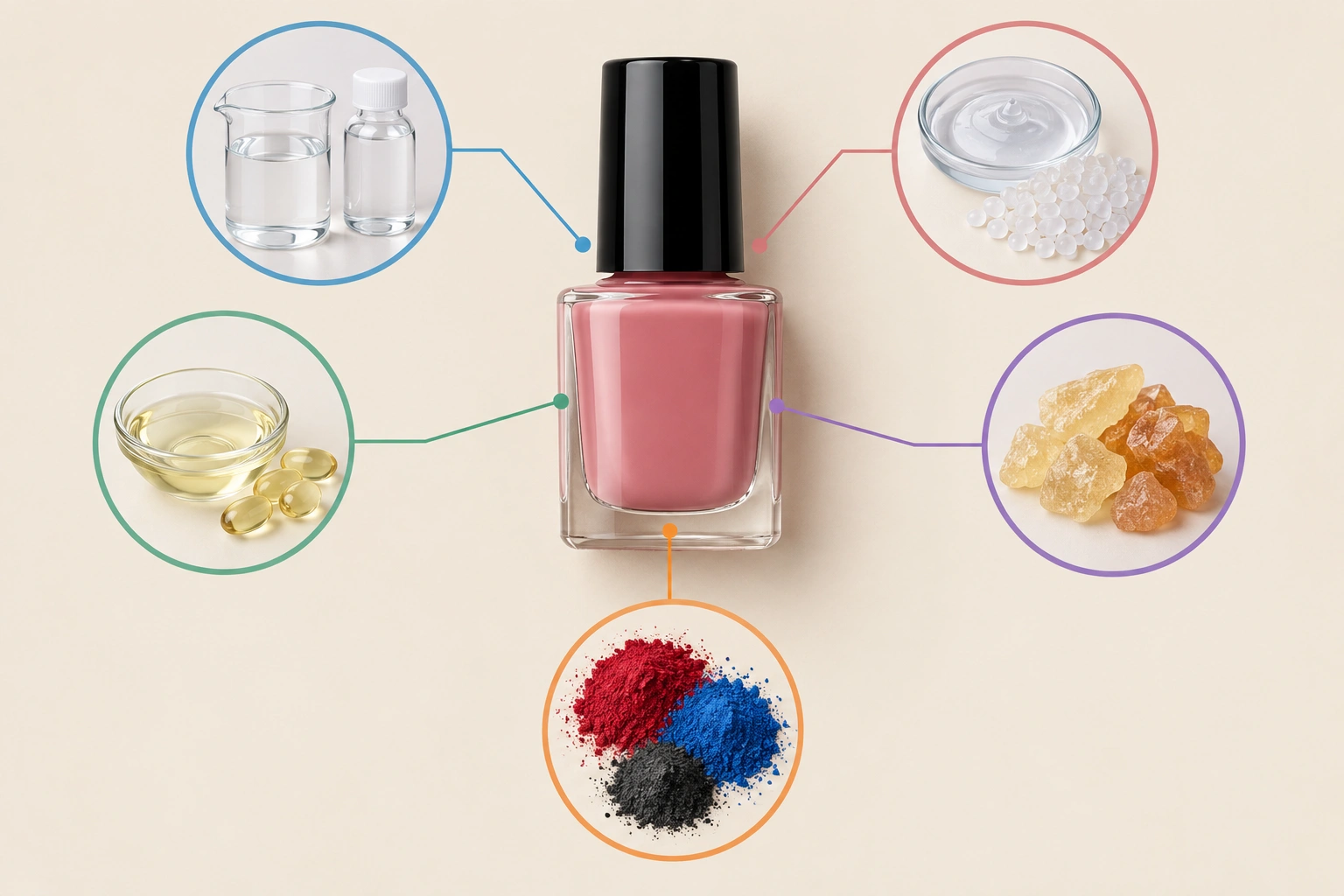
If you’ve ever turned a bottle over and wondered what all those long ingredient names mean, you’re not alone. Nail polish is usually a mix of a few main ingredient groups that work together to make the polish flow, dry, stick to the nail, and hold color.
In simple terms, most formulas include:
– Film formers to create the hard coating
– Solvents to keep the polish liquid in the bottle
– Plasticizers to help the polish stay flexible
– Resins to improve adhesion and shine
– Pigments for color and opacity
– Additives for texture, finish, or stability
That sounds technical, but each part has a job. Once you understand the basics, ingredient labels become much easier to read.
Quick Answer: What’s Usually in Nail Polish?
A standard nail polish formula is not just “color in a bottle.” It’s a carefully balanced mix that has to stay smooth in the bottle, brush on evenly, dry into a film, and resist chipping.
The most common base ingredient is nitrocellulose. This is the film former that helps polish harden into that familiar coating on the nail. Without it, polish would not set into a solid layer.
Then come solvents such as ethyl acetate, butyl acetate, and sometimes isopropyl alcohol. These keep the polish liquid until you apply it. As the solvents evaporate, the polish dries.
Other ingredients help the formula perform better:
– Plasticizers help reduce brittleness
– Resins improve shine and wear
– Pigments give the polish its color
– Small additives may adjust thickness, stability, or finish
If you want a simple comparison, think of polish as a paint-like coating that needs liquid ingredients to go on smoothly, and film-forming ingredients to dry into a durable finish. If you’d like help with the “too thick” side of that equation, our guide on how to fix thick nail polish may help.
The Main Chemicals in Nail Polish and What Each One Does
Nitrocellulose
Nitrocellulose is one of the most common film formers in nail polish. Its job is to create the solid layer that stays on the nail after the solvents evaporate.
Why it matters:
– Helps polish dry into a smooth film
– Gives the coating structure
– Supports the glossy, hard finish people expect
Without a film former, polish would stay wet or smear too easily.
Ethyl Acetate
Ethyl acetate is a solvent. In plain language, it helps keep polish fluid in the bottle so you can apply it with a brush.
Why it matters:
– Helps polish spread evenly
– Evaporates quickly as the polish dries
– Contributes to the familiar nail polish smell
Butyl Acetate
Butyl acetate is another common solvent. It does a similar job to ethyl acetate, but formulators may use it to help with flow and drying behavior.
Why it matters:
– Helps the polish go on smoothly
– Supports an even finish
– Affects how fast the polish flashes off as it dries
Isopropyl Alcohol
Isopropyl alcohol may appear in some nail products, including certain polishes and many removers. In polish, it can help with thinning, drying, or formula stability.
Why it matters:
– Helps some formulas dry or blend properly
– Can contribute to odor
– May feel drying if it gets on surrounding skin often
Tosylamide/Formaldehyde Resin
This resin is used in some traditional formulas to improve hardness, adhesion, and shine. It is one of the ingredients people often notice because of the word “formaldehyde” in the name.
Why it matters:
– Helps polish stick better
– Can improve durability and gloss
– May be avoided by people who prefer simpler formulas
Camphor
Camphor is sometimes used as a plasticizer or additive. In small amounts, it helps change the way polish behaves on the nail.
Why it matters:
– Can affect flexibility
– Helps the coating feel less brittle
– Is one of the ingredients some shoppers prefer to avoid
Pigments
Pigments are what give nail polish its color. They may be mineral-based, synthetic, or a mix depending on the shade and finish.
Why they matter:
– Create color
– Add opacity
– Help with special finishes like shimmer or pearl
Pigments themselves are usually the reason one polish looks sheer and another looks fully opaque.
Plasticizers
Plasticizers help the dried polish stay flexible instead of cracking. They are part of what makes polish wear better on moving nails.
Why they matter:
– Reduce brittleness
– Help polish bend with the nail
– Can improve chip resistance
Resins
Resins help the polish cling to the nail plate and can improve gloss and wear. They are part of the reason polish stays put instead of peeling too quickly.
Why they matter:
– Improve adhesion
– Support shine
– Help the formula last longer
Ingredients People Often Worry About
Some nail polish ingredients come up often in safety conversations. That doesn’t mean every person will react to them, but they are worth knowing.
Formaldehyde
Formaldehyde is a well-known ingredient that many consumers try to avoid. In cosmetics, it may appear as an ingredient in some formulas or as part of a resin system.
Why people watch for it:
– Can be a concern for sensitive users
– May be associated with irritation or allergy in some people
– Is often excluded from “free-from” formulas
Toluene
Toluene is a solvent that has been used in some nail products. It is one of the ingredients most often left out of modern “cleaner” formulas.
Why people watch for it:
– Can be concerning for frequent exposure
– May be avoided by people who want a simpler formula
– Is commonly listed in “free-from” claims
Dibutyl Phthalate (DBP)
DBP is a plasticizer that used to be more common in nail polish. Many brands now avoid it.
Why people watch for it:
– Often excluded from “3-free” formulas
– Associated with consumer concern around long-term exposure
– Not something every polish contains, but worth checking for if you prefer a cautious choice
Formaldehyde Resin
This is different from plain formaldehyde, but it also comes up in ingredient discussions. Some people who are sensitive choose to avoid both.
Why people watch for it:
– Can be a concern for people with cosmetic sensitivities
– Often appears in formulas aimed at durability
– May be listed under names that are easy to miss if you only skim the label
Fragrance and Other Additives
Not every polish contains fragrance, but some do. Additives can also include stabilizers, dyes, or finish modifiers.
Why people watch for them:
– Fragrance can bother sensitive users
– Additives are sometimes overlooked because they sound minor
– A shorter ingredient list may feel easier to manage if you react to cosmetics easily
Are Nail Polish Fumes or Ingredients Harmful?
For most everyday users, the main concern is usually not a single brush stroke of polish. It’s repeated exposure, poor ventilation, and skin contact over time.
Nail polish fumes come mostly from solvents evaporating. That’s why polish has a strong smell, especially in a closed room. Using polish in a well-ventilated area can reduce odor and irritation, even though it does not eliminate exposure entirely.
A few practical safety habits help a lot:
– Open a window or turn on a fan
– Avoid painting nails in a tiny, sealed room
– Keep polish off the skin around the nail if you tend to get irritation
– Close bottles tightly after use
If you use polish only occasionally, you may decide standard formulas are fine for you. If you paint your nails often, or you are sensitive to smells or cosmetics, ingredient choice and ventilation matter more.
What Do 3-Free, 5-Free, and 10-Free Labels Actually Mean?
“Free-from” labels are marketing terms, not a single universal standard. That means one brand’s 5-free formula may not match another brand’s.
In general:
– 3-free usually means the formula leaves out three ingredients many shoppers want to avoid, often formaldehyde, toluene, and DBP
– 5-free usually removes those plus two more ingredients, which vary by brand
– 10-free typically excludes even more ingredients, but the exact list is brand-specific
There is no universal standard for these labels, so the same number can mean different things from one brand to another. For example, one brand’s “5-free” might exclude formaldehyde resin and camphor, while another brand’s “5-free” could leave out a different pair of ingredients.
The important part is this: the number alone does not tell you exactly what is inside. Some ingredients can also appear in trace amounts or under alternate names, so it helps to compare the full INCI-style ingredient list rather than relying only on the front-of-bottle claim.
If you want a more reliable way to shop, read the actual ingredient list instead of stopping at the label on the front. For general cosmetic ingredient guidance, the U.S. Food and Drug Administration is a helpful place to check how cosmetic products are regulated and labeled.
How to Read a Nail Polish Ingredient List
You do not need chemistry training to scan a bottle. Use this simple method:
1. Look for the main solvent names
Common ones include:
– Ethyl acetate
– Butyl acetate
– Isopropyl alcohol
These are normal in many polish formulas. They are not automatically “bad”; they are part of what makes polish usable.
2. Check for ingredients you personally want to avoid
If you have sensitivity concerns, look for:
– Formaldehyde
– Toluene
– DBP
– Formaldehyde resin
– Fragrance
3. Watch for alternate ingredient names
Some ingredients show up under names that are easy to miss. For example, formaldehyde resin may appear as tosylamide/formaldehyde resin. If you are comparing products, check the full ingredient list, not just the marketing claim on the front.
4. Notice how long the ingredient list is
A shorter list may feel easier to manage if you have allergies or very reactive skin. That said, shorter is not always better for performance.
5. Ignore vague front-label promises until you verify the back label
Words like “clean,” “non-toxic,” or “natural” are not enough on their own. The ingredient list tells you much more.
If polish tends to get thick before you finish the bottle, that can also affect how you interpret formula quality. Our guide on why nail polish gets clumpy explains what happens when solvents evaporate over time.
Regular Nail Polish vs. Free-From vs. Water-Based Formulas
Here’s a simple way to compare the main options.
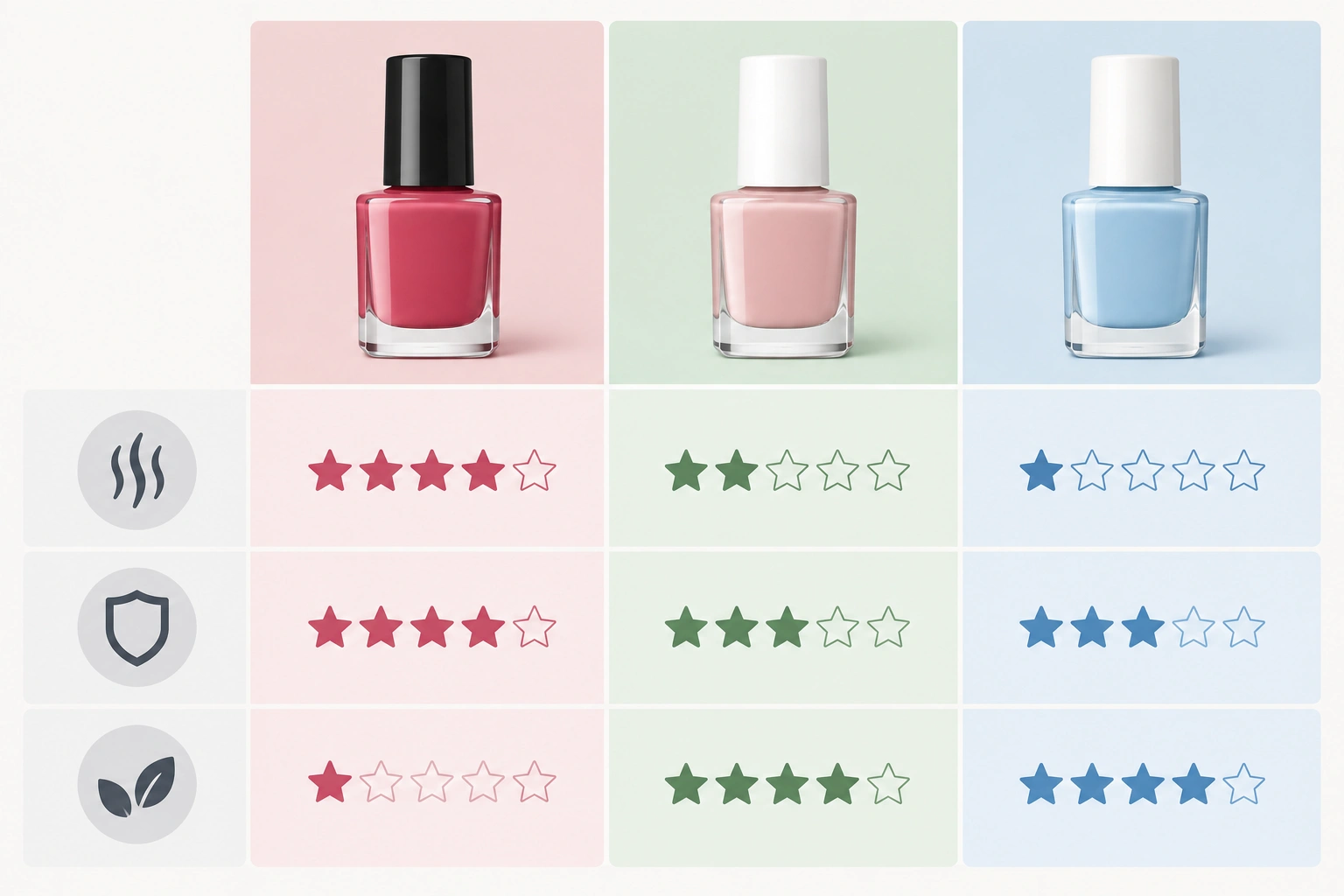
| Formula type | What it usually feels like | Main benefit | Main trade-off |
|---|---|---|---|
| Regular solvent-based polish | Smooth, familiar, strong smell | Good wear and easy application | May include more ingredients people want to avoid |
| Free-from polish | Similar to regular polish, but with some ingredients left out | Better fit for cautious shoppers | “Free-from” lists vary by brand |
| Water-based polish | Lower odor, gentler-feeling formula | Often appealing for sensitive users | May wear less well than standard polish |
Regular polish
This is the classic formula most people know. It often gives the best balance of flow, shine, and wear.
Best for:
– Beginners who want easy application
– People who value durability
– Anyone who does not mind solvent odor
Free-from polish
These formulas leave out certain ingredients that some shoppers prefer to avoid. They can be a smart middle ground.
Best for:
– People who want fewer controversial ingredients
– Shoppers comparing ingredient lists carefully
– Users who still want a familiar polish texture
Water-based polish
Water-based formulas are different enough that they may feel gentler and smell milder. They can be useful if you are very odor-sensitive.
Best for:
– Lower-odor preference
– Shorter wear expectations
– People testing a gentler-feeling option
If you want to compare drying behavior too, our article on how long nail polish takes to dry completely can help you set realistic expectations.
What to Check If You Have Sensitive Skin, Allergies, or Pregnancy Concerns
If your skin reacts easily, ingredient transparency matters more than trend labels.
A cautious approach usually means:
– Checking for formaldehyde, toluene, DBP, and formaldehyde resin
– Looking for fragrance if you react to scented cosmetics
– Avoiding polish on irritated or broken skin
– Keeping sessions short and well ventilated
If you are pregnant or simply want a lower-exposure routine, some people choose to be extra cautious and pick formulas that avoid the ingredients they are most concerned about, then use them in a ventilated space. That is a personal comfort choice, not medical advice. If you have specific health concerns, follow your clinician’s guidance.
If you have a known cosmetic allergy, a dermatologist can help you identify the ingredient family that may be causing the problem. Some nail polish ingredients may matter more if you already know you react to fragrance or cosmetic resins.
Don’t Forget Nail Polish Remover
Nail polish remover is a separate product with its own ingredient profile. This matters because people often focus on polish and forget that remover can be the bigger source of dryness or irritation.
Common remover ingredients may include:
– Acetone, which removes polish quickly but can be drying
– Ethyl acetate
– Isopropyl alcohol
– Moisturizing additives in some formulas
Acetone-based removers usually work faster and more aggressively, while non-acetone removers tend to be gentler but may take longer or need more rubbing. If your nails or cuticles feel dry after removal, the remover may be part of the reason. A gentler remover can make routine polish use more comfortable, even if you keep the same color formula.
When to See a Nail Technician or Dermatologist
See a nail technician if you want help choosing a formula that fits your routine, especially if you are unsure whether a regular, free-from, or water-based polish will suit your nails.
See a dermatologist if you notice:
– Repeated redness or itching around the nails
– Swelling after polish use
– A rash that keeps coming back
– A reaction that seems tied to a specific ingredient or product type
That kind of pattern may point to sensitivity or allergy, and it is better to get it checked than keep guessing.
Simple Takeaways for Choosing a Formula
If you want the easiest path, use this rule of thumb:
- Choose regular polish if you want the best balance of wear and ease of use.
- Choose free-from polish if you want to avoid certain ingredients and still keep a familiar polish experience.
- Choose water-based polish if odor and a simpler feel matter more than long wear.
The best choice is the one that matches your comfort level, how often you paint your nails, and whether you have known sensitivities. If you are unsure, start with the ingredient list. That tells you more than the front of the bottle ever will.
FAQs
Is nail polish toxic?
Nail polish is a cosmetic product, not something meant to be ingested or used carelessly. For most people, the main concerns are ingredient sensitivity, strong fumes, and frequent exposure rather than one-time use.
Are nail polish fumes harmful?
They can be irritating, especially in a closed room. Ventilation is the simplest way to reduce that discomfort.
What does 5-free really mean?
It usually means the brand has left out five ingredients it considers undesirable, but the exact list can vary by brand. Always check the actual label.
Is free-from polish safer?
It may be a better fit if you want to avoid specific ingredients, but it is not automatically safer for every person. Sensitivity depends on the full formula.
Should I check remover ingredients too?
Yes. Remover can be more drying or irritating than polish itself, so it deserves the same attention.

