
Why Nail Polish Can Turn Nails Yellow: A Beginner’s Guide to Causes, Prevention, and Safe Fixes

If you’ve noticed yellow nails after wearing polish, you’re not alone. In many cases, the color change is a cosmetic stain on the nail plate, not a sign that something is seriously wrong. The good news is that yellowing from polish is often preventable, and when it does happen, it often improves with time and gentle care.
Why nail polish can make nails look yellow
Nails are made of keratin, and the nail plate can take on color from polish over time. Pigment can bind to the superficial nail plate, which is the outer layer you see and touch. That means the discoloration is usually a surface stain rather than deep nail damage. The polish color may sit on the surface, or it may seem to settle into the nail enough to leave a yellow tint after removal.
A simple way to think about it: the polish color can transfer into the nail the same way some dyes can stain fabric. It does not always mean the nail is damaged. But it does mean your manicure routine may need a small adjustment.
If you want a deeper look at polish wear and product habits, our guide on why nail polish separates can help you understand how formula changes affect application and coverage.
The most common causes of yellowing
Dark, highly pigmented polish
Deep reds, navy, burgundy, and some bright colors tend to carry more pigment. That extra pigment can leave more residue behind, especially if the polish is worn repeatedly or removed and reapplied often.
This does not mean you have to avoid dark colors forever. It just means they may need a better barrier underneath.
Skipping base coat
A base coat helps create a layer between the polish pigment and the nail plate. Without it, color has a more direct path to the nail surface, which can increase the chance of staining.
Frequent reapplication without breaks
If polish is on your nails almost all the time, stains have more chances to build up. Nails can also start to look dull or dry from repeated wear and removal, which can make yellowing more noticeable.
A short break between manicures can help you see whether the color change is from staining, dryness, or something else.
Nail dehydration and surface dullness
Sometimes nails look yellow when they’re actually dry, rough, or slightly chalky from polish, remover, or over-buffing. Dry nails reflect light differently, so the surface can appear less pink and more yellow or muted.
This is one reason a nail may look “off” even when there is no deep stain.
Remover effects

Polish remover can affect how nails look, especially if you use it often. Acetone removes polish quickly, but it can also dry the nail and surrounding skin. Non-acetone remover is usually gentler, but it may take longer to clear stubborn color.
For a more detailed look at remover trade-offs, see whether nail polish remover can damage nails.
Which polishes stain the most
In general, darker and more saturated shades are more likely to leave color behind than pale or sheer formulas. That’s why a rich red or navy may stain more than a soft pink or nude.
Here’s the practical rule for beginners: if a polish looks very opaque in the bottle and covers the nail in one or two coats, treat it as a higher-staining color and use a base coat every time. If you wear those shades often, it’s worth being extra careful with removal too.
Lighter shades usually carry less staining risk, but they’re not completely stain-free. Any formula with strong pigment can leave some color if it sits on the nail long enough.
How a base coat helps prevent stains
A base coat acts like a protective layer between the polish and the nail plate. It does not make staining impossible, but it can reduce direct contact between pigment and keratin.
Use a base coat when:
– you wear dark polish regularly
– your nails have stained before
– you leave polish on for several days at a time
– you are trying a new highly pigmented shade
How removal products can affect nail color
Acetone remover
Acetone is efficient. It usually removes polish faster and more completely, which matters when you’re dealing with stubborn color. The trade-off is dryness. If your nails already feel brittle, acetone may make them look more dull or dehydrated.
Non-acetone remover
Non-acetone remover is often a better fit for nails that are already dry or fragile. It tends to be gentler, but it may struggle more with darker polish and can require more rubbing or more time.
The decision is usually simple:
– choose acetone if you need strong removal and your nails tolerate it well
– choose non-acetone if dryness is your bigger concern and you can be patient
Either way, moisturize after removal. Dry nails can look more yellow than hydrated ones.
How to prevent yellow nails in future manicures
A few small habits can make a big difference.
Use a base coat every time
This is the easiest prevention step, especially with dark polish. Apply it to clean, dry nails before color.
Don’t leave old polish on too long
If polish is chipped, worn, or stained-looking, remove it rather than layering more color on top. Repainting over old polish can trap pigment and make yellowing harder to judge.
Give nails occasional breaks
You do not need to stay polish-free forever. But if your nails are looking dull or yellow, a short break can help you see whether the issue improves once the color is removed and the nail is moisturized.
Remove polish fully
Patchy removal can leave pigment behind and make nails look stained even when the color is mostly gone. Take your time and clean the nail surface gently.
If you want help timing your polish routine, our guide on how long nail polish takes to dry completely can help you avoid smudging and repeated touch-ups that keep polish on the nail longer than necessary.
How to safely fade or remove yellow staining
The safest approach is gentle care, not scrubbing.
Try this:
1. Remove all polish completely.
2. Wash hands with mild soap and warm water, or soak nails briefly in soapy water to help loosen surface residue.
3. If the stain still looks superficial, you can try a soft baking soda paste very lightly once in a while, then rinse well.
4. Use a moisturizing hand cream or cuticle oil daily.
5. Keep the nails short while they grow out.
6. Reapply polish only with a base coat if you decide to paint them again.
Avoid harsh whitening tricks, repeated baking soda treatments, or aggressive buffing. Those can thin the nail plate and make the problem look worse. If the stain is only on the surface, it often fades gradually as the nail grows and the stained area is trimmed away.
How long it takes for yellowing to go away
Cosmetic staining usually improves as the nail grows out. That means the yellow area moves forward with the nail until you can trim it off.
You may notice the nail looks better after a few weeks, but a full reset can take longer because fingernails and toenails grow at different speeds. Depending on nail growth, cosmetic staining may take weeks to months to grow out. The important thing is to watch for gradual improvement. If the color is not changing at all over time, that is a reason to pay closer attention.
Yellow nail staining vs. nail fungus: a quick comparison
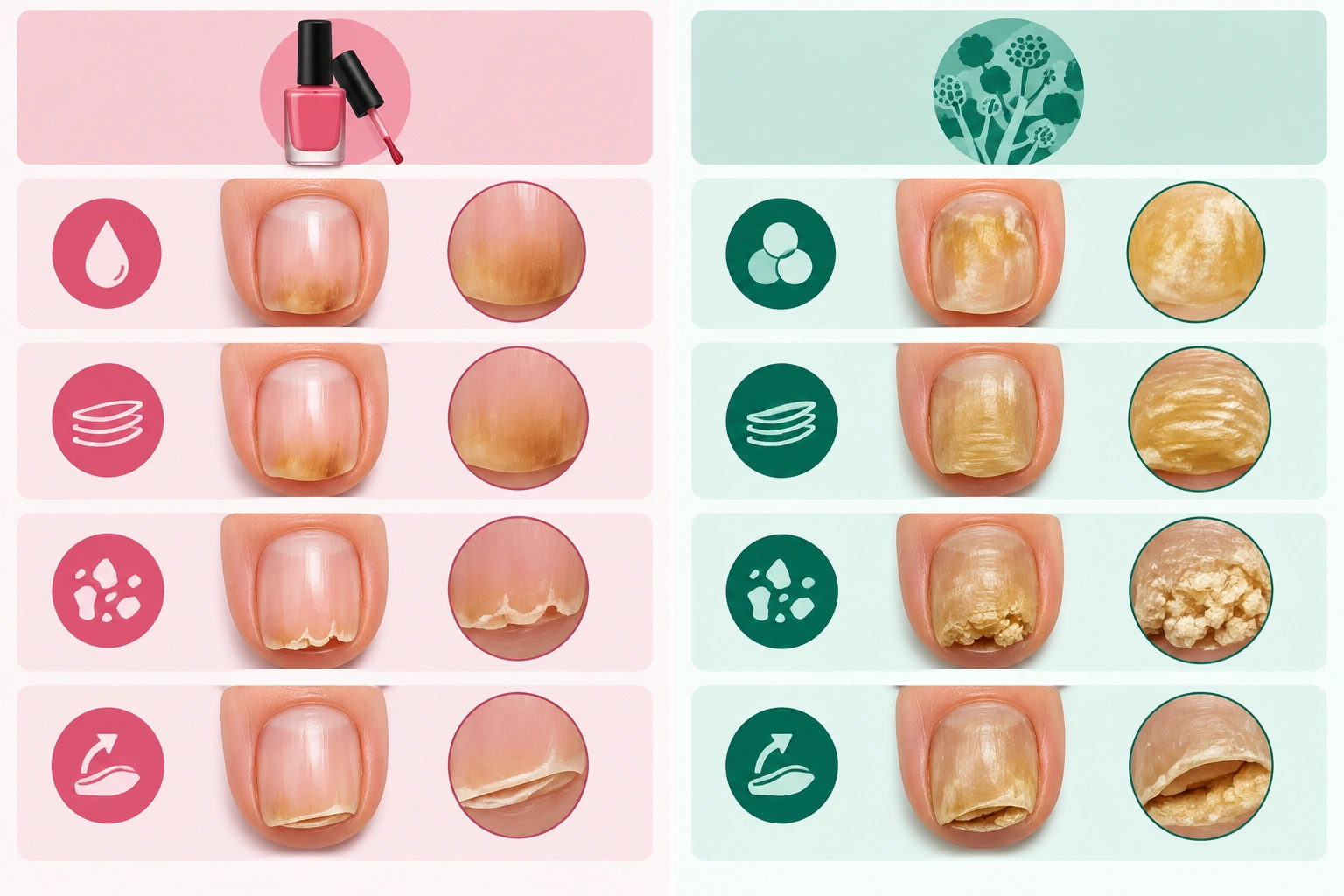
| Sign | Likely polish staining | More concerning for nail fungus or another issue |
|---|---|---|
| Color change | Yellowing after dark polish | Yellowing that appears without polish or keeps spreading |
| Nail texture | Smooth or slightly dry | Thickening, crumbling, roughness |
| Under-nail debris | Usually none | Debris buildup under the nail, crumbly material |
| Odor | Usually no odor | Sometimes a noticeable odor |
| Nail shape | Mostly normal | Lifting from the nail bed, distortion |
| Comfort | Usually no pain | May come with discomfort, tenderness, or sensitivity |
| Pattern | Improves as nail grows out | Persists or worsens over time |
This is not a diagnosis tool, but it helps you notice patterns. If the nail is only discolored and otherwise looks normal, polish staining is more likely. If the nail is thickening, lifting, crumbling, or developing debris or odor, the cause may be something else.
For general public health guidance on nail changes, the CDC is a useful place to start when you want to understand when a symptom deserves attention.
When to see a nail technician or dermatologist
A nail technician can help if you’re trying to figure out whether the problem looks cosmetic, or if your application routine may be causing repeated staining. A dermatologist is the better choice if the yellowing is persistent or comes with warning signs.
Make an appointment if you notice:
– thickening
– crumbling
– nail lifting
– pain or tenderness
– discoloration spreading beyond one nail
– yellowing that does not improve as the nail grows out
– persistent yellowing even when you are not wearing polish
– discoloration affecting multiple nails
If you’re unsure, it is safer to get the nail checked than to keep covering it with polish. A cosmetic stain can wait. A possible nail condition should not.
For more general health guidance on when nail changes need medical attention, the FDA is a reliable reference point for consumer safety information.
FAQ
Can nail polish permanently turn nails yellow?
Usually, no. Staining from polish is often temporary and improves as the nail grows out. Persistent yellowing should be checked if it does not fade or if the nail changes in texture.
Will a base coat stop yellowing completely?
Not always, but it can lower the chance of staining. It is especially helpful under dark or strongly pigmented polish.
Is acetone bad for nails?
Acetone is not automatically harmful, but it can be drying. If your nails feel brittle or rough after removal, use it less often and moisturize afterward.
Should I switch to lighter colors?
If your nails stain easily, lighter or less pigmented shades may be a better choice. They usually leave less color behind than very dark polish.
How do I know if it’s fungus instead of polish staining?
Look for thickening, crumbling, lifting, under-nail debris, odor, or yellowing that keeps spreading. Those signs are more concerning than a simple color change after a manicure.
Can I paint over yellow nails?
You can, but it is better to remove the old polish first and use a base coat. Painting over discoloration can hide the problem without fixing the cause.
How often should I take a break from polish?
There is no single rule for everyone. If your nails look dry, dull, or yellow, a short polish break can help them recover and make it easier to tell whether staining is the issue.
Do remover wipes cause less staining?
They may be convenient, but the key issue is whether they remove pigment fully without excessive rubbing. Gentle, complete removal matters more than the format alone.
Can smoking or medication also cause yellow nails?
Yes, yellowing can have causes beyond polish. If the discoloration appears without polish or affects multiple nails in a way that seems unusual, a clinician should evaluate it.
What if only one nail is yellow?
One nail can still be stained, but isolated yellowing is worth watching closely. If it changes shape, thickens, or becomes painful, get it checked.
Can nail polish stain toenails too?
Yes. Toenails can also discolor from polish, especially if dark shades are worn repeatedly or left on for long periods.
A simple beginner rule to remember
If your nails turn yellow after polish, first think about pigment, dryness, and removal habits. Use a base coat, choose lighter shades when needed, remove polish fully, and let the nail grow out if the stain is only cosmetic. If the nail is thick, crumbly, painful, lifting, or has debris or odor, do not assume it is just polish.

