
What Is a Base Coat in Nail Polish? A Beginner’s Guide to Better Manicures

If you are new to nail polish, the base coat is one of the easiest products to understand and one of the easiest to skip by accident. It is the first layer you apply before color polish. Think of it as the prep step that helps your manicure go on more smoothly and wear more evenly.
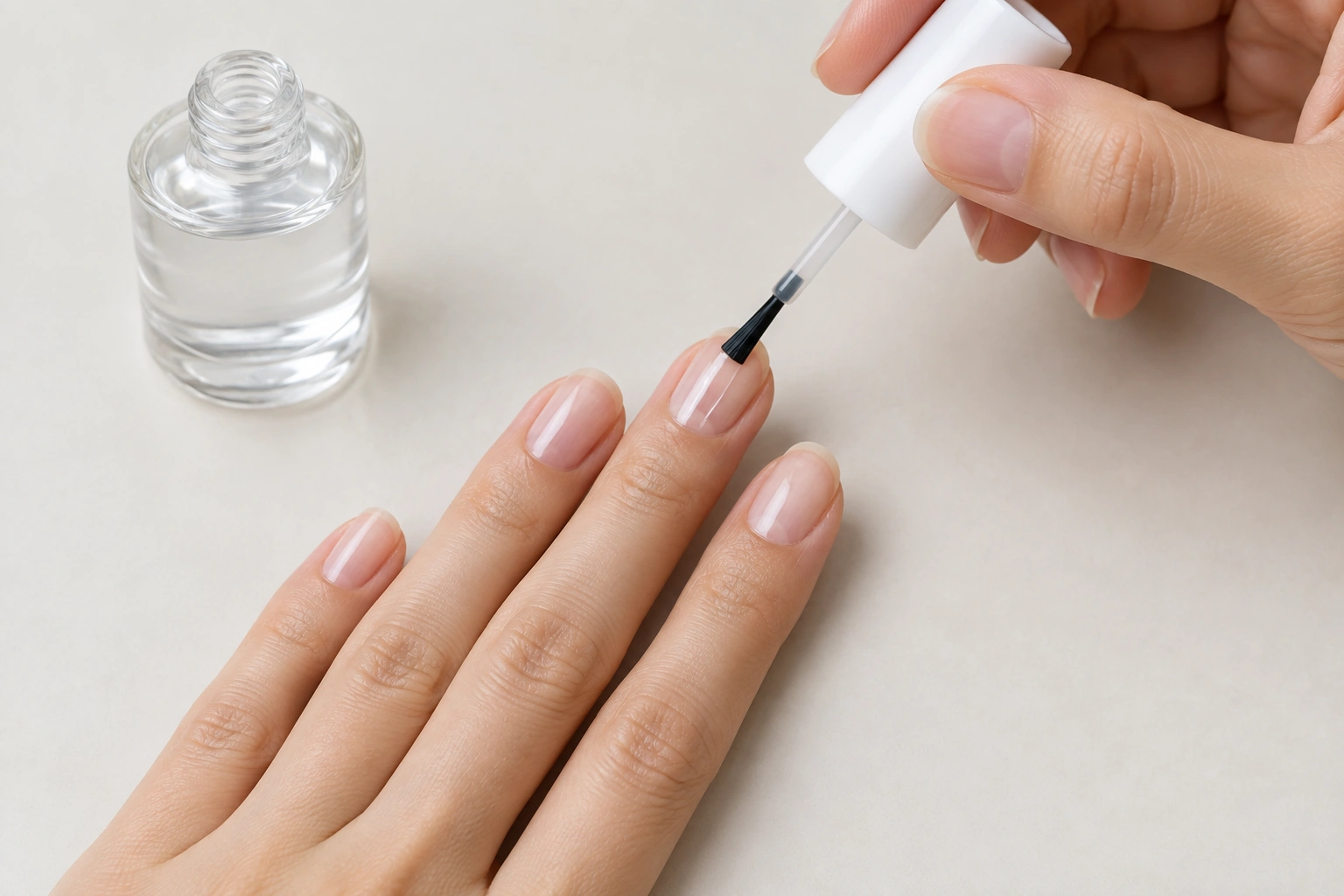
For regular polish, a base coat is helpful but not strictly necessary; for gel polish, you usually need products made for that specific system.
A good base coat does not need to be complicated. In a basic manicure, it sits between your natural nail and your color polish. That small step can help with how the polish looks, how long it lasts, and whether dark shades leave behind stains.
What Is a Base Coat?
A base coat is a clear or lightly tinted polish made to go on bare nails before color. Its job is to create a better starting surface for your manicure.
Unlike color polish, which is made to show pigment, a base coat is made to prep the nail. It helps the next layers grip better and can make the nail surface look a little smoother before you apply your chosen shade.
If you are picturing it as the “primer” of a manicure, that is a helpful way to think about it. It is the layer that comes first so the rest of the manicure has a better chance of looking neat.
What Does Base Coat Do?
A base coat usually has three main jobs:
1. Helps polish adhere better
Natural nails are not perfectly smooth. They can have tiny ridges and oils on the surface. A base coat gives color polish something more even to cling to, which may help the manicure wear better.
2. Smooths the nail surface
Some base coats are designed to fill in small ridges or texture. That can help color polish look more even, especially with lighter shades that show imperfections more easily.
3. Helps reduce staining
Dark or highly pigmented polishes can sometimes leave color behind on the nail plate. A base coat adds a layer between your nail and the polish, which may help reduce that staining.
For a beginner wearing red, navy, or black polish, this is one of the clearest reasons to use it.
Do You Really Need a Base Coat?
If you want a quick answer: no, a base coat is not absolutely required every single time. But for most beginners, it is worth using.
Here is the trade-off:
- Skip it: faster manicure, fewer products
- Use it: better prep, smoother wear, less chance of staining
If you are painting your nails a pale nude shade and do not mind a shorter wear time, you may be tempted to skip it. But if you are using a bold color, doing your nails for an event, or want a cleaner-looking result, base coat is the safer choice.
A simple rule works well: if you want your manicure to look more polished and last longer, use base coat.
Base Coat vs. Top Coat vs. Clear Nail Polish
These products can look similar in the bottle, which is why beginners mix them up. They do different jobs.
| Product | When It Goes On | Main Purpose | Can It Replace Base Coat? |
|---|---|---|---|
| Base coat | First | Helps polish stick, smooths nail, may reduce staining | N/A |
| Top coat | Last | Seals color and adds shine or finish | No |
| Clear nail polish | Varies | Usually made as a standalone clear polish | Not always |
A top coat is made for the top of the manicure, not the bottom. If you use it under color, it will not necessarily act like a proper base coat.
Clear nail polish is also not the same thing as a true base coat. It may look similar, but it is not always formulated to do the same prep job before color polish.
If you want a deeper timing guide, see how long base coat takes to dry. For the matching top layer, how long top coat takes to dry is a useful companion read.
How to Apply Base Coat in a Basic Manicure
You do not need special tools for this part. A basic manicure usually works best when the nail is clean and dry.
Step 1: Clean the nails
Remove old polish and wash your hands. Make sure there is no lotion or oil sitting on the nail surface.
Step 2: Shape and gently prep
File the nails if needed. If you push back your cuticles, do it gently. The goal is a tidy nail plate, not aggressive prep.
Step 3: Apply one thin layer of base coat
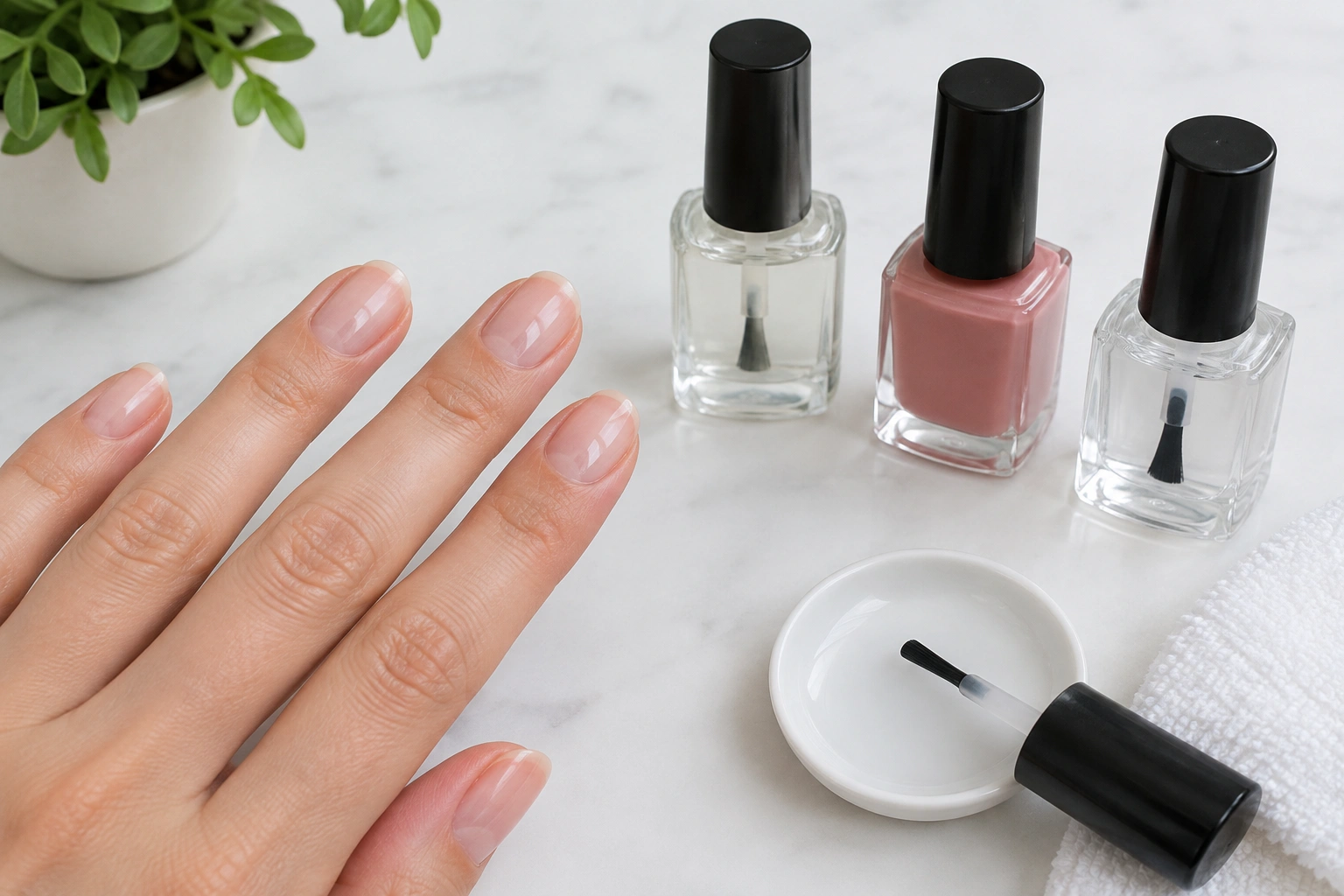
Use a small amount. One thin coat is usually enough for a beginner routine. Thick layers can take longer to dry and may make the manicure feel bulky. If a formula is especially streaky or ridge-filling, a second thin coat may be appropriate, but most beginners should start with one.
Step 4: Let it dry
Wait until the base coat is no longer wet or tacky enough to smear easily. Then move on to color polish.
Step 5: Apply color polish
Paint your color over the dry base coat in thin coats. Two thin coats often look better than one heavy one.
Step 6: Finish with top coat
Seal the manicure with a top coat after the color is dry enough to handle.
For a simple at-home routine, this order matters: base coat first, color polish second, top coat last.
How Long to Let Base Coat Dry Before Color
The safest beginner rule is to let the base coat dry until it no longer feels wet and does not drag when you touch it lightly.
Exact drying time depends on the formula, but the practical point is simple: do not rush into color too soon. If the base coat is still soft, the color layer can smear or settle unevenly.
If you are unsure, a little extra waiting is better than moving too fast. That small pause can save you from a messy manicure.
How to Choose the Right Base Coat for Your Nails
You do not need to shop by hype. Match the base coat to the main thing you want it to do.
| Base Coat Type | Best For | Simple Reason to Choose It |
|---|---|---|
| Regular base coat | Most beginners | Good all-purpose option for everyday polish |
| Ridge-filling base coat | Nails with visible ridges | Helps create a smoother-looking surface |
| Strengthening base coat | Nails that feel weak or flexible | Can be a more supportive-feeling option in routine use |
| Gel-compatible base coat | Gel polish systems | Made to work with that type of manicure |
A regular base coat is the easiest place to start if you are not sure what you need.
Choose ridge-filling if your polish seems to catch on texture or if lighter colors look uneven on your nails.
Choose strengthening formulas if you want a base coat that feels more tailored to nails that seem soft or fragile. Just keep expectations realistic: these products are part of a cosmetic routine, not a medical fix.
If you are using gel polish, check the product instructions carefully. Gel systems often need products made for that system, and not every regular base coat will work the same way.
For readers comparing product types, this base coat review and this base-and-top-coat kit review may help you understand how formulas are labeled.
Common Base Coat Mistakes to Avoid
A few beginner mistakes show up again and again.
Using too much product
Thick layers seem like they should help, but they usually do the opposite. They dry more slowly and can make the manicure look uneven.
Skipping base coat with dark colors
If you love deep red, blue, or black polish, this is where base coat matters most. Skipping it can make staining more likely.
Confusing top coat with base coat
They are not interchangeable. One goes under the color, the other goes over it.
Applying color too soon
If the base coat is still wet, the color can slide around or streak.
Treating clear polish like a guaranteed substitute
Some clear polishes may seem similar, but they are not always made to do the same job as a real base coat.
How to Remove Base Coat
Base coat usually comes off the same way regular nail polish does. You remove it with standard polish remover when you take off your manicure, so it is not removed separately.
If you are wearing regular polish, the remover takes off the base coat along with the color and top coat. There is no special removal step for most basic base coats.
If a formula is made for gel systems, removal may be different. In that case, follow the product directions rather than guessing.
When to See a Nail Technician or Dermatologist
If your nails are painful, very damaged, or irritated after using polish products, it is a good idea to stop and ask a professional for guidance.
A nail technician can help you choose a simpler routine or a more suitable base coat. A dermatologist is the right person to ask if you have ongoing nail or skin irritation, especially if polish products seem to trigger it.
Quick Beginner Takeaway
If you remember just one thing, make it this: base coat is the first layer that helps prepare your nails for color polish.
It can help polish stick better, smooth the surface a little, and reduce staining from darker shades. For beginners, that makes it one of the most practical steps in a manicure.

