
Why Nail Polish Feels Tacky After Drying: A Beginner’s Guide to What’s Normal and What Isn’t

If your manicure looks finished but still feels sticky, you are not imagining it. Nail polish can seem dry on the surface while the layers underneath are still soft. In some cases, that tacky feeling is part of the product. In other cases, it means the polish needs more time or was applied in a way that slowed drying.
The good news is that this problem is often fixable. Once you know whether you are dealing with regular polish, gel polish, or a sticky top coat, the next step becomes much simpler.
Why Nail Polish Can Feel Tacky After It Looks Dry
Nail polish does not all dry in the same way. Regular polish dries as solvents evaporate. That means the top may feel dry within minutes, while the layers below can take much longer to fully harden. Gel polish works differently and needs a UV/LED lamp to cure. Some gel systems also leave a sticky surface on purpose.
That is why “looks dry” and “is ready for normal use” are not the same thing. A manicure can seem fine and still dent, smudge, or grab onto fabric if it has not finished drying or curing.
If you want a deeper explanation of the drying process itself, this guide on how nail polish works and dries faster is a helpful companion.
Dry to the Touch vs Fully Cured vs a Normal Sticky Layer
These three ideas are easy to mix up, but they matter.
Dry to the touch
This means the surface feels dry when you lightly touch it. It does not guarantee the polish is hard underneath.
Fully cured or fully set
This means the manicure has hardened enough for normal wear without easily denting or dragging. Regular polish reaches this stage over time as solvents leave the coating. Gel polish reaches it after proper lamp curing.
A normal sticky layer
Some gel top coats leave a tacky film called an inhibition layer. That is not the same thing as polish failing to dry. It is often removed with the product’s recommended cleanser or wipe, depending on the system.
A simple way to think about it: if the surface is sticky but the product is supposed to be sticky, that may be normal. If the whole manicure stays soft or gummy, that is a drying problem.
Is the Tackiness Normal or a Sign Something Went Wrong?
Use this quick rule:
- Probably normal: the polish is a gel top coat with a sticky layer, or the manicure is only slightly tacky shortly after application.
- Probably a problem: the polish stays soft for a long time, dents easily, drags when touched, or never seems to harden.
If you are unsure, check the product type first. A regular top coat should not feel sticky forever. A gel top coat may need wiping. If the packaging is unclear, look for clues in how the product is meant to dry: regular polish air-dries, while gel polish usually requires a UV/LED lamp and often mentions “cure” or “cure time” on the label or directions. If you did not use a lamp, it is probably regular polish. If you did use a lamp and the product says it must be cured, it is likely gel or a gel-like system.
For general drying and smudging issues, this related article on why nail polish is not drying can help you narrow down the cause.

The Most Common Reasons Nail Polish Stays Sticky
Most tacky polish comes down to one of a few beginner mistakes or product issues.
Thick coats trap solvents
A thick coat looks efficient, but it slows drying because the layer underneath has a harder time releasing solvents. Two or three thin coats usually dry better than one heavy coat.
A good example: if your color looks opaque after one thick swipe but still feels gummy an hour later, the thickness is probably part of the problem.
Too many layers need more time
Base coat, multiple color coats, and top coat all add up. Each layer has to dry well enough before the next one goes on. If you rush, the lower layers can stay soft and make the whole manicure feel tacky.
Humidity slows the process
Moist air can make drying feel endless, especially with regular polish. A manicure that behaves well in a dry room can stay sticky in a humid bathroom or on a rainy day.
Poor airflow can hold the polish back
Polish dries faster when air can move around it. A still room is not ideal. You do not need strong heat, but a little airflow helps solvents escape.
Not waiting between layers
If each coat goes on before the last one has settled, the result can be a soft stack of polish instead of a firm finish. This is one of the most common reasons beginners think the polish is “not drying.”
The formula may be the issue
Sometimes the product itself is the problem. An old bottle, a poorly stored polish, or a formula that simply does not perform well can stay tacky much longer than expected even when applied carefully.
If you suspect the polish formula is the issue, compare it with another bottle you trust. If one product always behaves badly while others dry normally, the formula may be the culprit.
How Regular Nail Polish Dries vs How Gel Polish Cures
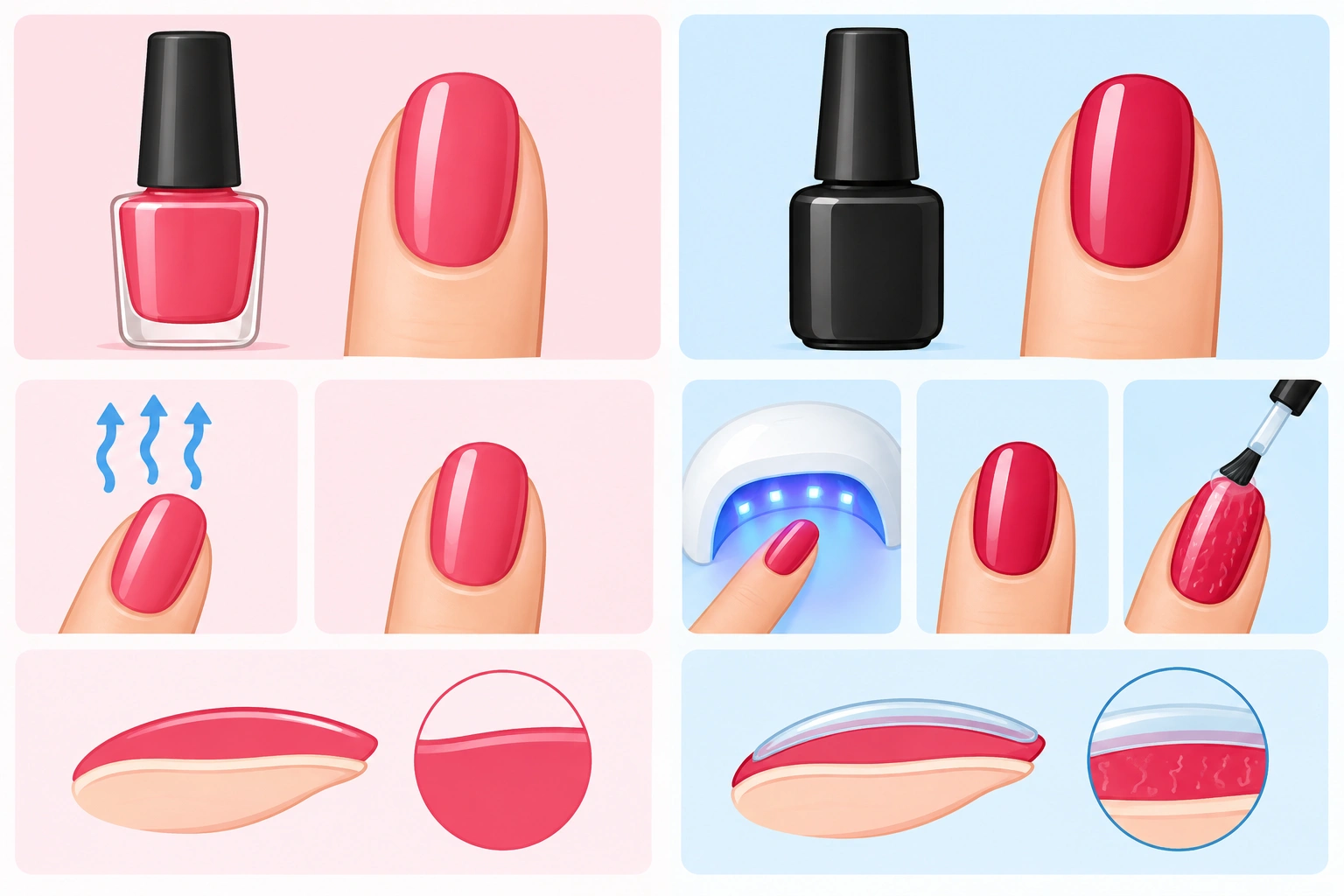
These systems need different troubleshooting.
| Feature | Regular Nail Polish | Gel Polish |
|---|---|---|
| How it hardens | Air drying as solvents evaporate | Cures under a UV/LED lamp |
| Sticky surface | Usually a sign it needs more time or was applied too thickly | May be normal if it has an inhibition layer |
| Best fix | Thin coats, more drying time, better airflow | Proper lamp curing and following the product system |
| Common mistake | Assuming it is ready too soon | Treating a sticky gel top coat like a failed manicure |
The biggest mistake is assuming all polish behaves like regular polish. If you are using gel, a sticky top coat may be part of the system. If you are using regular polish, stickiness usually means it still needs time or the coat was too heavy.
Approximate timing can help, but product instructions matter most. Regular polish may feel dry to the touch within minutes, yet still need much longer to fully harden. Gel polish usually needs the full lamp cure time listed by the brand, and some systems also need an extra wipe step for the sticky layer. If you are not sure which one you have, check whether the product requires a UV/LED lamp. If it does, treat it as gel; if it air-dries, treat it as regular polish.
For a practical overview of drying mistakes, see why nail polish smudges while drying.
Quick Ways to Help Tacky Polish Dry Safely
When polish feels sticky, the safest fixes are usually the simplest ones.
What to do first
- Check the product type. Make sure you are dealing with regular polish, gel polish, or a gel top coat with a normal sticky layer.
- Stop adding more coats. Extra layers usually trap more solvent or make curing less reliable.
- Improve airflow. Move to a better-ventilated room or use gentle air movement.
- Wait longer. If it is regular polish, more time is often the real fix.
- Use a drying aid if appropriate. Quick-dry drops or a quick-dry top coat can help regular polish when used correctly.
Give it more time
If the manicure is only slightly tacky and you know you used regular polish, waiting longer is often the best move. Try not to test it repeatedly with your fingertips. Every check can leave marks.
Improve airflow
Move to a room with better ventilation or use gentle air movement. Keep it light and indirect. You are trying to help solvents escape, not blow dust onto wet nails.
Use thinner coats next time
This is one of the most effective prevention steps. Thin coats dry more evenly and reduce the chance of a gummy surface.
Try quick-dry drops or a quick-dry top coat
These can help with regular polish when used as directed. They are useful if your coats are already thin and the problem is mostly slow drying. They are less helpful if the polish is piled on too heavily.
Avoid adding more polish to “fix” it
Adding another coat on top of a soft manicure usually traps more solvent underneath. That can make the problem worse, not better.
If you want a product-specific look at drying aids, this article on whether nail polish drying drops work is worth reading.
When a Sticky Top Coat Is Normal and When It Needs Wiping
This is one of the easiest places for beginners to get confused.
A gel top coat may leave a sticky inhibition layer after curing. That does not automatically mean the manicure failed. In many gel systems, the tacky film is expected and needs to be wiped off with the correct cleanser or product recommended by the manufacturer.
A regular top coat should not stay sticky for long after it has had proper drying time. If it does, the coat may be too thick, the room may be too humid, or the formula may not be performing well.
Decision rule:
– If it is gel and the instructions mention a tacky layer, follow the system.
– If it is regular polish and it still feels gummy well after waiting, treat it like a drying problem.
When You Should Remove and Redo the Manicure
Sometimes waiting longer is not the answer.
Consider starting over if:
– the polish stays soft far beyond the product’s expected dry or cure time,
– it dents easily when you barely touch it,
– it feels gummy instead of just slightly tacky,
– the layers look uneven or thick enough to trap more product underneath.
If the manicure is still clearly soft after a reasonable wait and the product type has been checked, a redo is usually the more practical choice. Trying to rescue a badly applied manicure can take more time than removing it and beginning again with thinner layers.
If you are dealing with repeated drying trouble, this related guide on how to prevent nail polish smudging while drying can help you rebuild the routine from the start.
How to Prevent Tacky Nail Polish Next Time
A few beginner habits make a big difference.
Use thin, even coats
Thin coats are the most reliable way to avoid trapped solvent and soft polish. They may look less perfect at first, but they usually dry better and last longer.
Let each layer settle before the next
Do not rush from base coat to color to top coat. Give each layer enough time to stop moving on the nail.
Paint in a comfortable room
A very humid room or one with poor airflow can slow drying. A dry, calm space is better.
Match the product to the job
If you want fast results, choose products made for quicker drying rather than trying to force a slow formula to behave like a fast one.
Read the product instructions
This matters most with gel. Some systems need a specific lamp, a specific cure time, or a wipe step for the sticky layer. Guessing can leave you with a manicure that feels wrong even when it is technically doing what the product expects.
When to See a Nail Technician or Dermatologist
See a nail technician if the same polish keeps staying tacky even when you apply it in thin coats, wait between layers, and use the product correctly. That can point to a formula issue or a technique problem that is easier to spot in person.
See a dermatologist if the nail area becomes irritated, red, or painful after using a product. Persistent irritation is not something to brush off.
For general product safety and ingredient guidance, it is also worth checking trusted sources like the FDA’s cosmetics information and the CDC’s consumer health guidance.
Common Questions About Sticky Nail Polish
How long should nail polish take to fully dry?
There is no single universal timing, because it depends on the polish type, how thick the coats are, and the room conditions. As a rough guide, regular polish may feel dry to the touch within minutes but can still need much longer to fully harden. Gel polish usually needs the full cure time listed by the brand, often in the UV/LED lamp rather than by air drying. The safest approach is to follow the product instructions and judge by how the polish behaves, not just by the clock.
Can quick-dry drops fix tacky polish?
They can help regular polish dry faster if the manicure was applied in thin layers. They will not fully rescue a manicure that is very thick or still wet underneath.
Why does my nail polish feel dry on top but sticky underneath?
That usually means the surface set before the lower layers finished drying. Thick coats and too many layers are common reasons.
Is a sticky gel top coat a problem?
Not always. Some gel systems intentionally leave a sticky layer that should be wiped off according to the product directions.
How do I know if the formula is the problem?
If the polish stays tacky even when you apply thin coats, wait properly, and use it in decent room conditions, the formula may be the issue. Compare it with another polish to see whether the problem repeats.
Should I put another top coat on top of tacky polish?
Usually no. If the layers underneath are still soft, another coat can trap more solvent and make drying harder.
A sticky manicure is frustrating, but it usually has a clear explanation. Once you know whether you are dealing with regular polish, gel polish, a normal sticky layer, or a true drying problem, the fix becomes much easier to choose.

