
How to Remove Nail Polish Without Remover: Safe Home Methods That Actually Help

If you’ve run out of remover, the best fix is usually to use the strongest household option you already have: rubbing alcohol or hand sanitizer for regular polish. These can help loosen polish enough to wipe it away, especially if the color is thin or fairly fresh.

If those aren’t available, a few other home products may help a little, but they are usually slower and less reliable. The biggest thing to know is this: regular nail polish and gel polish are not the same problem. Regular polish may come off with a household substitute. Gel polish usually will not.
A good rule is simple: try a gentle alcohol-based method first, stop if it is not working, and do not scrape at the nail surface.
Before You Start: Check Whether It’s Regular Polish or Gel
This step matters because it saves time and protects your nails.
Regular polish often feels smooth, but it is just a painted layer on top of the nail. Household alternatives can sometimes soften it enough to remove.
Gel polish is different. It is designed to stay put much longer, so weak DIY methods usually only smear it, not remove it. If you try to force it off, you can rough up the nail plate.
If you are unsure, look at the finish:
- Regular polish may chip more easily and can often be removed with a simple wipe.
- Gel polish usually looks harder, glossier, and more durable.
If you have gel polish, stop trying household substitutes once you see they are not budging. The practical next step is to use a proper gel-removal method or get help from a nail technician rather than rubbing harder.
For a quick refresher on nail care basics, you may also find our guide on how to remove nail polish stains from nails useful once the color is off.
Acetone vs. Non-Acetone Remover: Why Proper Remover Works Better
If you can get to a store later, this is the simplest comparison to know:
- Acetone remover is usually the strongest option. It breaks down regular polish quickly and is often the better choice for glitter or stubborn formulas.
- Non-acetone remover is usually gentler and may be a better fit if your nails or skin are dry, but it can take longer.
Both are still better than most household substitutes because they are made for polish removal. If household methods fail, the best fallback is usually to wait for proper remover rather than keep forcing the polish off.
If you want to understand why remover products are usually stronger, our article on whether nail polish remover damages nails explains the trade-off between effectiveness and dryness.
Best Household Alternatives, Ranked by Effectiveness
Here is a simple comparison so you can choose the best option based on what you have at home.
| Method | How well it may work on regular polish | Best for | Main downside |
|---|---|---|---|
| Rubbing alcohol / isopropyl alcohol | Usually the strongest home option | Thin, regular polish | Can dry nails and skin |
| Hand sanitizer | Fair to good if alcohol-based | Quick touch-ups | Often less effective than alcohol |
| Perfume or cologne | Sometimes helps with very light residue | Emergency use | Fragrance can irritate skin |
| Hairspray | May loosen a little residue | Last-resort cleanup | Messy and not very reliable |
| Toothpaste | Mild help only | Light residue | Slow and inconsistent |
| Vinegar + lemon juice | Mild help only | Very light residue | Weak on most colors |
| Clear top coat trick | Can soften old polish | Stubborn polish that has started to lift | Needs a wipe-off step afterward |
Among these, rubbing alcohol and alcohol-based hand sanitizer are the only options here that are usually worth trying first. Perfume, hairspray, toothpaste, and vinegar-lemon are mostly weak last resorts and are better for light residue than for intact polish.
How to Remove Nail Polish with Rubbing Alcohol
This is the best household method to try first.
What you need
- Rubbing alcohol or isopropyl alcohol
- Cotton pad or cotton ball
- A towel or paper towel
- Hand cream or cuticle oil for aftercare
Simple method
- Place the cotton pad over the nail.
- Saturate it with rubbing alcohol.
- Press it onto the polish for a moment.
- Rub gently in small circles.
- Replace the cotton if it gets too dry or covered in polish.
- Repeat until the color lifts or becomes patchy.
Give it about 30 to 60 seconds of pressing and rubbing per nail before deciding whether it is helping. If you have done 2 to 3 gentle passes and the polish is still basically unchanged, stop and move on.
The polish may not slide off the way it does with remover. That is normal. Alcohol often weakens the finish first, then friction does the rest. If the nail starts feeling raw or the polish barely changes after a few tries, stop and switch methods or wait for proper remover.
Keep the alcohol away from open flame or heat sources. Alcohol-based products are flammable, so this is not the time to use them near a stove, candle, or lit cigarette.
How to Remove Nail Polish with Hand Sanitizer, Perfume, or Hairspray
These are backup options when you do not have rubbing alcohol.
Hand sanitizer
Hand sanitizer can work because many formulas contain alcohol. Put a small amount on a cotton pad or directly on the nail, then rub gently. Try it for about 1 to 2 minutes per nail, or around 2 to 3 passes. If the polish is not softening or lifting, stop.
Perfume or cologne
Perfume and cologne are usually poor at removing intact nail polish. If you use them, treat them as emergency options for very light residue only. Spray a little onto a cotton pad rather than directly onto the skin if possible, then try one short pass. If nothing changes quickly, move on.
Hairspray
Hairspray is one of those methods people hear about often, but it is not very reliable. If you try it, spray a cotton pad, press it to the nail, and wipe gently once or twice. If the polish barely moves, do not keep spraying and rubbing. It is better to stop than to irritate your skin for a weak result.
Among these, hand sanitizer is usually the most practical because it is easier to control and often less messy than perfume or hairspray.
How to Use Toothpaste or a Vinegar-Lemon Mix
These methods are milder, so think of them as last-ditch helpers for light residue, not full polish removal.
Toothpaste
Use a small amount of plain toothpaste on the nail and rub with a cotton pad or soft cloth. It may help lift a bit of surface color, especially if the polish is already worn and chipped. Try it for 1 to 2 minutes, then stop if the polish is still intact.
Vinegar and lemon juice
Mix a little white vinegar with lemon juice, then soak the nail briefly with a cotton pad. The acidity may help loosen very light residue, but it is usually slow and not strong enough for darker shades. Give it one short attempt, then stop if you do not see obvious change.
These methods are best when you are trying to clean up the last traces after another method has already done most of the work. If the polish is intact and glossy, they usually will not do much.
The Clear Top Coat Trick for Stubborn Polish
This trick sounds odd, but it can help when old polish is stuck and slightly worn.
Paint a thin layer of clear top coat over the old polish, then wipe it off right away with a cotton pad while it is still wet. The fresh top coat can soften the old layer just enough to lift some of it.
This works best when:
– the polish is already a little aged,
– the edges are starting to lift,
– or the color is thin and patchy.
It is not a miracle fix, but it can make stubborn polish easier to remove when alcohol alone is not doing enough.
What to Do If the Polish Still Won’t Come Off
If the polish is still there after a few careful attempts, use this decision rule:
- If the color is fading or lifting: one more gentle round is reasonable.
- If nothing is changing: stop before you over-rub.
- If the nail feels sore, dry, or rough: stop immediately.
At that point, your safest option is to stop, moisturize your nails and cuticles, and wait for proper remover instead of forcing it. Scrubbing harder does not usually solve the problem. It usually just dries out the nail and skin.
If you need a practical fallback, use a non-acetone remover when you can get one, or acetone if you are dealing with regular polish that will not budge. For gel polish, wait for proper gel-removal supplies or a professional removal instead of trying to peel or scrape it off.
This is especially true for glitter polish, dark shades, and long-wear formulas. Those finishes often resist household substitutes and can take much more work than a beginner expects.
What Not to Do When Removing Polish Without Remover
A few shortcuts cause more trouble than they are worth.
Don’t scrape with sharp tools
A metal file, knife, or pointed object can scratch the nail surface. Once the top layer is damaged, nails can feel rough and look dull.
Don’t peel polish off
Peeling may seem satisfying, but it can take layers of the nail with it.
Don’t keep rubbing forever
If a method is not working, more force usually makes the nails drier, not cleaner.
Don’t use strong products on irritated skin
If your cuticles are cracked, your skin is red, or your fingers are already sensitive, skip harsh alcohol-heavy attempts. Fragrance-heavy products can sting and make things worse.
For safer polish habits overall, our guide on how to dry nail polish without smudging pairs well with this topic because less smudging means less cleanup later.
Aftercare: Wash, Moisturize, and Protect Your Nails
After using household substitutes, your nails and skin may feel dry. That is normal, especially after alcohol-based methods.
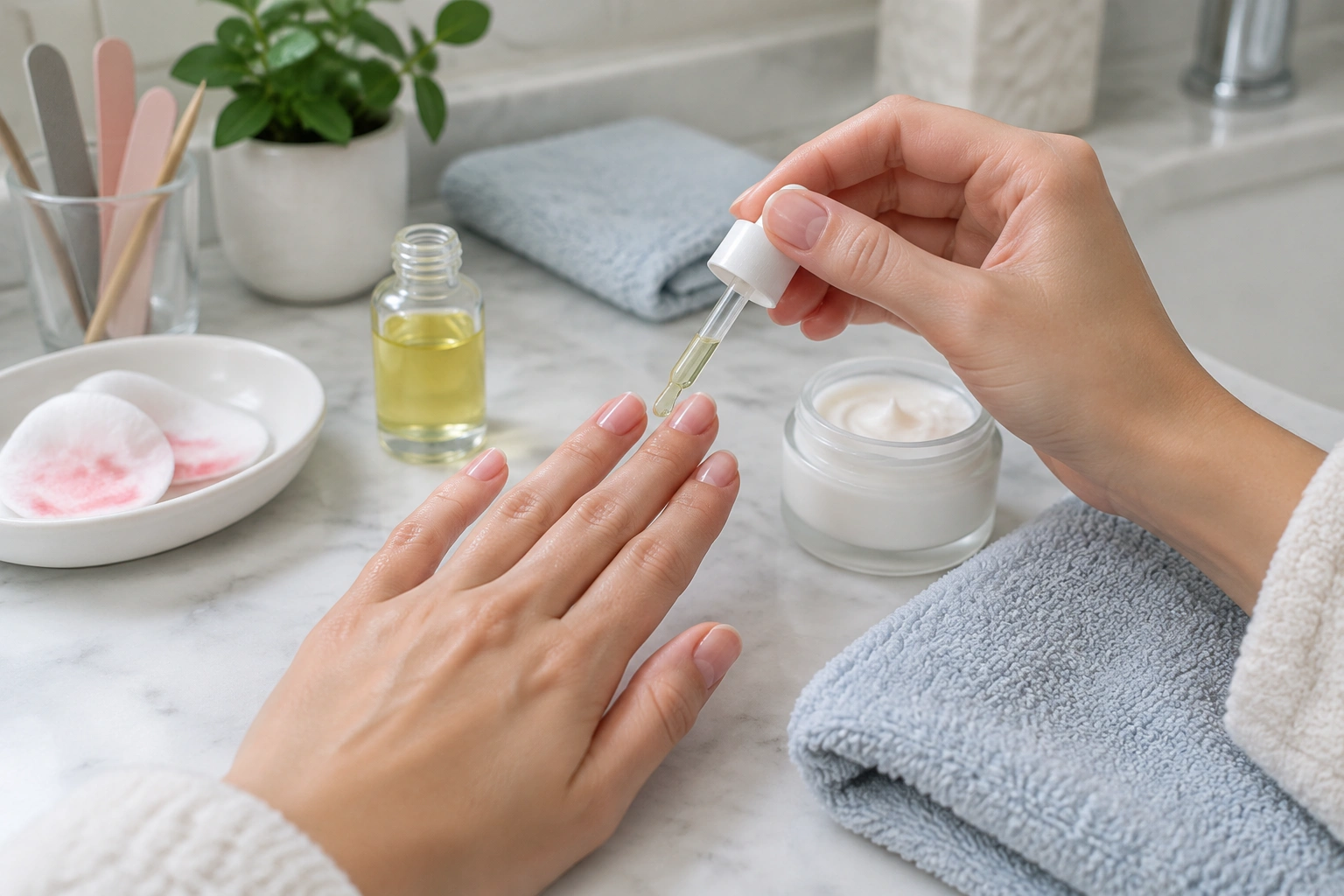
Do this next:
1. Wash your hands with mild soap and water.
2. Dry them well.
3. Apply hand cream.
4. Add cuticle oil if you have it.
5. Give your nails a break before the next manicure if they feel rough.
If the nail surface feels slightly stained after the polish is gone, you may also want to read how to remove nail polish stains from nails for a few simple cleanup tips.
A little moisture goes a long way here. Dry nails are more likely to feel brittle and look dull, so this step is worth doing even if you are in a hurry.
When to See a Nail Technician or Dermatologist
See a nail technician or dermatologist if:
– the polish seems to be gel and will not budge,
– your nails are lifting, painful, or very rough,
– your skin becomes red or irritated after trying a product,
– or you are unsure whether what you are wearing is safe to remove at home.
If you suspect a nail or skin problem rather than just stubborn polish, it is better to get professional advice than to keep experimenting.
Quick Takeaway
If you need to know how to remove nail polish without remover, the simplest answer is this: try rubbing alcohol first, then hand sanitizer if needed, and treat perfume, hairspray, toothpaste, or vinegar-lemon as backup options only. Work gently, stop when a method is not helping, and avoid scraping.
Regular polish may come off with a little patience. Gel polish usually will not. When in doubt, protect the nail and wait for proper remover.

