
How to Treat a Cut from a Nail Salon: A Practical First-Aid Guide

A small nick during a manicure or pedicure can feel alarming, especially when it happens in a place that is supposed to be clean and careful. Most minor salon cuts can be managed at home with simple first aid, but the key is to act quickly, keep the wound clean, and watch for signs that it is not healing normally.
If the cut is deep, keeps bleeding, or was caused by a tool that looked dirty, treat it more cautiously. The first few minutes matter most.
What to Do Right Away After a Nail Salon Cut
If you were cut during a salon service, pause the appointment and deal with the wound before anything else. The goal is to stop bleeding, reduce contamination, and avoid reopening the skin.
Here is the safest order:
- Apply direct pressure. Use clean gauze or cotton and press firmly on the cut. Hold steady pressure for 10 to 15 minutes without checking constantly.
- Rinse the area. Once bleeding starts to slow, clean the cut with running water.
- Wash gently with soap and water. This is usually the main home-care step for a minor cut.
- Use a bandage. Cover the area with a sterile bandage or adhesive bandage to protect it.
- Add antibiotic ointment only if it is a small, superficial cut and you tolerate it well. A thin layer can help keep the bandage from sticking, but it is not required.
- Watch it closely over the next 24 to 72 hours. Increasing redness, swelling, pain, or drainage should not be ignored.
If the cut is on the hand, finger, toe, or near the cuticle, protect it from rubbing and moisture as much as possible. A small cut on the side of a finger may only need a bandage, while a cut near the nail fold or cuticle may be more likely to reopen if it is bumped or soaked.
If the bleeding does not stop after 10 to 15 minutes of firm pressure, skip the rest of the service and get medical help.
How to Stop the Bleeding and Clean the Wound
For a shallow cut, bleeding usually settles once pressure is applied consistently. The mistake many people make is lifting the gauze every few seconds to check it. That interrupts clotting.
Pressure first, cleaning second
If the cut is actively bleeding, focus on pressure before anything else. Once the bleeding is under control, rinse the area with running water and wash gently with soap. Soap and water are generally enough for a minor skin break.
If the cut is still bleeding after 10 to 15 minutes of firm pressure, or if blood soaks through the dressing quickly, it should be checked by a clinician.
Bandage alone or ointment plus bandage?
For most tiny salon nicks, a clean bandage alone is enough. Use antibiotic ointment only if the cut is superficial, you are not sensitive to it, and you want to help prevent the bandage from sticking. If the skin becomes itchy, red, or more irritated after ointment, stop using it and switch to a plain clean bandage.
For cuts near the cuticle or nail fold, a bandage is especially helpful because that area moves a lot and can reopen easily. For a cut on the finger or toe skin, the same rule applies: protect it from friction, water, and dirt.
Should You Cover It or Leave It Open?
For a salon cut, covering the wound is usually the better choice. A bandage helps protect the area from polish, dust, water, lotion, and repeated rubbing from towels or shoes.
A simple decision rule works well:
- Cover it if the cut is on a finger, toe, or another area that will rub against tools, shoes, or clothing.
- Leave it briefly uncovered only if it is tiny, clean, and in a place where nothing will touch it.
- Use a bandage plus a thin layer of antibiotic ointment only if the skin is superficial and you are not sensitive to the product.
There is a trade-off here. A bandage alone keeps the area protected. Antibiotic ointment plus a bandage may help keep the wound moist and less likely to stick to the dressing, but some people react to topical antibiotics. If the skin becomes itchy, red, or more irritated after ointment, stop using it and switch to a plain clean bandage.
For very small cuts, a clean adhesive bandage is often enough. For a cut that is likely to get bumped or wet, the extra protection is worth it.
Minor Cut vs. Deep Cut: How to Tell the Difference
A minor salon cut is usually shallow, stops bleeding with pressure, and does not gape open. A deeper cut may look small at first but keep bleeding, separate at the edges, or hurt more than expected.
Use this comparison to decide what to do next:
| Situation | More likely minor | More likely needs medical care |
|---|---|---|
| Bleeding | Stops after steady pressure | Keeps bleeding or soaks through dressings |
| Wound shape | Small, shallow nick | Deep, gaping, or edges pull apart |
| Pain | Mild and improving | Worsening or throbbing |
| Location | Outer skin on finger or toe | Nail bed, joint, face, foot, or sensitive area |
| Cleaning | Easy to rinse and cover | Hard to clean or may contain debris |
| Healing | Improves over 1–3 days | Looks worse instead of better |
A small cut from a cuticle nipper is often manageable at home. A pedicure blade injury on the foot is more concerning, because foot wounds can be deeper than they first appear and are exposed to more friction and moisture.
Warning Signs That the Cut May Be Infected
A little tenderness right after the injury is normal. What matters is whether the wound starts to look or feel worse after the first day.
Watch for these signs:
- redness that spreads
- swelling that increases instead of settling
- warmth around the cut
- worsening pain
- pus or cloudy drainage
- red streaks
- fever
- the skin becoming more inflamed rather than less
A salon injury that becomes red, swollen, or increasingly painful should be checked by a doctor, because it may need more than home care. The concern is not just surface irritation; it can turn into a skin infection that needs prescription treatment.
For general skin infection warning signs, the American Academy of Dermatology has useful patient guidance on when a wound is no longer behaving like a simple healing cut.
When to See a Nail Technician or Doctor After a Nail Salon Cut
If the cut happened during a service, a good nail technician should stop the procedure, protect the wound, and clean the station and tools. If the injury was minor and the skin is already protected, you may be able to reschedule later once it has healed.
The salon should stop the service if:
– the cut is actively bleeding
– the area is hard to keep clean
– the tool appears contaminated
– the client is uncomfortable continuing
– the injury may have involved a dirty blade, nipper, or other shared tool
A doctor, urgent care clinician, or dermatologist becomes the better choice when:
- the cut is deep or gaping
- bleeding does not stop with pressure
- the wound is on the nail bed, toe, finger joint, or face
- there is visible swelling, heat, or pus
- pain is getting worse after the first day
- you have diabetes, poor circulation, or a weakened immune system
- the wound is on the foot and healing slowly
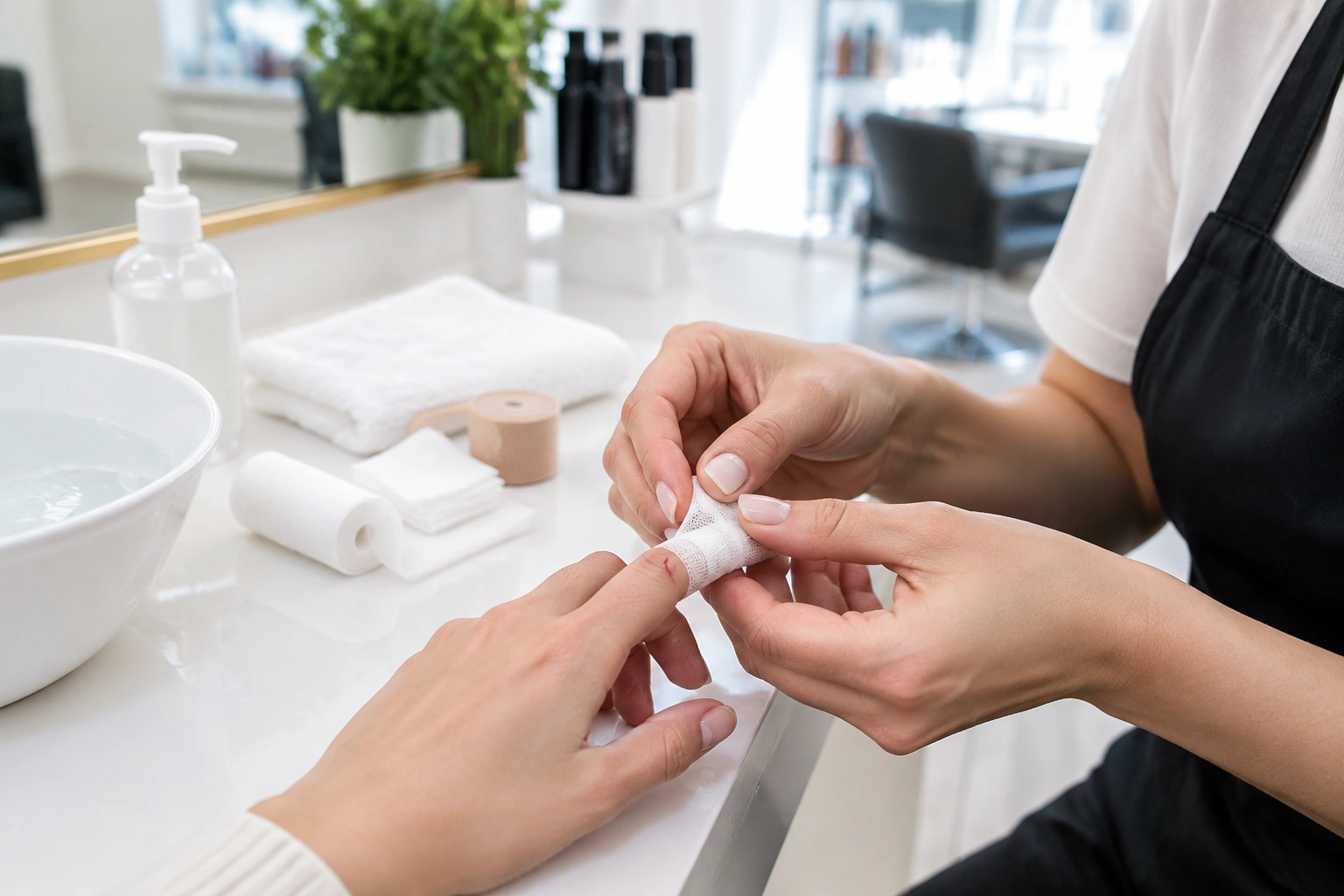
If you are unsure whether the injury is “bad enough,” ask yourself one question: is it improving hour by hour, or is it becoming more irritated and fragile? If it is the second, get it looked at.
What If the Cut Came from Dirty Tools or a Pedicure Razor?
This is where caution matters most. If the tool looked unclean, the workstation seemed unsanitary, or a pedicure razor was involved, treat the cut as higher risk.
A few practical steps help:
- clean the wound right away
- cover it promptly
- monitor it closely for the next few days
- avoid picking at it or reopening it
- document what happened in case you need to report it later
- ask the salon to stop using the tool and replace it if it may have been contaminated
If the same tool could have touched someone else’s skin or blood, it should not be used on the next client until it has been properly handled or replaced. For a wound that looks dirty or was made by a blade-like tool, medical evaluation is more important than trying to manage it like a routine nick.
Do You Need a Tetanus Booster?
A salon cut is usually a small skin break, so tetanus risk is generally low, but it is not zero, especially if the injury was dirty, deep, or puncture-like.
The simple rule is this: if you are not up to date on tetanus vaccination, or if you are not sure when your last shot was, ask a clinician promptly. They can advise based on the wound type and your vaccination history. That matters even more for dirty or puncture-like wounds.
Do not guess. If your vaccination status is unknown or out of date, that is enough reason to ask.
Should You Report or Document the Injury with the Salon?
Yes, at least in a basic, practical way. You do not need a legal battle to document a salon injury. You just need a clear record.
Keep note of:
- the date and time
- what service you were receiving
- which tool caused the cut, if known
- whether the tool seemed clean
- what the salon did immediately afterward
- photos of the wound, if you can take them safely
This matters because details fade quickly. If the wound later becomes infected or you need medical care, those notes help you explain what happened. It also gives the salon a chance to review hygiene and prevent the same problem for the next client.
How to Prevent Cuts During Future Manicure or Pedicure Visits
Prevention is mostly about asking better questions and watching for good technique.
Before the service, notice whether the technician:
- opens clean tools in front of you
- uses gentle pressure around the cuticle area
- avoids aggressive cutting
- pauses if your skin looks thin or irritated
If cuticle care is needed, pushing back softened cuticle is often safer than cutting it. That does not mean cuticle cutting is never done, but it should be minimal and controlled. Razor-style pedicure blades, sometimes called credo blades, deserve extra caution because they can create avoidable skin breaks.
You can also protect yourself by speaking up early. If the area feels sore, the technician is pressing too hard, or the skin is already raw, ask them to stop and adjust. A few seconds of communication can prevent a much bigger problem.
For a related read on infection concerns after salon injuries, see this NailPrime guide on nail salon cuts and what to worry about. If your concern is whether a cut could expose you to bloodborne illness, this NailPrime article on HIV and nail salon cuts may help answer that specific question.
When It’s Safe to Return for Another Salon Service
Return only when the skin is closed, calm, and no longer tender enough to be irritated by soaking, filing, or pressure. If the cut is still open, weeping, or easily reopened, another manicure or pedicure can slow healing and increase infection risk.
A good rule is simple: if you would need a bandage to get through the appointment, wait a little longer. Once the skin has healed enough that normal touch does not sting, you are in a much safer place to return.
Quick FAQ
Should I use soap and water or something stronger first?
Use running water and gentle soap first for a minor cut. Save antiseptic or other products for cases where they are specifically recommended.
Can I keep the manicure going after a cut?
Only if the wound is cleaned, covered, and not actively bleeding. If it keeps bleeding or the skin is in a sensitive spot, stop the service.
Is antibiotic ointment always necessary?
No. A clean bandage may be enough for a very small cut. Ointment is optional and can irritate some people.
What if the cut was near the cuticle?
Treat it like a wound that can reopen easily: clean it, cover it, and avoid soaking or pressure until it settles.
What if the tool looked dirty?
Clean the wound, document what happened, and get medical advice sooner if the cut is deep, dirty, or not improving.
A salon cut is usually minor, but it deserves proper care. Clean it well, cover it, and get help if bleeding will not stop or the wound starts to worsen.

