
Why Kids Bite Their Nails: Common Causes and Practical Ways to Help Them Stop

If you’ve ever watched a child chew on their nails during homework, screen time, or a tense moment, you’re not alone. Nail biting, or onychophagia, is a very common childhood habit. In many kids, it’s less about “bad behavior” and more about boredom, stress, concentration, or simply a learned self-soothing habit.

The good news: most nail biting can be managed at home with calm, consistent strategies. The key is to figure out why your child is doing it before choosing how to respond.
Why Kids Bite Their Nails
Children usually bite their nails for one of a few familiar reasons:
- Boredom: The hands need something to do, especially during quiet activities.
- Stress or worry: Nail biting can become a small, automatic way to release tension.
- Concentration: Some kids bite without noticing when they’re focused on homework, reading, or gaming.
- Self-soothing: The motion and sensation can feel calming.
- Habit carryover: A child who once sucked a thumb may later shift to nail biting.
Nail biting can also run in families, and children may copy what they see at home. If a parent, sibling, or caregiver bites nails, a child may learn the habit simply by watching.
As a pediatrician or child psychologist might explain, this is usually a pattern, not a personality flaw. Once a habit becomes automatic, a child may not even realize they’re doing it.
Is Nail Biting Normal or a Sign of Something More?
For many children, occasional nail biting is a normal habit and not a crisis. It can be especially common in preschoolers and school-age kids, and it may show up during stressful times, school transitions, or periods of boredom.
A useful rule of thumb:
- Usually developmentally common: the child bites only sometimes, there is little or no skin damage, and the habit does not seem tied to intense distress.
- More concerning: the child bites often, the skin is sore or bleeding, the habit seems hard to control, or it appears linked to anxiety, compulsive behavior, or other repetitive habits like skin picking.
Nail biting alone does not automatically mean a child has an anxiety disorder or another diagnosis. But if the behavior is intense, persistent, or happening alongside clear distress, it’s worth taking seriously.
What Triggers Nail Biting in Kids
The fastest way to reduce nail biting is to notice when it happens.
Try tracking the habit for a week. You do not need a complicated chart. A few notes are enough:
- Time: before school, after school, bedtime, car rides
- Activity: homework, TV, reading, waiting in line
- Mood: tired, worried, bored, frustrated
- Setting: at home, at school, in public, in the car
- Transitions: getting dressed for school, switching from play to dinner, leaving a friend’s house
- Social stress: before a playdate, after a disagreement, during a busy classroom moment, or when trying to fit in
Example: if your child bites only while doing math homework, the trigger may be concentration or stress around difficult tasks. If it happens mostly during screen time, the hands may simply be idle. If it shows up at bedtime, the trigger may be anxiety or winding down after a long day.
This matters because a child who bites during boredom may need a fidget tool, while a child who bites during stress may need reassurance and a different coping habit.
How to Help a Child Stop Biting Their Nails
The most effective home strategies usually focus on awareness, replacement, and reinforcement.
1. Give short, calm reminders
A simple cue works better than a long lecture. Try a neutral phrase like, “Hands down,” or “Let’s keep your fingers busy.”
The goal is not to scold. It is to help the child notice the habit before it becomes automatic.
2. Replace the habit with something else
Children often need a physical substitute. Options include:
- a small fidget toy
- a stress ball
- a textured keychain
- holding a pencil or crayon during homework
- keeping hands in pockets or folded during waiting periods
Replacement works best when the substitute is easy to reach. If the child has to search for it, they’ll usually go back to biting.
3. Use positive reinforcement
Praise the behavior you want to see. Be specific: “You kept your hands off your nails during dinner,” or “You noticed right away and used your fidget.”
A sticker chart can help younger children. Older kids may prefer a simple streak tracker or a small privilege tied to progress, such as choosing the family movie after a week of improvement.
4. Reduce the triggers you can control
If a child bites during homework, build in short breaks. If the habit shows up in the car, keep a fidget in the seat pocket. If bedtime is the danger zone, add a calming routine before lights out.
5. Keep nails trimmed and smooth
Short, smooth nails are less tempting to chew. This is not a cure, but it removes one of the small triggers that can keep the habit going. If you need a safe, child-friendly approach to trimming, our guide on how to take care of kids’ nails can help.
What Works Better: Rewards, Reminders, or Bitter Nail Polish?
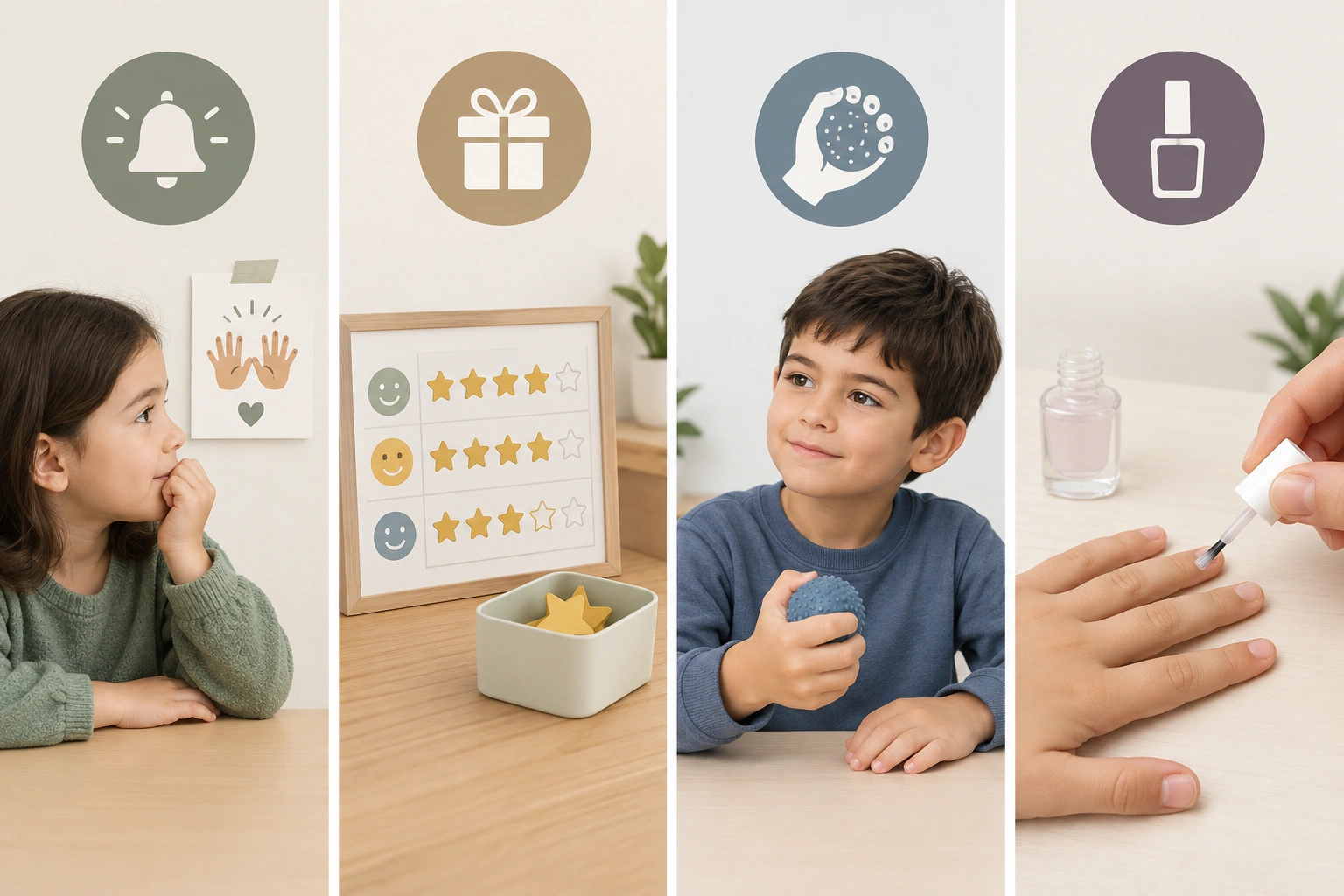
Each method has a place, but they work differently.
| Method | Best for | Strengths | Trade-offs |
|---|---|---|---|
| Reminders | Younger kids, or children who bite without noticing | Simple, immediate, easy to use anywhere | Can become nagging if overused |
| Rewards | Children who respond well to goals and praise | Builds motivation and confidence | Works best when goals are small and realistic |
| Habit replacement | Most children, especially when biting happens during boredom or focus | Addresses the behavior itself | Takes consistency and planning |
| Bitter nail polish | Some older children who understand the purpose and tolerate the taste | Creates a quick deterrent | Not ideal for every child; may not address the trigger |
Bitter nail polish can help some children, but it is not the best first choice for every family. For very young children, or for kids who are still putting fingers in their mouths often, behavioral strategies are usually a better starting point. If you do try a deterrent, it should be used with caution and only when the child is old enough to understand why it’s there. In many cases, habit replacement and positive reinforcement work better first.
What Not to Do
A few common approaches usually backfire:
- Punishment: It may increase stress, which can make the habit worse.
- Shaming: Comments like “That’s gross” or “Stop doing that” can make a child hide the behavior instead of changing it.
- Constant reminders: Too many corrections can turn the habit into a power struggle.
- Forcing the child to stop in public: This can create embarrassment and make the habit more automatic.
- Using deterrent products too early: Bitter products are not a good fit for very young children who may not understand them.
- Ignoring injury: If the skin is bleeding or sore, the child needs more than a casual “try harder.”
Children change habits faster when they feel supported, not embarrassed.
When Nail Biting Can Cause Damage
A little nail biting may seem harmless, but repeated biting can cause real problems. According to Alberta Health, nail biting can make fingertips red and sore and can irritate the cuticles; repeated biting may also increase the chance of skin or mouth irritation and, in some cases, infection. Long-term biting can also interfere with normal nail growth and leave nails looking oddly shaped. You can read their care guidance on nail-biting in children.

Watch for:
- bleeding around the nails
- swelling or pus
- redness that gets worse
- pain when touching the fingers
- mouth sores or irritated gums
- nails that look misshapen over time
If the habit has moved from “annoying” to “injuring,” the response should shift from casual reminders to active intervention.
Age-Specific Tips for Toddlers, School-Age Kids, and Teens
Toddlers and preschoolers
At this age, the habit is usually handled best with redirection. Toddlers do not have the self-control to manage a habit through willpower alone. Offer a toy, a snack, a comfort item, or another hand activity. Keep your tone gentle and brief.
School-age children
This is the age where patterns become easier to spot. Many children can understand a simple goal, like “No nail biting during homework” or “Use your fidget when watching TV.” Sticker charts and praise often work well here because children can see progress.
Teens
Older children usually do better with privacy and autonomy. Public reminders may feel embarrassing. Teens often respond better to self-monitoring, a discreet fidget, or a personal goal tied to a meaningful reason, such as wanting healthier-looking nails or avoiding sore fingertips before sports or school events.
When to Talk to a Pediatrician, Dermatologist, or Child Psychologist
If the nail biting has caused repeated bleeding, damaged the nail shape, or led to skin irritation that does not improve, a professional evaluation is a smart next step. A pediatrician is often the best first call, especially if you’re not sure whether the habit is part of a broader stress or behavior issue. A dermatologist can help if there is persistent skin or nail damage, swelling, discoloration, or possible infection.
You should also seek help if:
- the child cannot seem to stop despite repeated efforts
- the habit appears linked to significant anxiety or distress
- nail biting is happening alongside skin picking, mouth sores, or other repetitive behaviors
- the child is embarrassed, withdrawn, or upset about the habit
- the behavior is interfering with sleep, school, or social situations
If the habit seems driven by worry, perfectionism, or compulsive behavior, a child psychologist may be the right next step. If you’re unsure where to start, a pediatrician can help decide whether behavioral support or medical evaluation makes the most sense.
A Simple Plan Parents Can Use This Week
If you want a practical place to begin, try this:
- Notice the pattern for a few days.
- Pick one common trigger, like homework or screen time.
- Add one replacement habit, such as a fidget.
- Give one clear reminder, not ten.
- Praise any stretch of success, even a short one.
That small, steady approach is often more effective than trying to stop every bite at once.
FAQs
Is nail biting in kids always a sign of anxiety?
No. Boredom, concentration, self-soothing, and habit can all play a role. Anxiety is only one possible trigger.
Should I use bitter nail polish on my child?
It can help some older children, but it is not the best fit for every age or temperament. Habit replacement and positive reinforcement are often better first steps.
How long does it take to stop?
That varies. Some children improve quickly once the trigger is addressed, while others need weeks of repetition and reminders.
Can nail biting spread germs?
It can increase the chance of irritation and may contribute to infection if the skin is broken, but the exact risk depends on how severe the biting is and whether the skin is damaged.
When should I worry?
Focus on the effects: bleeding, infection, pain, nail damage, or signs that the behavior is tied to distress. If you’re unsure, start with a pediatrician.
For more practical nail care guidance for children, our article on how to care for children’s nails safely at home is a helpful next read.

