
Acetone vs Non-Acetone Nail Polish Remover: A Beginner’s Guide to Choosing the Right One

If you’re trying to decide between acetone and non-acetone remover, here’s the simple version: acetone is usually the faster, stronger choice, while non-acetone is often the gentler one. That makes acetone a better fit for stubborn polish, glitter, and many long-wear formulas, while non-acetone is often fine for regular polish when you want a softer option for natural nails.

The best remover is the one that matches what’s on your nails. If you choose based only on “gentle” or “strong,” you can end up with a product that works poorly and makes removal more frustrating than it needs to be.
Quick Answer: Which Nail Polish Remover Should You Choose?
If you wear regular nail polish and want the gentlest practical option, try non-acetone remover first.
If you wear glitter polish, dark polish, gel polish, acrylic-related products, or thick layers of color, acetone is usually the more useful pick.
A simple rule for beginners:
- Choose non-acetone if your main goal is gentler removal and you don’t mind a little extra time.
- Choose acetone if you want faster removal or need to deal with tougher polish types.
- If you only want one bottle for mixed use, buy acetone if you wear gel, glitter, or dark polish often; buy non-acetone if you mostly wear regular polish and want a gentler option.
If you want a deeper look at how removers can affect nails, this guide on whether nail polish remover damages nails is a helpful next read.
What Is Acetone Nail Polish Remover?
Acetone is a strong solvent that breaks down nail polish quickly. In plain language, it helps dissolve the polish so you can wipe it away instead of scrubbing hard.
That’s why acetone is often the remover people reach for when polish is chipped, layered on thick, or packed with glitter. It tends to work with less rubbing, which matters because aggressive scrubbing can rough up the nail surface and surrounding skin.
Acetone is also commonly used when removing harder-to-budge products, including some gel and enhancement-related products. That doesn’t mean it should be used carelessly, though. It is more likely to feel drying than non-acetone, especially if you use it often or leave it on the skin for longer than needed.
What Is Non-Acetone Nail Polish Remover?
Non-acetone remover is usually made with other solvents, often including ingredients such as ethyl acetate or isopropyl alcohol. It still removes nail polish, but it usually works more slowly because it is less aggressive at breaking down polish, so it may need more wiping or soaking.
For beginners, non-acetone is often the “softer-feeling” option. It can be a nice choice if you wear regular polish and your nails or skin get dry easily.
The trade-off is that it may struggle with tougher formulas. If you’ve ever sat there rubbing the same nail over and over, non-acetone may have been the reason.
Acetone vs. Non-Acetone: The Main Differences
Here’s the simplest way to compare them.
| Feature | Acetone Remover | Non-Acetone Remover |
|---|---|---|
| Speed | Usually faster | Usually slower |
| Strength | Stronger on stubborn polish | Better for lighter, regular polish |
| Drying effect | More likely to feel drying | Often feels gentler |
| Best for | Glitter, dark polish, gel, tougher removal jobs | Regular polish, light cleanup, sensitive-feeling nails |
| Everyday convenience | Efficient when you need results fast | Better when you prefer a softer removal routine |
The biggest decision is not which one is “better” overall. It’s which one fits the polish you actually wear.
For example, if you paint your nails with a basic cream polish once a week, non-acetone may be enough. If you love glitter top coats or long-wear formulas, acetone will usually save you time and frustration.
Which Remover Works Best for Each Polish Type?
Regular Nail Polish
For standard polish, both removers can work.
- Non-acetone is often fine if the polish is not especially dark or layered.
- Acetone is useful if the polish is stubborn, deeply pigmented, or you want quicker cleanup.
If you’re new to polish removal, this is where many people start. Regular polish is the easiest place to see the difference between the two products without dealing with extra complications.
Glitter Polish
Glitter polish is where acetone usually earns its place.
Glitter particles can cling to the nail, which means a mild remover may need a lot of rubbing. That extra friction is often more annoying than the remover itself. Acetone can make the process more manageable because it tends to break down the polish faster.
Gel Polish
Gel polish is different from regular polish, so don’t expect non-acetone remover to behave the same way.
Non-acetone remover often struggles here. Acetone is usually the more practical option for at-home gel removal, though gel products may still require proper soaking time and careful handling according to the product instructions. If the gel is not coming off easily, do not force it by scraping aggressively.
Acrylics and Other Nail Enhancements
This is the area where you should slow down and check what you’re wearing.
Acetone is commonly used for some enhancement-related removal, but it can damage or cloud certain artificial materials if they are not acetone-safe. That includes some press-on nails, tips, wraps, and decorative finishes. Non-acetone is not automatically safer just because it feels gentler. In some cases, it simply won’t do the job well.
If you wear acrylics, press-ons, or another enhancement, follow the removal directions for that specific product first. As a beginner rule of thumb, many acrylic systems and gel-based enhancements are designed for acetone-based removal, while some press-ons and softer artificial materials are not. When in doubt, check the brand’s instructions before soaking or wiping.
If you’re unsure, the FDA’s cosmetics guidance is a good place to look for general safety information about products used on the body.
Press-On Nails
Press-ons can be tricky because remover choice depends on how they were applied.
If you want to keep the press-on intact for reuse, acetone may not be the best idea because it can weaken adhesives and damage some press-on materials. If your goal is simply removal, follow the brand’s instructions rather than guessing. A gentle soak approach may work better than rushing with the strongest remover you can find.
Is Acetone Bad for Natural Nails?
Acetone is not automatically “bad” for natural nails. The bigger issue is dryness.
Natural nails and the skin around them can feel dry after acetone use, especially if you use it often. That dryness can make nails look dull or feel a little rough, but that is not the same thing as permanent damage.
A practical way to think about it: acetone is a tool, not a problem by itself. The results depend on how often you use it, how long it stays on your skin, and how well you care for your nails afterward.
If you want to understand the difference between normal dryness and avoidable damage, this article on nail polish remover and nail health can help.
How to Remove Polish Without Drying Out Your Nails
You can make either remover feel less harsh with a few simple habits.
Use the remover only as long as needed
Don’t soak your skin longer than necessary. The goal is to loosen polish, not bathe your hands in solvent.
Press, then wipe
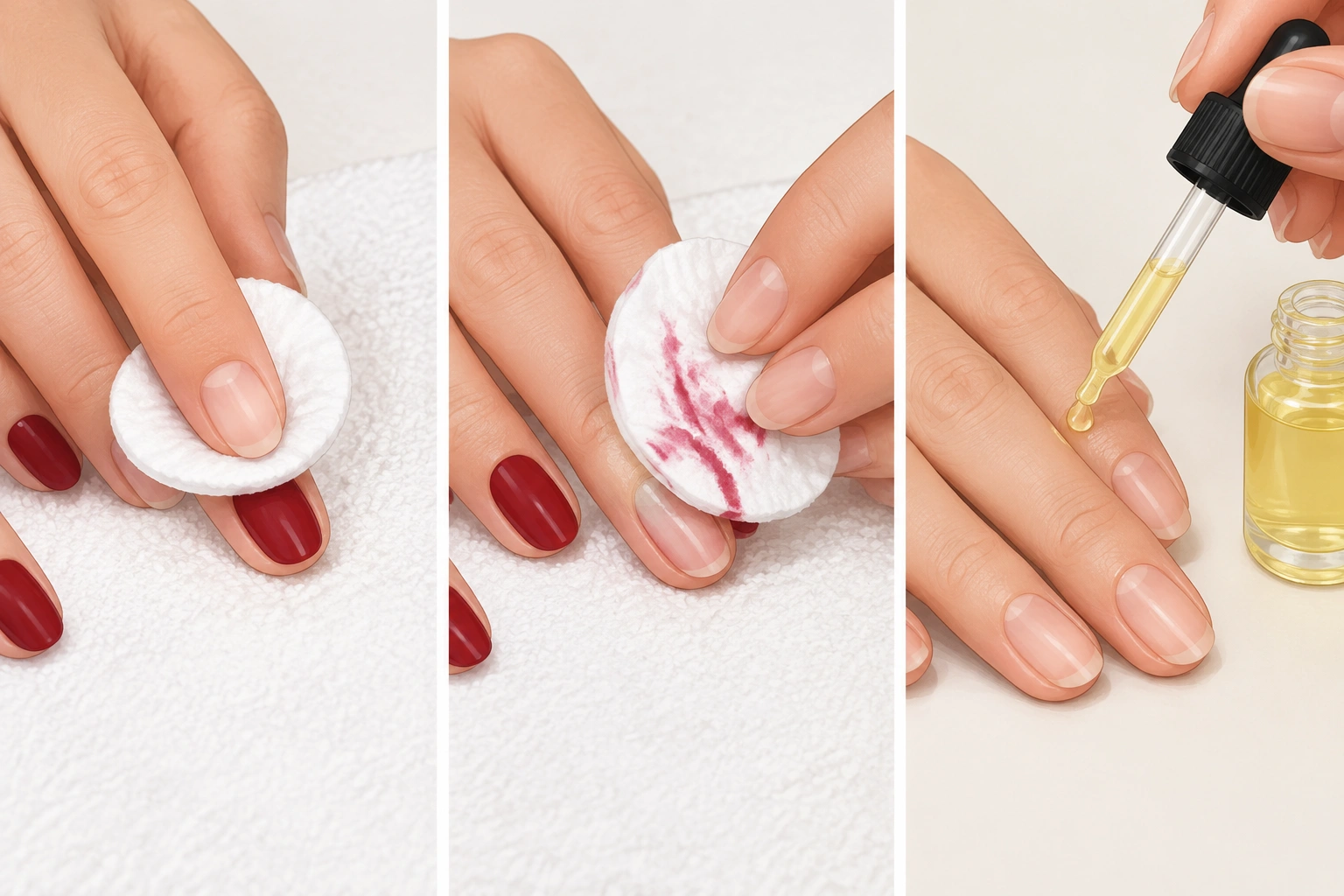
Instead of scrubbing back and forth, hold the cotton pad on the nail for a moment, then wipe. That usually removes polish more cleanly and reduces friction.
Work on one hand at a time
This helps you stay organized and prevents remover from sitting around on the skin while you deal with the other hand.
Wash and moisturize after removal
After the polish is off, wash your hands and apply hand cream or cuticle oil. This is one of the easiest ways to make acetone or non-acetone removal feel less drying.
A little cuticle oil goes a long way after removal, especially if your nails tend to feel rough. If you’re doing repeated removals, try to avoid using acetone multiple times in the same day, and consider wearing gloves for other cleanup tasks so your hands get a break. If you’re also trying to keep your manicure smoother overall, these tips on preventing nail polish bubbles may help your next application look better from the start.
When to Choose Acetone vs. Non-Acetone
Here’s a quick decision shortcut.
Choose acetone if:
- You need polish off quickly
- You wear glitter or dark polish often
- You use gel or other tougher formulas
- You don’t mind a more drying remover if it works faster
Choose non-acetone if:
- You mostly wear regular polish
- Your nails and skin dry out easily
- You prefer a gentler-feeling removal routine
- You don’t mind spending a little more time removing polish
If you only buy one remover, think about the polish you wear most often. That matters more than the label on the bottle.
Common Mistakes to Avoid
Using non-acetone on gel and expecting fast results
This is one of the most common beginner frustrations. If the remover is not working well, the product may simply not match the polish type.
Scrubbing too hard
If you have to rub aggressively, pause and reassess. The problem may be the remover, not your effort.
Forgetting about dryness afterward
Even gentler removers can leave nails feeling dry. Moisturizer and cuticle oil are part of the removal process, not an optional extra.
Using acetone on the wrong enhancement
Some nail enhancements and press-ons can be affected by acetone. Check the product instructions before soaking or wiping.
Choosing by price alone
A cheaper bottle is not always the better buy if it takes twice as long or doesn’t remove what you actually wear.
When to See a Nail Technician or Dermatologist
If your nails become painful, peel significantly, or your skin reacts badly to a remover, stop using it and get professional advice.
You should also ask a nail technician for guidance if you wear enhancements and are not sure how to remove them safely. A dermatologist is the right person to contact if you suspect an allergy or ongoing skin irritation.
For general household exposure and product safety basics, the CDC’s consumer guidance is a useful reference point for safe product handling habits.
Final Takeaway
If you want the shortest answer possible, here it is: acetone is usually the stronger, faster remover, while non-acetone is usually the gentler one. For regular polish, non-acetone may be enough. For glitter, gel, and tougher formulas, acetone is often the more practical choice.
The best beginner strategy is to match the remover to the polish you wear most, then protect your nails afterward with moisturizer or cuticle oil. If you use remover often, keep one bottle of acetone for tougher manicures and one non-acetone option for everyday regular polish so you can choose based on the job instead of forcing one product to do everything.

