
Cats are curious. If you leave an emery board, glass file, or manicure kit on a table, your cat may sniff it, paw at it, chew the edge, or even bite off a piece.
So, can cats eat nail files? No. Nail files are not food, and swallowing part of one can create a serious safety problem.
The biggest concern is usually not whether a nail file is “edible.” It is whether a swallowed piece can irritate the mouth, become stuck in the throat, injure the digestive tract, or cause an intestinal blockage. Veterinary guidance warns that swallowed foreign objects can sometimes become life-threatening if they obstruct or damage the digestive tract.
This guide explains what to do if your cat chews a nail file, which types may be more concerning, what warning signs to watch for, and when veterinary care is the safest choice.
Quick Answer
No, cats should not eat nail files. A chewed or swallowed nail file can cause mouth injuries, choking, digestive irritation, or intestinal obstruction. Glass and metal pieces may be especially concerning because they can be sharp. If you think your cat swallowed any part of a nail file, contact a veterinarian promptly.
Why Would a Cat Chew a Nail File?
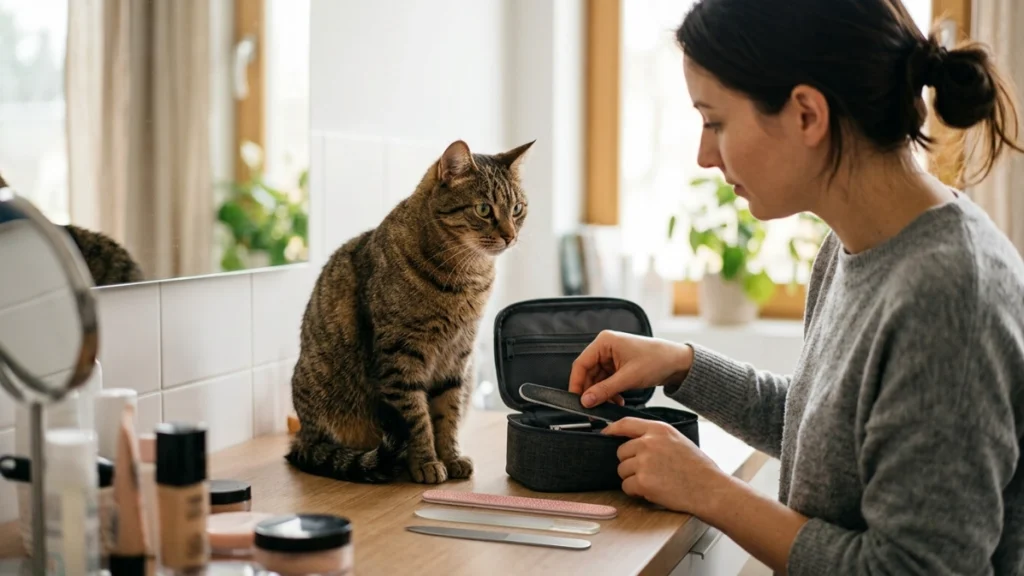
Most cats are not deliberately trying to eat manicure tools.
A nail file may simply be interesting because it has an unusual texture, smell, shape, or movement. Cats commonly investigate unfamiliar objects with their mouths.
A disposable emery board can be especially tempting because it is lightweight and easy to bat around. A cat may grab one from a coffee table or manicure bag and start chewing the corner.
The problem begins when chewing turns into swallowing.
Veterinary sources describe cats swallowing many kinds of non-food objects, including paper, rubber bands, toys, thread, and other household materials. Some objects pass through the digestive system, while others become lodged and cause an obstruction. VCA Animal Hospitals’ guide to foreign-body ingestion in cats explains that the size, shape, and characteristics of the swallowed object help determine the risk.
What Makes a Nail File Dangerous to a Cat?
A nail file presents several possible hazards depending on its material and how much was swallowed.
It Cannot Be Digested Like Food
A nail file is a grooming tool made from materials designed to stay firm or abrasive during use.
A cat’s digestive system cannot simply turn a piece of glass, metal, abrasive board, foam, or similar material into food.
A small, smooth object may occasionally pass through the digestive tract, but there is no safe way to assume that will happen at home. According to the Merck Veterinary Manual’s information on gastrointestinal obstruction, foreign objects can cause partial or complete blockages, and very small objects can still be problematic in small animals.
Rough Edges Can Irritate the Mouth
Nail files work because their surfaces are abrasive.
Aggressive chewing may therefore irritate a cat’s gums, tongue, or other tissues inside the mouth.
Broken files may create an additional mechanical injury risk.
Pieces Can Become Stuck
The most serious concern is a piece lodging somewhere in the digestive tract.
A gastrointestinal obstruction interferes with the normal movement of food and fluid. Veterinary guidance lists vomiting, reduced appetite, abdominal discomfort, lethargy, diarrhea, and difficulty passing stool among possible signs.
Do not wait for every symptom to appear before contacting a veterinarian if you actually saw your cat swallow a piece.
Are Some Nail File Types More Dangerous Than Others?
The material matters, although no nail file should be treated as safe for chewing or eating.
| Nail file type | Main concern if chewed or swallowed | What to do |
|---|---|---|
| Emery board/cardboard file | Pieces may be swallowed; abrasive coating and adhesives vary | Remove it and check whether any pieces are missing |
| Foam buffer | Soft-looking pieces are still non-food foreign material | Contact a vet if a noticeable piece may have been swallowed |
| Glass/crystal file | A broken file can create sharp fragments | Treat suspected ingestion as urgent |
| Metal file | Hard or sharp material may injure the mouth or digestive tract | Contact a veterinarian promptly |
| Electric-file bit | Small, rigid attachment may be swallowed or become lodged | Seek veterinary advice promptly |
Emery Boards
Disposable emery boards may look relatively harmless because they contain a flexible board rather than a solid piece of metal or glass.
That does not make them edible.
They also contain abrasive surfaces and may use adhesives or layered materials that vary by manufacturer. If your cat destroyed an emery board, try to determine whether you can account for the missing pieces.
Glass or Crystal Files
A chipped or broken glass file deserves extra caution.
Sharp foreign objects can potentially damage tissues as they move through the body. If part of a glass nail file appears to be missing and you suspect your cat swallowed it, contact a veterinarian rather than waiting to see whether symptoms develop.
Metal Nail Files
Metal files are durable during normal manicure use, but they are not suitable cat toys.
A broken tip or small metal piece may have sharp edges. The safest response to suspected ingestion is professional veterinary advice.
Foam Buffers
Foam buffers can appear soft enough that a pet owner may be less worried.
However, softness does not guarantee safe passage through a cat’s digestive system. A chunk of foam or backing material is still a foreign object.
What Should You Do If Your Cat Ate a Nail File?
If you actually saw your cat swallow part of a nail file—or you find a badly chewed file with material missing—take the situation seriously.
1. Remove the Remaining Nail File
Move the damaged file and the rest of your manicure supplies out of reach.
Do not let the cat continue chewing while you investigate.
2. Identify the Material
Check whether the file is:
- Cardboard or emery board
- Foam
- Glass or crystal
- Metal
- Ceramic
- An electric-file attachment
Knowing the material can help your veterinarian understand the potential risk.
3. Estimate How Much Is Missing
Do not spend so long reconstructing the file that you delay veterinary care.
However, if possible, note whether the missing section is a tiny corner or a substantial piece.
Take a photograph of the remaining file.
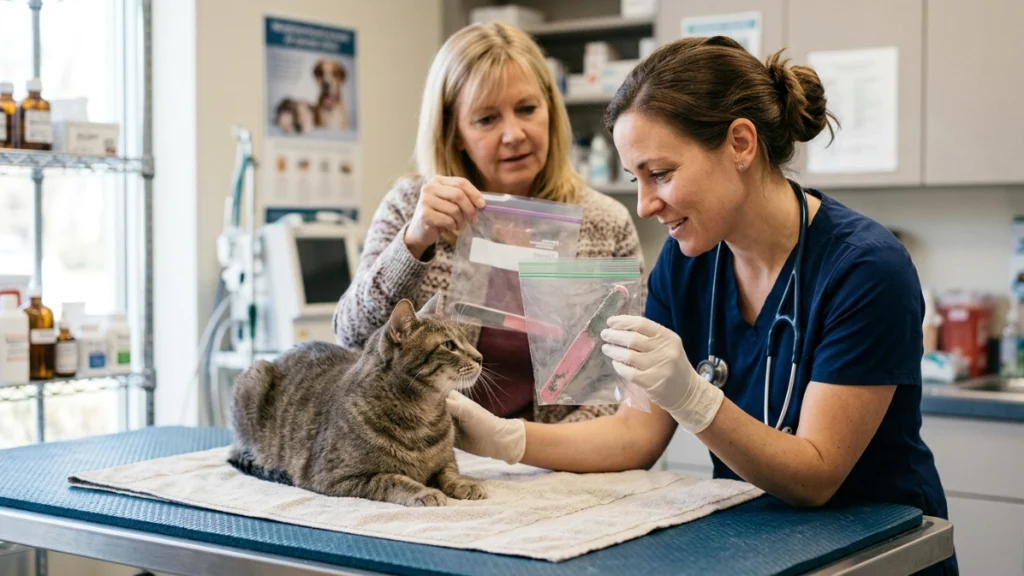
4. Save the File and Packaging
Keep the damaged file in a bag or container.
If you still have the package, save that too. Product information may help identify the material or coating.
5. Call Your Veterinarian
Explain:
- Your cat’s approximate weight and age
- What type of nail file was involved
- How much may be missing
- When the incident happened
- Whether your cat has vomited or shown other symptoms
- Whether the piece could be sharp
The veterinarian can determine whether home observation, examination, imaging, or another approach is appropriate.
Veterinarians commonly use physical examination, X-rays, ultrasound, and sometimes endoscopy when investigating suspected foreign-body ingestion.
Expert Tip: Photograph the damaged nail file next to an intact file or ruler and bring the remaining pieces with you. Giving your veterinarian a clear idea of the object’s size and material can be more useful than simply saying, “My cat ate part of a nail file.”
Do Not Try to Make Your Cat Vomit at Home
This is one of the most important mistakes to avoid.
Do not give your cat hydrogen peroxide, salt, mustard, or another home remedy in an attempt to cause vomiting.
The ASPCA advises pet owners to contact a veterinarian or poison-control professional rather than attempting home vomiting methods. It specifically notes that hydrogen peroxide should not be given to cats because it can irritate and injure their stomach and esophagus. ASPCA guidance on inducing vomiting in pets explains why professional advice should come first.
A sharp object may also create additional injury if forced back through the esophagus.
Warning Signs After a Cat Swallows a Foreign Object
A cat with a gastrointestinal foreign body may not display exactly the same symptoms as another cat.
Possible warning signs include:
- Vomiting
- Repeated retching
- Reduced or absent appetite
- Lethargy
- Abdominal tenderness or pain
- Hiding or acting unusually
- Diarrhea
- Straining to defecate
- Passing very little stool
- Drooling
- Pawing at the mouth
- Difficulty swallowing
- Sudden behavioral changes when the abdomen is touched
VCA lists vomiting, abdominal pain, decreased appetite, straining to defecate, lethargy, and behavioral changes among signs associated with foreign-body ingestion.
A gastrointestinal obstruction can become an emergency because prolonged blockage can interfere with blood supply and damage intestinal tissue.
Difficulty breathing, collapse, repeated vomiting, severe pain, or suspected swallowing of a sharp glass or metal fragment warrants urgent veterinary attention.
What Will a Veterinarian Do?
The exact approach depends on the object, your cat’s symptoms, and how long ago the ingestion occurred.
A veterinarian may first perform a physical examination and ask what you saw.
Diagnostic testing may include:
- Abdominal X-rays
- Ultrasound
- Blood tests
- Additional imaging
- Endoscopic examination in selected cases
Some small objects may move through the digestive system without surgery, but veterinary monitoring is important when that approach is chosen.
If a foreign body creates an obstruction or cannot safely pass, endoscopic or surgical removal may be necessary. Merck notes that detected foreign bodies may require endoscopic or surgical retrieval depending on their location, shape, clinical signs, and ability to progress through the gastrointestinal tract.
How Much Can Treatment Cost?
There is no single price for treating nail-file ingestion.
Cost depends on what your cat needs.
A basic veterinary examination is very different from emergency imaging, hospitalization, endoscopy, or abdominal surgery.
Factors that can affect the bill include:
- Your location
- Regular clinic versus emergency hospital
- X-rays or ultrasound
- Blood testing
- Sedation or anesthesia
- Endoscopic removal
- Surgery
- Hospitalization
- Medication and follow-up appointments
Early evaluation may also give your veterinarian more options than waiting until a cat becomes seriously ill.
If cost is a concern, tell the veterinary clinic when you call. Ask for an estimate for the recommended diagnostic steps and whether payment options are available.
What If My Cat Only Chewed the Nail File?
Chewing and swallowing are not necessarily the same situation.
If the nail file is still completely intact, your cat is acting normally, and you are confident nothing was swallowed, remove the file and monitor the cat.
Check for obvious signs such as:
- Bleeding from the mouth
- Excessive drooling
- Repeated pawing at the mouth
- Refusal to eat
- Visible mouth discomfort
- Broken glass or sharp edges
Do not force your fingers deep into a frightened cat’s mouth while searching for fragments.
If part of the file is missing, you cannot account for debris, or you are unsure whether your cat swallowed something, calling your veterinarian is the safer choice.
How to Keep Cats Away From Nail Files
Prevention is much easier than dealing with a swallowed grooming tool.
Store Manicure Tools in a Closed Container
Keep files, clippers, buffers, cuticle tools, and electric-file bits inside a manicure case or drawer with a secure closure.
Do not leave them loose on a vanity.
Clean Up After Filing
Nail-care sessions often leave small pieces of disposable files, artificial nail material, cotton, foil, press-on nails, or other debris nearby.
Clean the surface and floor when you finish.
Replace Damaged Files
A cracked glass file or peeling emery board is more likely to shed pieces.
Discard damaged tools safely.
If you want guidance on choosing files for your own manicure, remember that tool material, grit, durability, and cleanability matter—but whichever type you use, it should remain inaccessible to pets.
Give Your Cat Appropriate Toys
If your cat regularly steals beauty tools, hair ties, cotton swabs, or other household items, provide safer toys and store tempting objects away after use.
Repeated chewing or swallowing of non-food items also deserves a conversation with your veterinarian.
Common Mistakes to Avoid
Pet emergencies can make people react quickly, but a few choices can make the situation worse.
Avoid these mistakes:
- Waiting for severe symptoms after witnessing ingestion. A cat can have a foreign object before obvious illness develops.
- Assuming cardboard or foam is automatically harmless. It is still material the body cannot use as food.
- Trying to induce vomiting at home. Cats should not be given hydrogen peroxide for this purpose.
- Throwing the damaged file away immediately. Save it so the veterinarian can see its material and missing section.
- Assuming a tiny cat can safely pass any tiny object. Object shape and location matter as well as size.
- Ignoring broken glass or metal. Sharp fragments deserve prompt professional attention.
- Using a nail technician as a pet-safety resource. Nail professionals understand manicure tools; veterinarians diagnose and treat animals.
When to See a Nail Technician or Dermatologist
For your own nails, a licensed nail technician can help with manicure technique, tool choice, shaping, and routine cosmetic care. Persistent nail pain, infection, discoloration, swelling, or other medical concerns may require a dermatologist or another healthcare professional.
But if your cat ate a nail file, neither a nail technician nor a dermatologist is the right professional.
Contact a veterinarian.
The fact that the swallowed object happens to be a nail-care tool does not make this a nail-care treatment problem. It is a potential veterinary foreign-body emergency.
If you are concerned that a coating, chemical, or another product on the nail file may also be toxic, the ASPCA Animal Poison Control Center provides veterinary toxicology assistance for suspected poisoning exposures.
FAQs
Can cats eat nail files made of cardboard?
No. A cardboard or emery-board nail file is not food. Even though it may seem less dangerous than glass or metal, swallowed pieces can still act as foreign material in the digestive tract.
My cat bit off a tiny piece of an emery board. What should I do?
Remove the file and determine whether a piece is actually missing. Save the file and call your veterinarian for advice, especially if you cannot tell how much was swallowed or your cat develops vomiting, reduced appetite, pain, or lethargy.
Can a cat pass a piece of nail file naturally?
Some small foreign objects do pass naturally, but others become stuck. Whether an object passes depends on its size, shape, location, and material. A veterinarian should decide whether monitoring is reasonable.
Is a glass nail file dangerous for cats?
A whole glass file should still be kept away from cats, and broken glass is particularly concerning because fragments may have sharp edges. Contact a veterinarian promptly if you think any glass was swallowed.
Should I give my cat food to push the nail file through?
Do not try to force a foreign object through the digestive tract with food or other home remedies unless your veterinarian specifically tells you to do so. Call the clinic and follow professional instructions.
Can I give my cat hydrogen peroxide to make it vomit?
No. The ASPCA states that hydrogen peroxide should not be given to cats to induce vomiting because it can cause gastrointestinal injury. Contact your veterinarian instead.
When is swallowing a nail file an emergency?
Seek urgent veterinary help for suspected sharp glass or metal ingestion, breathing or swallowing difficulty, repeated vomiting, severe pain, collapse, marked lethargy, or other signs that your cat is becoming seriously unwell.
Conclusion
So, can cats eat nail files? No—and a cat that chews one should not be allowed to continue playing with it.
The level of danger depends on what the nail file is made from, how much is missing, whether the material is sharp, and whether your cat actually swallowed it.
An intact file that was briefly chewed is very different from a broken glass file or a missing metal fragment. However, you should not try to diagnose a possible internal foreign body yourself.
Remove the tool, save any remaining pieces, photograph the damage, and contact your veterinarian whenever ingestion is suspected.
The easiest prevention step is also simple: keep nail files, buffers, electric-file bits, press-on nails, and other manicure supplies inside a closed storage case when you are finished using them.
That keeps your nail routine organized—and keeps an interesting-looking beauty tool out of your cat’s mouth.
