
Can Nail Oil Strengthen Nails, or Does It Just Moisturize Them?

If your nails split, peel, or snap easily, nail oil can be a useful part of the fix—but the honest answer is a little nuanced. Nail oil does not “strengthen” nails in the same way a hardener tries to make them rigid. Instead, it helps nails stay hydrated, flexible, and less likely to break from everyday stress.
That difference matters. Brittle nails often do better when they can bend slightly instead of cracking under pressure. In that sense, nail oil can support stronger-looking, better-performing nails over time, especially when dryness is the main issue.
Can Nail Oil Strengthen Nails?
Yes, but with an important caveat: nail oil supports nail strength indirectly rather than changing the nail plate into a harder material.
Your nail plate is made of keratin, and when it becomes dry, it tends to lose flexibility. Dry nails are more likely to peel at the free edge, split down the middle, or crack after small impacts. Nail oil helps by conditioning the nail plate and the skin around it, which can reduce that dryness-related damage.
That is why people often notice nails feel “stronger” after regular oil use. What they are usually feeling is better moisture balance, less roughness, and less breakage—not a literal hardening of the nail itself.
A helpful way to think about it:
– Nail oil supports flexibility and hydration
– Nail hardeners aim to make nails firmer
– Healthy nails usually need a balance of both strength and flexibility
For nails that are dry from handwashing, acetone, gel polish removal, or repeated manicures, nail oil is often the more practical first step.
What Nail Oil Actually Does to Nails
Nail oil works on two areas: the nail plate and the cuticle area.
The cuticle is the thin seal at the base of the nail. The surrounding skin helps protect the new nail as it grows out. When that area gets dry, it can crack, lift, or form hangnails. The nail plate itself can also lose moisture and become rough, dull, or prone to peeling.
A good nail oil helps by:
– softening dry skin around the nail
– reducing the rough, brittle feel of dehydrated nails
– improving the look of the nail surface
– helping nails tolerate normal bending and daily wear better
This is why many people see less peeling and fewer snapped edges after consistent use. The improvement is often gradual, but it can be meaningful if dryness is the root problem.
Strengthening vs Moisturizing: What’s the Difference?
This is the part that clears up most of the confusion.
A moisturized nail is a nail with better water balance and flexibility. A strengthened nail usually means one that resists breakage better. Those are related, but not identical.
A nail can look shiny and smooth without actually being healthier. It can also feel a bit softer after oiling without being weak. That softer, more flexible state is often what helps prevent breakage. Nails that are too dry can become hard in a brittle way, which sounds strong but actually snaps more easily.
That is why some nail strengtheners disappoint people with brittle nails. A rigid coating may make the nail feel tougher for a day or two, but if the nail becomes too stiff, it can break more sharply when bent or bumped.
If your nails are peeling at the tips, bending before they break, or feeling rough after handwashing, moisture is usually the issue to address first.
Best Ingredients to Look For in Nail Oil
Not all nail oils are identical. Some are simple blends of plant oils, while others include added conditioning ingredients.
Jojoba oil
Jojoba oil is one of the most useful ingredients to look for because its structure is often considered similar to skin oils, which can make it a practical conditioning choice for the nail area. It is a popular option for people who want something lightweight that does not sit greasy on the surface.
Vitamin E
Vitamin E is commonly included in nail oils as a supportive conditioning ingredient. It is often paired with other oils to help keep the formula nourishing and stable, rather than acting as a primary nail-strengthening ingredient.
Almond oil
Almond oil is a classic option for softening dry nails and cuticles. It can be especially helpful if the skin around the nails is rough or tight.
Some formulas also include other oils or botanical ingredients. For example, some brands describe rose, vanilla, or lavender oils as supportive for nail conditioning and protection. Those can be pleasant additions, but the core benefit still comes from the oil’s ability to reduce dryness and improve flexibility.
Nail oil is mainly for the nail plate and surrounding skin, while cuticle oil is a type of nail oil focused more narrowly on the cuticle area.
If you want a formula that feels more practical than decorative, focus on:
– a short ingredient list
– jojoba, vitamin E, or almond oil near the top
– a texture you will actually use daily
Commercial nail oils often feel more polished and absorb more predictably than plain kitchen-style oils, but simple natural oils can still be useful if they suit your routine.
How to Use Nail Oil for Best Results
Application matters more than most people realize. Nail oil works best when it becomes part of a regular routine, not an occasional fix.
Apply it to:
– the nail plate
– the cuticle area
– the skin along the sidewalls of the nail
A small amount is enough. Massage it in for a minute or so so it can spread across the nail surface and surrounding skin. You do not need a thick layer.
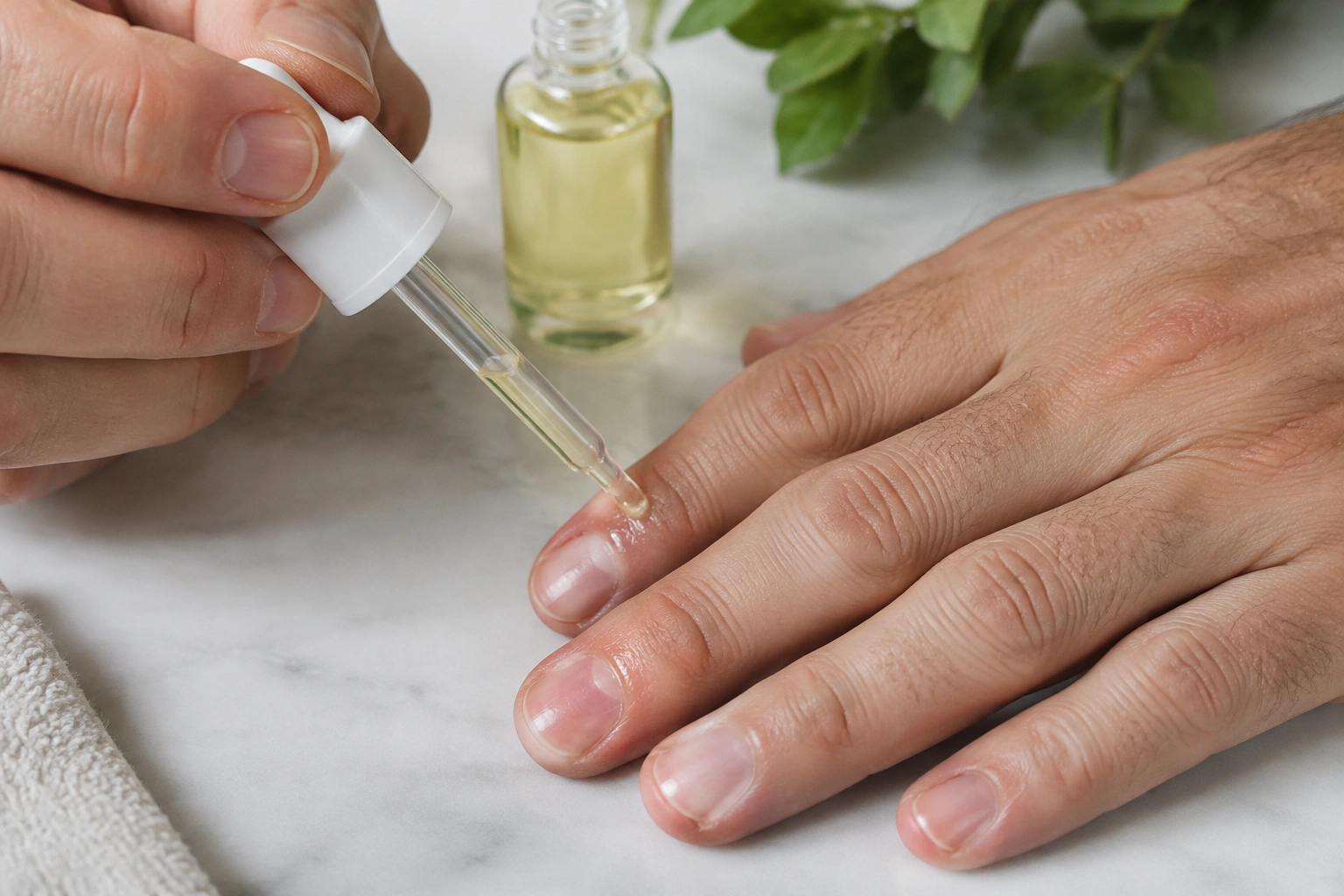
Good times to apply it:
– after washing your hands
– after showering
– before bed
– after removing gel polish or other enhancements
– after using acetone
If your nails are very dry, twice daily is a practical starting point. People with frequent handwashing or sanitizer use often benefit from applying it more often, especially after water exposure.
The key is consistency. One application can make nails feel softer for the moment, but repeated use is what helps the condition improve over time.
How Long It Takes to See Results
Nail oil is not an overnight repair product.
Some people notice immediate cosmetic improvement, such as less roughness or a healthier sheen, after the first few uses. But better flexibility and less breakage usually take longer.
A realistic timeline looks like this:
– a few days to 2 weeks: nails may feel less dry and look smoother
– 2 to 6 weeks: peeling and snapping may start to improve if dryness was the main issue
– several weeks to months: the visible nail can grow out in better condition
That slower timeline matters because nails grow gradually. If the damage is on the nail plate, it has to grow out. Nail oil supports the new growth and helps protect the nail as it emerges, but it cannot instantly replace damaged keratin.
If you stop after a few days because the change seems subtle, you may never see the benefit. Most nail oil routines reward patience.
When Nail Oil Helps Most
Nail oil is especially useful when nails are dry rather than structurally diseased or badly damaged.
It tends to help most in situations like:
– frequent handwashing
– repeated sanitizer use
– dry indoor air
– gel polish wear and removal
– acrylic or extension wear
– acetone exposure
– over-buffing or aggressive filing
For example, someone who removes gel polish and notices their nails feel bendy and rough may get better results from daily oiling than from jumping straight to a hardener. The goal is to restore flexibility after the nail has been dehydrated. It can help the nail grow out more comfortably, but it does not repair thinning or trauma to the nail plate itself.
It can also be helpful for people whose nails peel at the tips. That kind of peeling is often made worse by dryness and repeated wet-dry cycles. Oil will not seal every split instantly, but it can reduce the conditions that keep the peeling going.
Nail Oil vs Nail Hardeners, Cuticle Cream, and Strengthening Polish
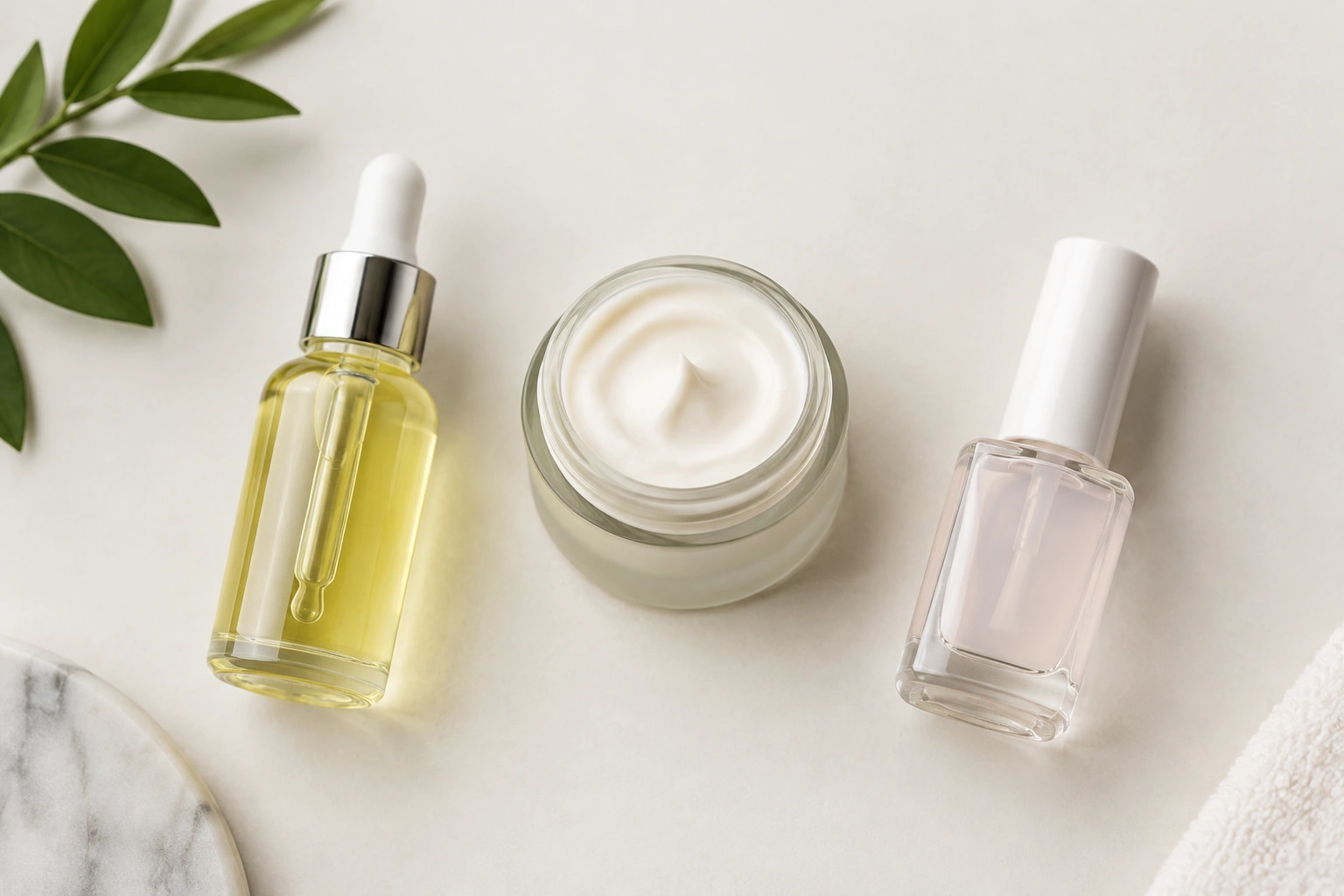
Here is the simplest way to compare the options.
| Product | Main goal | Best for | Limitations |
|---|---|---|---|
| Nail oil | Hydration and flexibility | Dry, peeling, brittle nails | Won’t create rigid reinforcement |
| Nail hardener | Firmer, stiffer nails | Nails that need temporary rigidity | Can worsen brittle nails if overused or if the real problem is dehydration |
| Cuticle cream | Moisture and barrier support | Very dry cuticles and surrounding skin | Often sits heavier and may absorb more slowly |
| Strengthening polish | Cosmetic reinforcement and coating | Nails that need a protective surface layer | Results can be temporary and formula-dependent |
Nail oil is usually the best first choice when dryness is the main problem. Cuticle cream can be a good companion product, especially at night, but it often feels heavier. Strengthening polish may help if you want a more coated feel, while nail hardeners are better reserved for people whose nails are not primarily dry and fragile.
If you have ever tried a hardener and found your nails snapping more easily, that can be a sign your nails needed moisture instead of stiffness.
Limits of Nail Oil and When It Is Not Enough
Nail oil is useful, but it has limits.
It will not:
– treat fungal infections
– resolve nail disease
– correct persistent structural damage on its own
– instantly repair severely damaged nails
– replace medical care when symptoms are concerning
If your nails are badly split, painful, discolored, thickened, or separating from the nail bed, oil alone is not the answer. The same is true if the problem keeps coming back despite a solid routine.
Nail oil is best viewed as support care. It improves the environment around the nail so healthy growth has a better chance, but it cannot override a deeper issue.
When to See a Nail Technician or Dermatologist
If your brittle nails do not improve after several weeks of consistent care, or if they are changing in a way that seems unusual, it is worth getting them checked.
See a professional if you notice:
– persistent splitting or peeling that does not improve
– pain, swelling, or redness around the nail
– nail discoloration
– thickened, crumbly, or lifting nails
– sudden changes in multiple nails
– ongoing brittleness with no clear cause
A nail technician can help identify damage from technique, product use, or over-filing. A dermatologist can evaluate whether the issue may be related to an underlying health concern.
As a general rule, if the problem is only dryness, nail oil is a sensible at-home solution. If the problem is changing, persistent, or painful, it should not be treated as a cosmetic issue only.
The Bottom Line
Nail oil can help nails become stronger in a practical sense, especially when weakness comes from dryness. It improves hydration, flexibility, and resistance to everyday breakage, which is why nails often peel and snap less when it is used consistently.
It is not the same as a hardener, and it will not fix every nail problem. But for weak, brittle, or overworked nails, it is one of the simplest home care steps that can make a real difference over time.
If you want to build a smarter routine, the best place to start is with regular oiling, less harsh exposure, and patience long enough for the nail to grow out healthier.
For a deeper look at ingredient choices, see how to choose between nail oil and cuticle oil and whether nail oils are good for dry, brittle nails. If you wear polish often, it also helps to understand what happens when nail oil is used on painted nails.

