
How Long Should Nail Polish Dry Between Coats? A Beginner’s Timing Guide

If you’re painting your nails at home, the biggest question is usually simple: how long should nail polish dry between coats so the next layer goes on smoothly?
For standard nail polish, a practical beginner rule is to wait until the coat is dry to the touch and no longer looks wet or easily smudged. In many home manicures, that means giving each thin coat a short pause before adding the next one. The exact timing depends on the formula, how thickly you applied it, and even the room you’re in.
The good news: you do not need a perfect timer to get this right. You just need to know what “ready” looks and feels like, and how to avoid the common mistakes that make polish drag, bubble, or dent.
Quick Answer: How Long to Wait Between Coats
There is no universal minute count that fits every polish, but for regular nail polish, beginners usually do best by waiting about 1–5 minutes between thin coats.
A few practical guidelines:
- Thin coats usually need only a short wait in that range.
- Thicker coats need longer, sometimes noticeably longer.
- Quick-dry formulas may shorten the wait.
- Gel polish follows a different curing process and is not the same as air-drying polish.
A safe beginner habit is to paint one thin coat, pause briefly, then check whether the surface still looks wet or feels tacky. If it does, give it more time. If it looks set and no longer feels soft, you can move on.
If you want a deeper look at total drying time, you may also find our guide on how long nail polish takes to dry completely helpful.
What “Dry Enough” Actually Means
A coat can seem dry because the top surface is no longer glossy, but that does not always mean it is ready for another layer.
Think of polish drying in layers:
- The top surface may dry first.
- The underlayer can stay soft longer.
- Pressing too soon can leave a dent or pull the polish.
That is why “dry to the touch” is more useful than “looks dry.” If the coat still feels sticky, stringy, or soft, it needs more time.
For beginners, the safest rule is simple: if it leaves a mark or shifts when lightly touched, it is not ready yet.
How to Tell If the First Coat Is Ready for the Next One
You do not need to press hard or poke the nail to test it. That usually causes the problem you were trying to avoid.
Use these low-risk checks instead:
Look for a duller finish
Fresh polish usually looks very glossy and wet. As it dries, the shine often softens a little.
Check one nail first
Use the first nail you painted as your test nail. If that one is ready, the others are often close behind.
Watch for drag marks

If your brush pulls the first coat into streaks, the coat was still too soft.
A simple decision rule helps: if a light touch would leave a fingerprint or dent, wait longer.
Why Thin Coats Dry Better Than Thick Coats
This is one of the most useful beginner habits you can learn.
Thin coats dry faster because there is less liquid on the nail. They also level out more evenly, which helps prevent:
- streaks
- bubbling
- wrinkling
- long soft spots under the surface
Thick coats may look more opaque right away, but they create a trade-off: you save a step in the moment and lose time later waiting for the polish to set. Thick layers are also more likely to dent when you reach for a phone, a bag, or a door handle too soon.
If your polish is taking forever to dry, the fix is usually not “wait longer between thick coats.” The better fix is to apply thinner coats.
Drying Time by Polish Type
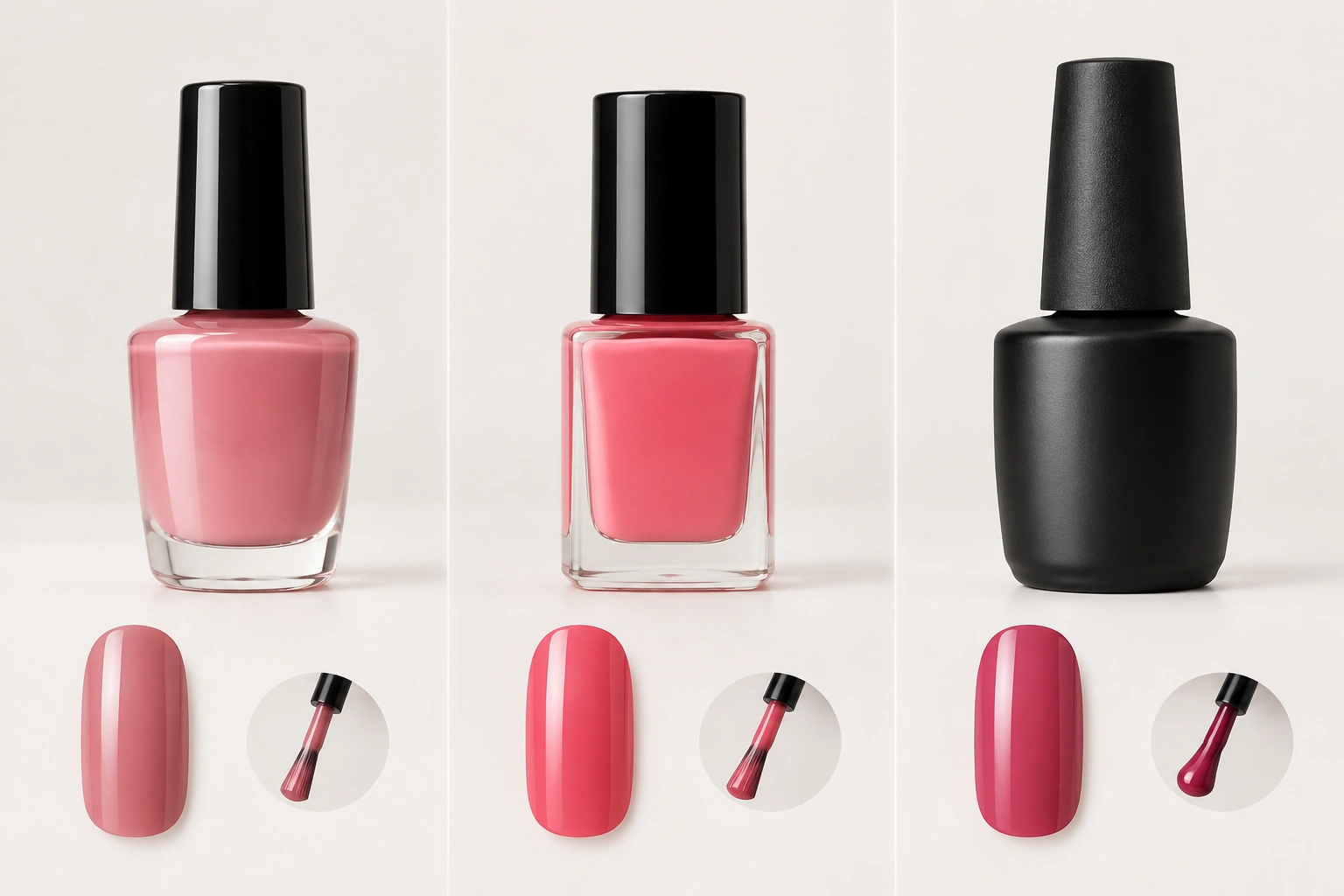
Different formulas behave differently, so it helps to know what you’re using before you start.
| Polish type | Drying expectation between coats | Beginner note |
|---|---|---|
| Regular nail polish | Wait about 1–5 minutes between thin coats | Best applied in thin coats |
| Quick-dry polish | Often ready sooner than standard polish | Still avoid thick layers |
| Gel polish | Not air-dried; it needs curing under a lamp | Follow product instructions exactly |
| Thick or highly pigmented polish | Often needs extra time | May need thinner application |
Regular polish is the easiest place to begin because it is forgiving, but it usually asks for more patience.
Quick-dry formulas can speed things up, yet they do not magically fix a heavy coat. If the layer is too thick, even a faster formula can still stay soft underneath.
Gel polish is different enough that it deserves its own process. If you are using gel, follow the brand’s curing instructions instead of treating it like standard polish. For a broader comparison, our guide on how long nail polish takes to dry can help set expectations.
For product-specific guidance, it is always smart to check the brand’s own directions. Brands such as essie often explain how their formulas are meant to be used, and that advice should override any general timing rule.
How Base Coat, Color Coats, and Top Coat Affect Timing
Each part of the manicure needs a little breathing room.
Base coat
After applying the base coat, wait about 1–3 minutes before adding color. It should no longer look wet or slide around on the nail.
Color coats
This is where timing matters most. Apply one thin color coat, wait about 1–5 minutes, then add the next. Most beginners do better with two thin coats than one heavy coat.
Top coat
After the final color coat, give it a slightly longer pause if needed, usually 2–5 minutes, before sealing it with top coat. If you rush it onto a soft color layer, you can drag the polish underneath and leave a wrinkled finish.
If you want the manicure to last and still look smooth, give each layer a short pause rather than rushing the whole process.
What Changes Drying Time: Formula, Humidity, and Room Conditions
Drying time is not only about the polish. Your environment matters too.
Polish formula
Some formulas are naturally thinner and faster to set. Others are richer, more opaque, or more heavily pigmented, which often slows drying.
Coat thickness
This is one of the biggest factors. More polish means more time.
Room humidity
A damp room can slow drying. If the air feels heavy, expect the polish to take longer.
Temperature and airflow
A normal room with gentle airflow is usually better than a hot, stuffy space. Strong heat can disturb the surface, and very warm air does not necessarily solve the problem.
If you have ever wondered whether cold air helps, our article on whether you should use cold air to dry nail polish covers that question in more detail.
How to Speed Up Drying Safely
If you want your manicure to move faster, focus on methods that support the polish instead of disturbing it.
Use a quick-dry top coat
This can help the surface set faster and reduce the time you need to baby your nails after painting.
Try quick-dry drops or spray
These products are made to help the finish set more quickly, but they work best when the polish underneath is applied in thin layers.
Paint thinner coats
This is still the most effective step. A better application often saves more time than any add-on product.
Give each hand a little structure
Many beginners paint one hand, then the other, instead of trying to rush every nail at once. That reduces accidental smudges.
Avoid heavy heat
A hair dryer too close to the nails can disturb the finish rather than help it.
For a closer look at fast-drying methods, you can also read about quick-dry top coats and drying products for general usage tips, but always follow the package directions first.
Common Mistakes That Make Polish Smudge or Peel
Most polish problems come from rushing, not from bad luck.
Applying coats too thickly
This is the biggest beginner mistake. Thick coats take longer to dry and are easier to dent.
Painting over a soft layer
If the first coat is still tacky, the second coat can drag it around and create streaks.
Touching the nail to “check”
Pressing the surface often leaves a mark and can ruin an otherwise good coat.
Skipping the pause before top coat
The color layer needs a moment before sealing it in.
Assuming quick-dry products fix everything
They help, but they are not a substitute for thin application and reasonable wait time.
If your polish is visibly wrinkled, deeply dented, or dragged after a rushed coat, the cleanest fix may be to remove it and begin again rather than trying to patch it.
For removal basics, our guide on how long opened nail polish lasts can also help you decide whether old polish is part of the problem.
Simple Beginner Routine for a Smooth Manicure
Here is an easy timing flow you can follow at home:
- Prep clean nails.
- Apply a thin base coat.
- Wait 1–3 minutes.
- Apply the first thin color coat.
- Wait about 1–5 minutes.
- Apply the second thin coat.
- Wait a few minutes before top coat if the surface still feels soft.
- Finish with top coat and give the manicure extra time before heavy use.
That routine works because it keeps every layer thin and gives each one a fair chance to set.
If you are unsure whether to keep going, use this rule: when in doubt, wait a little longer rather than layering too soon.
When to See a Nail Technician or Dermatologist
If polish repeatedly wrinkles, peels, or refuses to dry even when you use thin coats and follow the instructions, a nail technician can help you troubleshoot the application process.
If you notice irritation, swelling, or a reaction around the nails after using a product, stop using it and speak with a dermatologist or other qualified health professional.
FAQs
How long should nail polish dry between coats?
For regular polish, beginners usually do best waiting about 1–5 minutes between thin coats, then checking that the layer no longer looks wet or feels soft.
Can I put on a second coat if the first one is still tacky?
No. If it still feels tacky, the next coat can drag the first one and cause streaks or dents.
Does thick polish need more drying time between coats?
Yes. Thick coats hold more liquid and usually take longer to set underneath, even if the surface looks dry.
Is quick-dry polish better for beginners?
It can be helpful, especially if you want a faster routine. Still, thin coats matter just as much with quick-dry formulas.
Should the base coat dry before color polish?
Yes. Give the base coat a brief pause so the color goes on evenly instead of sliding around.
What if I already applied the next coat too soon?
If the finish is only slightly imperfect, you may be able to let it settle and finish carefully. If it is wrinkled, deeply dented, or heavily dragged, removing it and starting over is often the cleanest option.
Is gel polish the same as regular polish for drying time?
No. Gel polish is not air-dried in the same way. It follows a different curing process, so you should follow the product instructions exactly.
Final Takeaway
The simplest beginner rule is this: wait until each coat is dry to the touch, then apply the next thin layer. Thin coats dry more evenly, quick-dry products can help, and thick coats almost always create more waiting and more mistakes. Once you get used to checking the finish instead of the clock, painting your nails becomes much easier.

