
How Many Coats of Nail Polish Do You Need for a Smooth Manicure?

If you’re wondering how many coats of nail polish to use, the simple beginner answer is this: most regular polishes look best with two thin color coats. That usually gives you smoother coverage, better color payoff, and a finish that dries more evenly than one thick coat.
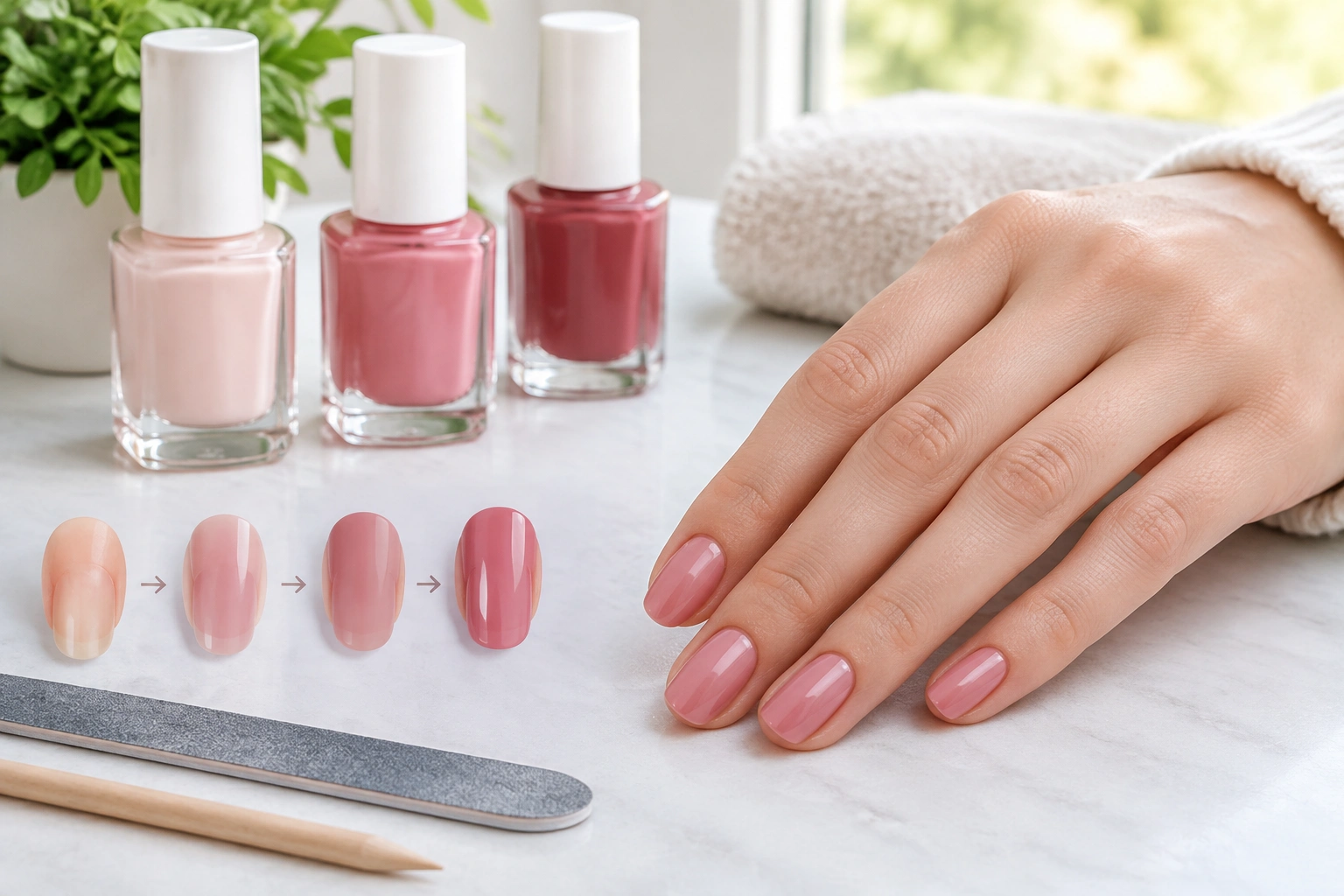
Some polishes need only one coat for a sheer look. Others need three thin coats to look even. The best number depends on the formula, the pigment, and how opaque you want the result to be.
A helpful way to think about it: one coat is often a first layer, two coats are the standard, and three coats are for sheerer formulas. If you keep each coat thin, your manicure is more likely to look neat instead of bulky.
Quick Answer: How Many Coats of Nail Polish Are Usually Needed?
For most beginners, the safest rule is:
- 1 coat: sheer coverage or a very light, natural look
- 2 coats: the usual choice for regular nail polish
- 3 coats: sometimes needed for sheer, pastel, or low-pigment shades
That rule works because thin layers are easier to control. A thick coat may look opaque at first, but it can take longer to dry and is more likely to smudge or wrinkle.
If you want a quick visual guide while painting, think in terms of coverage, not just number. When the nail still looks see-through or patchy after the first coat, it usually needs another thin layer.
What Counts as a Coat of Nail Polish?
Not every layer on the nail counts the same way.
Color coats
These are the layers of polish that give your nail its actual color. When people ask how many coats of polish to use, they usually mean these color coats.
Base coat
A base coat goes on before color. It helps create a smoother surface and can improve how the polish grips the nail. It does not replace a color coat.
Top coat
A top coat goes on after the color. It adds shine and helps protect the manicure. It also does not count as a color coat.
So if you do base coat, two color coats, and top coat, that is still a normal manicure. The base and top coat are part of the routine, but they are not your coverage coats.
For more on keeping your manicure neat between layers, see how long to wait between coats of nail polish.
Why Two Thin Coats Work Best for Most Polishes
Two thin coats usually give the best balance of coverage and finish. The first coat gives the nail a base of color. The second coat evens out streaks and fills in weak spots.
That is why many cream polishes look patchy after one coat but smooth after two.
A better approach is to build the color in layers. That way, each coat has less polish to dry and less risk of flooding the nail.
When One Coat Is Enough — and When It Isn’t
One coat can be enough when you want a sheer, natural finish. For example:
- a sheer pink for a barely-there look
- a tinted nude that you want to keep soft and translucent
- a polish that is already very opaque and evenly pigmented
One coat is usually not enough if the nail still looks streaky, transparent, or uneven after painting. That is especially common with pale colors, pastels, and some cream formulas.
A simple test: if you can still clearly see the nail line or patchy brush marks after the first coat, add another thin coat. If the finish already looks even and that translucent look is what you want, stop there.
When to Use Three Coats Instead of Two
Three coats are sometimes the right choice, but only when each layer is thin.
You may need a third coat if:
- the polish is very sheer
- the shade is pale, like a light nude or pastel
- the formula has low pigment
- the first two coats still look streaky or see-through
This is common with lighter colors because they often have less coverage than deeper shades. A pale pink may need three thin coats to look smooth, while a dark red might reach full color in two.
The trade-off is drying time. More coats can improve opacity, but they also add more layers to dry. If the polish starts feeling thick or gummy, stop and let it be. It is better to have a neat semi-sheer manicure than a bulky one that dents easily.
How Coat Count Changes by Polish Type
Here’s a simple comparison to help you choose the right number of coats.

| Polish type | Typical coat count | What to expect |
|---|---|---|
| Sheer polish | 1–3 coats | Soft tint, natural look |
| Cream polish | 2 coats | Smooth, even color |
| Opaque polish | 1–2 coats | Strong coverage, fewer streaks |
| Light pastel | 2–3 coats | Often needs extra layering |
| Dark polish | 1–2 coats | Usually covers faster |
| Glitter polish | 1–3 coats | Coverage depends on sparkle density |
| Shimmer polish | 1–2 coats | Can look even sooner than glitter |
| Gel polish | Follow the product directions | Cures differently than regular polish |
Sheer polish
Sheer polish is meant to be translucent. One coat may be the goal if you want a clean, natural finish. Add more if you want a little more color.
Cream polish
Cream formulas are the classic “two-coat” polish for most beginners. If the first coat looks streaky, a second thin coat is usually enough. A third coat is generally only needed if the shade is unusually sheer or patchy.
Glitter and shimmer polish
Glitter polish can behave differently because the particles create texture. Some glitter shades look patchy in one coat and denser after two. Others are designed to look sparkly even when sheer. Shimmer often covers more smoothly than chunky glitter. If the finish still looks sparse after two coats, a third thin coat can help.
Light vs. dark shades
Dark shades often look more opaque sooner because the pigment is stronger. Light shades can take longer to cover because they tend to be more translucent.
If you’re choosing between a pale nude and a deep berry, expect the berry to reach full color faster.
For a related beginner timing guide, you may also find how long nail polish takes to dry between coats useful.
How to Tell If You Need Another Coat
Look at the nail in good light before deciding.
Add another coat if you see:
- streaks from the brush
- patchy areas near the tip
- the natural nail showing through
- uneven color from side to side
Stop when the nail looks smooth and the color is even enough for your preference. Full opacity is not always the goal. Some manicures are meant to look soft and translucent.
A good beginner habit is to check each nail separately. Sometimes the first nail looks fine, but the second one needs a touch more polish because the brush was loaded differently.
How Long to Wait Between Coats
Wait until the first coat is mostly dry to the touch before adding the next one. For regular polish, a practical beginner window is often around 1 to 3 minutes, but thicker formulas, sheer polishes, or very wet coats may need a little longer.
If the surface still drags when you lightly touch it, it is too soon.
Rushing this step can cause:
- streaking
- bubbles
- wrinkling
- dents from the brush
- longer overall drying time
You do not need to make the first coat completely hard, but it should no longer feel wet or tacky enough to pull up when you paint over it.
A practical beginner rule: paint one hand, then the other, and return to the first hand only after the polish has had a little time to settle. If you want more detailed timing guidance, how long should nail polish dry between coats is a helpful next read.
How to Apply Thin, Even Coats Without Streaks
Thin coats are easier to dry and easier to control. Here’s how to get them:
- Wipe off extra polish on the brush before painting
- Place the brush near the center of the nail
- Push gently toward the cuticle without touching skin
- Pull the polish down the middle first, then each side
- Use a light hand and avoid going back over the same area too many times
For beginners, a good rule is to load only enough polish so the brush looks coated, not dripping. If the brush is carrying a big bead of polish, wipe a little off on the bottle neck before applying. Apply with gentle pressure so the brush fans slightly, but don’t press hard enough to flood the cuticle or leave ridges.
Over-brushing can leave visible lines and can disturb the layer underneath. If a coat looks streaky, it is usually better to let it dry and add another thin coat than to keep brushing the same wet layer.
Think of the brush as laying down color, not scrubbing it in.
Common Mistakes That Make Polish Look Worse
A few beginner mistakes cause most polish problems.
Applying one thick coat
This often looks heavy and dries unevenly. It can also make the polish more likely to chip or dent.
Adding the next coat too soon
If the first layer is still soft, the brush can drag it around and create bald spots.
Using too much polish near the cuticle
Flooding the cuticle area makes the manicure look messy and can reduce wear.
Assuming every polish works the same way
A sheer pink, a cream red, and a glitter polish will not behave the same. Coat count should change with the formula.
Stopping too early
If the nail still looks streaky after one coat, that is usually a sign to add another thin layer rather than hoping the top coat will fix it.
How Base Coat and Top Coat Affect the Total Number of Coats
Base coat and top coat improve the manicure, but they do not replace color coats.
A base coat can help the polish go on more smoothly and can give the color something to grip. It is especially useful if your nails are a little uneven in texture.
A top coat adds shine and helps protect the finish. It can also make the manicure look more polished and complete.
Neither one changes the basic rule for coverage. If the color still looks sheer after one coat, you still need another color coat. If you want a better understanding of the full manicure timeline, how long to wait between nail polish coats is another useful reference.
For general safety and product handling, it is sensible to follow label directions and use polish in a well-ventilated space. The FDA’s cosmetics information is a good place to learn how cosmetic products are regulated.
Simple Decision Guide: One, Two, or Three Coats?
Use this quick check at the table:
- Choose one coat if the polish is intentionally sheer and already looks even enough for your style.
- Choose two coats if you want the standard beginner result: smooth, balanced coverage.
- Choose three coats if the polish is still streaky or translucent after two thin coats, especially with light or low-pigment shades.
If you are unsure, pause after the second coat and look at the nail in natural light. That usually makes streaks and patchiness easier to see than under bathroom lighting.
When to See a Nail Technician or Dermatologist
If your polish never seems to sit evenly, or your nails are constantly peeling, splitting, or changing texture, a professional can help you sort out whether the issue is technique, product choice, or something else.
A nail technician can also help you choose formulas that suit your nails better. If you notice pain, swelling, or persistent nail changes, a dermatologist is the right person to ask.
FAQs
Does base coat count as one of the coats?
No. Base coat is a separate step. It helps the polish adhere and can make the surface smoother, but it does not count as a color coat.
Does top coat count as one of the coats?
No. Top coat is the finishing layer. It adds shine and protection, but it does not replace a color coat.
Is two coats of nail polish enough?
Usually, yes. Two thin coats are the standard starting point for most regular polishes. If the color still looks sheer after two, add a third thin coat.
Why does my polish look streaky after one coat?
That usually means the formula is too sheer for one coat or the layer was applied too thinly in spots. A second thin coat often evens it out.
Can I use three coats without making the manicure too thick?
Yes, if each coat is thin. The problem is not the number alone; it is how much polish is on the nail at once.
Do dark colors need fewer coats?
Often, yes. Dark shades usually have stronger pigment, so they may look opaque faster than pale or pastel shades.
Do glitter polishes need more coats?
Sometimes. Glitter formulas vary a lot. Some are meant to be sheer, while others build coverage in two or three layers.
Should I wait for each coat to dry completely?
Wait until it is mostly dry to the touch and no longer drags easily. If it still feels wet, give it more time before the next coat.
What if my polish still looks uneven after two coats?
Add a third thin coat if the formula needs it. If the polish is already getting thick, it may be better to stop and choose a more opaque shade next time.
Does gel polish follow the same rule?
Not exactly. Gel polish cures differently from regular polish, so you should follow the product’s instructions rather than relying on the standard air-dry rule.
How do I know if I used too much polish?
If the polish looks bulky, pools at the edges, or stays soft for a long time, the coat was probably too thick. Thin layers usually give a cleaner result.
Can I remove polish if I don’t like the coverage?
Yes. Use a basic nail polish remover and try again with thinner coats or a different shade. If you want a simpler application next time, choose a more pigmented formula.
Final takeaway
For most beginners, two thin coats is the sweet spot. Use one coat for a sheer look, two for standard coverage, and three only when the polish still looks translucent after the second layer. Keep the coats thin, let each one settle, and your manicure will look smoother and wear better.
