
How to Dry Nail Polish Fast at Home: A Beginner-Friendly Guide

If you want your manicure to dry faster without smudges, the safest answer is usually a mix of thin coats, a quick-dry product, and gentle airflow. A fan or cool air can help more than hot air, and a quick-dry top coat or drying drops can save time if you paint your nails often. What usually causes trouble is the opposite: thick polish, too many layers, and touching your nails before they have set.
As a licensed nail technician, I tell beginners to think in two stages: dry to the touch and fully set. A nail can feel dry on top while still being soft underneath. That is why a manicure can look finished and still dent if you grab your phone too soon.
Quick Answer: Fastest Safe Ways to Dry Nail Polish at Home
If you need the shortest practical answer, here it is:
- Apply thin coats. This is the biggest difference you can make before you even start drying.
- Use a quick-dry top coat or drying drops if you have them.
- Sit in front of a fan or use cool airflow to help the surface set.
- Try cool water only after the polish has had a moment to settle.
- Avoid hot air, thick coats, and testing the polish too early.
A simple beginner-friendly sequence is: paint one thin coat, wait a few minutes, add the next thin coat, then finish with a quick-dry top coat or drying drops and use a fan for a short while. That approach is usually easier and safer than trying to rush the manicure with heat.
If you want a fuller breakdown of the fastest methods, the comparison in this best way to dry nail polish quickly guide can help you choose the easiest option for your routine.
Why Nail Polish Takes Time to Dry
Regular nail polish dries as the solvents in the formula evaporate. That happens from the outside in, which is why the top layer can seem set before the polish underneath is ready.
That simple detail explains most smudges. If the coat is thick, the top may feel dry while the lower layers stay soft much longer. That is also why a manicure can dent hours later if you press on it, even when it no longer feels sticky.
Base coat and top coat also affect the process. They help the manicure last longer and look smoother, but they add extra layers that need time to settle. For general safety and product use, it helps to follow the instructions on the polish label and store products in a well-ventilated space. The FDA’s cosmetics overview is a useful reference for basic product guidance.
The Fastest At-Home Drying Methods, Ranked
Here is a simple way to think about the main options.
| Method | Speed | Safety for beginners | Cost | Best for |
|---|---|---|---|---|
| Thin coats + air drying | Moderate | High | Low | Everyday manicures |
| Fan or cool airflow | Faster than still air | High | Low if you already own one | People who want a simple boost |
| Quick-dry top coat | Fast | High if used as directed | Extra product | Frequent polish wearers |
| Drying drops | Fast | High if used correctly | Extra product | Beginners who want less waiting |
| Cool water method | Can help the surface set | Moderate | Low | People who are careful and patient |
| Hair dryer | Mixed | Lower if heat is too warm | Low if you already have one | Usually not my first pick |
A few trade-offs matter here. Air drying is the simplest and safest, but it is usually the slowest. Quick-dry products cost extra, but they are the most convenient if you paint your nails often. For beginners, a fan is the easiest low-risk boost because it adds gentle airflow without heat. Cool water can help, but it is a little fussier and easier to mess up if the polish is still too wet.
If you are deciding between quick-dry products, the essie nail care section is a helpful place to compare product types and see how brands describe their use.
How to Apply Polish So It Dries Faster
The fastest drying method starts before drying at all.
Use thinner coats
Thin coats dry faster than one thick coat because there is less polish for the solvents to escape from. They also look smoother and are less likely to bubble or wrinkle.
A beginner mistake is loading the brush heavily and trying to cover the whole nail in one pass. That often leaves the polish soft for longer. Instead, wipe a little extra polish off the brush, then apply one smooth coat. If the color looks patchy, that is normal. It is better to add another thin coat than to force full coverage in one thick layer.
Don’t overload the brush
Too much polish near the cuticle or sidewalls slows drying and makes cleanup messier. It can also pool at the edges, where it stays soft longer. Keep the stroke light and controlled.
Use base coat and top coat wisely
A base coat helps polish grip better, and a top coat helps seal the manicure. But more product is not better. Use just enough to cover the nail evenly. If your top coat is a quick-dry formula, that can help the final layer set faster.
If you want a more detailed breakdown of simple drying habits, this how to dry nail polish quickly guide covers the basics in a beginner-friendly way.
How Long to Wait Between Coats and After the Final Coat
Between coats, a practical rule of thumb is to wait about 2 to 5 minutes before adding the next layer. If the polish still looks wet, streaky, or easily moves around, give it a little longer. If it looks smooth and settled, you can usually continue carefully.
For the final coat, plan on at least 10 to 15 minutes before light use of your hands, even if the surface seems dry sooner. For normal use, like typing, opening bags, or handling small items, it is safer to wait closer to 30 to 60 minutes. Full curing can take longer than that, especially with thicker coats.
A simple beginner check is this: if a gentle tap or brush leaves a mark, it is not ready yet. If you are unsure, wait longer rather than testing it.
Best Drying Methods You Can Use at Home
Fan or cool airflow
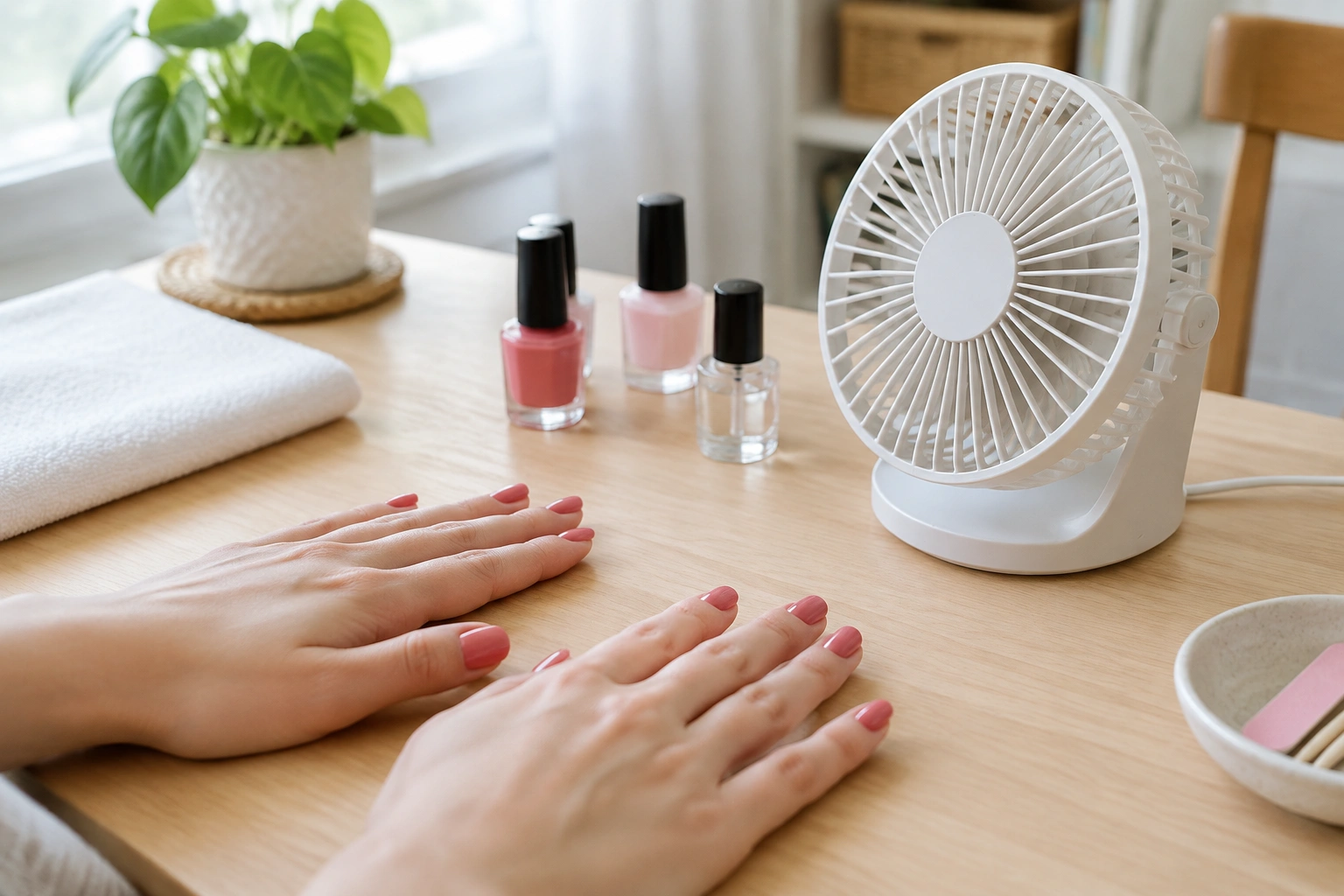
A fan is the easiest home option for beginners. It helps move air across the nail surface without adding heat, which makes it the safest and simplest choice here. Keep your hands still and spaced apart so you do not bump the polish while it sets.
A small desk fan works fine. You do not need anything fancy. Cool airflow is the goal, not force.
Cold water or ice water
Some people like the cold water method because it can help the top layer firm up. If you try it, let the polish sit briefly first so it is not completely wet when it touches the water. Be gentle. A strong splash or rough movement can disturb the finish.
This method can help the surface set, but it is not the easiest beginner option. For most people, fan drying is simpler and less likely to cause mistakes.
Quick-dry top coat
This is one of the most practical upgrades if you paint your nails often. A quick-dry top coat can shorten the waiting time after the final color layer and also leave a smoother finish.
The trade-off is simple: you have to buy an extra product, and you need to apply it correctly. Use a thin, even layer and follow the product directions.
Drying drops
Drying drops are another beginner-friendly option. They are usually used after the final coat and can help reduce the waiting time before light use. They are especially handy if you tend to smudge nails while reaching for your phone, keys, or bag.
If you are choosing between a quick-dry top coat and drying drops, think about your routine. A top coat is part of the manicure finish. Drying drops are more of a finishing aid.
What to Avoid If You Want Nails to Dry Faster
Some “fast” methods cause more problems than they solve.
Avoid hot air from a hair dryer
Hot air can make polish behave badly. It may cause bubbles, ripples, or uneven drying. If you use a dryer at all, cool air is the safer choice. Even then, keep the airflow gentle.
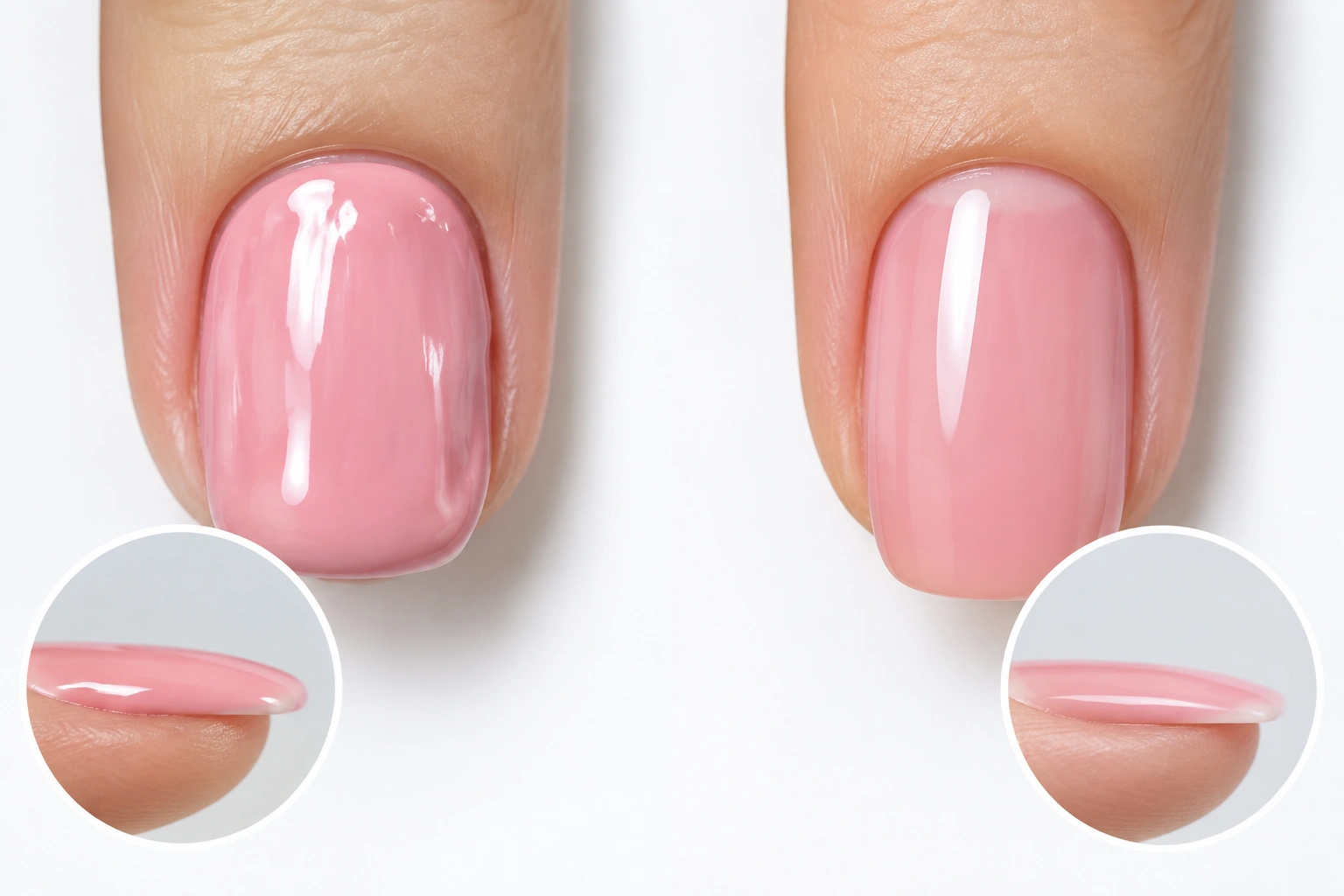
Avoid thick coats
Thick coats are one of the biggest reasons polish stays tacky. They also make dents and smudges more likely. If your color looks streaky, use another thin layer instead of one heavy one.
Avoid testing too soon
A nail that looks dry is not always ready. Touching it lightly, pressing it with your thumb, or checking with your other hand can leave marks. If you want to know whether polish is ready, look for a smooth, settled surface and wait longer than your first instinct tells you.
Avoid moving your hands around too much
Once the final coat is on, keep your hands still. Reaching, typing, and opening drawers too soon can ruin the finish faster than the drying method can save it.
How to Tell When Nail Polish Is Dry Enough to Touch
There are a few simple signs, but none of them guarantee full curing.
- The surface no longer looks wet or wobbly.
- A light glance does not show polish shifting around.
- The top feels firm enough that a tiny accidental brush does not leave an obvious mark.
Even then, be careful. Dry-to-touch does not mean fully cured. Fully cured polish is harder and more durable, and that can take longer than beginners expect.
If you are unsure, treat the manicure as delicate for a while longer. That one habit prevents most dents.
Should You Buy a Quick-Dry Top Coat or Drying Drops?
If you want the easiest single purchase, a quick-dry top coat is usually the better choice because it becomes part of the manicure itself. It can help the finish look smoother and may reduce the amount of time you spend waiting after the final coat.
Drying drops make sense if you want something simple and targeted. They are handy when you already have a top coat you like and just want the manicure to set a little faster.
Here is the easy decision rule:
- Choose a quick-dry top coat if you want one product that helps both finish and drying.
- Choose drying drops if you mainly want to reduce the wait after painting.
- Use both only if the directions allow it and you know how each product behaves.
Simple Troubleshooting for Sticky, Soft, or Smudged Polish
If the polish still feels sticky
It probably needs more time, or the coats were too thick. Leave it alone and avoid adding anything else on top unless the product directions suggest it.
If you see bubbles
Bubbles often mean the polish was applied too thickly, shaken too hard, or exposed to heat. Next time, use thinner coats and gentler application.
If you smudged one nail
If the mark is small and the polish is still soft, you may be able to smooth it lightly with a fresh thin layer of top coat once the surface is stable enough. If the smudge is deep, it is usually better to let the nail dry fully and fix it later rather than keep touching it.
If the manicure looks dry but dents easily
That usually means the top layer set before the layers underneath. The safest answer is more time, not more pressure.
For a broader comparison of quick methods, this fastest way to dry nail polish guide is useful if you want a simple next step.
When to See a Nail Technician or Dermatologist
See a nail technician if you keep having the same drying problem even when you use thin coats and a proper top coat. Sometimes the issue is technique, product choice, or layering order, and a professional can help you spot it quickly.
See a dermatologist if you notice irritation, redness, or a reaction after using polish or drying products. That is less about drying speed and more about making sure your skin is comfortable and safe.
Final Thoughts
If you want your manicure to dry faster at home, the clearest beginner-friendly choice is to use thin coats, then finish with a quick-dry top coat or drying drops and gentle fan airflow. That combination is usually the easiest way to reduce smudges without adding heat or complicated steps. Give the final coat at least a little time before light use, and your results will usually be cleaner.

