
Fastest Way to Dry Nail Polish Without Smudging Your Manicure

If you want the fastest safe way to dry nail polish at home, the short answer is this: use thin coats, finish with a quick-dry top coat or quick-dry drops, and let your nails rest with cool airflow instead of heat. That combination usually gives beginners the best mix of speed and fewer smudges.
The biggest mistake is assuming the polish is dry just because the surface feels dry. Nail polish can feel set on top while still staying soft underneath. That’s why a manicure can look fine for a few minutes and then dent when you grab your keys or pull on shoes.
Fastest Way to Dry Nail Polish: The Short Answer
If you only want one simple plan, use this:
- Apply polish in thin, even coats.
- Wait briefly between coats so the layer can settle.
- Finish with a quick-dry top coat or quick-dry drops.
- Sit near a fan or cool air.
- Avoid touching, tapping, or testing the nails too soon.
For most beginners, that is the most practical at-home approach. It is also easier to repeat consistently than tricks that depend on water temperature or guesswork.
A simple beginner timing guide: after each thin coat, wait a few minutes before adding the next one, and after the final coat, give the manicure a longer rest before normal use. Exact timing varies by formula, but many beginners do best by treating the nails gently for at least 20 to 30 minutes and being extra careful for longer if the polish still feels soft. Touch-dry is not the same as safe for regular use.
If you want a deeper comparison of speed methods, this guide pairs well with our internal articles on the best way to dry nail polish quickly and the quickest way to dry nail polish.
Why Nail Polish Takes So Long to Dry
Nail polish dries as the liquid solvents evaporate. When the polish goes on too thick, those solvents take longer to escape. That is why a heavy coat can stay tacky long after a thin coat would have set.
A few things slow drying down:
- Thick coats trap more liquid.
- Too many layers add more drying time.
- Warm, humid air can make evaporation slower.
- Rushing the next coat can trap the layer underneath.
- Some formulas are simply slower than others.
- Base coat choice can matter too; a thicker base coat can add to the overall drying time, and skipping base coat may change how the color applies and settles.
This is also why a manicure may seem dry on the surface but still dent easily. The top layer can firm up first while the lower layer remains soft.
For readers who want to know whether a formula itself makes a difference, our related article on does quick dry nail polish really dry faster breaks that down in simple terms.
The Fastest Safe Methods That Actually Work at Home
Here are the most useful beginner-friendly methods when you want polish to dry faster right now.
1. Use thin coats instead of one thick coat
This is the habit that helps the most. Thin coats dry more evenly and usually set faster than one heavy layer. If the color looks sheer after the first coat, that is normal. A second thin coat is usually better than a thick first one.
A practical rule: if polish looks glossy and pooled at the edges, it is probably too thick. If it looks smooth and even, you are on the right track.
2. Finish with a quick-dry top coat
A quick-dry top coat is one of the easiest speed upgrades for home manicures. It adds shine and a protective finish.
Use it as the last step after your color coats are in place. For beginners who want one product to simplify the process, this is often the best buy.
3. Try quick-dry drops if you want a lighter finish
Quick-dry drops are another useful option. They are usually applied after the final coat, and many people like them because they do not add as much extra thickness as a top coat.
If your polish already feels a little heavy, drops may be the more comfortable choice. If you want shine plus speed, a quick-dry top coat may be the better fit.
4. Sit in front of a fan or use cool airflow
A fan or other cool airflow can help the polish set more comfortably while you wait. Cool airflow is better than warm air because it supports drying without softening the polish.
This works best after the final coat, when you are trying to avoid dents and smears. Keep the airflow gentle so dust and lint do not blow onto wet nails.
5. Use cold water carefully, not aggressively
Some people like the cold-water method, but it is not the first choice for beginners. If you try it, be gentle and keep expectations modest.
Cold water may help the surface set a bit, but it is not a substitute for thin coats and a proper top coat. If you are choosing between methods, start with a quick-dry top coat or quick-dry drops first, then use cool airflow, and treat cold water as an optional backup.
Quick-Dry Top Coats vs. Quick-Dry Drops
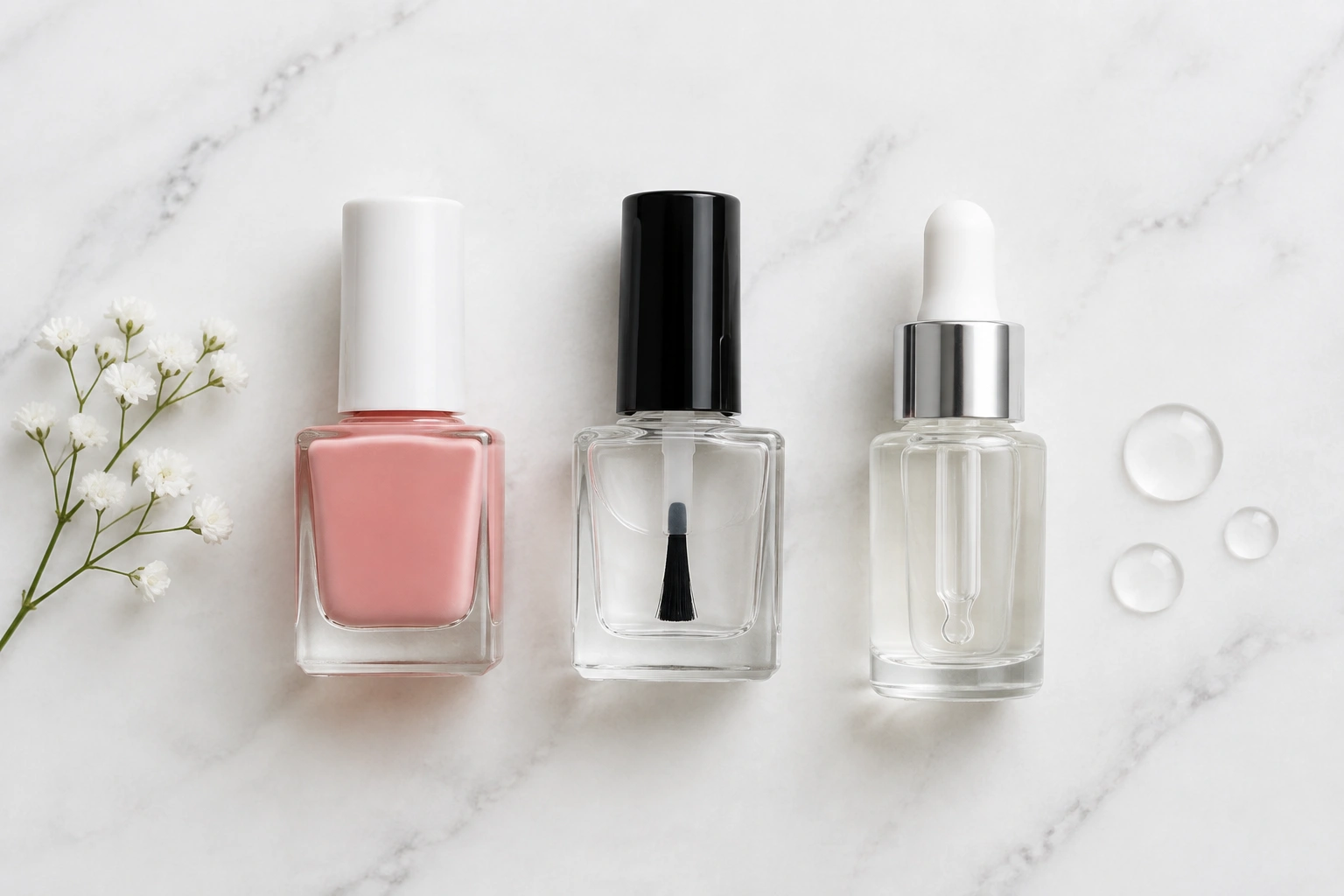
Both products can help, but they solve the problem a little differently.
| Method | Best for | Main benefit | Trade-off |
|---|---|---|---|
| Quick-dry top coat | People who want shine and speed | Adds a protective finishing layer | Can add a little thickness |
| Quick-dry drops | People who want a lighter finish | Helps the polish set without a heavy coat | Depends more on the formula |
If you want the most beginner-friendly option, a quick-dry top coat is often easier to understand and use. If you already like your top coat but want a faster finish, drops can be a simple add-on.
For product-focused readers, our article on does quick dry nail polish really dry faster is a helpful companion.
Fan, Cool Air, or Hair Dryer: Which Is Best?
For drying nail polish, cool air is the safest airflow choice. A fan or a hair dryer on a cool setting can help move air over the nails and support evaporation.
A warm or hot hair dryer is a different story. Heat can soften polish, cause bubbles, or make the surface more prone to dents. If you use a hair dryer at all, choose the cool setting and keep it at a distance. If you only have warm air available, it is usually better to skip it and let the nails air-dry instead.
Here is the simple rule:
- Quick-dry top coat: best first step for most people
- Quick-dry drops: good second choice if you want less thickness
- Fan or cool air: useful while the polish sets
- Cold-water method: optional, but not the main recommendation
- Warm or hot air: risky and often counterproductive
If you want a deeper answer about UV or lamp questions for regular polish, see our related posts on can a UV lamp dry regular nail polish and does UV light dry regular nail polish.
Thin Coats Dry Faster Than Thick Coats

This is the single most important application habit for faster drying.
A thick coat looks convenient at first because it may seem like fewer layers. In practice, it usually means longer drying time, more smudging, and a greater chance of wrinkling. Thin coats give the solvents a better chance to evaporate evenly.
Here is an easy beginner approach:
- Wipe most of the polish off the brush before applying.
- Paint one smooth coat.
- Let it settle before adding the next layer.
- Repeat only as needed for color coverage.
If your polish keeps staying sticky, the problem may not be the drying method at all. It may simply be too much polish on the nail.
How Long to Wait Between Coats and After the Final Coat
There is no single timing rule that works for every formula, but beginners do best when they slow down a little between layers.
A useful approach is to wait until the coat looks mostly settled and no longer drags when you lightly move the brush. In practical terms, many beginners can think in terms of a few minutes between thin coats, then a longer wait after the final coat before using their hands normally. Exact times vary by formula, room temperature, and how thick the polish went on.
After the final coat, give the manicure extra care even if it seems dry on top. A helpful rule of thumb is:
- Touch-dry: you may be able to lightly touch the surface without leaving an obvious mark, but the polish can still dent.
- Safe for normal use: the manicure is much less likely to smudge when you do everyday tasks, but it may still need more time to fully harden.
Avoid:
- putting on tight shoes right away
- digging in a bag for keys
- opening cans or packages with your nails
- typing hard on the tips
- testing the polish with a fingernail
A manicure can be touch-dry before it is truly ready for normal use.
Dry on the Surface vs Fully Cured: What “Dry” Really Means
This is where many beginners get tripped up.
Dry on the surface means the top layer no longer feels wet. You may be able to touch it lightly without leaving an obvious mark.
Fully cured or fully hardened means the polish has set all the way through and is much less likely to dent or smear. That takes longer than the surface-dry stage.
A simple example: you finish painting your nails, wait long enough that they no longer feel sticky, and then put on socks or grab a bag. They may look fine at first, but the polish can still dent if pressure hits the nail too soon. That is normal. The safest move is to treat them gently for a while after painting.
Common Mistakes That Make Polish Stay Soft Longer
A few habits slow drying more than people expect.
Applying polish too thickly
This is the biggest one. Thick coats trap solvent and stay soft longer.
Shaking the bottle too hard
Aggressive shaking can create bubbles. Those bubbles can make the surface uneven and less smooth.
Rushing the next coat
If the first coat is still wet and you add another layer too soon, the manicure can take longer to settle.
Using warm air
Heat can backfire by softening the finish instead of helping it set.
Touching the nails too early
If you test the polish too soon, you can leave dents that are hard to fix without redoing the manicure.
Using too many layers
More coats mean more drying time. If you need opacity, thin coats are still better than one heavy pass.
Skipping the right base coat
A base coat that goes on too thick can slow the whole manicure down. On the other hand, skipping base coat altogether can change how the color lays down, which may lead to more coats than you need.
For general cosmetic safety guidance on product use and ingredients, the FDA’s cosmetics information is a useful starting point.
Simple Troubleshooting Guide: Sticky, Wrinkled, or Smudged Polish
If something goes wrong, the cause is usually pretty simple.
- If the polish is sticky or still tacky, it usually means the coat was too thick, the layers were rushed, or the formula just needs more time.
- If the polish is wrinkled, it usually means the top layer set before the layer underneath, often from thick coats or heat.
- If the polish is smudged, it usually means the manicure was touched or pressured before it was ready for normal use.
What to do:
- For sticky polish, wait longer and avoid adding more product right away.
- For wrinkled polish, it is often best to remove and redo the nail rather than trying to smooth it out.
- For smudged polish, gently clean up the mistake if it is minor; if the dent is deep, a fresh coat or a redo may be necessary.
Simple Decision Guide: What Should You Use Right Now?
If you are standing there with wet nails and want a quick answer, use this guide.
- Need the fastest practical home result? Use thin coats plus a quick-dry top coat.
- Already painted your nails and want a lighter finish? Try quick-dry drops.
- No special product on hand? Use cool airflow and leave the nails alone.
- Applied polish too thickly? Give it more time and avoid adding heat.
- Want the safest beginner method? Thin coats, cool air, and patience.
If you are unsure whether a product is worth buying, quick-dry top coats are usually the more versatile choice because they add both finish and speed. Drops are useful too, but they are more of a targeted helper than a full finishing step.
When to See a Nail Technician or Dermatologist
If your polish consistently stays tacky no matter how thinly you apply it, a nail technician can help you troubleshoot the application. Sometimes the issue is the product, but often it is the coat thickness, timing, or layering method.
See a dermatologist if you notice skin irritation, redness, swelling, or a reaction around the nails after using polish or drying products. The CDC’s general hand hygiene guidance is also a good reminder that clean, dry hands matter when you are working around your nails.
Final Takeaway
The fastest safe way to dry nail polish is usually not one magic trick. It is a simple combination: thin coats, a quick-dry top coat or drops, and cool airflow. That approach helps the manicure set faster and lowers the chance of dents, smudges, and bubbles.
If you remember one thing, make it this: a polish that feels dry on top may still be soft underneath. Give it a little more care than your eyes suggest, and your manicure will hold up much better.

