
Is Nail Lacquer the Same as Nail Polish? A Beginner’s Guide

If you’re staring at a bottle that says nail lacquer and wondering whether it’s different from nail polish, the short answer is: usually, not in any meaningful way for a beginner. In everyday shopping and use, the terms are often used interchangeably.
For regular, non-gel products, lacquer, polish, enamel, and varnish are usually the same type of product in everyday use.
That said, the label can still matter a little. Some brands prefer one term over another for marketing, while regional wording can also change what appears on the bottle. Those naming differences are separate from actual formula differences, which is why the front label doesn’t always tell you everything about the product.
For most people, the practical takeaway is simple: if a bottle is sold as nail lacquer, you can usually treat it like regular nail polish unless the instructions say otherwise. If you want a deeper breakdown, you can also compare this guide with our related post on nail polish vs nail lacquer and our plain-language overview of what nail lacquer is.
What the Terms Usually Mean on Product Labels
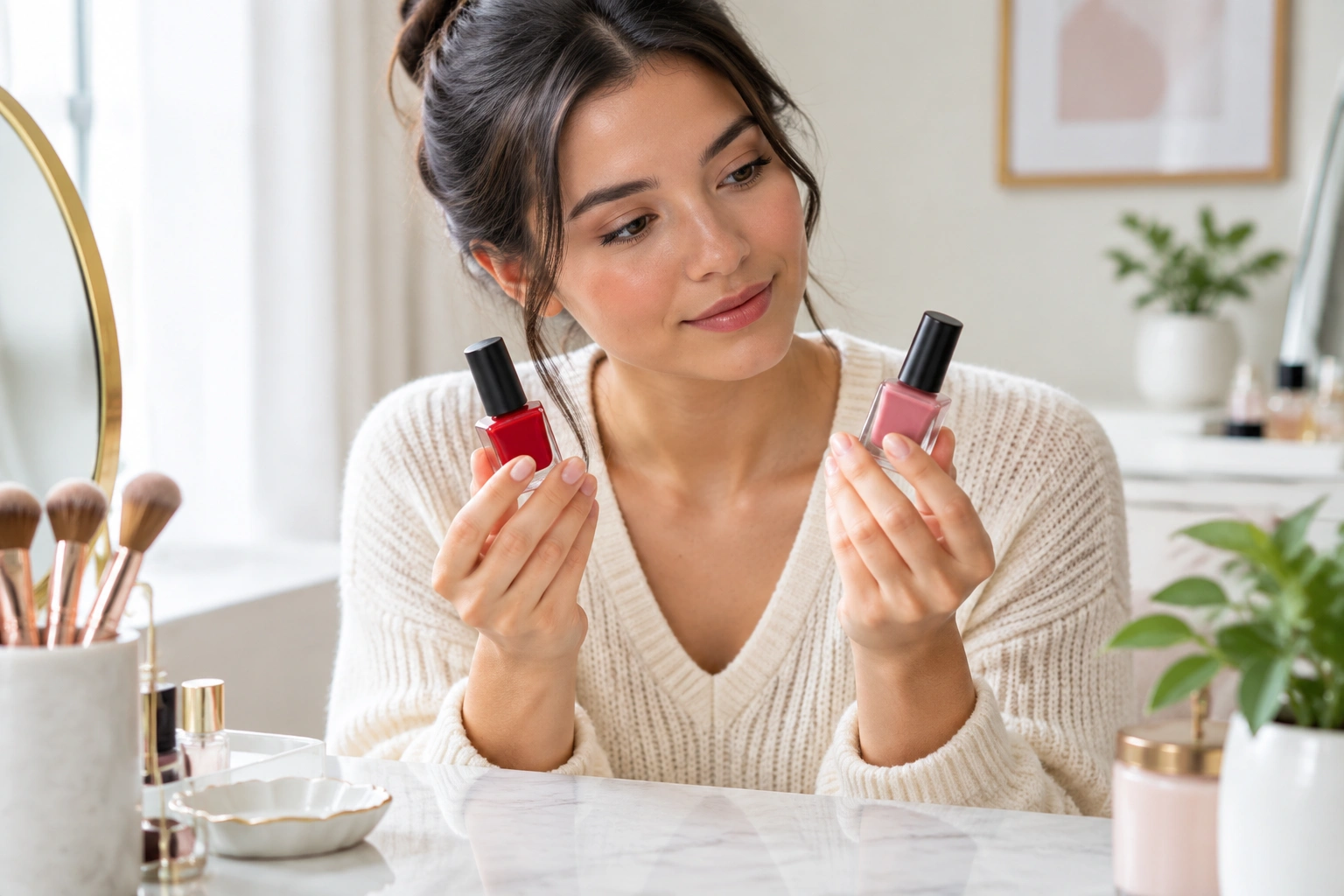
In beauty, the words nail lacquer, nail polish, nail enamel, and nail varnish are often used to describe the same general kind of product: a colored coating you paint onto natural nails.
For most shoppers, the practical rule is simple: these labels usually mean the same regular nail color product unless the bottle specifically says gel or tells you it needs curing.
Here’s the simplest way to think about it:
- Nail polish is the most common everyday term.
- Nail lacquer is often a more product-label or marketing term.
- Nail enamel may appear on some brands or in some regions.
- Nail varnish is another older or regional term you may still see.
For a beginner, the label alone usually does not mean you’ve found a totally different category of product. The more useful clues are on the back of the bottle: drying instructions, removal method, and whether the product is regular polish or gel.
A good habit is to read the directions instead of assuming the front label tells the whole story. If the polish says to use a base coat and top coat like normal, that’s a strong sign it works like standard polish.
Why Brands Use Different Names
A lot of the confusion comes from branding, not chemistry.
One company may call a product “lacquer” because it sounds polished and professional. Another may use “enamel” because that fits the brand’s style. Some brands use “polish” because it’s the word most shoppers recognize. The front label is often chosen to shape the product’s image, not to explain a major formula difference.
That’s why two bottles can look different on the shelf even if they function similarly at home. The word choice may reflect:
- brand style
- regional language
- packaging preferences
- marketing tone
This is also why it helps to check the full product description. If the bottle is meant for normal air-drying and regular remover, it will usually behave like standard polish no matter which name is printed on the front.
Real Differences That Can Matter in Practice
Even if the names are often interchangeable, the actual experience can still vary from bottle to bottle. That’s because brands can use different formulas, finishes, and brush designs.
Finish
Some lacquers and polishes look glossy. Others dry with a cream, satin, shimmer, or matte finish. The finish is usually more noticeable than the label name.
If you want a classic manicure look, choose a regular glossy formula. If you want a softer finish, look for words like matte or satin instead of focusing on lacquer versus polish.
Wear time
A product labeled lacquer is not automatically longer-lasting than one labeled polish. Wear time depends on the formula, how it’s applied, and how much your hands are used during the day.
For example, a regular polish with a good base coat and top coat may last longer than a “lacquer” applied in a rush with no prep. So when shopping, look for product details like “chip resistant” or “long wear” rather than assuming the word lacquer means better durability.
Drying time
Drying speed can vary by formula, but the name on the bottle is not a guarantee. Some regular polishes dry quickly; others stay tacky longer. If you’ve ever had polish smudge after feeling dry on top, that’s a formula-and-application issue, not just a lacquer issue. If that happens often, our guide on why nail polish stays tacky after drying may help.
Removal
Most regular lacquer and polish remove in a similar way: with remover and a little patience. The main thing to check is whether the product is actually regular polish or a gel formula, because gel usually needs a different removal process.
Nail Lacquer vs Nail Enamel vs Nail Varnish
These three terms can cause a lot of second-guessing, but for beginners they usually point to the same general product category.
Nail lacquer vs nail enamel
In many cases, lacquer and enamel are just different names for a colored nail coating. A brand may choose one term over the other, but that doesn’t automatically mean the formula is different in a way you need to worry about.
Nail lacquer vs nail varnish
“Nail varnish” is another term you may see on packaging, especially in some regions. It generally refers to the same kind of painted nail color as polish or lacquer.
What matters more than the name
If you’re deciding between products, pay attention to:
- whether it’s regular polish or gel
- whether the instructions mention UV/LED curing
- how it’s removed
- the finish you want
- how long you want it to last
That information is much more useful than the front label alone.
Nail Lacquer vs Gel Polish
This is where the difference becomes more practical.
Regular lacquer or polish is usually the easier beginner choice. You paint it on, let it air-dry, and remove it with remover later. Gel polish is a different type of product that is designed for longer wear and usually needs curing under a UV or LED lamp.
Regular lacquer/polish
Best if you want:
- simpler application
- easier at-home removal
- less equipment
- more flexibility to change colors often
Gel polish
Best if you want:
- longer wear
- a more durable finish
- fewer chips over time
But gel has trade-offs. It usually takes more steps to apply and remove. If you peel or force it off, you can damage the nail surface. And because gel removal is more involved, it’s not the most beginner-friendly option if you just want a straightforward manicure.
For many beginners, regular lacquer or polish is the better starting point. It teaches the basics without adding a lamp or a complicated removal process.
How to Use Nail Lacquer or Nail Polish at Home
The good news is that regular lacquer and regular polish are usually used the same way.
Simple application steps
- Clean the nails. Remove old product and oils.
- Apply a base coat. This helps the color go on more smoothly and protects the nail surface.
- Add thin color coats. Two thin coats are often better than one thick coat.
- Finish with a top coat. This helps with shine and can improve wear.
For regular lacquer, polish, enamel, and varnish, the same base coat and top coat are generally compatible. The main exception is gel polish, which usually needs a gel-specific base coat, top coat, and curing step.
A thin coat matters because thick layers dry more slowly and are easier to dent. If your manicure keeps getting smudged, the fix is often to use less product per coat, not to switch from polish to lacquer.
If you need help with drying issues, our article on how to make sticky nail polish dry covers some practical fixes.
How to Remove It Safely
Most regular nail lacquer and polish can be removed with nail remover. The main decision is whether to use acetone or non-acetone remover.
Acetone remover
Acetone usually works faster and is often better for stubborn color or glitter. It can also be drying to the skin and nails, so it helps to moisturize afterward.
Non-acetone remover
Non-acetone remover is usually gentler, but it may take more time and effort. It can be a good option if you prefer a slower, milder removal process.
Safe removal habits
- Work in a well-ventilated area.
- Let the remover do the work.
- Avoid scraping the nail surface.
- Do not peel polish off by hand.

Peeling may seem harmless, but it can take layers of the nail surface with it. If you want to reduce dryness after removal, apply hand cream or cuticle oil afterward.
One important note: if the product is actually gel polish, don’t treat it like regular lacquer. Gel often needs a different removal method. When in doubt, check the label before you start.
Which One Should a Beginner Choose?
If you’re new to nail care, the easiest choice is usually regular nail polish or nail lacquer—whichever name the brand uses.
Choose regular lacquer/polish if you want:
- simple application
- easy removal at home
- no lamp
- a low-pressure way to learn
Choose gel polish if you want:
- longer wear
- fewer chips
- are willing to handle a more involved removal process
A simple rule helps here: beginners should choose regular lacquer/polish unless they specifically want gel’s longer wear and are willing to deal with lamp curing and harder removal.
That decision matters more than the word on the front of the bottle. The key question is not the label itself, but whether the product is a regular air-drying formula or a gel system that changes the routine.
When to See a Nail Technician or Dermatologist
If your nails react badly to a product, or if you’re unsure whether a formula is regular polish or gel, it’s smart to ask a nail technician for help. A dermatologist is the right person to speak with if you notice ongoing irritation, rash, or unusual nail changes after using nail products.
That’s not because every issue is serious, but because it’s better to stop and check than to keep using something that isn’t agreeing with your skin or nails.
Quick Recap
If you only remember one thing, make it this: nail lacquer and nail polish are usually the same thing in everyday use. The label often reflects branding or regional wording more than a major difference in how the product works.
For beginners, the most useful questions are not “Is this lacquer or polish?” but:
- Is it regular polish or gel?
- How do I remove it?
- What finish do I want?
- How long do I want it to last?
Once you know those answers, choosing a bottle gets much easier.

