
Is Nail Polish Safe? A Beginner-Friendly Guide to Ingredients, Risks, and Safer Use

Nail polish is generally safe for most people when it’s used as directed, but “safe” is not the same for everyone. Your skin sensitivity, the formula you choose, how often you wear polish, and how you remove it all affect the answer.
If a polish goes on cleanly, stays on the nail, and does not cause redness, itching, burning, or swelling, it is usually a reasonable cosmetic choice. If your skin reacts, or if you’re pregnant, have sensitive skin, or are choosing polish for a child, it makes sense to be more selective.
If you want the shortest possible answer, here it is: nail polish can be safe for many people, but it is not risk-free, and the safer choice is the one that fits your body and your habits.
Quick Answer: Is Nail Polish Safe?
For everyday use, nail polish is usually considered a cosmetic product that many people can wear without problems. The main concerns are not usually the color itself, but the ingredients in the formula, the way the product is applied, and what happens if it touches your skin often.
A simple way to think about it:
- Lower risk: polish stays mostly on the nail, you use it in a ventilated space, and you remove it gently.
- Higher risk: polish gets on the skin repeatedly, you notice irritation, you use strong remover often, or you already have sensitive skin.
A helpful reference point is the FDA’s cosmetics guidance on cosmetic safety and labeling, which is worth reading if you want a plain overview of how nail products are regulated in the U.S.
What Makes Nail Polish Safe or Risky?
Nail polish safety depends on three main things: the formula, your sensitivity, and your routine.
1) The formula
Some polishes contain ingredients that people often try to avoid, especially if they have allergies or want to limit exposure to certain solvents and resins. That does not automatically mean a product is dangerous, but it does mean the ingredient list matters.
2) Your skin and nails
A polish that feels fine on one person may irritate another. If your skin tends to react to cosmetics, fragrances, adhesives, or removers, you may be more likely to react to nail products too.
3) How you use it
Even a decent formula can become a problem if you apply it on the skin, work in a tight bathroom with no airflow, or peel it off instead of removing it properly.
The CDC’s general advice on indoor air and ventilation is a useful reminder that airflow matters whenever you’re using products with noticeable fumes.
Ingredients People Commonly Worry About
When people ask about nail polish safety, a few ingredient names come up again and again. You do not need to memorize a chemistry lesson, but it helps to know why these ingredients are discussed.
Formaldehyde
Formaldehyde has been used in some nail products and hardeners. It is one of the ingredients people often try to avoid because it can be irritating for some users.
Toluene
Toluene is a solvent that helps polish apply smoothly. It is also one of the ingredients that raises concern in safety discussions, especially for people who want to be cautious with fumes.
Dibutyl phthalate (DBP)
DBP is another ingredient commonly mentioned in “free-from” marketing. It has been associated with concern in cosmetic conversations, which is why many shoppers look for formulas that leave it out.

Camphor
Camphor can be found in some polishes and treatments. In small cosmetic amounts it may be fine for many users, but it can still matter if you are trying to reduce potential irritants.
Ethyl tosylamide
This ingredient is often discussed because of ingredient sensitivity and labeling concerns. If you prefer simpler formulas, you may want to check for it before buying.
Acetone
Acetone is not in polish itself, but it is one of the most common removers. It works fast, but it can be drying and may irritate skin or cuticles if you use it often or leave it on the skin.
How to Read Nail Polish Ingredient Labels
If you want to compare products more carefully, read the ingredient list on the back or side of the bottle, box, or product page. Brands may use common names in marketing, but the actual ingredient list usually uses INCI names or standardized cosmetic ingredient names.
That means a label may list ingredients such as:
- Formaldehyde
- Toluene
- Dibutyl Phthalate or DBP
- Camphor
- Ethyl Tosylamide
- Acetone on removers, not polish itself
- Nitrocellulose, butyl acetate, or ethyl acetate in many formulas
Not every ingredient with a long name is a problem. The point is to identify the exact names you want to avoid based on your own sensitivity, not just the front-of-bottle claims. If a brand says “3-free” or “non-toxic,” check what that means for that specific formula.
What Do “3-Free,” “5-Free,” “Non-Toxic,” and “Hypoallergenic” Really Mean?
These labels sound reassuring, but they do not all mean the same thing.
3-free and 5-free
“3-free” usually means the formula leaves out three ingredients that are often discussed in nail safety conversations, commonly formaldehyde, toluene, and DBP. “5-free” usually means two more ingredients are excluded as well, but the exact list can vary by brand.
That means “free-from” labels are helpful, but they are not a full safety guarantee. A polish can be 5-free and still irritate someone, especially if they are sensitive to another ingredient.
Non-toxic
“Non-toxic” is a marketing term, not a promise that a product can never cause irritation or that it is safe for everyone. It may simply mean the brand is trying to avoid certain ingredients.
Hypoallergenic
“Hypoallergenic” suggests the product is made to be less likely to trigger a reaction, but it does not mean allergy-proof. People with sensitive skin can still react.
Vegan
Vegan means the formula does not use animal-derived ingredients. That is helpful for some buyers, but it does not automatically make the polish gentler or safer.
A practical rule: use these labels as a starting point, not a final answer. If you have reacted before, read the ingredient list instead of relying on the front of the bottle.
Can Nail Polish Cause Allergies or Irritation?
Yes, it can. Sometimes the issue is simple irritation, and sometimes it is a true allergy.
Temporary irritation
This may look like mild dryness, slight stinging, or a little redness around the nail after application or removal. It can happen if polish touches the surrounding skin, if remover dries you out, or if your hands are already sensitive.
Allergic contact dermatitis
A true allergy may cause itching, redness, swelling, burning, rash, or skin that keeps getting worse each time you use the product. The reaction often shows up around the cuticle, fingertips, or the skin near the nail plate.
Allergic contact dermatitis can worsen with repeated exposure, so a product that only causes a mild reaction at first may become a bigger problem later. If you notice a reaction, stop using the product. Do not keep testing the same bottle on the same skin and hope it settles down.
A good beginner habit is to watch the skin around the cuticle closely after trying a new polish. That area often gives the earliest warning.
Is Nail Polish Safe During Pregnancy or for Children?
This is one of the most common safety questions, and the honest answer is: it depends on the product, the setting, and your comfort level.
During pregnancy
Many pregnant people choose to keep wearing polish, but they often prefer simpler formulas, good ventilation, and less frequent exposure to fumes and remover. If you are trying to be cautious, choose a well-ventilated area, avoid long sessions in closed rooms, and limit skin contact with polish and remover.
If you go to a salon, ventilation matters there too. Strong fumes, repeated exposure, and crowded work areas can be more noticeable than a quick at-home application. If you are sensitive to smells, ask for a space with better airflow or consider doing polish at home.
If you have concerns about a specific ingredient or a history of sensitivity, ask your clinician for advice that fits your situation.
For children
Children can wear nail polish occasionally, but adult supervision matters. Keep the bottle, remover, and cotton pads away from children’s mouths and eyes, use it briefly, and make sure the room is ventilated. For children with sensitive skin, it is reasonable to avoid frequent use and to stop if redness or itching appears.
For both groups, the safest approach is usually conservative: fewer layers, less skin contact, and gentle removal.
Regular Polish vs Gel Polish: Which Is Safer?
Neither one is automatically “the safest.” They just come with different trade-offs.
| Option | Main upside | Main downside | Best for |
|---|---|---|---|
| Regular polish | Easy to apply and remove | Chips sooner, so it may need more frequent touch-ups | Beginners, occasional wear |
| Gel polish | Longer wear | More involved application and removal | People who want longer-lasting color |
| Acetone remover | Fast removal | Can be drying | Stubborn polish or frequent color changes |
| Non-acetone remover | Gentler feel for some users | Slower removal | Sensitive nails or lighter polish wear |
| 3-free / 5-free formulas | Leaves out some commonly discussed ingredients | Not automatically irritation-free | People who want to limit certain ingredients |
| “Hypoallergenic” labels | May be made for lower irritation | Still not a guarantee | Sensitive users who still want polish |
Gel polish can be convenient, but the longer wear time does not necessarily mean less risk overall. If removal is rough, the nail plate and cuticle area can end up more stressed than with regular polish.
How to Use Nail Polish More Safely
A few small habits make a real difference.
Keep polish off the skin
Try to apply polish only to the nail plate, not the cuticle or the skin around the nail. If you get polish on the skin, clean it up before it dries.
Use ventilation
Open a window, turn on a fan, or work in a room with good airflow. This matters most when you are using strong-smelling polish or remover.
Patch-test a new product if you react easily
If your skin has reacted to cosmetics before, it is reasonable to be cautious with a new formula. Because nail products can cause delayed reactions, a small test on one nail is not a guarantee, but it may help you notice early redness or itching before you use the product more widely.
Don’t overdo layers
Thick coats take longer to dry and may smudge more easily, which can lead to extra fixing, extra remover, and more drying.
Take breaks if nails feel dry or brittle
If your nails are starting to feel rough, thin, or weak, give them a rest before applying another full set of polish. A short break can help you figure out whether the issue is the product, the remover, or just overuse.
If you ever deal with clumpy old bottles, that can also affect application and cleanup. This guide on why nail polish gets clumpy can help you spot when a bottle is no longer worth using.
How to Remove Nail Polish With Less Damage
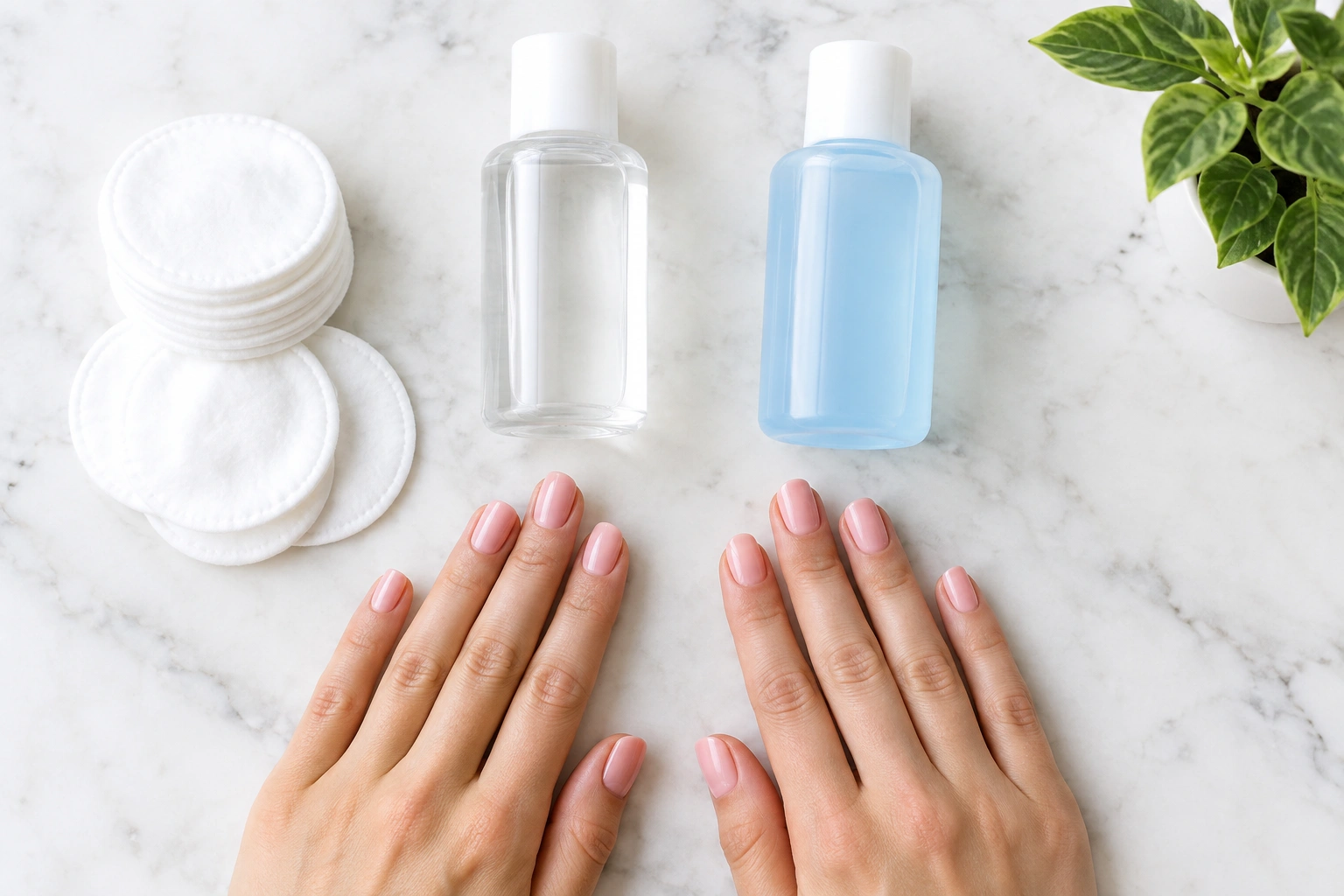
Removal is where many beginners accidentally cause the most stress to their nails.
Acetone vs non-acetone remover
Acetone usually works faster, especially on darker polish or stubborn layers. It is often the better choice for glitter, multiple coats, or gel-like residue, but it can be drying. Non-acetone remover is usually slower and may be preferable if your skin and cuticles get dry easily or you are only removing light regular polish.
Protecting cuticles after removal
After you remove polish, wash away remover residue, dry your hands well, and apply a cuticle oil, hand cream, or a simple moisturizer to the nail area. That extra step can help reduce the dry, tight feeling that often follows acetone use.
Safer removal habits
- Soak a cotton pad instead of flooding the skin.
- Hold the remover on the nail briefly rather than rubbing hard.
- Avoid scraping the nail plate.
- Do not peel polish off with your fingers.
- Wash and dry your hands after removal.
Peeling polish can take layers of the nail surface with it, which is one reason nails may feel thinner after repeated wear.
If your polish is thick or hard to remove, these tips on how to fix thick nail polish may help you avoid overworking the nail during cleanup.
When to Stop Using Nail Polish and Get Advice
Use this simple decision rule:
- Keep using the product if it applies normally, stays mostly on the nail, and your skin stays comfortable.
- Switch formulas or change your routine if you get repeated dryness, mild irritation, or strong fumes bother you. Try a different remover, better ventilation, or a simpler formula.
- Stop using it and seek medical advice if you get persistent redness, itching, burning, swelling, a rash, or nail changes that keep coming back with the same product.
A mild reaction that goes away after you stop using the product may simply mean the formula is not a good match for you. If the reaction is severe, spreading, painful, or includes swelling around the face, lips, or eyes, seek urgent medical care.
If the reaction is mild but persistent, a dermatologist can help you figure out whether it is irritation or allergic contact dermatitis. If you want product-selection help or application guidance, a nail technician can also help you narrow down what might be triggering the problem.
The key is not to “push through” repeated reactions. A polish that irritates you is not a good match, no matter how popular it is.
Simple Bottom Line for Beginners
If you want to wear nail polish, you probably can. For most people, the better question is not “Is nail polish safe?” in the abstract, but “Which formula, which remover, and which habits are safest for me?”
Choose the simplest formula that meets your needs, keep it off the skin, work with good airflow, and stop using any product that causes irritation. That approach gives you the best mix of comfort, control, and confidence.
FAQs
Is nail polish safe to use every week?
For many people, yes, but weekly use can increase exposure to polish, remover, and drying ingredients. If your nails start feeling brittle or your skin becomes irritated, spacing out applications may help.
Is “non-toxic” nail polish really safer?
It may be a better fit if you want to avoid certain ingredients, but the label alone does not guarantee that it will not irritate your skin.
Is gel polish safer than regular polish?
Not necessarily. Gel polish lasts longer, but the application and removal process can be more demanding. Safety depends on your nails, your routine, and how carefully it is removed.
Should I use acetone or non-acetone remover?
Acetone is usually faster. Non-acetone may feel gentler for some people. If your skin gets dry or itchy, try reducing how often remover touches the surrounding skin.
Can children wear nail polish?
Occasionally, yes, with adult supervision and good ventilation. Keep polish and remover away from the eyes and mouth, and stop if irritation appears.
What if my cuticles get red after polish?
Stop using that product for now. If the redness keeps happening, or if you also notice itching, swelling, or a rash, consider speaking with a dermatologist.
Is nail polish safe during pregnancy?
Many people continue to wear it, but a cautious approach is best: choose a formula you tolerate well, use it in a ventilated area, and limit strong fume exposure. If you are unsure, ask your clinician.
How long should I keep polish on?
There is no single rule that fits everyone. If the polish is still comfortable, it may be fine to wear for several days, but remove it if it chips badly, starts to irritate your skin, or your nails feel overly dry.
Should I throw away old polish?
If a bottle has become very thick, stringy, separated, or hard to apply smoothly, it may be time to replace it. Old polish can be frustrating to apply and may lead to extra cleanup and overhandling.
Where can I learn more about polish drying and wear?
If you are trying to avoid smudges and repeated touch-ups, this guide on how long nail polish takes to dry completely is a useful next read.

