
What Matte Nail Polish Is and How to Use It With Confidence

Matte nail polish is nail polish that dries to a flat, non-shiny finish instead of a glossy one. If you’re used to classic shiny nails, matte can feel a little surprising at first because the color still shows, but the light reflection is much softer. The result is a smooth, modern look that can make even simple shades feel more intentional.
If you’re deciding between matte nail polish vs glossy polish, a simple beginner rule is: choose matte if you want a more modern look and don’t mind being a little more careful about oils, smudges, and wear; choose glossy if you want the easiest finish to refresh and the most forgiving everyday look. Matte also tends to look best when you like a flat, low-shine style and don’t mind a bit more upkeep.
If you’re just getting started with polish finishes, it helps to think of matte as a style choice, not a different kind of manicure. The polish can be regular nail polish, gel polish, or a top coat that creates the matte effect. If you want a broader overview of polish types, our guide to nail polish vs. nail lacquer is a helpful place to compare the basics.
What Matte Nail Polish Looks Like
A matte manicure usually looks soft, smooth, and low-shine. Instead of catching light the way glossy polish does, it absorbs most of that reflection. That gives the color a flatter appearance, almost like velvet or chalky paper rather than glass.
That difference becomes more noticeable in certain lighting. In bright daylight, matte nails often look crisp and clean. Under indoor lighting, they may look slightly deeper or more muted. If you touch them, the surface can feel less slick than glossy polish, though the exact texture depends on the product.
One thing beginners notice quickly: matte polish can show nail ridges, uneven coats, and smudges more clearly than glossy polish. Gloss tends to blur small flaws by reflecting light. Matte does the opposite, so careful application matters more.
Matte, Glossy, Satin, and Gel: What’s the Difference?
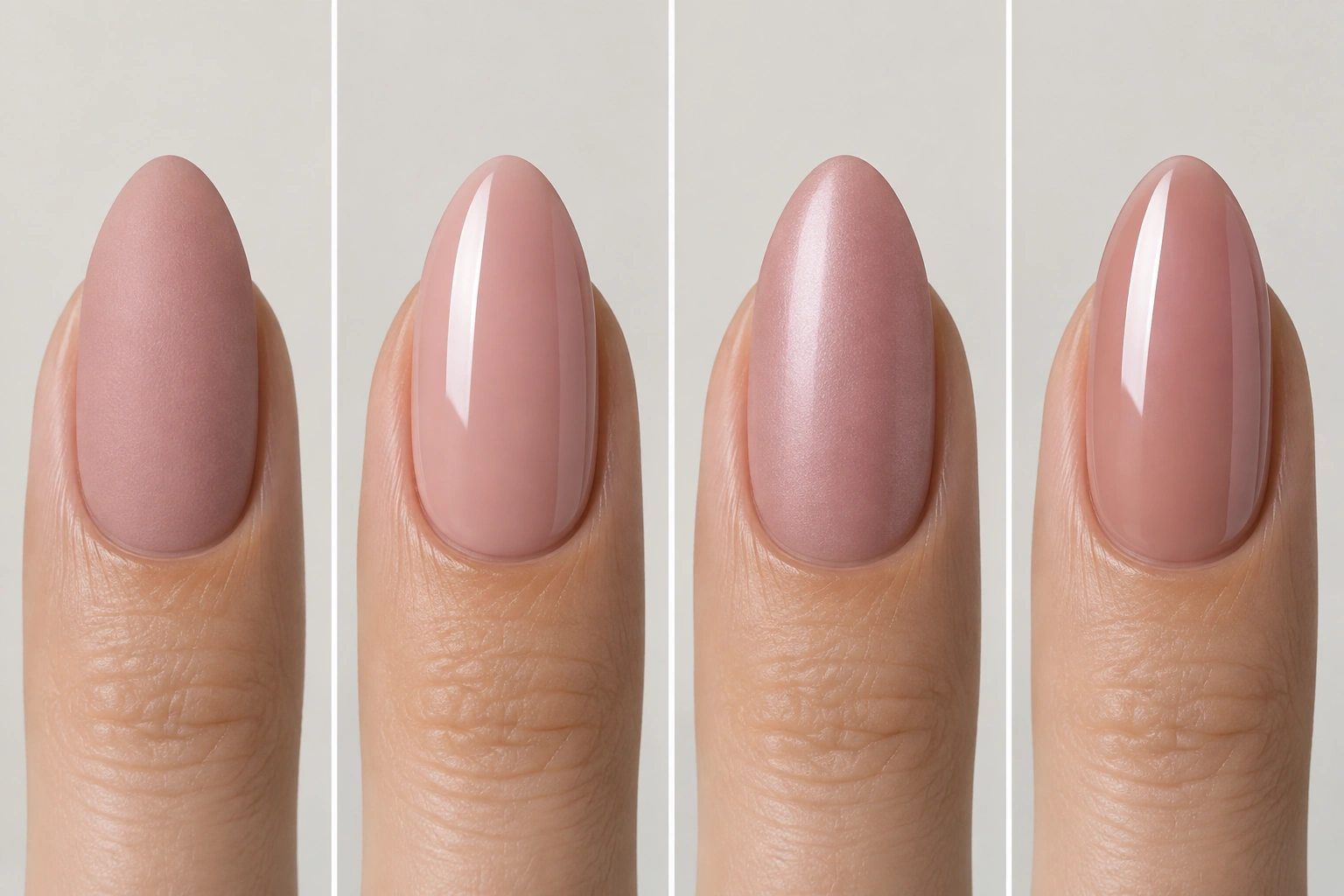
These finishes can all use similar colors, but they create very different results on the nail.
| Finish | How it looks | Best for | Main trade-off |
|---|---|---|---|
| Matte | Flat, soft, very low shine | A modern, understated look | Can show streaks and oils more easily |
| Glossy | Bright, shiny, reflective | Classic polished nails | Less muted, more traditional |
| Satin | Soft sheen, between matte and glossy | People who want a subtle shine | Not as flat as true matte |
| Gel finish | Can be glossy or matte depending on product | Longer wear and a more uniform-looking surface | Removal is usually more involved |
A satin finish is often the easiest “middle ground.” It still has a little glow, but it does not look as reflective as standard glossy polish. In plain language, matte = flat with no shine, while satin = soft sheen with a light glow. If you want the most dramatic difference from regular polish, matte is the clearest choice.
Gel is a separate category because it describes the polish system, not just the shine level. You can have glossy gel or matte gel. So when you compare matte vs. gel, you’re really comparing finish and wear method at the same time.
How Matte Nail Polish Works
You do not need to understand chemistry to use matte polish well. The simple version is this: matte finishes are designed to reflect less light. That reduced reflection is what makes the color look flat instead of shiny.
Some matte polishes are made to dry that way from the start. Others use a matte top coat over regular polish. In both cases, the finish changes the way the top layer interacts with light, which is why the nail looks softer and less reflective once it dries.
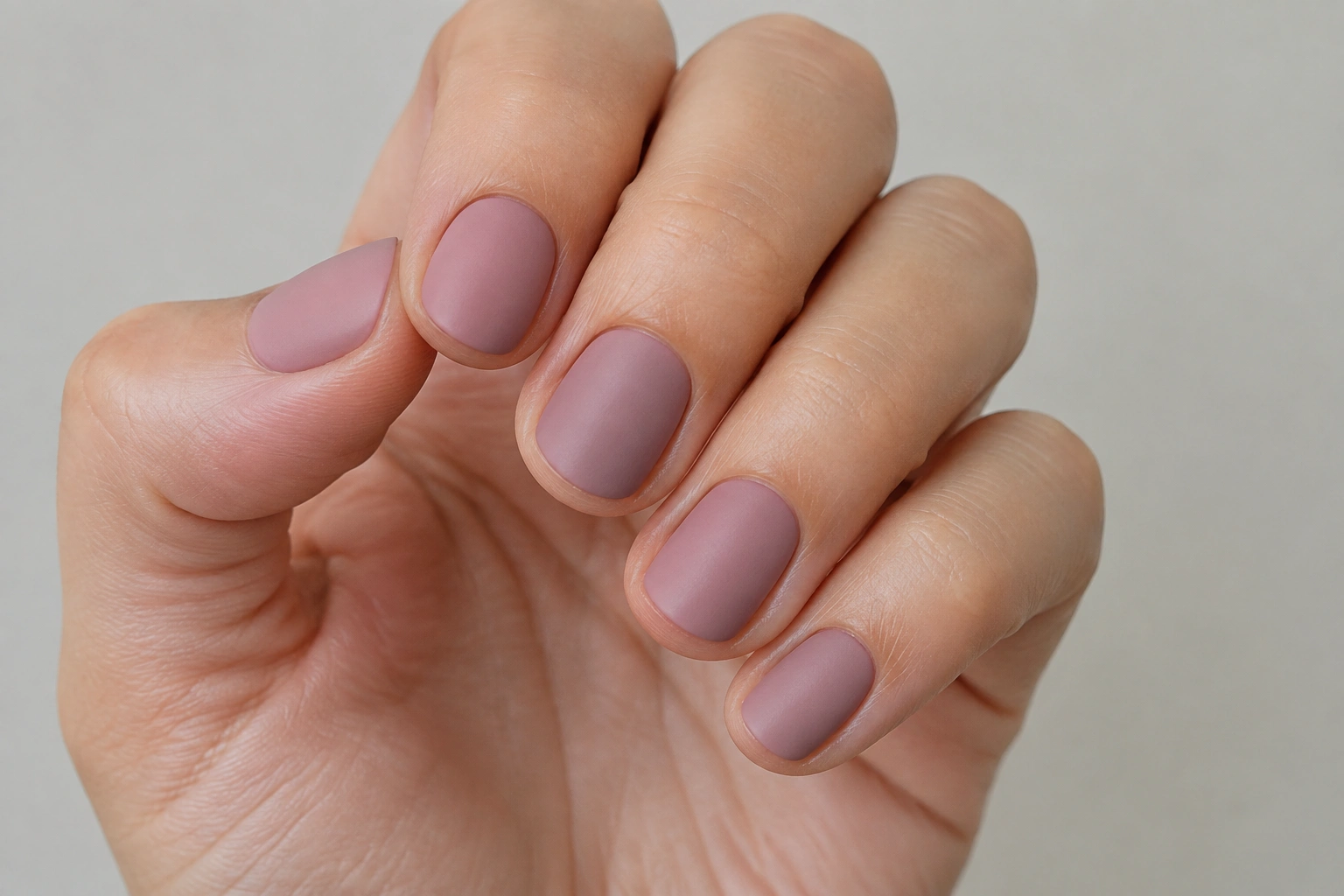
That is why matte can look different from brand to brand. One formula may dry to a very flat finish, while another may have a softer, satin-like result. Lighting, coat thickness, and wear also affect how matte the final look appears. Some formulas also lose their ultra-flat look a little faster as the surface picks up oils or friction during daily wear.
How to Apply Matte Nail Polish for an Even Finish
The goal with matte polish is a smooth, thin, even layer. Thick coats are more likely to dry unevenly and leave streaks.
A simple beginner-friendly method works well:
- Prep the nail first. Clean the nail surface and remove leftover oil or old polish.
- Use a base coat. This helps the polish grip better and gives you a smoother starting point.
- Apply thin coats. Two thin coats usually look better than one heavy coat.
- Use as few brush passes as possible. Try to place the polish, then leave it alone instead of going back over the same spot repeatedly.
- Let each coat dry fully. Wait until the underlayer is completely dry before adding the next coat or a matte top coat.
- Finish with the right top coat only if needed. A regular glossy top coat will remove the matte look, while a matte top coat can keep or create it.
For more even coverage, avoid overworking the polish once it starts to set. Too many brush strokes can pull the color around and create patchy or streaky areas. If you are using a matte top coat over regular polish, make sure the color underneath is fully dry first. Otherwise, the top coat can drag the color and leave uneven patches.
For readers who struggle with polish that never seems to dry properly, our article on why nail polish stays tacky after drying explains some common causes.
Why Matte Polish Can Look Streaky or Shiny in Spots
Matte polish is less forgiving than glossy polish, so small mistakes show up faster.
Here are the most common reasons it looks off:
- The coat is too thick. Thick polish can dry unevenly and create streaks.
- The nail wasn’t fully dry before the matte layer. Moisture or soft color underneath can affect the finish.
- Oil touched the surface. Hand lotion, cuticle oil, and skin oils can create shiny spots.
- The polish was disturbed while drying. A fingerprint or brush mark can leave a different sheen.
- The formula itself is uneven. Some polishes need extra careful application to look uniform.
If one nail looks shinier than the others, check whether lotion or oil touched it after application. That is a very common reason matte nails lose their flat finish at the tips or around the cuticle area. Tip wear and friction can also change the finish over time, so the free edge may look glossier first as the manicure starts to wear.
If your polish seems to be staying soft or sticky, this related guide on how to make sticky nail polish dry may help you troubleshoot the issue.
Matte Top Coat vs. Pre-Made Matte Polish
If you’re deciding whether to buy a dedicated matte polish or use a matte top coat, think about flexibility versus consistency.
A matte top coat gives you more options. You can turn almost any regular polish shade matte, which is useful if you want to test the look before buying more products. It is also a practical choice if you already own a few favorite colors and want to change their finish.
A pre-made matte polish can be easier if you want a more predictable result. Since the finish is built into the formula, there is less guesswork about how it will look over another color.
A simple rule of thumb:
– Choose a matte top coat if you like experimenting with colors you already own.
– Choose dedicated matte polish if you want a ready-made matte look with less trial and error.
How Oils, Lotion, and Top Coats Affect the Matte Look
Matte nails can change during wear. That does not always mean something went wrong. Sometimes the finish just reacts to everyday products.
Hand lotion and cuticle oil can make the surface look shinier, especially if they sit on the nail instead of being rubbed in around it. A glossy top coat will also make a matte manicure shiny again, which is useful if you change your mind, but not if you want to keep the flat look.
A few practical habits help:
– Apply lotion carefully around the nails rather than over them.
– Wait until polish is fully dry before using oil nearby.
– Avoid sealing matte polish with a standard glossy top coat unless you want shine.
– Before taking photos, gently wipe the nail surface if there is any residue from lotion or oil.
– If the matte finish starts to look patchy or uneven, a fresh matte top coat can help restore a more uniform look.
This is one reason matte nails can feel a little higher-maintenance than glossy nails, depending on your lifestyle and the formula you use. Gloss usually hides minor wear better. Matte shows changes faster.
How to Remove Matte Nail Polish Safely
Matte polish usually comes off the same way as regular polish, but gentle removal matters because matte finishes can leave nails feeling drier if you scrub too hard.
For regular matte nail polish, use a nail polish remover that matches the formula you’re removing:
– Acetone remover often works faster, especially on stubborn polish.
– Non-acetone remover can be a gentler option for lighter polish or if you prefer less drying.
A safe removal routine is simple:
1. Saturate a cotton pad or remover wrap.
2. Hold it on the nail for a few seconds.
3. Wipe gently instead of scraping.
4. Repeat if needed rather than rubbing hard.
5. Wash hands and follow with hand cream or cuticle oil.
For matte gel polish, the process is different. Follow the product’s recommended gel-removal method instead of treating it like regular polish. Depending on the formula, that may mean soaking, filing, or professional removal. Peeling gel off can damage the nail surface.
For polish that is extra stubborn or seems to resist removal, our guide to how to fix nail polish that won’t dry may also be useful, since slow-drying polish often needs a more patient removal approach too.
Pros and Cons of Matte Nail Polish
Matte polish has a very distinct appeal, but it is not always the easiest finish to live with.
Pros:
– Gives nails a modern, soft look
– Makes colors feel more muted and refined
– Works well for simple, minimal styles
– Can be created with a matte top coat over regular polish
Cons:
– Shows streaks, smudges, and oils more easily
– Can look uneven if applied too thickly
– May need more careful maintenance than glossy polish
– Doesn’t hide nail texture as well as some glossy formulas
If you like a clean, understated finish, matte can be very satisfying. If you want the most forgiving everyday manicure, glossy is usually easier to maintain.
Is Matte Nail Polish Right for Your Nails and Style?
Matte can look especially nice on short nails because the flat finish gives a neat, modern effect without needing extra shine. It also works well on longer nails if you want a dramatic, fashion-forward look.
Nail shape matters less than the overall style you want. Square, almond, oval, and short natural nails can all wear matte polish well. In practice, matte often looks best on nails with a smooth surface and on lengths where you want the color to stand out more than the shine.
Here’s a simple way to decide:
– Pick matte if you want something soft, current, and less reflective.
– Pick glossy if you want a classic finish that is easier to refresh.
– Pick satin if you want a little shine without full gloss.
– Pick gel matte if you want a longer-wearing matte look and are comfortable with the removal process.
If you are a beginner choosing between matte nail polish vs glossy polish, glossy is usually the easier low-maintenance option because it tends to be more forgiving of small flaws. Matte is a better fit if you want a more styled look and do not mind being a bit more careful with application and upkeep.
If you are unsure, try a matte top coat on one color you already own. That gives you a low-risk way to see whether the finish suits your style before you buy more matte shades.
When to See a Nail Technician or Dermatologist
If your nails become unusually thin, painful, discolored, or irritated after polish use or removal, stop using the product and get professional advice. A nail technician can also help if you keep getting streaky results and want help choosing a formula or application method.
FAQ: Matte Nail Polish Basics
Does matte nail polish need a special top coat?
Not always. Some polishes are made to dry matte on their own, while others need a matte top coat to create the effect.
Can I make regular nail polish matte?
Yes. A matte top coat is the easiest way to turn regular polish into a matte finish.
Why does my matte polish look shiny in some spots?
Oil, lotion, fingerprints, or a glossy top coat can all make parts of a matte manicure look shiny.
Is matte polish harder to apply than glossy polish?
Usually, yes. Matte polish shows streaks and uneven coats more clearly, so thin layers matter more.
What remover should I use?
Either acetone or non-acetone remover can work for regular matte polish. Matte gel polish should be removed using the gel product’s recommended method.
Does matte polish last as long as glossy polish?
Not always. Wear time depends on the formula, your routine, and how much the finish gets touched by oils or friction.
Is matte better for short nails?
It can be. Short nails often look very neat in matte, but the finish can work on many nail lengths and shapes.
Will a glossy top coat ruin the matte look?
Yes. A standard glossy top coat will usually make the surface shiny again.

