
Why Is My Nail Polish Not Drying? A Beginner’s Guide to Fixing It Fast

If your manicure still feels soft, sticky, or easy to dent, the problem is usually one of a few simple things: the coats were too thick, you used too many layers, the polish is old or thickened, or the environment is slowing drying down.
The good news is that most slow-drying polish problems are fixable. You can often make the next manicure dry better by changing how you apply it, and you can sometimes rescue the one you already have if you catch the issue early.
Quick Answer: The Most Common Reasons Nail Polish Won’t Dry
When nail polish seems like it “won’t dry,” beginners are often dealing with one of these:
- Too much polish on the nail
- Too many coats
- Not enough time between layers
- Old, thick, or stringy polish
- Humidity or poor airflow
- Confusing regular polish with gel polish
A manicure can also feel dry on top while still being soft underneath. That is why a nail may look fine until you press it against a phone, a blanket, or a zipper and end up with a dent.
If you want a deeper breakdown of drying problems, this guide pairs well with how nail polish works and faster drying tips.
How Long Nail Polish Should Take to Dry vs Fully Cure
Regular nail polish and gel polish do not dry the same way.
Surface-dry vs fully dry
- Surface-dry means the top layer feels less tacky and may seem ready to touch.
- Fully dry means the polish has set through the layers, so it is much less likely to dent or smudge.
That difference matters because a manicure can fool you. It may feel okay when you lightly tap it, but still smear if you use your hands normally.
Regular polish timing guide
For regular polish, beginners can usually expect:
- Each thin coat: wait about 2 to 5 minutes before the next coat
- Surface-dry: often around 10 to 20 minutes
- Safe enough for light use: often around 30 to 60 minutes
- Fully dry through the layers: often up to a few hours, depending on coat thickness, humidity, and how many layers you used
If the manicure is still denting easily after a long wait, it may be unusually slow-drying rather than just normal drying time.
Regular polish vs gel polish
- Regular polish dries by letting solvents evaporate.
- Gel polish needs a UV/LED lamp to cure properly.
If you use gel polish without the right lamp, it may stay sticky or never set the way you expect. If you are unsure whether your product is regular polish or gel, check the label before trying to “air dry” it. Some gel systems also leave a tacky inhibition layer after curing, so sticky does not always mean uncured.
For a simple comparison of drying methods, see Best Way to Dry Nail Polish Quickly.
| Type | How it dries | What beginners notice |
|---|---|---|
| Regular polish | Air-drying as solvents evaporate | Can feel dry on top before it is fully set |
| Gel polish | Cures under UV/LED light | May feel tacky until cured correctly, or have a tacky layer after curing |
| Thin coats | Faster evaporation | Smoother finish, less smudging |
| Thick coats | Slower evaporation | More chance of dents, wrinkles, and tacky spots |
Why Your Nail Polish Is Still Wet: The Main Causes
1) The coats are too thick
Thick coats are the most common reason polish dries slowly. A heavy coat traps more liquid underneath, so the top may seem dry while the lower part stays soft.
A beginner example: if one thick coat looks smoother than two thin coats, it may seem like the faster choice. In practice, it often causes more waiting and more smudging later.
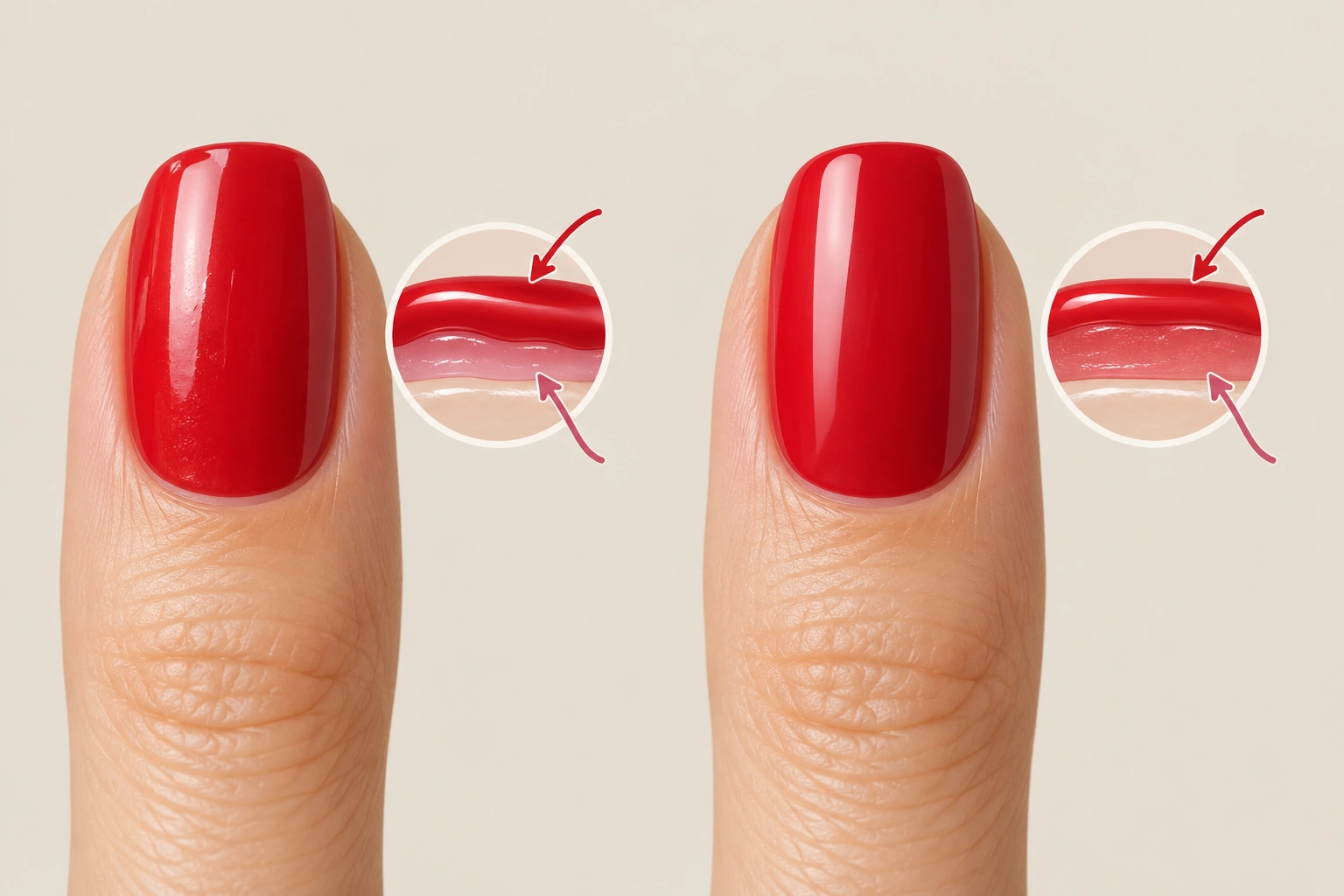
A better approach is to use thin, even coats. You may need one extra layer for coverage, but each layer will dry more reliably.
2) You used too many layers
Every layer adds drying time. That includes base coat, color coats, and top coat. If each layer goes on before the last one is ready, the manicure can turn gummy or uneven.
A simple rule: if the polish starts to drag when you brush on the next coat, pause longer. Re-brushing over a soft layer can create ridges and trap wet polish underneath.
3) The polish is old, thickened, or stringy
Old polish often behaves badly. It may:
- Pull into strings when you lift the brush
- Leave ridges or bubbles
- Spread unevenly
- Stay tacky longer than normal
That does not always mean the bottle is unusable, but it is a strong sign the formula has thickened. In that case, a proper nail polish thinner may help. Use a thinner made for polish, not a random solvent.
If the bottle is very old, replacement may be the better choice.
4) Humidity is slowing the drying
Regular polish depends on evaporation, so damp air can slow it down. You may notice this more in a bathroom after a shower or on a very humid day.
Humidity does not usually ruin the manicure on its own, but it can make drying feel much slower than expected. If possible, paint your nails in a drier room with steady airflow.
5) You applied the next coat too soon
This is a common beginner mistake. A layer can look “fine” before it is ready for more polish. If you add the next coat too soon, the lower layer can stay soft longer and become easier to dent.
If your polish seems to never dry, think back to the application order. Did each coat get enough time before the next one went on?
Regular Polish vs Gel Polish: Make Sure You’re Using the Right Drying Method
This is worth checking before you troubleshoot anything else.
Use air-drying for regular polish
Regular polish is meant to dry in open air. Helpful tools include thin coats, a quick-dry top coat, and careful waiting between layers.
Use a lamp for gel polish
Gel polish is different. It usually needs a UV/LED lamp to cure. If you skip the lamp, the surface may stay sticky no matter how long you wait.
Quick decision rule
- If the polish label says gel, use the lamp system it was designed for.
- If it says regular polish, focus on thin coats and air-drying methods.
If your polish is drying strangely and you are not sure whether the issue is the product or the technique, this article on why nail polish drying drops work can help you compare options.
What to Do Right Now to Help Nail Polish Dry Faster
Here are the safest, most practical fixes for a manicure that is already on your nails, ranked from most effective to least effective.
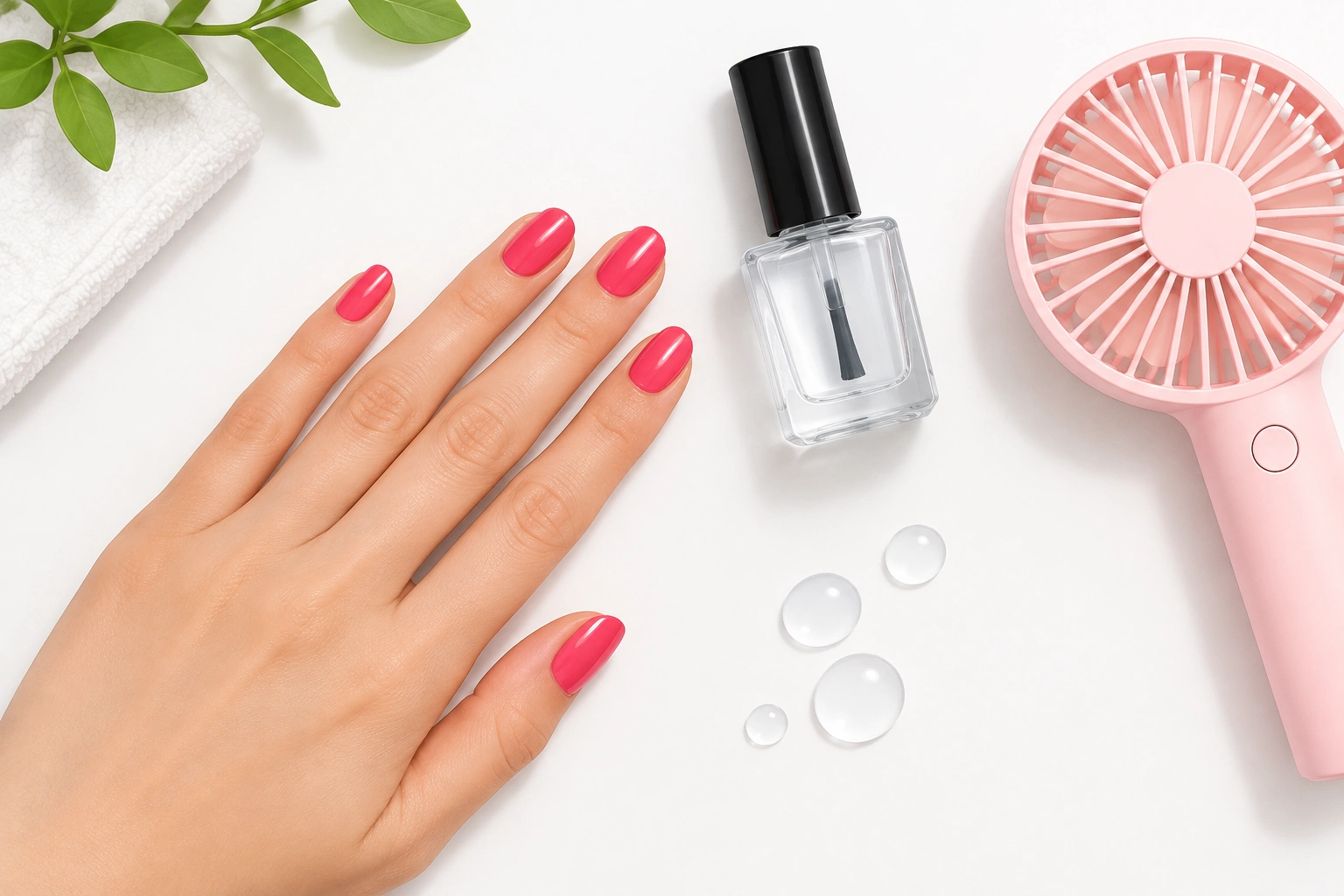
1) Stop adding more layers and let the manicure settle
If the polish is already soft, the best move is usually to stop touching it and give it time. Adding another coat or trying to “fix” it often makes the problem worse.
2) Use a quick-dry top coat if the manicure is still usable
A quick-dry top coat can help seal the surface sooner than a standard top coat. That can make the manicure feel more set and less vulnerable to light smudges.
This is most useful when the polish is already thin and even. If the manicure is very soft, a top coat may not rescue it and can sometimes trap the problem underneath.
3) Use gentle airflow
A fan can help move air across the nails, which supports evaporation for regular polish. Keep the airflow gentle. Strong heat is not a good shortcut.
4) Try drying drops if the product is made for polish
Drying drops can help some manicures set faster on the surface. They are not magic, but they can be useful when the polish job is already thin and even.
5) Keep your hands still longer than you think
Even when polish feels dry, it may still dent if you use your hands normally. Give your nails a quiet stretch of time before reaching for keys, bags, or your phone.
Best use case for each method
- Already painted manicure: quick-dry top coat, gentle airflow, drying drops, and simply leaving it alone
- Prevention for next time: thinner coats, more time between layers, and better polish choice
What Not to Do While Polish Is Drying
Some common “fixes” actually make things worse.
Don’t use heat
Warm air may seem like it should help, but heat can cause bubbling or uneven setting. It can also make the top layer look dry before the polish underneath is ready.
Don’t keep testing the nail
Pressing a nail to see if it is dry often creates the exact dent you were trying to avoid. If you need to check, do it very lightly on one edge rather than pressing the center.
Don’t add more polish to fix a streak
If a coat looks thin or uneven, the temptation is to brush more polish over it. That usually creates a thicker layer that takes longer to dry.
Don’t use too much top coat
Top coat is helpful, but a heavy layer can slow drying and make the manicure feel soft longer.
Don’t rely on water too early
Cold water methods are popular, but they are not always reliable. If the polish is still soft, water can still leave dents or smears.
For more on avoiding smudges, see how to prevent nail polish smudging while drying.
How to Tell If the Polish Formula Is the Problem
Sometimes the issue is not your technique. The polish itself may be the problem.
Signs the formula is too old or thick
- The brush pulls up stringy polish
- The polish leaves visible ridges
- The color goes on patchy and uneven
- The bottle seems harder to shake or mix smoothly
- The manicure stays tacky much longer than usual even with thin coats
Thin it or replace it?
Use a nail polish thinner if the polish is only slightly thickened and still usable. Replace the bottle if it is very old, badly separated, or impossible to apply smoothly.
A polish that is too thick can make even a careful manicure dry badly. In that case, starting over with fresh polish is often less frustrating than trying to rescue a lumpy coat.
If your bottle seems suspiciously thick, this related guide on nail dehydrator not drying may also help you sort out product-related problems.
When to Wait Longer and When to Remove and Redo
Wait longer if:
- The polish was applied in thin coats
- The surface is only slightly tacky
- There are no deep dents or wrinkles
- The manicure looks smooth and even
Remove and redo if:
- The polish is still very soft after a long time, not just a normal drying window
- The surface has heavy wrinkling or obvious bubbling
- There are deep dents that keep coming back
- The manicure has thick buildup that looks lumpy or gummy
- You can see brush marks, bubbles, or ridges that won’t settle
- The formula is old and hard to work with
A bad application can waste more time than a fresh start. If the manicure is clearly overloaded with polish, removing it and doing thinner coats usually saves frustration.
How to Prevent Slow-Drying Polish Next Time
Use thinner coats
This is the biggest improvement most beginners can make. Thin coats dry more evenly and are less likely to trap wet polish underneath.
Wait between coats
Give each layer enough time to stop dragging before adding the next one. That simple pause helps the manicure set more cleanly.
Keep the polish in good condition
Close the bottle tightly after use. If the polish starts getting thick, address it early with a proper thinner instead of waiting until it becomes stringy.
Paint in a dry, calm space
A room with less humidity and more airflow is usually better than a steamy bathroom.
Choose products that match your routine
If you want speed, use a quick-dry top coat or drying drops made for nail polish. If you want the longest-lasting glossy finish, be ready to give the manicure more time.
When to See a Nail Technician or Dermatologist
If the problem is only that the polish will not dry, a nail technician can help you figure out whether the issue is the product, the application, or the type of polish you are using.
If your nails or skin are also irritated, painful, or reacting badly to products, a dermatologist is the better person to ask. Slow-drying polish by itself is usually a product or technique issue, not a medical one.
FAQs
Why is my nail polish still sticky after hours?
Most often, it was applied too thickly, layered too soon, or the polish is old and not performing well. If it is regular polish, give it more time and avoid touching it. If it is gel polish, make sure it was cured under the correct lamp.
Can I use a fan to dry nail polish?
Yes, gentle airflow can help regular polish dry. Keep it mild. Strong heat is not a good idea, and the fan will not fix a very thick manicure.
Does cold water help nail polish dry?
Sometimes people find it helpful, but it is not as reliable as thin coats and proper drying time. If the polish is still soft, water can still cause dents or smears.
Do quick-dry drops really work?
They can help some manicures set faster, especially when the polish is already applied in thin, even coats. They are most useful as a support, not a rescue for very thick polish.
Should I remove the polish if it is still soft?
If it is only slightly tacky, wait longer. If it is gummy, wrinkled, deeply dented, or still very soft after a long time, removing and redoing is often the better choice.
Why does my nail polish dry on top but smudge later?
That usually means the surface set before the layers underneath were fully dry. Thick coats and too many layers make this more likely.
Can base coat or top coat slow drying?
Yes, especially if either one is applied too heavily. Both products help the manicure, but too much of either can make the whole system dry more slowly.
The main fix is usually simple: use thinner coats, give each layer time, and match the drying method to the polish type. Once you understand that difference, your manicure gets much easier to control.

