
Best Nail Files for Builder Gel: Top Professional Picks and Buying Guide

Builder gel gives nails extra strength and a smooth shape while lasting longer than regular polish. Many people choose builder gel to fill, extend, or reinforce natural nails at home or in salons because it creates a hard, sculpted layer that resists chipping and lifts less than standard gels. Nail files for builder gel serve a different job than regular files: they must shape a tough surface without causing cracks, over-thinning, or heat spikes during filing.
Choosing the right file means balancing grit, shape, and durability for safe, consistent results. Coarse grits remove product faster but risk scratching or overheating the nail bed, while finer grits refine the surface and blend layers; the file’s shape and backing affect control and access to cuticle lines. We tested a range of emery boards, buffer blocks, and professional e-files to find files that shape builder gel efficiently while minimizing damage and dust.
Best Nail Files for Builder Gel
Below is our full list of the best nail files for builder gel. We tested and picked files that shape, smooth, and refine builder gel layers without causing lifting. Use this list to find the right grit and shape for your routine.
Teenitor Nail File & Buffer Set

We recommend this kit if you want a full set that covers shaping, smoothing, and shining at a low price.
Pros
- Good range of grits for each step.
- Buff and shine pieces give a quick glossy finish.
- Durable emery and easy to rinse.
Cons
- Coarser grits can feel rough if you press too hard.
- Some lower-grit files seemed less useful to us.
- Shape and size may not suit very small nails.
We used the Teenitor set over several sessions and liked how it handled a full builder-gel routine. The 150/180 grits cut and shape tips quickly, and the 240 felt gentler as we refined edges. The step progression made the process feel organized.
The buffer blocks smoothed ridges well, and the 1000/4000 sides really do add a fast shine. We noticed the high-gloss finish lasted about a week on our nails. Cleaning the emery and EVA blocks was simple with soap and water.
At this price, the kit gives good value for at-home gel maintenance. We would skip the roughest pieces if you have thin or weak nails, but the finer grits and shiners are ones we kept using.
HeeYaa Nail Files (12-pack)

We recommend these if you want sturdy, reusable 100/180 grit files that shape builder gel without eating through the product too fast.
Pros
- Durable double-sided grit for shaping and smoothing.
- Washable and holds up to multiple uses.
- Good value—twelve files for salon or home use.
Cons
- Grit is fairly coarse for very soft natural nails.
- Edges can wear after heavy daily use.
- Not ideal if you need ultra-fine finishing grit.
We used these files on several builder-gel sets and they handled bulk filing well. The 100 side removes product quickly while the 180 side refines the shape without shredding the gel. They felt solid in hand and cut down filing time compared with thin emery boards.
Cleaning them was simple—water and a quick scrub removed dust and kept the surface usable. After multiple uses the grit stayed consistent on most files, though a couple showed wear where we filed aggressively at the free edge. For routine maintenance and shaping, they lasted longer than we expected.
For a mix of salon and at-home work, these give the best balance of price and performance. If you need ultra-fine finishing or very gentle work on fragile natural nails, add a finer buffer for the final step.
Makartt Zebra 100/180 Nail Files
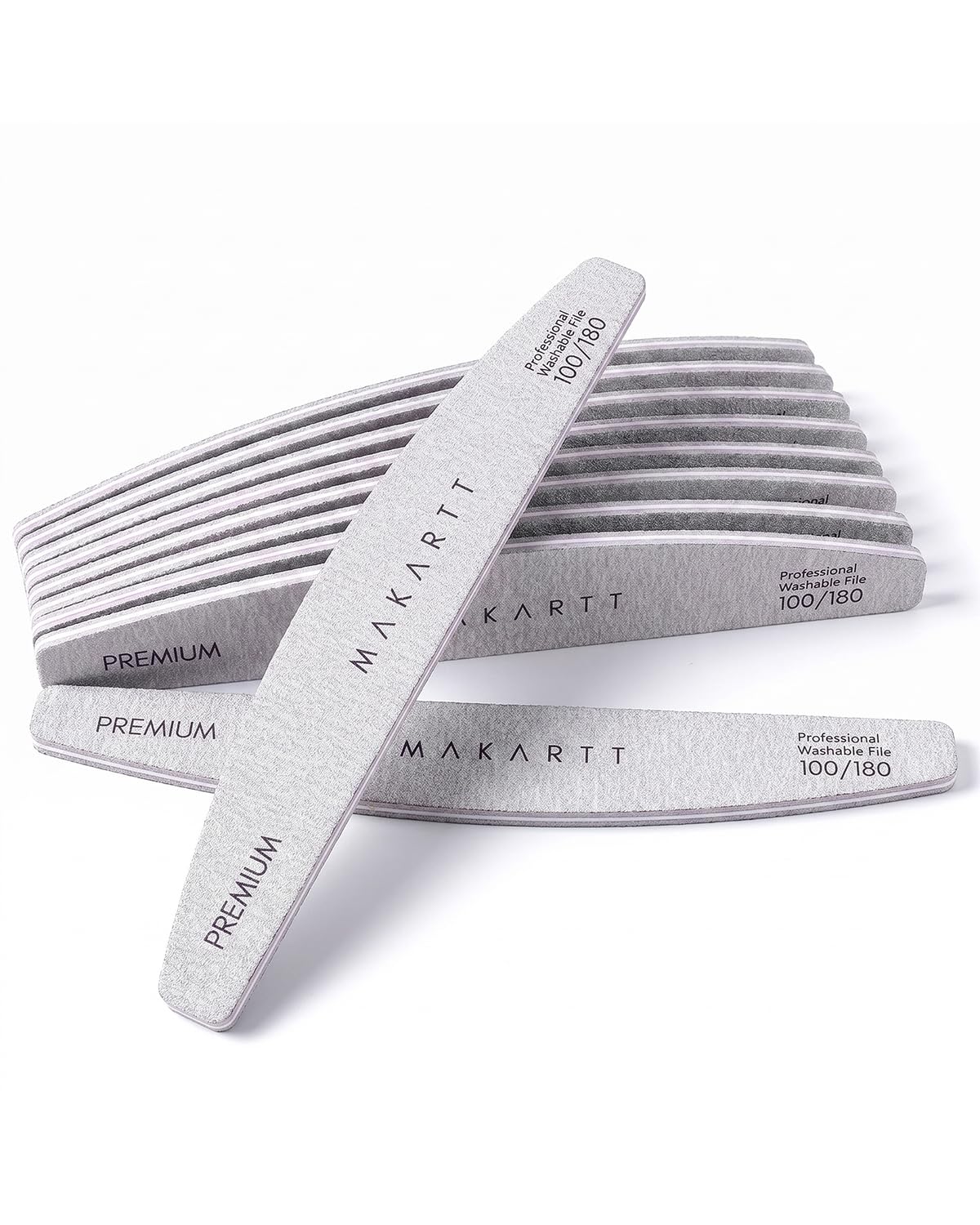
We recommend this set when you want a tough, affordable file that handles builder gel and lasts through many uses.
Pros
- Fast shaping with the 100 grit and cleaner edges with 180 grit
- Pre-buffed edge feels gentler around cuticles
- Sturdy core; files do not fall apart after repeated use
Cons
- 100 grit can be too aggressive if you’re inexperienced
- Not as smooth as salon metal files for final finishing
- Grit may feel rougher on the 180 side than expected
We tested these on builder gel extensions and natural nails. The 100 side removes bulk quickly, so you trim length and shape fast. That saved time when prepping long tips.
The half-moon curve followed the nail line well. It let us get into corners without digging at the sidewalls, and the pre-buffed edge reduced the sting near cuticles.
After several uses and washes the files kept their shape. They stayed rigid and the grit stayed effective, so they felt like a solid value for home and salon backup.
We liked having ten in the pack for hygiene and travel. If you need a gentler finish, plan to finish with a finer buffer or a metal file, but for builder gel shaping these work very well.
Makartt Zebra 100/180 Nail Files
Cliganic Nail Files (12-Pack)
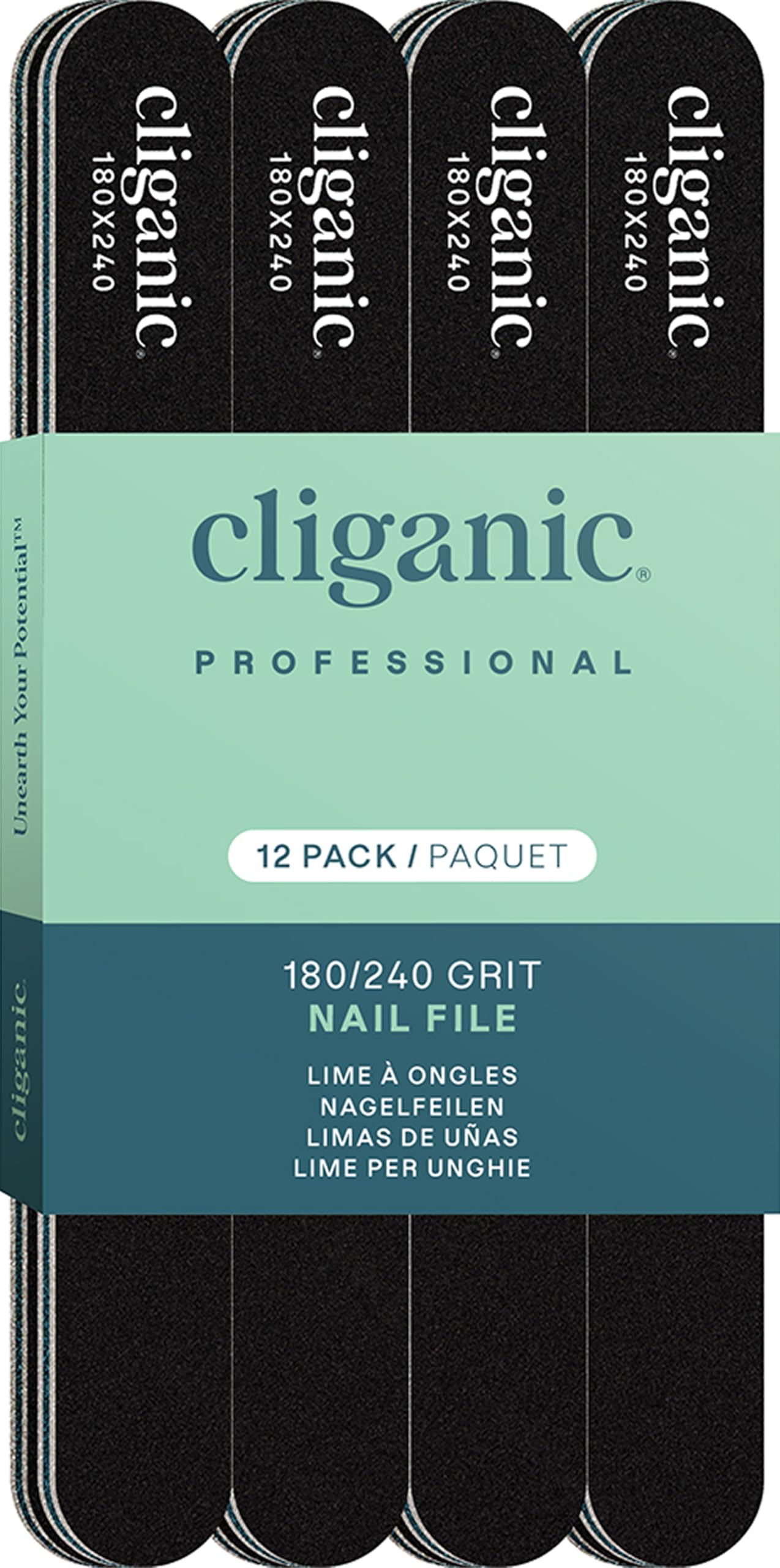
We recommend this set if you want a simple, reliable emery board that handles builder gel shaping and finishing without breaking the bank.
Pros
- Durable grit that lasts through multiple uses.
- Double-sided 180/240 gives shaping and smoothing in one tool.
- Washable and easy to rinse after use.
Cons
- 180 grit can feel too rough on very thin natural nails.
- Emery boards wear down faster than metal or glass files.
- Not a substitute for electric filing on heavy builder gel removal.
We used these on full builder gel sets and at-home fills. The 180 side cut through the bulk quickly, and the 240 side left a clean, controlled edge for finishing. They fit well in our hand for longer sessions.
These files held grit longer than other disposable boards we’ve tried. Rinsing under water cleared dust without loosening the grit. The size felt comfortable for both nail beds and tips.
For salon-style heavy work, we still reached for an e-file for speed. But for shaping, blending seams, and smoothing edges, these were dependable. They’re a good value when you need several files on hand for clients or home use.
Orly Builder In A Bottle (Builder Gel)

We recommend this if you want an easy-to-use builder gel that strengthens nails and gives a clear, salon-style finish at home.
Pros
- Easy brush-on application that feels familiar and controlled.
- Self-leveling formula reduced filing and left a smooth surface.
- Strengthened my nails without the harsh smell or damage of acrylics.
Cons
- Thicker areas can feel heavy until fully cured.
- Some users report lifting or chipping with poor prep.
- Small bottle for frequent at-home builders.
We used this Orly gel for fills and small extensions and liked how it handled. The brush spreads the gel smoothly and the self-leveling really shows — you get a glossy, even surface after curing. It saves time on buffing compared with some hard gels.
When we built length with forms, the product held its shape and resisted cracking under light wear. For thin nails, it added noticeable strength that let our nails grow without breaking. Curing times matched our LED lamp and the finish stayed shiny.
Prep matters more than usual with this one. When we skipped proper dehydration and base layer, edges lifted sooner. With clean prep and a good base coat it lasts much longer and defeats chips for several days.
Treamlyn 10-Pack Rough Nail Files

We recommend this pack if you want strong, cheap files that handle builder gel and acrylic shaping well.
Pros
- Cuts bulk fast with the 100 grit side
- Stays rigid and doesn’t bend under pressure
- Ten files give good value for home or salon use
Cons
- Grit wears down after heavy use
- Not as long-lasting as metal or glass files
- Edges can feel a bit rough on delicate natural nails
We used these on several builder gel sets and they made taking down thickness quick. The 100 grit side shaves product away without flexing, so we could shape tips fast. Switching to 180 smoothed edges enough to prep for buffing.
Handling felt familiar and solid compared to flimsy emery boards. They held their shape when filing full-coverage gel and thick acrylic overlays. We did notice the coarse surface blunted after a few heavy sessions, so they’re best as a budget workhorse rather than a forever tool.
Cleaning is easy with a brush but avoid soaking—the paper surface won’t like water. For DIYers and busy salons that rotate tools, the pack gives a lot of usable life for the price.
AhaTopia Nail File & 4-Way Buffer Kit

We recommend this kit if you want an affordable, all-in-one set that handles builder gel shaping and gives a decent shine with simple at-home use.
Pros
- Lots of pieces so we rarely run out.
- 4-way buffer gives quick shine and smooths ridges.
- Double-sided emery boards work on both thick and natural nails.
Cons
- Buffer could be slightly more aggressive for very thick builder gel.
- Emery grit wears with heavy use over time.
- Not a replacement for a professional e-file on thick enhancements.
We used this kit for multiple builder-gel fills and light shaping. The 100/180 emery sides cut through thicker gel and shape tips well, while the finer side helps smooth before buffing. It saved us time when switching between shaping and finishing.
The 4-way sponge block surprised us with how fast it brought up shine on natural edges and thin gel layers. One pass left a glossy finish that looked salon-ready without polish. For heavy, layered builder gel we found the buff step gentle; it worked best after we reduced bulk with the emery file first.
Packing and cleanup felt easy. The files are washable and light to carry, so we kept extras in our kit. If you need an aggressive tool for major gel removal, add a coarse e-file or heavier grit, but for shaping, smoothing, and shine this set is a solid, budget-friendly option.
HomeyEra 100/180 Nail Files (12 Pack)

We recommend this pack if you want sturdy, long-lasting emery boards for shaping both natural and builder gel nails.
Pros
- Durable grit that holds up over multiple uses
- Good length and square shape for better control
- Dual 100/180 sides handle shaping and smoothing
Cons
- Emery dust can build up with heavy use
- Not as gentle as very fine buffers for topcoat finish
- Bulk pack may include some slightly uneven edges
We used these files on both builder gel and acrylic tips. The coarse 100 side removed product quickly without making the nail edge feel thin. The 180 side smoothed ridges well before gel layering.
Handling felt secure. The 7.1-inch length and square shape gave us a steady grip when filing long extensions. They did not bend much, so pressure stayed even.
After several uses, grit held up and did not flake away fast. We noticed some emery dust when filing thick gel, so working over a towel helped keep the area clean.
These files work best when you want fast shaping and a reliable second-stage smoothing step. They aren’t a final buff for mirror-shine finishes, but they’re great for prep and shaping.
Buying Guide
We look for grit that matches the job. Coarse grits (80–100) shape builder gel fast. Medium grits (150–180) refine edges. Fine grits (240+) smooth the surface before buffing.
We check file type and durability. Emery boards wear quickly; glass, ceramic, and high-quality metal files last longer. A strong core prevents bending and gives more control.
We consider file shape and size for the nail style. Straight files suit square nails. Round or oval files help with curves and tips. Short files are good for detail; long files give smooth, even strokes.
We inspect backing and grip for comfort. A cushioned handle reduces hand fatigue. Non-slip backing helps keep steady pressure and avoids over-filing.
We value dust control and safety features. Files that create less dust help keep the workspace clean. Look for edges that won’t cut the skin and tips that reduce snagging.
We note how easy a file is to clean. Reusable files should withstand sanitizing without losing grit. Disposable options remove cross-contamination risk but add waste.
We compare sets and included grits. Sets can save money and cover more steps. Single files let us replace only what we need.
We weigh price against longevity. Cheaper files may need frequent replacement. Higher upfront cost can be worth it for consistent, safe results.
Editor’s Choice
We chose a nail file that balances grit, shape, and durability for builder gel. It files bulk quickly but still lets us refine edges and smooth the surface.
The file is a 180/240 grit combo with a firm core. The 180 side shapes the gel; the 240 side smooths and refines without damaging the layers.
We like an ergonomic handle for control and less hand strain. A lightweight, non-slip grip helps when we work on both hands.
Maintenance matters. Replace the file when it clogs or the abrasive wears thin to avoid uneven filing.
Key features at a glance:
- Grit: 180/240 (dual-sided)
- Shape: C-curve or straight for stability
- Core: Firm for pressure control
- Grip: Non-slip handle for steady work
We tested for dust control and found files that cut cleanly produce less airborne debris. That makes the workspace easier to keep tidy and reduces cleanup time.
We recommend this style for both pros and home users who apply builder gel. It performs well across multiple fills and delivers predictable results.
Conclusion
We chose files that balance grit, shape, and durability for builder gel. A medium-coarse file helps sculpt the gel without thinning it too fast. Fine grits smooth the surface for shine and long wear.
We recommend keeping at least two types on hand: one for shaping and one for finishing. Replace worn files to avoid uneven edges or damage to the gel. Clean them after each use to stop buildup and bacteria.
When picking files, think about your technique and nail shape. Paddle or oval files work well for natural curves. Straight files give precise edges for square or sharp styles.
We tested options that are affordable and long lasting. We looked for consistent grit, comfortable handles, and easy cleaning. Those features help us get reliable results every time.
We advise starting gentle and checking progress often. Work in short strokes and keep the file flat against the nail. This prevents digging into the gel and keeps the look smooth.
Our picks fit home users and pros who want control and consistency. Use the right grit for each step and replace tools when they wear out. That simple routine keeps builder gel strong and nails looking neat.
FAQS
What grit file should we use for builder gel?
We use 180–240 grit for shaping builder gel. For smoothing edges or refining, we switch to 240–320 grit. Coarser grits remove product faster but risk damage.
Can we use an electric file on builder gel?
Yes, we can use an e-file with care. Use a low speed and the right bit to avoid heat and thin spots. Practice on tips before working on nails.
How often should we file between fills?
We file lightly every 2–3 weeks to maintain shape and thin the growth area. Avoid heavy filing each time; that shortens service life.
Do we need different files for natural nails and builder gel?
Yes. We use softer, finer files for natural nails and more abrasive files for builder gel. Mark or store them separately to prevent cross-use.
How do we avoid lifting when filing?
We file gently around the cuticle and slope the product toward the free edge. Clean dust and check adhesion before sealing with top coat.
How long do files last?
Disposable emery boards last a few uses; glass or ceramic files last months if kept clean. Replace files when they clog, wear smooth, or cut less effectively.

