
You set your nail file down for a minute, and suddenly your cat is licking it, biting the edge, or trying to carry it away. It can look funny at first, but it is reasonable to wonder: why does my cat eat nail files, and should I be worried?
Cats investigate their surroundings with their noses, paws, and mouths. A nail file has an unusual rough texture, carries interesting household scents, and may move like a small toy when your cat bats it around. But repeatedly chewing or actually swallowing pieces of a nail file is different from simple curiosity.
Persistent eating of non-food objects can be a form of pica, and swallowed file fragments can potentially injure the mouth or cause a digestive blockage.
Here is how to tell harmless curiosity from a problem, what to do if your cat swallowed part of a nail file, and how to keep both your manicure tools and your cat safer.
Quick Answer
If you’re wondering why does my cat eat nail files, the attraction may come from their texture, smell, movement, boredom, or simple curiosity. Repeatedly swallowing nail files or other non-food objects can also indicate pica. Keep files out of reach, provide safe enrichment, and contact a veterinarian if your cat actually swallows pieces or repeatedly seeks out non-food items.
Why Is My Cat Attracted to Nail Files?
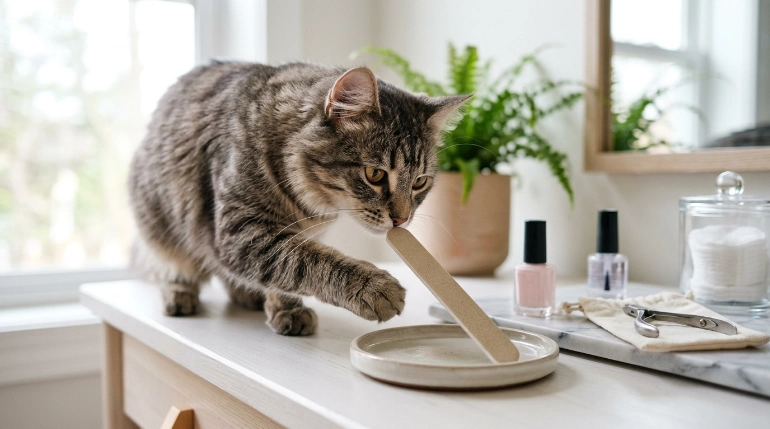
There is no single proven reason cats specifically love nail files. In many cases, several small factors probably combine.
The Rough Texture Feels Interesting
An emery board feels completely different from most household objects. It is lightweight but stiff, with a gritty surface that can provide unusual feedback when a cat bites or licks it.
Young and curious cats, in particular, often investigate objects with their mouths.
A cat that gives a nail file a few experimental bites and then walks away may simply be exploring.
The situation becomes more concerning if your cat:
- Searches specifically for nail files
- Chews them repeatedly
- Tears pieces from cardboard files
- Swallows the abrasive coating or backing
- Regularly eats other non-food items
Those behaviors deserve closer attention.
Your Nail File Carries Familiar Smells
A used nail file can carry tiny amounts of nail dust, skin oils, hand cream, polish residue, or other scents from your beauty routine.
Cats have a strong sense of smell, so an object that seems odorless to you may still be interesting to them.
That does not mean cats are nutritionally attracted to fingernail material. There is no good evidence that cats need or benefit from eating nail filings.
It Moves Like a Toy
Put an emery board on the edge of a table and tap it. It slides, spins, flips, and sometimes springs back.
To a playful cat, that can be far more interesting than the file’s intended purpose.
Your cat may begin by batting at the file, then grab it with their paws and eventually bite it as part of play.
Your Reaction May Accidentally Reinforce It
Imagine this pattern:
Your cat grabs your nail file. You immediately run over, talk loudly, chase the cat, and trade the file for a treat.
From the cat’s point of view, stealing the file just created an exciting game and earned attention.
If the behavior is partly attention-driven, calmly removing access and redirecting your cat to an appropriate toy is usually better than turning the situation into a chase.
Boredom or Stress Can Play a Role
Cats need opportunities to stalk, chase, scratch, climb, explore, and solve small problems.
A cat without enough stimulation may invent activities using whatever is available—including your manicure supplies.
Anxiety and compulsive behavior can also contribute to persistent consumption of non-food items. VCA’s veterinary guidance on pica in cats lists anxiety and compulsive disorders among possible causes.
Could Eating Nail Files Be Pica?
Possibly.
Pica means persistently ingesting things that are not food. Cats with pica may consume materials such as plastic, fabric, paper, string, or similar household objects.
Chewing alone does not automatically prove that your cat has pica.
The important distinction is:
| What Your Cat Does | Possible Meaning | Best Response |
|---|---|---|
| Sniffs or licks a file once | Normal curiosity | Put the file away |
| Bats or carries it | Play behavior | Redirect to a safe toy |
| Frequently chews files | Strong preference, boredom, stress, or another issue | Prevent access and monitor |
| Removes and swallows pieces | Possible pica and foreign-body risk | Contact your veterinarian |
| Eats several types of non-food objects | Pica becomes more concerning | Arrange veterinary evaluation |
| Vomits or stops eating after swallowing material | Possible obstruction or injury | Seek prompt veterinary care |
Pica can have behavioral causes, but veterinarians may also investigate medical conditions. VCA lists gastrointestinal disease, anemia, diabetes, hyperthyroidism, dietary insufficiency, and other conditions among possible contributors.
That is why persistent pica should not automatically be dismissed as your cat “being weird.”
Is It Dangerous for a Cat to Eat a Nail File?
Yes, actually swallowing nail-file material can be dangerous.
The exact risk depends on what type of file your cat gets into and how much material is swallowed.
Emery Boards Can Break Into Pieces
Traditional emery boards usually have an abrasive surface attached to a flexible backing.
A determined cat may shred the edges and swallow small fragments.
Tiny particles may pass without causing an obvious problem, but there is no reliable way to know at home whether a larger piece will pass normally.
Larger Pieces May Cause a Blockage
Foreign material can become trapped in the stomach or intestines.
The Merck Veterinary Manual’s information on gastrointestinal obstruction in cats notes that foreign objects can cause partial or complete intestinal obstruction. Common warning signs include vomiting, appetite loss, lethargy, diarrhea, and abdominal pain or swelling.
A blockage can become life-threatening and sometimes requires endoscopic or surgical removal.
Hard or Sharp Pieces Can Cause Injury
A broken glass file, damaged hard file, or rigid fragment may injure your cat’s:
- Tongue
- Gums
- Teeth
- Throat
- Esophagus
- Stomach
- Intestines
VCA also notes that eating inappropriate materials can contribute to tooth fractures or other dental problems.
Never intentionally give your cat an old nail file as a chew toy.
Residue on the File Adds Another Concern
Used manicure tools may have come into contact with nail polish, polish remover, gel products, acrylic products, lotions, cleaners, or other substances.
If your cat chewed a file contaminated with a product and you are unsure whether the substance is harmful, contact your veterinarian.
For suspected toxic exposure, the ASPCA Animal Poison Control Center provides veterinary toxicology assistance 24 hours a day.
What Should I Do If My Cat Ate Part of a Nail File?
Do not panic, but do take the situation seriously.
1. Take the Nail File Away
Remove the remaining file and any loose fragments.
If possible, keep the damaged file. Knowing how much is missing may help your veterinarian evaluate the situation.
2. Check Your Cat’s Mouth Only If It Is Safe
Look for obvious bleeding, a fragment caught near the front of the mouth, or excessive drooling.
Do not reach deep into your cat’s throat or force an upset cat’s mouth open.
3. Estimate What Was Swallowed
Try to determine:
- What type of nail file it was
- Approximately how much is missing
- Whether it broke into sharp pieces
- When your cat swallowed it
- Whether the file had product residue on it
Share this information with your veterinarian.
4. Do Not Induce Vomiting on Your Own
A foreign object may cause additional injury while coming back up.
Do not give hydrogen peroxide, oil, butter, salt, or another home remedy unless a veterinarian specifically instructs you to do so.
5. Watch Closely for Warning Signs
Contact a veterinarian promptly if your cat develops:
- Repeated vomiting
- Gagging or regurgitation
- Excessive drooling
- Difficulty swallowing
- Loss of appetite
- Unusual tiredness
- Abdominal tenderness or swelling
- Diarrhea
- Difficulty passing stool
- Obvious pain
- Blood in vomit or stool
Vomiting, appetite loss, lethargy, and abdominal discomfort are among recognized signs of gastrointestinal obstruction.
If your cat is choking, having difficulty breathing, collapsing, repeatedly vomiting, or showing severe pain, seek emergency veterinary care immediately.
How to Stop Your Cat From Eating Nail Files
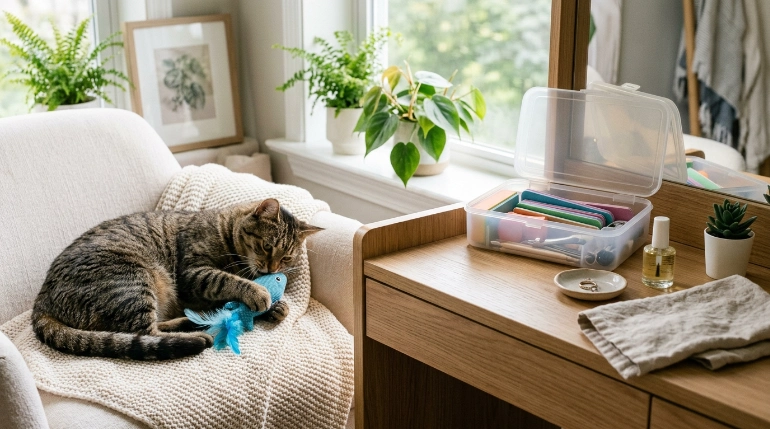
Prevention is usually easier than repeatedly taking the file away.
Store Nail Tools in a Closed Container
A zipped manicure case, drawer, cabinet, or lidded box works well.
Do not leave files on:
- Bathroom counters
- Nightstands
- Coffee tables
- Open vanity trays
- The edge of your desk
- The floor beside your manicure area
A drawer costs nothing if you already have one, and even an inexpensive closed organizer can eliminate much of the problem.
Give Your Cat Better Things to Do
Try replacing the nail-file activity with appropriate enrichment.
Useful options include:
- Wand toys
- Cat-safe balls
- Scratching posts
- Cardboard scratchers
- Food puzzles
- Climbing structures
- Hide-and-seek games with treats
- Short interactive play sessions
VCA recommends preventing access to preferred non-food objects while providing scratching areas, prey-like toys, feeding toys, and other forms of environmental enrichment for cats displaying pica behavior.
Avoid Punishment
Yelling, spraying your cat with water, or physically frightening them may increase anxiety.
That is especially unhelpful if anxiety already contributes to the behavior.
Instead, remove the file calmly and reward your cat for interacting with an appropriate toy.
Review Your Cat’s Diet With Your Veterinarian
Do not assume your cat is eating nail files because they “need minerals.”
If you are concerned about nutrition, start with a complete and balanced cat food appropriate for your cat’s life stage.
Cornell University’s guide to choosing a complete and balanced cat food explains that commercial foods carrying an appropriate nutritional adequacy statement are designed to provide the required balance of nutrients.
Do not begin vitamin or mineral supplements simply because your cat chews unusual objects. Ask your veterinarian first.
Expert Tip: If your cat repeatedly steals one specific manicure item, do not spend weeks trying to make that item unattractive. Store it completely out of reach and give your cat a safe activity that provides similar opportunities to bite, bat, chase, or explore.
Are Some Nail Files Safer Around Cats Than Others?
No nail file should be treated as a cat toy, but the potential hazards differ.
| Nail File Type | Main Concern Around Cats |
|---|---|
| Cardboard/emery board | Easy to chew, shred, and swallow |
| Foam file/buffer | Soft material may be torn off and swallowed |
| Glass file | Can break or chip if dropped or bitten |
| Metal file | Hard surface can damage teeth; small attachments may pose hazards |
| Electric nail-file accessories | Small bits, cords, and removable pieces add extra risks |
For your own manicure, choose the file that works best for your nails. For your cat’s safety, secure storage matters more than file material.
Do not switch from an emery board to a metal or glass file because you believe the harder option will be safe for the cat to chew.
It isn’t a chew toy.
Keep Your Manicure Area Hygienic Too
If your cat has been licking or biting a disposable emery board, replacing it is usually the simplest choice.
Disposable nail files are inexpensive compared with dealing with contaminated or damaged tools.
You should also:
- Clear nail dust from your manicure surface.
- Close polish, remover, gel, glue, and other products immediately after use.
- Keep small manicure accessories in containers.
- Do not allow your cat to play with cotton pads soaked in nail products.
- Wash your hands before handling food after doing your nails.
- Store all manicure supplies where curious pets cannot reach them.
This protects your beauty tools while reducing your cat’s opportunities to swallow something inappropriate.
When to Call a Veterinarian
Arrange a veterinary visit if your cat regularly eats nail files or other non-food materials, even if they currently seem well.
Veterinary evaluation becomes especially important when the behavior:
- Appears suddenly in an adult cat
- Happens repeatedly
- Includes actual swallowing
- Involves several different non-food items
- Occurs with vomiting or diarrhea
- Comes with weight loss
- Is accompanied by increased or decreased appetite
- Happens alongside weakness or unusual behavior
A veterinarian can evaluate your cat’s mouth, digestive health, diet, and overall condition and decide whether further testing is appropriate.
When to See a Nail Technician or Dermatologist
For the cat’s chewing behavior, a veterinarian—not a nail technician or human dermatologist—is the appropriate professional.
However, you may need help with your own nails or skin if a cat-damaged manicure tool caused an injury.
A nail technician can help you choose a fresh file and explain proper tool hygiene, but nail technicians should not diagnose an infection or skin condition.
Consider seeing a dermatologist or other medical professional if you develop persistent:
- Redness
- Swelling
- Increasing pain
- Pus or drainage
- Significant inflammation around the nail
And if a file has been heavily chewed or contaminated, replacing it is safer and simpler than continuing to use it.
Common Mistakes to Avoid
- Giving the old file to your cat as a toy. A file that is no longer good for manicures is still not safe to swallow.
- Assuming tiny pieces cannot matter. You may not know exactly how much your cat swallowed.
- Waiting for severe symptoms after a large piece disappears. Call your veterinarian for case-specific guidance.
- Inducing vomiting without professional direction. Foreign objects can cause additional damage.
- Punishing your cat. Anxiety may make some repetitive behaviors worse.
- Assuming pica always means a nutrient deficiency. Pica can have several behavioral and medical causes.
- Buying supplements without veterinary advice. A balanced diet should be evaluated before adding nutrients.
- Leaving nail products open beside your cat. Files are not the only manicure supplies that can create a pet-safety problem.
FAQs
Why does my cat lick my nail file?
Your cat may be investigating its unusual texture or the scents left on a used file. Occasional licking is different from repeatedly chewing and swallowing pieces. Put the file away so licking does not progress into ingestion.
Why does my cat chew emery boards?
Emery boards are light, rough, easy to grab, and easy to shred. Those characteristics can make them interesting to a playful cat. Repeatedly consuming pieces, however, can be consistent with pica and should be discussed with your veterinarian.
Can cats it will pass normally. citeturn346621view1
Should I worry if my cat ate a tiny piece of an emery board?
The risk depends on the size, material, your cat’s size and health, and whether other material was swallowed. Save the remaining file and contact your veterinarian if you are uing, appetite changes, lethargy, abdominal discomfort, or difficulty passing stool. citeturn346621view1
Does eating nail files mean my cat has a vitamin deficiency?
Not necessarily. Pica can be associated with multiple behavioral and medical factors. Do not diagnose a nutrient deficiency based only on chewing behavior or start supplements dance. citeturn346621view0turn346621view3
How do I stop my cat from stealing my nail file?
Store your files in a closed drawer or manicure case, avoid leaving them on countertops, and redirect your cat toward safe toys, scratching surfaces, food puzzles, and inteing into a chasing game.
What if my cat keeps eating other non-food objects too?
Repeatedly consuming plastic, fabric, paper, string, nail files, or other inappropriate materials deserves veterinary evaluation. Persistent ingestion fits the general definition of pica, and your veterinarian can investigate possible behavioral and medical causes. citeturn346621view0
Conclusion
So, why does my cat eat nail files? In many cases, the file is simply an unusually textured, interesting-smelling object that is fun to bat, bite, and explore. Boredom, attention-seeking behavior, anxiety, or persistent pic
The most important question is whether your cat merely investigates the file or actually swallows it.
If your cat chews off pieces, remove access immediately. Store manicure tools in a closed container, provide better enrichment, and monitor your cat carefully. Persistent consumption of non-food materials should be discussed with a veterinarian, while vomiting, appetite loss, abdominal pain, or other symptoms after swallowing a file warrant prompt professional attention. citeturn346621view0turn346621view1
Your safest next step is simple: keep nail files for your manicure and give your cat toys designed for cats.
