
If you have ever looked at the growing number of glass, ceramic, metal, and traditional emery nail files and wondered which one is actually worth using, you are not alone. Ceramic files often look more durable and polished than disposable boards, but that does not automatically make them right for every nail type.
So, are ceramic nail files good? For many people, yes. A quality ceramic nail file can shape natural nails smoothly, last much longer than a disposable emery board, and be cleaned between uses. The key is using light pressure and choosing the right level of abrasiveness for your nails.
Below, we will look at the benefits, limitations, safety considerations, cleaning routine, cost, and who should—and should not—consider using a ceramic nail file.
Quick Answer
Yes, ceramic nail files are good for many natural nails, especially if you want a durable, reusable file that gives you good control while shaping. They can create smooth edges without aggressive filing when used gently. However, very thin, peeling, damaged, or sensitive nails may need an extra-fine file and lighter pressure.
What Is a Ceramic Nail File?
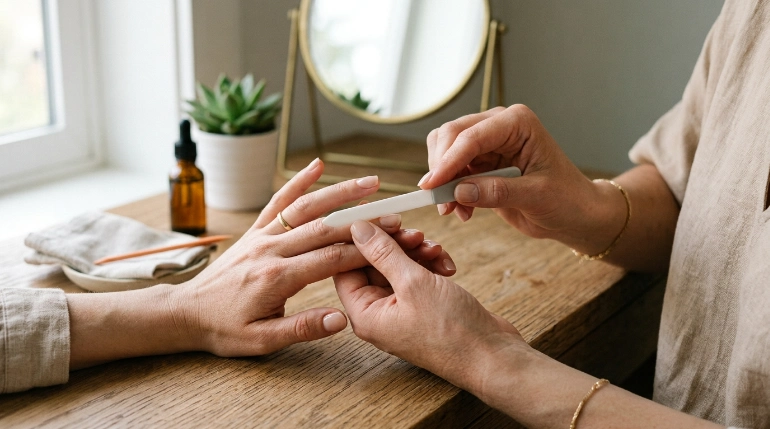
A ceramic nail file uses a hard ceramic filing surface rather than the paper-and-abrasive construction found on most disposable emery boards.
The textured ceramic surface gradually removes tiny amounts of nail from the free edge—the white or extended part of your nail—to create the shape you want.
Ceramic files are usually designed to be reusable. Depending on the product, they may also be washable, which makes them convenient for someone who regularly does her own manicures.
They should not be confused with glass nail files. Both are reusable alternatives to traditional boards, but the surface material and filing feel can be different.
Are Ceramic Nail Files Good for Natural Nails?
For healthy natural nails, a ceramic file can be an excellent everyday shaping tool.
The main advantage is control. Instead of removing a large amount of nail quickly, a fine ceramic surface lets you make small adjustments to the shape.
That is useful when you want to:
- Smooth a small snag before it becomes a tear
- Maintain almond, oval, square, or squoval nails
- Refine uneven corners after clipping
- Shorten nails gradually
- Keep a reusable file in your manicure kit
The American Academy of Dermatology’s nail-trimming guidance recommends using a nail file to slightly round fingernails at the corners and advises filing in the same direction. This helps reduce unnecessary stress on the nail edge.
A ceramic file can work well for that purpose as long as its surface is not excessively coarse.
Benefits of Ceramic Nail Files
1. They Give You Good Control
Ceramic nail files are especially useful for precision work.
If one corner of your nail is slightly longer than the other, you can remove a very small amount instead of accidentally taking off too much.
That makes ceramic files appealing when you care about maintaining a specific manicure shape.
2. They Can Leave a Smooth Nail Edge
A fine ceramic surface can produce a neat, smooth edge when you use gentle strokes.
That matters because a rough edge can catch on hair, sweaters, towels, or bedding. Once a nail starts snagging, it is easier for a small weak spot to turn into a split.
Do not try to make the edge perfectly smooth by filing it repeatedly for several minutes. Over-filing is still possible with a ceramic file.
3. They Are Reusable
Disposable emery boards lose effectiveness as the abrasive surface wears down or becomes clogged.
Ceramic files are generally designed for repeated use, making them appealing if you file your nails frequently.
You will still need to replace one if:
- The ceramic surface becomes damaged
- It develops chips or cracks
- The abrasive texture no longer files evenly
- It cannot be cleaned properly
4. Many Are Easy to Clean
A reusable file has one major hygiene advantage: you can often clean debris from its surface instead of continuing to use a dirty disposable board.
Always follow the file manufacturer’s cleaning instructions because not every ceramic file is constructed exactly the same way.
For personal nail tools, cleanliness matters. The Mayo Clinic’s healthy fingernail guidance recommends keeping nails clean and practicing good nail hygiene.
5. They Can Be Convenient for Regular DIY Manicures
If you shape your nails once or twice a week, constantly replacing inexpensive boards can become annoying.
A ceramic file gives you a dedicated tool that can stay in your manicure kit and be cleaned when necessary.
For someone who regularly maintains natural nails at home, that convenience may justify paying more upfront than she would for a basic disposable board.
Ceramic vs. Glass vs. Emery Board Nail Files
No nail file material is automatically best for everyone.
Here is a practical comparison:
| Nail File Type | Best For | Main Benefits | Main Limitations |
|---|---|---|---|
| Ceramic | Routine natural-nail shaping | Reusable, precise, often washable | Can feel too aggressive if coarse or used with heavy pressure |
| Glass | Gentle natural-nail maintenance | Smooth filing feel, reusable | Can break if dropped |
| Emery board | General manicure use | Inexpensive, easy to find, many grit choices | Wears out and is harder to clean thoroughly |
| Metal | Quick shortening of sturdy nails | Durable and fast | Often too aggressive for thin or peeling natural nails |
For most healthy natural nails, ceramic and fine glass files are both reasonable choices. The better option depends more on the actual abrasive surface and how you use it than on the name of the material alone.
Are Ceramic Nail Files Good for Weak or Brittle Nails?
They can be, but this is where technique becomes especially important.
Weak nails may bend, peel into layers, or split at the tips. If you repeatedly scrub a coarse file back and forth over those edges, you may make the problem worse.
For fragile nails:
- Choose a fine, gentle ceramic surface
- Use very little pressure
- File only as much as necessary
- Stop if the nail starts flexing
- Do not aggressively thin the top surface
- Moisturize nails and surrounding skin regularly
The American Academy of Dermatology’s healthy nail tips also recommend keeping nails shaped and free of snags while avoiding habits that damage the nail or cuticle.
If your nails are suddenly becoming much more brittle, discolored, thick, painful, or distorted, switching files is not necessarily the solution. Those changes may deserve professional evaluation.
How to Use a Ceramic Nail File Safely
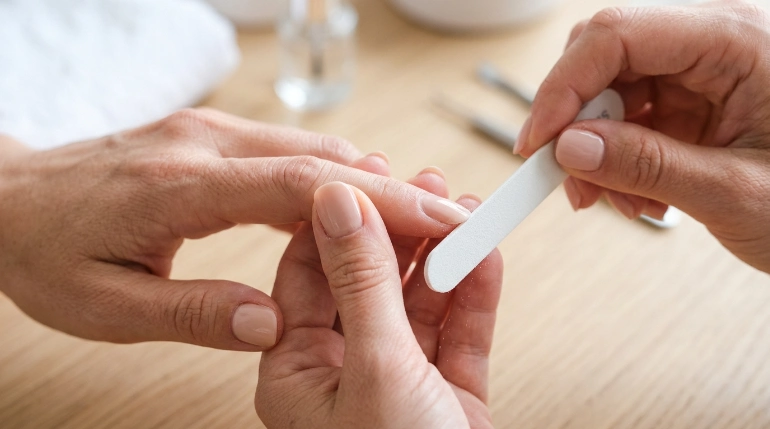
Ceramic files are straightforward, but a few technique changes can make a big difference.
Step 1: Start With Clean Nails
Remove obvious dirt and make sure you can clearly see the free edge of your nail.
You do not need to soak your nails for a long time before filing.
Step 2: Decide on Your Shape
Choose the basic shape before you start.
Common choices include:
- Round
- Oval
- Squoval
- Square
- Almond
If your nails need significant shortening, trimming first may be faster than trying to file away a large amount of length.
Step 3: File With Light Pressure
Hold the file against the free edge rather than pressing aggressively into it.
Use controlled strokes. You should feel the ceramic surface doing the work without needing to push hard.
Step 4: Work Gradually
Check the nail after every few strokes.
It is much easier to remove a little more nail than to fix a corner you accidentally filed too short.
Step 5: Smooth Snags Carefully
Once you have the basic shape, gently refine any rough points.
Avoid repeatedly filing an already-smooth edge simply because you are trying to make it look perfect.
Step 6: Clean the File
Brush away nail dust and clean the ceramic file according to its manufacturer’s directions.
Allow it to dry completely before storing it in a case or manicure kit.
Expert Tip: Let the ceramic surface do the work. If you find yourself pressing hard or filing the same spot over and over, stop and check your technique before removing more nail.
Can You Use a Ceramic File on Gel or Acrylic Nails?
Possibly, but ceramic files are most straightforward for natural nail shaping.
Artificial enhancements can require different levels of abrasiveness depending on whether you are shortening, reshaping, reducing bulk, or preparing the product for removal.
A very fine ceramic file may feel frustratingly slow on thick acrylic, while a coarse ceramic file could be too aggressive around the natural nail.
This is one area where DIY filing deserves extra caution. The American Academy of Dermatology’s advice on reducing artificial-nail damage specifically notes that artificial nail services can contribute to brittleness, peeling, and cracking and recommends minimizing damage during removal.
If you are trying to remove a professional gel or acrylic enhancement, do not simply grind it away until your natural nail feels thin. Follow the appropriate removal method for the product or have a nail technician handle it.
What About the Top Surface of the Nail?
A ceramic nail file should normally be treated as a shaping tool for the free edge, not as something to aggressively sand the entire nail plate.
The nail plate is the hard portion of the nail you can see.
Repeatedly filing its top surface can make the nail thinner. This is especially risky when your nails already bend, peel, or feel tender.
If you want to smooth minor surface irregularities, use a product specifically intended as a gentle nail buffer and follow its instructions.
Visible deep grooves, new dents, unusual discoloration, or major changes in nail texture should not simply be buffed away to hide them.
Hygiene: Can You Share a Ceramic Nail File?
Sharing manicure tools is not a great habit, particularly when a tool may contact damaged skin or an unhealthy-looking nail.
Even if your ceramic file is washable, the simplest home routine is to keep your personal file for your own use.
You should also avoid filing a nail that has:
- Pus or drainage
- Bleeding skin
- Significant swelling
- An open cut
- Obvious infection around the nail
- A painful injury
Trying to “clean up” an infected or injured nail with a file can irritate the area further.
When Should You Replace a Ceramic Nail File?
A ceramic file can last considerably longer than a disposable board, but reusable does not mean permanent.
Replace it when you notice:
- Cracks in the ceramic
- Chipped edges
- An uneven abrasive surface
- Areas that no longer file effectively
- Permanent contamination you cannot remove
- Damage that makes the file uncomfortable to hold or use
Do not keep using a cracked ceramic file simply because it still removes nail. A damaged edge can become rough or unpredictable.
Cost: Is a Ceramic Nail File Worth Paying More For?
Ceramic files generally make the most sense for someone who values durability and does regular nail maintenance.
Think about cost in terms of how you actually do your nails.
A ceramic file may be worth it if:
- You file your nails regularly
- You prefer reusable manicure tools
- You want more control around corners and shapes
- You are tired of replacing worn emery boards
- You want a file that can usually be cleaned after use
A basic emery board may be enough if:
- You rarely file your nails
- You need an inexpensive temporary option
- You prefer disposable tools
- You need several different grit levels for different nail services
Paying more does not automatically mean the file will be gentler. Surface texture and technique matter more than a premium-looking handle or package.
Who Should Be Careful With Ceramic Nail Files?
Be particularly gentle if you have:
- Very thin nails
- Peeling nail layers
- Nails damaged after artificial enhancements
- Tender fingertips
- Cracks extending into the attached part of the nail
- Recently injured nails
If the file causes discomfort, stop.
Normal shaping should not produce sharp pain, bleeding, or significant tenderness.
Common Mistakes to Avoid
Ceramic nail files are easy to use, but these mistakes can undo their benefits:
- Pressing too hard. More pressure does not necessarily create a better shape.
- Removing too much length at once. File gradually and check the nail often.
- Using a very coarse surface on thin nails. Fragile nails usually need gentler filing.
- Aggressively filing the top of the natural nail. This can unnecessarily thin the nail plate.
- Continuing after the nail becomes sore. Tenderness is a reason to stop, not keep refining.
- Using a chipped or cracked file. Damaged ceramic should be replaced.
- Sharing your file without proper hygiene. Personal manicure tools are best kept personal.
- Filing through signs of infection. Redness, swelling, warmth, pus, and persistent pain are health concerns rather than cosmetic problems.
Ceramic Nail File vs. Salon Filing
You do not need a professional manicure just to maintain healthy nail length and shape.
Simple natural-nail filing is usually manageable at home when the nails and surrounding skin look healthy.
A salon becomes more useful when you want:
- Detailed enhancement reshaping
- Acrylic or hard-gel maintenance
- Professional product removal
- Complex artificial-nail corrections
- Help controlling length and symmetry you struggle with yourself
However, a nail technician is not a replacement for a medical professional. If the concern appears to involve infection, disease, unexplained discoloration, or an injury, a dermatologist or other qualified healthcare professional is the better next step.
When to See a Nail Technician or Dermatologist
A nail technician can help when the issue is mainly cosmetic—for example, shaping uneven enhancement nails or safely maintaining a professionally applied manicure.
A dermatologist is more appropriate when something seems medically unusual.
Seek professional medical advice if you notice:
- Persistent redness or swelling around a nail
- Warm or painful skin around the nail
- Pus or drainage
- Unexplained nail discoloration
- A nail separating from the nail bed
- Major changes in nail thickness or shape
- A nail that becomes brittle or crumbly without an obvious reason
- A dark streak or other unexplained color change
- Pain that does not improve
The NHS guide to nail problems advises seeking medical care for unexplained changes in nail shape or color and for sore, red, swollen, warm skin around a nail, which can indicate infection.
Do not try to file away discoloration, thickening, or damaged nail tissue simply to make the nail look normal. Filing cannot diagnose or treat an underlying medical problem.
FAQs
Are ceramic nail files better than regular nail files?
They can be better if you want a reusable, precise filing tool. A good ceramic file can provide excellent control for natural nails, but a quality fine-grit emery board can also work well. Technique and abrasiveness matter more than material alone.
Are ceramic nail files good for thin nails?
They may be suitable if the surface is fine and you use very light pressure. If your nails peel or bend easily, avoid aggressive filing and stop if the edge starts becoming thinner or more fragile.
Can ceramic nail files damage nails?
Yes, if they are too coarse or used aggressively. Any nail file can cause unnecessary thinning or splitting when you over-file, press too hard, or repeatedly work the same area.
Should you file nails wet or dry?
For routine shaping, having a clear, stable nail edge makes it easier to control how much nail you remove. Avoid aggressive filing when the nail is very soft and flexible after prolonged water exposure.
Can you wash a ceramic nail file?
Many ceramic files are designed to be cleaned, but you should follow the manufacturer’s directions for your specific product. Make sure the file is fully dry before storing it.
How often should I use a ceramic nail file?
There is no need to file on a fixed schedule. Use it when you need to correct length, maintain your preferred shape, or smooth a snag. Frequent unnecessary filing can gradually remove more nail than you intended.
Are ceramic nail files worth it?
For regular DIY manicures, they often are. Their durability, precision, and reusable design can make them more convenient than disposable files. If you only file your nails occasionally, however, a basic emery board may already meet your needs.
Conclusion
So, are ceramic nail files good? Yes—for many people, a quality ceramic file is a practical, reusable tool for shaping healthy natural nails and smoothing small snags.
The biggest benefits are control, durability, and a filing surface that can often be cleaned and reused. But ceramic does not automatically mean damage-proof. A coarse surface, heavy pressure, excessive filing, or using the file on already damaged nails can still cause problems.
Choose a file that feels appropriate for your nail strength, use gentle strokes, keep the tool clean, and replace it if it becomes chipped or damaged.
Most importantly, know when a nail problem is beyond DIY care. If you see persistent pain, swelling, discoloration, separation, or signs of infection, put the file down and get professional advice instead of trying to file the problem away.
Use your ceramic file as a maintenance tool—not a treatment—and it can be a smart addition to your everyday nail-care routine.
