
If you have searched for what happened to Diamond Deb nail files, you have probably run into a confusing mix of results. Some listings look vintage. Others use the Diamond Deb name but come from unfamiliar brands. And the classic metal file you remember may be nowhere to be found at your usual beauty store.
There is a reason for that confusion.
The original product was generally branded Diamon Deb—without the second “d” in Diamond. The brand changed hands several times over the decades, and its old retail presence gradually became much harder to trace. Today, you can still find vintage originals, old or newer Kurlash/Diamon Deb stock, and many metal files sold as “Diamond Deb” or “Diamond Deb style.” They are not necessarily the same product.
Here is what seems to have happened, how to recognize the differences, and what to buy if you simply want a good replacement.
Quick Answer
What happened to Diamond Deb nail files? The original Diamon Deb brand went through several ownership changes and eventually became much less visible in mainstream U.S. beauty stores. The file style still exists, but today’s market includes vintage originals, Kurlash/Diamon Deb products, and many unrelated “Diamond Deb” style metal nail files.
First, It Was Actually Called Diamon Deb
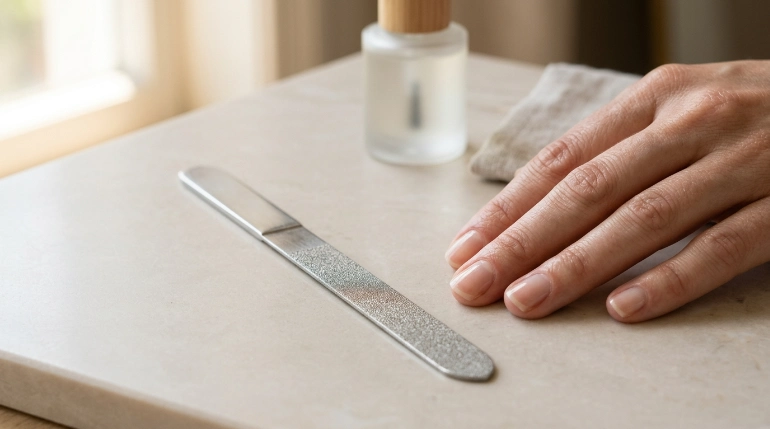
One detail makes this topic much more confusing than it needs to be.
The historic name was commonly written Diamon Deb, not Diamond Deb.
You can still see vintage products carrying the Diamon Deb name, while many modern sellers use the more natural spelling “Diamond Deb.” A professional podiatry discussion from years ago also noted that the original U.S. brand was spelled Diamon Deb.
That spelling difference matters when you are trying to replace an old file.
Searching only for “Diamond Deb nail file” may show:
- Generic stainless-steel nail files
- Files advertised as Diamond Deb style
- Modern products from unrelated manufacturers
- Vintage Diamon Deb files
- Kurlash/Diamon Deb products
- Professional podiatry files using a similar design
So the name on a marketplace listing does not automatically tell you exactly what you are buying.
So, What Actually Happened to Diamon Deb?
The clearest explanation is a long series of ownership and distribution changes rather than one dramatic disappearance.
Historical records for Kurlash and Diamon Deb show that the two names became connected in the early 1960s. The business then changed owners repeatedly.
A published company history traces the following sequence.
| Period | What Happened |
|---|---|
| 1961 | Kurlash was combined with Diamon Deb |
| 1964 | Kurlash-Diamon Deb was sold to Harold M. Mitchell, Inc. |
| 1980 | The company was sold again |
| 1985 | Kurlash-Diamon Deb moved to Newburgh, New York |
| Later | The business became part of Cook Bates |
| 1998 | Cook Bates was sold to Pacer Technology |
| 2001 | The Cook Bates division was sold to W.E. Bassett |
The important part for shoppers is what came after all those changes.
Products that were once easy to recognize under one familiar brand became part of larger nail-care businesses. Over time, Diamon Deb stopped having the clear, widespread retail identity that longtime customers remembered.
There are signs that the name did not simply vanish overnight. Sally Beauty’s manufacturer contact information still associates Diamon Deb with W.E. Bassett, while older industry information also connects W.E. Bassett with Kurlash/Diamon Deb.
That does not mean the classic file remains widely distributed in exactly the same form.
It means the story is more complicated than “the company closed.”
Were Diamond Deb Nail Files Recalled or Banned?
I could not find credible evidence showing that Diamon Deb nail files disappeared because of a major safety recall or government ban.
The available history instead points toward ownership changes, shrinking brand visibility, and changes in distribution.
That is an important difference.
When a beloved beauty tool disappears from store shelves, it is easy to assume that something was wrong with it. In this case, the public information I could verify does not support that conclusion.
The bigger problem today is simply determining whether a product advertised as “Diamond Deb” is an original-style branded file, old stock, or a modern look-alike.
Why Are Original Diamon Deb Files So Popular?
The old files developed an unusually loyal following.
Vintage owners regularly describe keeping the same metal file for decades, and some people specifically search for the old pointed or rounded versions after losing one. Those personal reports are not scientific evidence, but they help explain why original files continue to appear on resale sites years later.
The basic design also has practical advantages.
Traditional Diamon Deb-style files are usually built around a rigid metal body with an abrasive filing surface. Unlike a disposable cardboard emery board, the tool does not bend easily.
That can make it useful for:
- Shaping thicker natural nails
- Smoothing toenail edges
- Fixing a rough corner quickly
- Keeping one reusable file for years
- Cleaning the tool more easily than a paper file
The downside is that a strong metal file can also be too aggressive for thin, peeling, or damaged nails if you use heavy pressure.
Can You Still Buy Genuine Diamon Deb Nail Files?
Sometimes—but this is where things become messy.
Current online searches still bring up products labeled Diamon Deb, including Kurlash-associated listings, vintage examples, and old-stock products. At the same time, marketplaces contain many inexpensive files from completely different manufacturers using phrases such as “Diamond Deb nail file.”
You can also find professional suppliers selling products described as Diamond Deb style, which confirms that the shape or tool type has become recognizable beyond the original brand.
A listing saying “Diamond Deb” does not prove it is vintage
Look closely before buying.
A modern multipack with several pointed metal files may be perfectly usable, but that does not make it the same tool someone purchased decades ago.
If authenticity matters to you, check:
- The exact spelling stamped on the file
- Any Kurlash branding
- Country-of-origin markings
- Original packaging
- Close-up photos of the logo
- Whether the seller calls it vintage, new old stock, reproduction, or “style”
- Whether the actual pictured file is the item you will receive
Do not pay a high vintage price based on the product title alone.
How Much Do Old Diamond Deb Nail Files Cost?
There is no dependable fixed price.
Current resale listings vary dramatically depending on size, age, condition, packaging, and whether the seller claims the piece is an original.
At the time of checking, vintage Diamon Deb files on eBay ranged from relatively inexpensive used pieces to examples listed for several dozen dollars. Meanwhile, generic Diamond Deb-style multipacks were often much cheaper. Prices and availability can change at any time.
For everyday nail care, paying a collector-style price is usually unnecessary.
If your priority is performance rather than nostalgia, focus on the material, abrasiveness, shape, and finish of the replacement.
What Is the Best Replacement for a Diamond Deb Nail File?
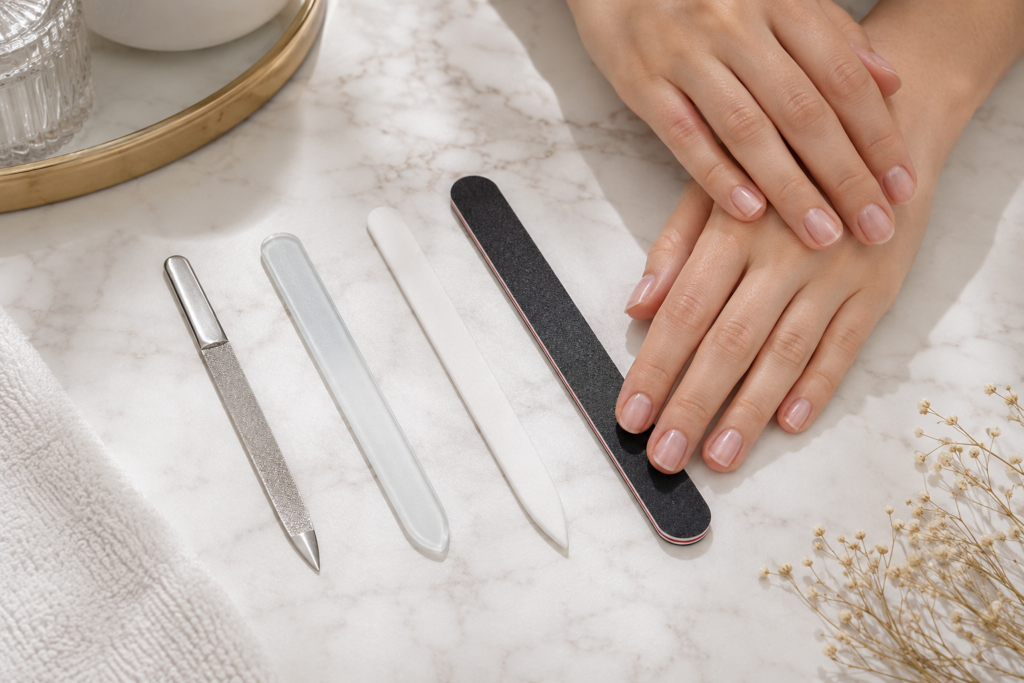
You have several good options.
The right one depends on what you liked about your old file.
| File Type | Best For | Main Benefit | Main Limitation |
|---|---|---|---|
| Diamond-coated metal file | Thick or sturdy nails | Durable and washable | Can feel aggressive |
| Fine stainless-steel file | General shaping | Strong and reusable | Quality varies |
| Glass file | Thin or peeling natural nails | Very smooth filing | Can break if dropped |
| Ceramic file | Gentle shaping | Smooth feel | Can chip or break |
| Emery board | Occasional use | Cheap and easy to find | Wears out quickly |
Choose a diamond-coated metal file if you liked the firm feel
This is probably the closest category to what many people remember about Diamon Deb.
Look for a fine or medium abrasive surface rather than the roughest option you can find.
A file should shape your nail without making you feel like you need to force it across the edge.
Choose glass if your nails peel easily
A quality glass file can be a better everyday option for delicate natural nails.
It does not feel exactly like an old Diamon Deb, but many people prefer its smoother action.
The American Academy of Dermatology’s healthy nail guidance recommends keeping nails shaped and free of snags rather than allowing damaged edges to catch and tear.
Choose an emery board if you want something simple
You do not need an expensive reusable tool for occasional filing.
A basic fine-grit emery board is enough for many natural nails.
Just replace it once the abrasive surface becomes worn, dirty, or damaged.
How to Use a Metal Nail File Without Damaging Your Nails
A durable tool can still cause damage when used too aggressively.
For natural nails, gentler is usually better.
1. Start with dry, clean nails
Make sure you can clearly see the nail edge.
Avoid filing skin, inflamed cuticles, or any cracked area that hurts.
2. Use light pressure
You should not need to grind aggressively.
If the file removes nail much faster than expected, reduce your pressure.
3. File from the side toward the center
The American Academy of Dermatology recommends filing nails in the same direction, rather than aggressively sawing back and forth.
This is especially helpful if your nails already split or peel.
4. Avoid digging under the nail
Some older Diamon Deb designs have a narrow or pointed end.
That tip can look convenient for cleaning underneath a nail, but pushing a hard metal point too deeply beneath the nail can injure the sensitive tissue below it.
A nail file is for shaping—not for digging.
5. Stop when the edge feels smooth
More filing is not always better.
Once the rough edge is gone, put the file away.
Expert Tip: If one or two gentle passes remove a lot of nail, your file may be coarser than you need. Switch to a finer file instead of trying to control an overly aggressive surface with pressure alone.
How to Clean a Reusable Metal Nail File
Reusable tools need basic hygiene too.
The CDC’s nail hygiene guidance recommends cleaning nail-grooming tools, including files, before use. In commercial environments where tools are shared, stronger infection-control procedures are required.
At home:
- Remove visible nail dust.
- Clean the file according to its manufacturer’s instructions.
- If it is designed to be washed, rinse it thoroughly.
- Dry it completely before storage.
- Keep your personal nail tools separate from other people’s tools.
Do not assume every reusable-looking file can be sterilized.
Some professional metal files are specifically advertised as autoclavable, while inexpensive coated files may not tolerate the same process.
Follow the instructions for the exact file you own.
Should You Buy a Vintage Diamon Deb File?
It depends on why you want one.
A vintage file makes sense when:
- You collect vintage beauty tools.
- You want the same model you used for years.
- You can confirm its condition.
- The abrasive surface is still intact.
- Nostalgia matters more than price.
A modern replacement makes more sense when:
- You simply need to shape your nails.
- You cannot verify the vintage file’s condition.
- The old file is rusty, damaged, or contaminated.
- You want a gentler abrasive.
- A seller is asking a large premium.
Remember that age itself does not make a nail tool better.
A well-preserved vintage tool may still be useful, but a worn surface, corrosion, deep scratches, or contamination can make replacing it the smarter choice.
Common Mistakes to Avoid
- Searching only for “Diamond Deb.” Try the historic spelling Diamon Deb when researching vintage originals.
- Assuming every listing is genuine. Many current products use similar wording.
- Paying vintage prices without checking markings. Ask for clear close-up photos.
- Using a coarse metal file on thin nails. A glass or fine-grit file may be gentler.
- Sawing aggressively back and forth. Use controlled strokes instead.
- Sharing nail files. Personal grooming tools can carry contamination.
- Using a file on infected or injured tissue. Filing is not treatment.
- Digging beneath the nail with a pointed tip. You can injure the nail bed or surrounding skin.
- Buying based only on nostalgia. If you want performance, compare materials rather than names.
When to See a Nail Technician or Dermatologist
A nail file can fix a rough edge.
It cannot diagnose or treat a nail disease.
Stop DIY filing and consider professional advice if you notice:
- Persistent pain
- Red or swollen skin
- Pus or drainage
- A nail lifting away from the nail bed
- Significant discoloration
- Thick, crumbly nails
- Bleeding
- Repeated splitting in the same area
- A major change in nail shape or texture
Nail fungus, for example, can make nails change color, thicken, or become brittle, and it often requires proper treatment rather than repeated filing.
A licensed nail technician can help with normal grooming and cosmetic maintenance.
A dermatologist is the better choice when you suspect infection, disease, persistent pain, or an unexplained nail change.
FAQs
Did Diamond Deb stop making nail files?
The classic Diamon Deb line became much harder to find after years of ownership and distribution changes. Products still appear under Diamon Deb or related names, but shoppers should not assume every current “Diamond Deb” listing is identical to the older files.
Is it Diamond Deb or Diamon Deb?
The historic brand was Diamon Deb. “Diamond Deb” is now widely used in searches and product descriptions, which is one reason modern search results can be confusing.
Who owned Diamon Deb?
The brand was associated with Kurlash and passed through several businesses. Historical records eventually trace the Cook Bates business through Pacer Technology to W.E. Bassett in 2001.
Are modern Diamond Deb files the same as the originals?
Not necessarily. Some are Kurlash/Diamon Deb products, while others come from unrelated manufacturers or are explicitly sold as Diamond Deb-style files. Always check the manufacturer, markings, and product photos.
What type of nail file is closest to an old Diamon Deb?
A rigid stainless-steel file with a fine diamond-type abrasive surface will usually give you the closest feel. For delicate or peeling natural nails, however, a fine glass file may be more comfortable.
Can I wash a Diamond Deb-style metal nail file?
Many stainless-steel versions are designed to be washable, and some professional models are even autoclavable. Do not assume this applies to every product. Follow the cleaning instructions supplied by its manufacturer.
Is a metal nail file safe for natural nails?
Yes, when the abrasive surface is appropriate and you use light pressure. Very coarse files can remove natural nail quickly, so people with thin or peeling nails may prefer a finer glass, ceramic, or emery file.
Final Thoughts
So, what happened to Diamond Deb nail files?
The simple answer is that the original Diamon Deb brand went through decades of ownership changes and gradually lost the clear mainstream retail presence many longtime customers remember. The basic metal nail-file design did not disappear. Instead, the market became filled with vintage originals, related branded stock, and modern look-alikes.
If you want the nostalgic original, search using the correct Diamon Deb spelling and verify the markings before paying a premium.
If you mainly want the performance, you have more freedom. Choose a fine diamond-coated metal file, glass file, or another well-made reusable option that suits your nail thickness.
Whatever you choose, gentle filing, clean tools, and healthy nails matter more than the brand name stamped on the handle.
