
If you already have a nail file sitting in your manicure kit, you may have wondered whether it could also smooth or shorten your dog’s claws. After all, dog nails and human nails are both made largely of keratin, so the idea does not seem unreasonable.
So, do nail files work on dogs? Yes, they can. A handheld nail file can smooth rough edges and gradually shorten some dog nails. However, ordinary human nail files are often too fine or too slow for thick canine nails. A pet-specific file or nail grinder is usually more practical, especially for medium and large dogs.
The important part is choosing the right tool, working slowly, and avoiding the sensitive inner portion of the nail called the quick. Here is what you should know before trying it.
Quick Answer
Yes, nail files work on dogs, especially for smoothing sharp edges or shortening thin nails gradually. However, human nail files can be slow on thick dog nails. A pet-specific file or grinder is usually more efficient. Always file carefully and stop before reaching the quick, which contains nerves and blood vessels.
How Nail Files Work on Dog Nails
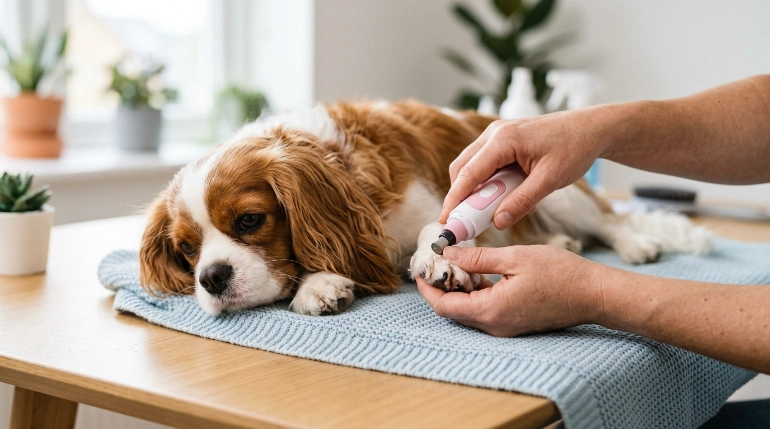
Dog nails are much thicker and harder than most human fingernails, but an abrasive nail file can still remove small amounts of material from the tip.
Instead of cutting through the nail in one motion, the file gradually wears the nail down. This can make filing feel less intimidating for owners who are nervous about accidentally clipping too deeply.
Veterinary guidance from VCA Animal Hospitals on trimming dog nails specifically notes that some owners use a handheld file or grinder instead of clippers. Filing can also leave the end of the nail smoother than clipping alone.
The downside is speed. If your dog has large, thick nails, removing meaningful length with a basic emery board can take quite a while.
Filing Is Best for Small Adjustments
Think of a dog nail file more as a shaping and maintenance tool than a solution for extremely overgrown nails.
It works particularly well for:
- Smoothing a sharp edge after clipping
- Maintaining already-short nails
- Filing thin puppy nails
- Removing tiny amounts at a time
- Dogs that dislike the pressure or snapping sensation of clippers
- Owners who feel more comfortable taking off nail gradually
If the nails are significantly overgrown, filing alone may be frustratingly slow.
Can You Use a Human Nail File on a Dog?
Technically, yes. A clean human nail file can work on some dogs, but not every type will be equally useful.
A disposable emery board may work surprisingly well on a puppy or small dog with thin nails. On a Labrador, German Shepherd, or another dog with dense claws, the same file may barely remove material.
Human files are designed primarily for relatively thin fingernails. Dog files and grinders are designed for tougher claws.
If you do try a human file, use a new or thoroughly cleaned file that has not been shared between your manicure routine and your dog.
Avoid using a dirty file covered in nail dust, cosmetic residue, oils, polish, or other manicure products.
Which Type of File Works Best?
Here is how the common options compare.
| Tool | Best For | Speed | Main Benefit | Main Limitation |
|---|---|---|---|---|
| Human emery board | Puppies and thin nails | Slow | Cheap and quiet | Wears out quickly |
| Metal or pet nail file | Small adjustments | Slow to moderate | Reusable and controlled | Can still take time |
| Pet nail grinder | Most dog sizes | Moderate | Smooth, gradual removal | Noise, vibration, and heat |
| Dog nail clippers | Removing more length | Fast | Efficient | Greater risk of cutting the quick if used incorrectly |
For occasional smoothing, you probably do not need an expensive tool. If filing will become part of your dog’s regular grooming routine, however, a pet-specific file or grinder is usually worth considering.
Nail Files vs. Nail Grinders for Dogs
A nail grinder is essentially a powered filing tool. Instead of moving a file manually across the nail, a rotating abrasive surface gradually removes nail material.
For thick dog nails, this can be much faster.
The American Kennel Club’s dog nail trimming safety guidance recommends appropriate dog nail clippers or grinders and emphasizes removing small amounts while avoiding the quick.
Grinders also create rounded, smooth edges, which can be useful if freshly clipped nails feel sharp.
However, powered does not automatically mean safer.
A grinder can:
- Become hot if held against one nail too long
- Catch long paw hair
- Frighten dogs with its noise
- Cause uncomfortable vibration
- Reach the quick if you keep grinding
The safest approach is usually several short contacts rather than holding the grinder continuously against one spot.
Expert Tip: Whether you use a manual file or grinder, check the nail after every few passes. Removing tiny amounts gives you much more control than trying to finish the nail quickly.
Understanding the Quick Before You File
The most important part of dog nail care is understanding the quick.
The quick is the living tissue inside the nail containing blood vessels and nerves. Cutting or grinding into it can cause pain and bleeding.
On clear or pale nails, you may be able to see a pink area inside the nail. That makes judging your stopping point easier.
Black nails are more difficult because you cannot simply look through the nail.
That is one reason gradual filing can feel reassuring. You are removing very small amounts instead of making one larger cut.
However, a nail file does not make it impossible to reach the quick.
You still need to watch your progress.
If you are uncertain about where the safe portion of the nail ends, ask your veterinarian or groomer to demonstrate nail trimming before attempting significant shortening yourself.
How to File Your Dog’s Nails Safely
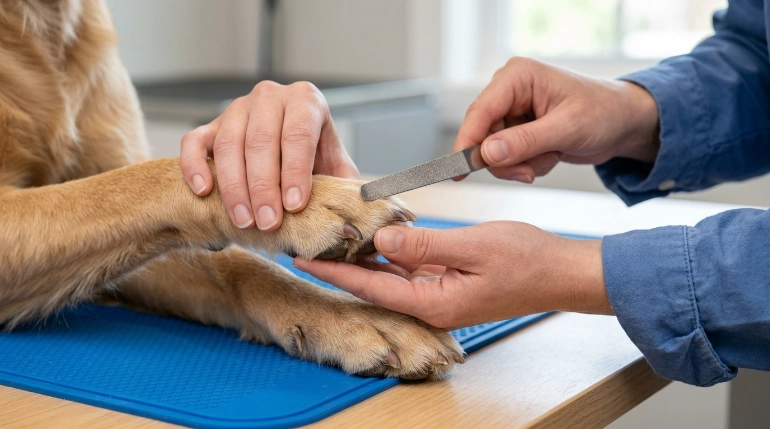
If your dog’s nails only need light shaping or maintenance, filing can be simple once your dog is comfortable having her paws handled.
1. Choose a Suitable File
Start with a clean pet nail file, coarse emery board, or dog nail grinder.
For very small or young dogs, a basic handheld file may be enough. For thick adult nails, a grinder is usually more practical.
2. Get Your Dog Comfortable
Do not immediately grab a paw and start filing.
First, touch and hold your dog’s paws during relaxed moments. Reward calm behavior with praise or a favorite treat.
Then introduce the file without actually using it.
If you are using an electric grinder, allow your dog to hear the device from a distance before moving it near the paw.
VCA’s guidance on reducing stress during dog nail trimming emphasizes gradual acclimation rather than forcing a frightened dog through the procedure.
3. Hold One Toe Gently
Separate the nail you want to work on while keeping fur away from the filing surface.
Never squeeze the toe tightly.
If your dog continually pulls away, growls, snaps, or becomes increasingly distressed, stop rather than turning nail care into a wrestling match.
4. File the Tip Gradually
Work across the sharp end of the nail using controlled movements.
You do not need heavy pressure. Let the abrasive surface do the work.
Remove a little material, inspect the nail, and continue only if necessary.
With a powered grinder, use brief touches to reduce heat buildup.
5. Smooth Any Sharp Corners
Once the nail is short enough, lightly round the rough edges.
This is one area where filing is particularly useful. Clippers can sometimes leave a sharp corner that scratches skin, fabric, or furniture.
6. Reward Your Dog
Give praise, treats, or play after the session.
You do not necessarily need to finish every nail at once. For an anxious dog, successfully filing two nails today can be better than forcing all four paws and making the next session harder.
How Often Should You File Dog Nails?
There is no universal filing schedule because nail growth varies with the individual dog.
Activity matters too. Dogs that regularly walk on abrasive surfaces such as concrete may naturally wear their nails down more than dogs that spend most of their time indoors or on grass.
Instead of following a strict calendar, inspect the nails regularly.
Possible signs that they are getting too long include:
- Nails clicking prominently on hard floors
- Nails touching the ground while the dog is standing normally
- Nails beginning to curve
- Changes in how the dog positions the paw
- Snagging on rugs, bedding, or fabric
Frequent light maintenance is often easier than allowing nails to become very long and then trying to remove a large amount.
Can Filing Help With Overgrown Dog Nails?
It can, but this is where expectations matter.
When a dog’s nails remain long for an extended period, the quick may also extend farther toward the tip. That means you generally cannot safely return a severely overgrown nail to an ideal short length in one aggressive session.
Gradual trims or filing sessions may be needed.
Do not keep filing deeper simply because the nail still looks long.
If your dog’s nails are extremely curved, touching the paw pad, causing pain, affecting walking, or repeatedly breaking, contact a veterinarian or experienced professional groomer.
Is Filing Safer Than Clipping?
Filing can offer more control because material is removed gradually. That is especially appealing when you are nervous about cutting the quick.
But neither method is completely risk-free.
Advantages of Filing
- Gradual nail removal
- Smooth finished edges
- Less sudden pressure on the nail
- Useful between full trims
- Some dogs tolerate it better than clippers
Limitations of Filing
- Slow on large or thick nails
- Dogs may dislike the sensation
- Manual files wear out
- Grinders can generate heat
- The quick can still be reached
- Electric grinders can catch long hair
The best tool is not simply whichever one looks safest. It is the tool that lets you work slowly, confidently, and comfortably without overwhelming your dog.
Hygiene Matters More Than You Might Think
If you are a beauty lover with a collection of files, buffers, clippers, and manicure tools, resist the temptation to casually swap the same tools between your nails and your dog’s paws.
Dog paws regularly contact dirt, grass, outdoor surfaces, and microorganisms.
A better routine is to keep a separate file specifically for your dog.
For reusable tools:
- Remove visible nail dust and debris after use.
- Follow the manufacturer’s cleaning instructions.
- Let the tool dry completely before storage.
- Replace disposable files when worn or dirty.
- Store pet grooming tools separately from your manicure supplies.
Do not use a file on an obviously infected, bleeding, cracked, or injured nail unless your veterinarian has told you how to manage it.
What If You Accidentally Reach the Quick?
Stop immediately if the nail begins bleeding.
Keep your dog as calm as possible and apply appropriate first aid. Styptic powder is commonly kept with pet nail-care supplies because it can help control minor bleeding from an accidentally nicked quick.
It is smart to prepare before starting rather than searching for supplies after an accident. The American Animal Hospital Association’s pet first-aid guidance also stresses keeping basic pet first-aid supplies available and consulting a veterinarian when an injury requires professional attention.
Seek veterinary advice if bleeding is heavy, does not stop appropriately, or the dog appears significantly painful.
Cost and Tool Considerations
You do not have to build an elaborate grooming kit just to maintain your dog’s nails.
A manual file is normally the simplest and lowest-cost option. It also has no batteries, motor, noise, or charging requirements.
A nail grinder costs more upfront but may make sense if:
- You have a medium or large dog
- Your dog’s nails are particularly thick
- You maintain several dogs
- You file nails frequently
- Manual filing takes too long
Professional grooming costs more per visit, but the convenience can be worthwhile for dogs that are difficult to handle or owners who are uncomfortable judging the quick.
Your dog’s comfort and safety should matter more than choosing the cheapest tool.
Common Mistakes to Avoid
Even a simple nail file can cause problems when used incorrectly. Watch for these common mistakes:
- Trying to remove too much at once. Small adjustments are safer.
- Sharing your manicure file with your dog. Keep pet and human tools separate for better hygiene.
- Using an extremely fine file on thick nails. You may spend a long time without making meaningful progress.
- Filing an injured nail. Cracks, swelling, bleeding, or unusual discoloration deserve closer attention first.
- Ignoring your dog’s stress signals. Trembling, repeated pulling away, growling, snapping, or frantic movement means it is time to stop.
- Holding a grinder against the nail too long. Friction creates heat.
- Allowing long hair near a spinning grinder. Hair can become caught in the tool.
- Assuming a file cannot reach the quick. It absolutely can if you remove enough nail.
- Forcing all the nails to be finished in one session. Short, positive sessions are often easier for nervous dogs.
When to See a Nail Technician or Dermatologist
For dog nails, a human nail technician or dermatologist is not the appropriate professional. Nail technicians work with human nails, while dermatologists primarily treat human skin and nail conditions.
For your dog, speak with a veterinarian or qualified professional groomer instead.
A groomer can be helpful when your dog simply needs routine nail maintenance but you are uncomfortable doing it yourself.
Contact a veterinarian if you notice:
- Persistent bleeding
- A nail split near the base
- Swelling around the toe
- Pus or unusual discharge
- Redness or significant inflammation
- A bad odor around the nail
- Limping
- Persistent licking or chewing at one toe
- A nail growing into or toward the paw pad
- Sudden changes in several nails
- Significant pain when the paw is touched
These problems go beyond ordinary cosmetic grooming.
Trying to file away a nail that is infected, injured, or abnormal can delay the treatment your dog actually needs.
FAQs
Do nail files work on dogs with thick nails?
Yes, but a basic manual file can be very slow on thick dog nails. A pet nail grinder is usually more efficient because its rotating abrasive surface removes harder nail material faster.
Can I use my regular emery board on my dog?
You can use a clean emery board for light filing, particularly on small dogs or puppies. It may not be coarse or durable enough for large, thick nails. Keep the file for pet use afterward rather than returning it to your manicure kit.
Is a nail file safer than dog nail clippers?
Filing removes nail more gradually, which can make controlling the amount easier. However, you can still reach the quick if you file too far. Both methods require care.
Can I file my dog’s nails instead of clipping them?
Yes. Some owners maintain their dogs’ nails entirely with a handheld file or grinder. Whether that is practical depends on nail thickness, length, your dog’s tolerance, and how frequently you maintain them.
Can filing hurt a dog?
Filing should not hurt when you work only on the hard outer nail. It can become painful if you reach the quick, aggressively manipulate a sore toe, or allow a powered grinder to become too hot.
What grit nail file should I use on my dog?
A relatively coarse file is generally more practical for tough dog nails than a very fine manicure file. The file should remove material predictably without requiring excessive pressure. Pet-specific files remove some of the guesswork.
What should I do if my dog hates having her nails filed?
Stop forcing the session and introduce the process gradually. Practice touching the paws, reward calm behavior, introduce the tool slowly, and work on only one or two nails at first. A groomer or veterinarian can help if your dog becomes extremely fearful or defensive.
Conclusion
So, do nail files work on dogs? Yes—but the right tool and technique make a big difference.
A manual nail file can be excellent for smoothing rough edges, maintaining short nails, and working on puppies or dogs with thinner claws. For thick nails or regular maintenance, a pet-specific grinder is usually faster and more practical.
Whichever method you choose, work gradually, watch for the quick, maintain clean pet-only tools, and never force a frightened dog through the process.
If the nails are extremely overgrown, painful, damaged, infected, or difficult for you to handle safely, skip the DIY experiment and ask a veterinarian or professional groomer for help. Your goal is not simply shorter nails—it is comfortable, healthy paws and a grooming routine your dog can safely tolerate.
