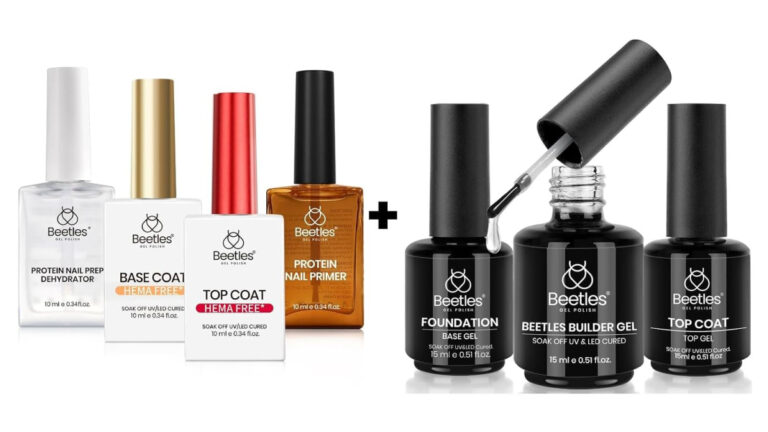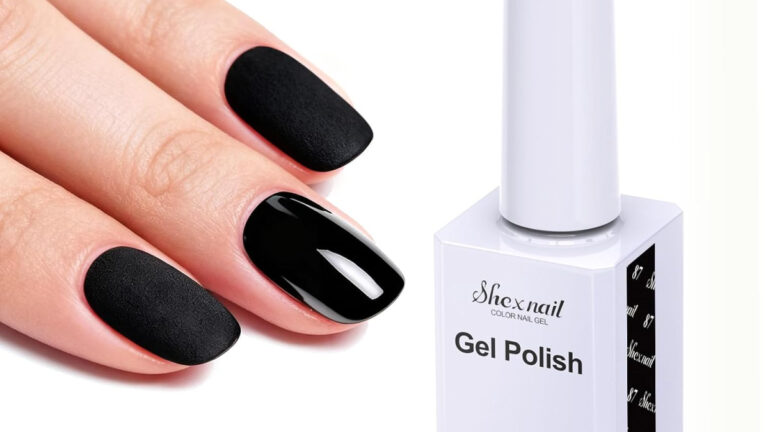

Quick Answer
If your gel polish is peeling after dehydrator, the dehydrator usually is not the only issue. Peeling can come from leftover cuticle, touching the nail after prep, product on the skin, incompatible base products, thick coats, curing problems, or a weak natural nail. The American Academy of Dermatology’s gel manicure guidance also notes that repeated gel wear can leave nails brittle, peeling, or cracked.
Check these first
- Cuticle on nail: Invisible dead skin near the cuticle can stop the base coat from bonding.
- Post-prep touching: Finger oils can return to the nail after dehydrator if you touch the surface.
- Skin contact: Gel touching the cuticle or sidewalls can lift as the nail grows or flexes.
- Curing issue: Thick coats or the wrong lamp can leave gel under-cured.
- Product mismatch: A dehydrator cannot compensate for an incompatible base coat, primer, gel, or lamp.
- Nail condition: Thin, peeling, flexible, or over-filed nails may struggle to hold rigid gel.
Best next step
- Notice where the gel starts peeling, then change one prep or application step at a time.
If you’re asking, “Why is my gel polish peeling after dehydrator?” you’re already looking in the right part of the manicure. Prep matters, but dehydrator is only one piece of the adhesion process.
When I troubleshoot lifting, I start with the peel pattern instead of simply adding more prep liquid. That usually points to the real problem faster.
In This Guide
- Why does gel polish peel even after dehydrator?
- What does nail dehydrator actually do?
- What are the most common causes of peeling?
- What does the peeling pattern tell you?
- How do you fix gel polish peeling after dehydrator?
- Dehydrator vs primer vs base coat
- When is peeling a nail-health issue?
- Frequently asked questions
- Final takeaway
Why Does Gel Polish Peel Even After Dehydrator?
Gel polish can still peel after dehydrator because removing surface oil is only one requirement for good adhesion. The nail plate must also be clean, properly prepared, free from skin contact, coated correctly, and cured completely.
A dehydrator cannot fix every adhesion problem. Think of it as a surface-prep step, not a guarantee against lifting.
Peeling and lifting are clues
The location of the failure matters. Gel that lifts near the cuticle usually points toward prep or skin contact, while peeling from the free edge often points toward wear, flexibility, uncapped edges, or application thickness.
- Cuticle-area lifting: Check for invisible cuticle, flooding, oils, or touching after prep.
- Sidewall lifting: Check whether gel touched the skin or whether prep missed the side edges.
- Free-edge peeling: Check edge capping, nail flexibility, daily wear, and coat thickness.
- Whole-sheet peeling: Check base coat compatibility, curing, surface prep, and contamination.
This is why applying another coat of dehydrator is rarely my first answer. I want to know where the manicure failed first.
Dehydrator cannot correct poor curing
Gel needs the right curing conditions for the product being used. A perfectly dehydrated nail can still peel if the gel remains under-cured.
Follow the gel manufacturer’s lamp and cure-time instructions rather than guessing. Mixing systems can make troubleshooting harder because cure requirements vary.
What Does Nail Dehydrator Actually Do?
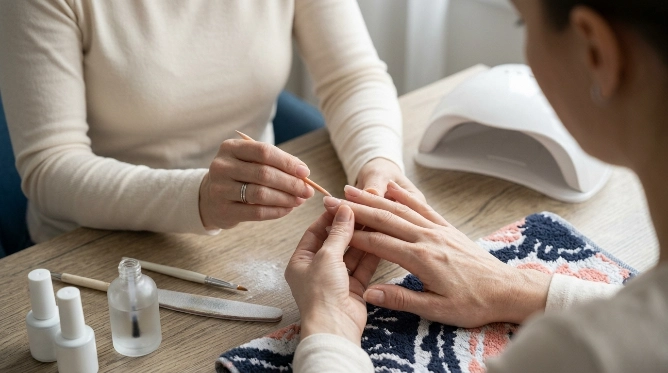
A nail dehydrator temporarily removes surface moisture and oil from the natural nail plate before gel, acrylic, builder gel, or another enhancement is applied. Its job is to create a cleaner surface for the next product.
Definition: A nail dehydrator is a nail-prep liquid designed to reduce surface oils and moisture before an adhesion product or coating is applied.
What dehydrator can help with
- Removing light surface oil after nail preparation
- Reducing temporary moisture on the nail surface
- Preparing the nail for primer, bonder, or base coat
- Making the prep process more consistent on naturally oily nails
What dehydrator cannot do
- Remove attached cuticle from the nail plate
- Repair thin or peeling natural nails
- Correct gel that has touched the skin
- Make an incompatible lamp cure gel correctly
- Replace a base coat when the system requires one
- Guarantee adhesion on an over-filed or damaged nail
That distinction matters. If the original problem is mechanical, curing-related, or product-related, stronger dehydration will not necessarily improve wear.
What Are the Most Common Causes of Gel Polish Peeling After Dehydrator?
The most common problems happen before, during, or immediately after application. Work through them systematically instead of changing your whole routine at once.
1. Invisible cuticle remains on the nail plate
The thin layer of non-living tissue attached near the cuticle area can be easy to miss. Gel applied over it bonds to that tissue instead of directly to the nail plate.
As the skin shifts, the coating can lift. Clean prep around the proximal nail fold and sidewalls is especially important.
2. You touched the nails after dehydrating
Once the nail is prepped, avoid touching the surface with your fingers. Skin oils can transfer back almost immediately.
Hair, clothing, phones, and dusty work surfaces can also contaminate a freshly prepared nail.
3. Gel flooded the cuticle or sidewalls
Gel should sit on the nail plate, not the surrounding skin. Product that overlaps the skin can create a raised edge that catches and begins lifting.
Skin exposure to uncured nail products is also something to avoid. The U.S. Food and Drug Administration notes that some nail products can cause irritation or allergic reactions, so follow product instructions and minimize skin contact.
For broader product-safety information, see the FDA’s nail care product guidance.
4. The nail was over-buffed
More filing is not always better. Repeatedly thinning the natural nail can create a weak, flexible surface that moves differently from the gel coating.
Use only the surface preparation required by your system. Do not aggressively remove layers of natural nail to chase adhesion.
5. Your coats are too thick
Thick gel coats are harder to cure evenly and may wrinkle, feel soft, or separate. Thin, controlled coats are easier to manage.
Keep product away from the skin and cure each layer according to the manufacturer’s directions.
6. The lamp and gel system do not match
Not every lamp cures every gel identically. Wattage alone does not tell you whether a lamp’s output matches a specific photoinitiator system.
When possible, use the lamp and cure schedule recommended by the gel manufacturer. This removes one major variable.
7. The natural nail is peeling or flexible
If layers of the natural nail are already separating, gel may lift with them. Applying more dehydrator does not repair the weakened nail plate.
Repeated removal can also contribute to dryness and damage when gel is peeled or scraped away. The AAD’s gel removal guidance recommends softening removable gel rather than picking it off.
Section Takeaway: Dehydrator solves surface oil and moisture, not every adhesion problem. The fastest way to stop peeling is to identify whether the failure comes from prep, application, curing, product compatibility, or the natural nail.
What Does the Peeling Pattern Tell You?
Where the gel starts failing can narrow down the cause. Use this table as a troubleshooting guide rather than a diagnosis.
| What You See | Likely Area to Check | What to Change |
|---|---|---|
| Lifting around cuticle | Cuticle removal, flooding, oils | Clean the nail plate carefully and leave a tiny skin-free margin |
| Lifting along sidewalls | Missed prep or skin contact | Prep side edges thoroughly and control product placement |
| Peeling from free edge | Edge wear, flexible nails, application | Use thin coats and follow the system’s free-edge instructions |
| Entire layer comes off | Base compatibility, contamination, curing | Check the full product system and lamp requirements |
| Gel lifts with natural nail flakes | Weak or peeling nail plate | Reduce aggressive prep and give damaged nails time to recover |
If the same pattern appears on several nails, look for a repeated technique issue. If only one nail fails, consider how that finger is used during everyday tasks.
How Do You Fix Gel Polish Peeling After Dehydrator?
Start fresh rather than sealing new gel over lifted material. Once a pocket has formed, covering it does not restore the original bond.
A simple troubleshooting routine
- Remove lifting product safely. Do not peel or rip bonded gel from the natural nail.
- Inspect the nail plate. Look for peeling layers, soreness, discoloration, or visible damage.
- Shape gently. Avoid unnecessarily thinning the nail.
- Clear attached cuticle. Focus on the nail plate near the cuticle and sidewalls.
- Remove dust. Keep the prepared surface clean.
- Apply dehydrator as directed. Use the amount and method listed by the manufacturer.
- Do not touch the nail. Move directly to the next prep or base step.
- Apply thin gel layers. Keep uncured product away from surrounding skin.
- Cure as instructed. Use the recommended lamp and cure time where available.
- Track the result. If peeling returns, note exactly where it begins.
Change one variable at a time
This is one of the most useful troubleshooting habits. If you change dehydrator, primer, base coat, lamp, filing technique, and gel brand together, you will not know which change mattered.
Start with the most obvious problem. Then test the corrected routine on your next manicure.
Dehydrator vs Primer vs Base Coat: What Is the Difference?
These products are often grouped together, but they do different jobs. Using dehydrator does not automatically mean you can skip primer or base coat.
| Product | Main Job | Typical Position | Does It Replace Dehydrator? |
|---|---|---|---|
| Dehydrator | Reduces surface oil and moisture | After nail prep, before adhesion products | Not applicable |
| Primer or bonder | Supports bonding between the nail and enhancement system | Usually after dehydrator when the system calls for it | Usually no |
| Gel base coat | Creates the cured foundation for gel color | Before color gel | No |
Some brands build several functions into one product. Others require separate prep steps.
The safest approach is simple: follow the directions for your specific system. Do not assume a routine from one brand applies unchanged to another.
When Is Peeling a Nail-Health Issue Instead of an Application Issue?
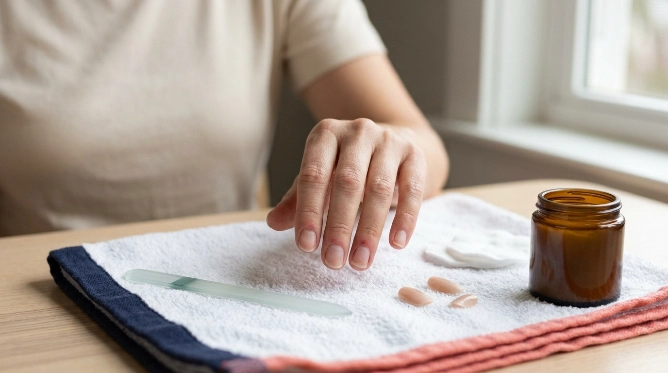
If the gel coating is peeling but the natural nail underneath looks intact, you are probably dealing with an adhesion problem. If layers of your natural nail are coming away too, give the nail itself more attention.
Stop and inspect your nails if you notice
- Natural nail layers peeling with the gel
- Persistent tenderness or burning
- Redness or swelling around the nail
- Itching or a rash after nail-product exposure
- Green, yellow, dark, or unusual discoloration
- Separation of the natural nail from the nail bed
- Drainage or worsening pain
The American Academy of Dermatology notes that gel manicures can leave nails brittle, peeling, or cracked. Its guidance on reducing artificial-nail damage also emphasizes gentle removal and protecting the natural nail.
Dermatology note: Persistent pain, swelling, rash, nail separation, drainage, or unusual color changes deserve professional assessment rather than repeated home troubleshooting.
Give damaged nails a break
Do not keep adding stronger prep products to a nail that is becoming thinner or more irritated. Improving adhesion is not worth repeatedly removing healthy nail layers.
As of 2026, my rule for troubleshooting remains simple: protect the natural nail first, then improve the manicure technique.
Frequently Asked Questions
Can too much dehydrator make gel polish peel?
Using more dehydrator than the manufacturer recommends is not a reliable way to improve adhesion. If peeling continues, check cuticle removal, contamination, skin contact, base-product compatibility, coat thickness, and curing instead of repeatedly adding prep liquid.
Should I use dehydrator before every gel manicure?
Use dehydrator according to your gel or prep system’s instructions. Some systems include it as a normal preparation step, while others have different requirements.
Do I need primer after nail dehydrator?
Only if your product system calls for primer or bonder. Dehydrator removes surface oil and moisture, while primer or bonder serves a different adhesion role.
Why does my gel peel off in one whole piece?
Sheet-like peeling can point toward contamination, incomplete prep, base-coat incompatibility, or a curing problem. Check whether the nail was touched after prep and whether the lamp matches the gel system.
Why does gel polish peel from the tips first?
Free-edge peeling can happen from daily wear, flexible nails, application technique, or failure around the edge. Thin layers and correct product placement usually make troubleshooting easier.
Can I put more gel over an area that has started lifting?
It is better to remove the lifted material safely and correct the cause. Covering a lifted area does not restore the original bond and can hide what is happening underneath.
Should I peel gel polish off if it is already loose?
No. Pulling off gel can remove layers of the natural nail along with it. Soften and remove the product according to its removal instructions rather than forcing attached areas free.
Final Takeaway: Fix the Cause, Not Just the Dehydrator
If your gel polish is peeling after dehydrator, do not assume you need a stronger dehydrator. Most recurring lifting problems are easier to solve by checking the entire prep, application, and curing process.
Start with the location of the peel. Then check cuticle removal, contamination, skin contact, coat thickness, product compatibility, lamp requirements, and the condition of your natural nails.
Small corrections usually beat aggressive prep. Protect the natural nail, follow your product system’s directions, and change one variable at a time until you identify what is shortening your gel wear.