
What Nail Polish Is, How It Works, and How to Choose the Right Type for Your Manicure

If you’ve ever wondered what nail polish actually is before buying a bottle or starting a manicure, the short answer is this: it’s a colored coating made to sit on the nail surface, add shine or finish, and help protect the nail plate from everyday wear. In British English, you’ll also hear it called nail varnish, and some people use nail enamel or nail lacquer as well.
That simple definition matters because it explains why polish behaves the way it does. Nail polish is not just “color.” It’s a formula designed to spread smoothly, dry into a film, and stay flexible enough to resist some chipping while still looking glossy. Once you understand that, drying time, finish, and product choice make a lot more sense.

What Nail Polish Is
Nail polish is a cosmetic coating applied to fingernails or toenails. Its main job is decorative, but it also offers a light protective layer over the nail surface. That protection is practical: it can help reduce staining from dark pigments, add a barrier against minor scuffs, and give the nail a smoother, finished look.
Modern nail polish is usually a solvent-based, pigmented formula applied with a brush, and it dries on its own without a lamp. For shoppers, the key takeaway is simple: if a product is sold as regular nail polish or nail lacquer, it is usually meant to dry in open air. If it needs a UV or LED lamp, you’re looking at a gel-type system instead.
What Nail Polish Is Made Of
Most nail polish formulas contain the same basic building blocks, even when brands market them differently:
- Solvents keep the formula liquid in the bottle and help it spread on the nail.
- Pigments give color and opacity.
- Resins or film-formers help the polish turn into a solid layer once the solvents leave.
- Plasticizers help the dried film stay a little flexible instead of cracking.
A simple way to think about it is this: the solvent helps the polish go on smoothly, the pigment gives it color, the resin helps it dry into a coating, and the plasticizer helps that coating bend a little instead of snapping. That mix is the reason polish can be brushed on smoothly, then dry into a hard-looking finish.
This is also why two bottles that look similar can behave very differently. A sheer pink polish and a high-pigment red may both be “regular polish,” yet the red may need more careful application because any streaking or pooling is easier to notice. A glitter polish is different again because the particles can make the film thicker and change drying behavior.
How Nail Polish Works on Nails
Nail polish works by forming a thin film on top of the nail plate. As the solvents evaporate, the remaining ingredients lock together into a coating that feels dry to the touch and gradually hardens more fully.
That drying process happens in stages:
- Wet stage: the polish is still movable and easy to smudge.
- Touch-dry stage: the surface feels less tacky, but the layers underneath may still be soft.
- Set stage: the film has hardened enough for normal use, though it may still be vulnerable to dents if you press hard or stack pressure on the nails too soon.
This is the reason a manicure can seem dry after a few minutes and still get ruined by a sheet, a zipper, or a bag handle. The top surface may be dry before the lower layers are fully set. Thin coats help because solvent can escape more evenly. Thick coats trap more liquid inside the film, which slows the process and raises the risk of wrinkling or smudging.
Regular Polish vs Gel Polish vs Shellac
Here’s the practical comparison most shoppers need.
| Type | How it dries | Typical wear | Removal | Best for |
|---|---|---|---|---|
| Regular nail polish | Air-dries on its own | Shorter than gel | Usually remover and cotton | Easy at-home use, frequent color changes |
| Gel polish | Cures under UV/LED lamp | Longer wear, better chip resistance | Soak-off or file-assisted removal | Long-lasting manicures |
| Shellac | Usually a salon or brand term for a gel-polish service | Similar to gel systems | Usually salon-style removal | People who want a gel service result |
The term shellac is often used loosely, but in everyday beauty language it usually refers to a branded or salon-style gel-polish service rather than a completely separate chemistry category. That matters because shoppers sometimes think shellac is simply a different “kind of regular polish.” It is not. If a formula requires lamp curing, it behaves more like gel than traditional polish.
Regular polish is the easiest to use at home and the easiest to change. Gel lasts longer and resists chips better, but it requires the lamp step and a more careful removal process. If you want faster drying without switching to a lamp-based system, quick-dry regular polish is usually the better trade-off.
Base Coat, Color Coat, and Top Coat: What Each One Does
These three layers are not interchangeable.
Base coat
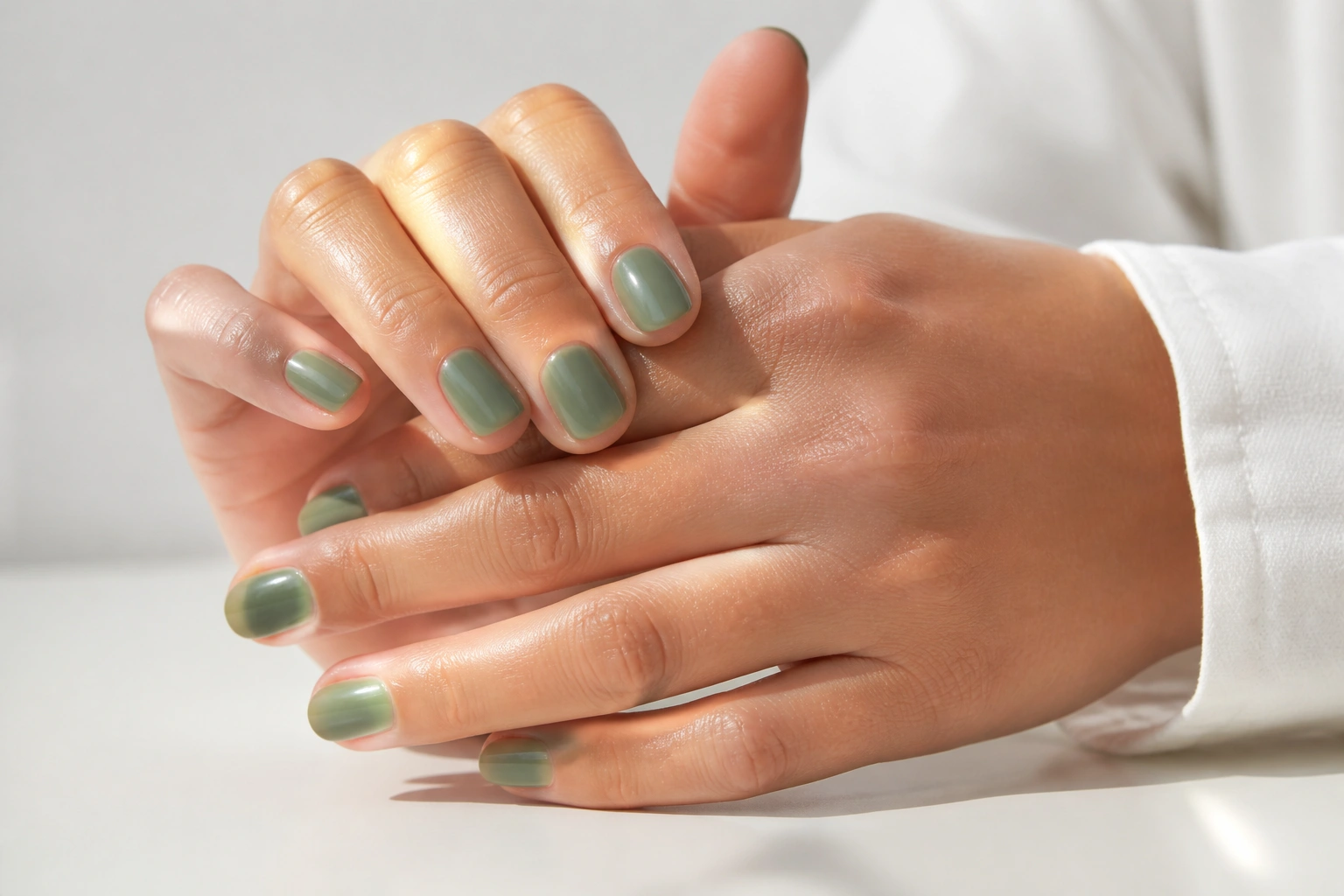
A base coat goes on bare nails before color. Its main jobs are to improve adhesion and help reduce staining from pigments. If you wear deep reds, navy, black, or bright neon shades often, a base coat is worth the extra minute.
Color coat
This is the pigmented polish you actually see. It gives the manicure its color and finish. Most people get the best results with two thin coats rather than one thick one. Two thin coats usually dry more evenly and look smoother.
Top coat
A top coat seals the color layer, adds shine or a matte finish depending on the formula, and helps protect against scuffs. It does not replace a base coat because it serves a different purpose. A base coat helps the polish grip the nail; a top coat helps lock the manicure in from the outside.
If you skip the base coat, the color may stain more easily and may not adhere as well. If you skip the top coat, the manicure can look dull faster and may chip sooner. For a full routine, each layer earns its place.
How Long Nail Polish Takes to Dry
There is no single drying time that applies to every polish, but regular nail polish generally needs more patience than people expect. The surface can feel dry fairly quickly, while deeper layers may still be soft for much longer.
Drying time changes based on:
- Formula type: quick-dry polish usually sets faster than standard polish
- Coat thickness: thinner coats dry faster
- Number of layers: more layers mean more solvent to evaporate
- Room conditions: humidity and poor airflow can slow drying
- Finish: cream, shimmer, glitter, and jelly formulas may behave differently
A realistic approach is to treat “dry to the touch” as only the first checkpoint. If you need to leave the house, put on socks, or use your hands heavily, give the manicure extra time. The surface may be ready before the polish is fully hardened.
How to Make Nail Polish Dry Faster
The fastest way to improve drying is not a gimmick. It’s better application.
Use thinner coats
This is the biggest lever you control. Thin coats dry more evenly because solvent can escape faster. Thick coats trap liquid and increase the chance of dents, streaks, and wrinkling.
Let each layer breathe
Give the first coat a few minutes before adding the second. You want the layer to settle, not stay wet enough to drag when you brush the next coat across it.
Choose quick-dry polish when time matters
Quick-dry formulas are designed to reduce waiting time, but the trade-off is that they can be less forgiving during application. They may begin setting sooner, so you have less time to correct a mistake.
Use quick-dry drops or a drying product correctly
These can help, but they are not magic. They work best when the manicure is already applied in thin layers. If the polish is piled on too thickly, a drying product won’t fully solve the problem.
Keep your environment in mind
Warm, still, humid air is not ideal. A room with decent airflow helps solvents leave the film more efficiently. Just avoid a fan strong enough to blow dust onto wet polish.
If you want a deeper breakdown of practical drying methods, see how to dry nail polish faster and the best way to dry nail polish quickly.


How to Choose the Right Nail Polish for Your Needs
Use this simple decision guide.
Choose regular polish if:
- you want easy at-home application
- you like changing colors often
- you want simple removal with standard remover
Choose gel polish if:
- you want longer wear
- you are comfortable using a UV/LED lamp
- you do not mind a slower, more involved removal process
Choose quick-dry polish if:
- drying time is your top priority
- you need a manicure that fits into a busy schedule
- you are okay with slightly less working time while applying
Choose a base coat if:
- your nails stain easily
- you want better adhesion
- you wear dark shades often
Choose a top coat if:
- you want more shine
- you want to help seal the manicure
- you want the color to hold up better against daily wear
For a vacation manicure, gel may be worth the extra effort. For a weekday refresh or a last-minute color change, regular polish usually wins because it is faster to remove and easier to redo.
Is Nail Polish Safe for Natural Nails?
For most people, nail polish is safe for natural nails when used as directed. The bigger issues are usually application and removal habits, not the color itself.
If you are comparing formulas, it helps to know what ingredients matter most to shoppers. Many people look for products that avoid formaldehyde, toluene, and dibutyl phthalate (DBP), especially if they have sensitive skin or simply prefer to avoid those ingredients. Acetone is different: it is commonly used as a remover and can be drying, but it is not the same kind of ingredient concern as the others. If you want a simpler approach, check the label, choose brands that disclose ingredients clearly, and pick the formula that fits your tolerance and removal routine.
A few practical safety points matter:
- Read the ingredient list if you are sensitive to certain chemicals.
- Follow curing instructions exactly for gel systems.
- Avoid aggressive scraping or peeling during removal.
- Give nails a break if they feel dry or rough after repeated wear.
There is also a lot of confusion around ingredient concerns and product claims. Cosmetic rules vary by country, so if you want official guidance on product safety and labeling, the FDA’s cosmetics overview is a useful place to start.
If you wear polish frequently, basic nail care helps more than chasing a perfect formula. Keep the nail surface clean before application, avoid flooding the cuticle, and remove polish gently instead of ripping it off.
Common Mistakes and How to Avoid Them
Applying thick coats
This is the most common reason polish stays tacky too long. Fix it by using more product control on the brush and building color in thin layers.
Skipping the base coat
If your nails stain easily or your manicure chips too soon, this is often part of the problem.
Confusing gel with shellac
If a product needs a lamp, treat it like a gel system. Don’t expect it to dry like regular polish.
Touching the surface too soon
A nail can look fine and still dent easily. Give the manicure more time than your eyes suggest.
Using the wrong remover for the formula
Regular polish and gel polish do not remove the same way. Forcing the issue can damage the nail plate.
Troubleshooting Nail Polish Problems
If the polish smudges
The coat was probably still soft. Use thinner layers next time and give each layer more time before using your hands normally.
If the polish streaks
The formula may be too sheer, the brush may be overloaded, or the coat may be dragged while still wet. Apply in fewer strokes and avoid going back over a partially set layer.
If the polish dries too slowly
The coats are likely too thick, or the formula is not a quick-dry type. Try thinner application and a faster-drying formula next time.
If the polish chips quickly
Check your prep, base coat, and top coat. Chips often come from weak adhesion, not just the color formula.
If the finish looks dull
A top coat usually restores shine. If the polish is old or thickened in the bottle, the finish may also be uneven.
Practical Examples: Which Polish to Use in Common Situations
A busy weekday manicure usually calls for regular polish or quick-dry polish. You want something simple, fast to remove, and forgiving if you only have a short window.
A vacation manicure is often better with gel polish if you want wear time and fewer chips. The trade-off is the lamp and removal process.
A natural-nail routine benefits from a base coat, a regular color polish, and a top coat. That gives you stain protection, color, and a more durable finish without committing to a lamp system.
A last-minute event manicure works best with quick-dry polish plus thin coats. That combination is more realistic than expecting a thick, glossy finish to be fully set in a few minutes.
When to Ask a Nail Technician
Ask a nail technician if your nails are peeling, splitting, or lifting in a way that makes polish application difficult, or if you are unsure whether a gel system is appropriate for your nail condition. A technician can also help if you are consistently getting smudges, bubbles, or premature chipping even after improving your technique.
For readers who want more step-by-step drying help, these guides may be useful: how to make nail polish dry faster and the quickest way to dry nail polish.
FAQ
Is nail polish just for decoration?
No. It is decorative, but it also gives the nail a light protective coating and can help reduce staining.
Does nail polish dry on its own?
Regular nail polish does. Gel polish does not; it needs a UV or LED lamp to cure.
What is the difference between gel polish and shellac?
In everyday beauty use, shellac usually refers to a salon-style gel-polish system. It is not the same thing as regular air-drying polish.
What makes polish dry faster?
Thin coats, quick-dry formulas, and proper airflow all help. Thick coats slow everything down.
Can I use nail polish on natural nails?
Yes. That is the most common use. A base coat and gentle removal make the routine easier on natural nails.
Do I need a top coat every time?
If you want better shine and a more sealed finish, yes. It is one of the easiest ways to improve wear.
What should I avoid if I want faster drying?
Avoid thick coats, overworking the brush, and stacking too many layers too quickly.
Is gel always better than regular polish?
No. Gel lasts longer, but regular polish is easier to apply, easier to remove, and usually better for quick color changes.

