
Are Nail Files Better Than Clippers? A Practical Nail Care Guide

If you regularly shape your nails at home, you may wonder: are nail files better than clippers, or should you keep using both?
The answer depends on what you are trying to do. Clippers remove nail length quickly, while files give you more control over shape, smoothness, and small adjustments. Your nail thickness, sensitivity, preferred manicure style, and technique also matter.
For many people, the smartest approach is not choosing one tool over the other. It is knowing when to clip, when to file, and how to use each tool without weakening or damaging the nail.
This guide compares nail files and clippers, explains their benefits and limitations, and helps you choose the safest option for your everyday nail routine.
Quick Answer
Are nail files better than clippers? Nail files are usually better for shaping, smoothing, and making small length adjustments, while clippers are faster for shortening long nails. Neither tool is automatically healthier. For most people, clipping excess length first and then gently filing the edges gives the best combination of speed, control, and a neat finish.
Nail Files vs. Clippers: What Is the Main Difference?
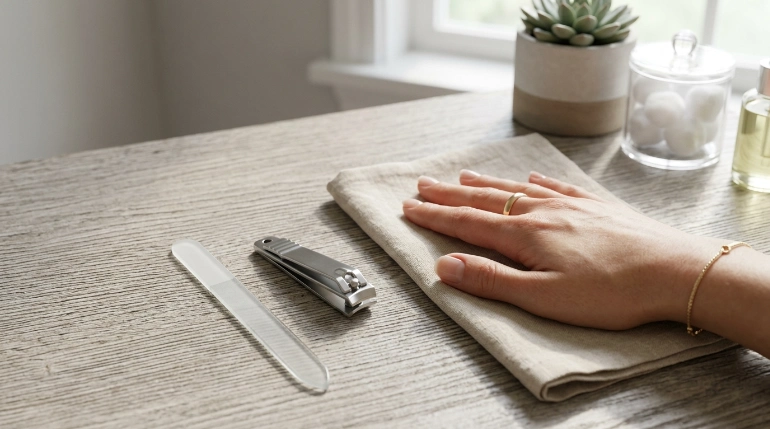
Nail clippers and nail files can both shorten your nails, but they work very differently.
A nail clipper uses two sharpened blades to cut through the nail plate in one movement. This makes it useful when your nails have grown significantly longer than you want.
A nail file gradually removes tiny amounts of nail material through abrasion. Because the process is slower, you have more control over the final shape.
Think of it this way:
- Clippers are for major length removal.
- Files are for detail work, shaping, and smoothing.
- Using both can often give you the cleanest result.
The American Academy of Dermatology’s nail-trimming guidance recommends trimming nails with clippers or nail scissors and then smoothing uneven or rough edges with a nail file or emery board. It also advises filing in the same direction rather than repeatedly sawing back and forth.
Nail File vs. Nail Clipper Comparison
| Feature | Nail File | Nail Clippers |
|---|---|---|
| Removing lots of length | Slow | Excellent |
| Precise shaping | Excellent | Limited |
| Smoothing rough edges | Excellent | Poor |
| Creating oval or almond shapes | Excellent | Difficult |
| Short natural nails | Very useful | Useful |
| Thick nails | May take longer | Usually faster |
| Brittle or splitting nails | Gentle when used correctly | Can sometimes create sudden stress |
| Portability | Excellent | Excellent |
| Typical cost | About $1–$20+ depending on material | About $3–$25+ depending on quality |
| Maintenance | Clean or replace as needed | Clean and keep blades sharp |
| Best overall use | Shaping and finishing | Shortening |
The prices above are general retail ranges rather than fixed costs. Premium glass files, professional tools, or specialty clippers can cost more.
When Nail Files Are Better Than Clippers
There are several situations where reaching for a file first makes sense.
You Only Need to Remove a Little Length
If your nails are just slightly longer than you want, clipping can remove more nail than intended.
A file allows you to shorten the free edge—the white or extended portion of the nail—a little at a time. This is especially helpful when you have carefully grown your nails to a particular length.
You Want a Specific Nail Shape
Clippers are not designed for detailed shaping.
If you want:
- Oval nails
- Squoval nails
- Rounded nails
- Almond-shaped natural nails
- Soft square edges
a file gives you much more control.
You can slowly refine each side until the nails look balanced rather than making one irreversible cut.
Your Nail Edges Feel Rough
Clipping often leaves small corners or sharp areas behind.
A nail file is ideal for smoothing those areas so your nails are less likely to catch on hair, sweaters, towels, or bedding.
This is one reason files and clippers work so well together.
You Have Brittle or Easily Splitting Nails
Some brittle nails do not respond well to aggressive clipping. The sudden pressure of a clipper can sometimes encourage an existing weak area to split.
Gentle filing may give you greater control.
However, technique matters. Aggressive filing can also weaken nails. The American Academy of Dermatology recommends keeping nails shaped and snag-free with an emery board and using appropriate trimming techniques to maintain healthy nails.
If your nails regularly peel, crack, split, or break despite gentle care, do not assume the tool is the only problem.
When Clippers Are Better Than Nail Files
Files are precise, but they are not always practical.
Your Nails Have Become Too Long
Trying to file several millimeters off every nail can become tedious.
A good pair of sharp clippers can remove most of the unwanted length quickly. You can then finish the job with a file.
This is often the easiest routine:
- Clip the bulk of the excess length.
- Leave slightly more nail than your final target.
- Use a file to refine the shape.
- Smooth any rough corners.
Your Nails Are Naturally Thick
Thicker nails may take a long time to shorten with a fine nail file.
A sharp, properly sized clipper can be more efficient.
For especially thick toenails, avoid forcing a small fingernail clipper through the nail. Using the wrong tool can make the clipper slip or cause an uneven cut.
You Need a Fast Basic Trim
If shape is not your priority and you simply want clean, shorter nails, clippers are convenient.
Mayo Clinic’s healthy fingernail guidance recommends using sharp manicure scissors or clippers, trimming nails across, and then gently rounding the tips.
Is Filing Healthier Than Cutting Nails?
Not automatically.
A nail file can feel gentler because it removes nail gradually, but poor filing technique can still cause damage.
Likewise, clippers are not bad for nails when they are sharp, clean, appropriately sized, and used carefully.
The health of your nails depends more on factors such as:
- How aggressively you use the tool
- Whether the tool is clean
- Whether clipper blades are sharp
- The grit and material of your file
- How thin or brittle your nails are
- Whether you have gel, acrylic, or other enhancements
- Whether the nail is already injured or infected
The best tool is the one that lets you shorten or shape the nail without tearing, peeling, crushing, or injuring the surrounding skin.
What Type of Nail File Is Best?
Not all nail files feel the same.
Emery Boards
Traditional emery boards are inexpensive and easy to find.
They work well for routine shaping, but the abrasive surface wears down over time. Because many cannot be thoroughly disinfected, replacing them regularly is sensible for personal hygiene.
Avoid sharing used disposable files with other people.
Glass or Crystal Nail Files
Glass files have a fine textured surface and are popular with people who want a smooth, controlled filing experience.
They cost more upfront than basic emery boards but can usually be cleaned and reused for a long time when handled carefully.
They can be especially convenient for natural nails and small finishing adjustments.
Metal Nail Files
Metal files are durable and washable, but some versions feel quite aggressive.
If your nails are thin, peeling, or easily damaged, a gentler file may feel more comfortable.
Whatever material you choose, do not use excessive pressure just because the file is taking longer than expected.
How to File Your Nails Without Damaging Them

Good technique matters more than filing quickly.
Step 1: Start With Clean Nails
Wash and dry your hands and make sure there is no dirt trapped beneath the free edge.
If you are doing a full manicure, remove old polish first if you need to inspect the natural nail for damage or discoloration.
Step 2: Choose Your Final Shape
Decide whether you want square, rounded, oval, or squoval nails before you start.
Constantly changing direction or shape can make you remove more nail than necessary.
Step 3: File Gradually
Use light pressure and work on the edge of the nail.
Avoid digging the file into the skin along the sides of your nail.
Step 4: Use Controlled Strokes
Dermatologists recommend moving the file in the same direction rather than aggressively sawing back and forth, because rough back-and-forth filing can weaken the nail.
Step 5: Check Symmetry Frequently
Stop every few strokes and look at the nail from the front.
This makes it easier to catch uneven areas before you remove too much length.
Step 6: Moisturize
After trimming or filing, apply hand cream or cuticle oil if your skin and nails feel dry.
Do not cut healthy cuticles simply to make the manicure look cleaner. Cuticles help protect the area where the nail grows, and damaging them can increase the opportunity for germs to enter.
Expert Tip: When shortening long nails, clip them slightly longer than your desired final length. Then use a file for the last bit of shortening and shaping. This reduces the chance of accidentally cutting a nail too short.
Are Nail Files Better for Short Nails?
Often, yes.
When your nails are already short, there may not be enough free edge for comfortable clipping.
A file gives you finer control and lets you smooth a tiny corner without risking a cut that goes too close to the skin.
For very short nails, use gentle pressure. Filing aggressively along the sidewalls—the skin-adjacent sides of the nail—can make the area sore.
If there is almost no free edge, you may be better off leaving the nail alone until it grows slightly.
What About Toenails?
Toenails deserve slightly different treatment.
Because toenails are often thicker, clippers are usually more practical for removing length.
Avoid dramatically rounding the corners of toenails. Cutting deeply into the sides can contribute to problems around the nail edge.
If your toenails are extremely thick, distorted, painful, difficult to cut, or repeatedly become ingrown, professional evaluation is safer than forcing a clipper or aggressively filing them down.
Nail Hygiene Matters With Both Tools
Even a technically perfect manicure can cause problems if your tools are dirty.
For personal nail-care tools:
- Remove visible nail debris after use.
- Follow the manufacturer’s cleaning instructions.
- Allow washable tools to dry completely before storage.
- Do not casually share personal clippers or reusable files.
- Replace disposable files when they become worn or dirty.
- Replace clippers that are rusty, damaged, misaligned, or noticeably dull.
Keeping nails clean and dry also matters because prolonged moisture can contribute to nail problems, while bacteria and fungi thrive in damp environments.
If you visit a salon, pay attention to tool-cleaning practices and general hygiene rather than judging the salon only by how attractive the manicure looks.
Common Mistakes to Avoid
Even simple tools can cause problems when they are used incorrectly.
- Cutting nails too short. Leave enough nail to protect the sensitive skin beneath the free edge.
- Using dull clippers. Dull blades may crush or tear instead of creating a clean cut.
- Aggressively filing back and forth. Rough filing can increase stress on the edge of the nail.
- Over-filing the sides. This can make the nail narrower and may irritate the surrounding skin.
- Using excessive pressure. More pressure does not necessarily create a better shape.
- Sharing personal nail tools. This can create unnecessary hygiene risks.
- Ignoring pain or swelling. Nail care should not require you to file through pain.
- Trying to file away discoloration. Changes in nail color or texture may need evaluation rather than cosmetic removal.
- Cutting or aggressively pushing back cuticles. This can damage the protective barrier around the nail.
- Using the wrong tool for thick toenails. Forcing a small clipper can lead to slipping or uneven trimming.
Nail Files, Clippers, and Artificial Nails
If you wear acrylic, gel, dip powder, or other nail enhancements, the decision becomes more complicated.
Artificial enhancements may require different grits and techniques than natural nails. Filing too aggressively can thin the natural nail underneath, while poorly placed clipping pressure can crack an enhancement.
The American Academy of Dermatology notes that some artificial nail practices can contribute to brittleness, peeling, or cracking, so minimizing unnecessary trauma is important.
If you are removing or reshaping a professional enhancement and you are unsure how much product can safely be filed away, returning to a qualified nail technician is often smarter than experimenting.
What If Your Nails Are Sensitive or Damaged?
If your nails are thin from repeated manicures, picking, over-buffing, or product removal, gentler maintenance is usually better.
Consider:
- Keeping the nails relatively short
- Using a fine, gentle file
- Avoiding aggressive buffing
- Moisturizing nails and surrounding skin
- Taking a break from unnecessary mechanical stress
- Avoiding picking or peeling gel and other coatings
Do not try to “repair” a painful or severely damaged nail simply by filing it smooth.
A cosmetic tool cannot treat an infection or an underlying medical condition.
When to See a Nail Technician or Dermatologist
Most routine shaping can be handled safely at home, but some nail problems are outside the limits of DIY care.
Consider seeing an experienced nail technician when:
- You need significant reshaping of acrylic, gel, or dip enhancements.
- You repeatedly crack enhancements during home filing.
- You are unsure which file grit or professional tool is appropriate.
- Your natural nails have become very thin after enhancement removal.
A dermatologist, podiatrist, or other healthcare professional may be more appropriate if you notice:
- Persistent pain
- Redness or swelling around the nail
- Pus or drainage
- A nail lifting away from the nail bed
- Significant unexplained discoloration
- A new dark streak
- Repeated bleeding
- Thick, distorted, or crumbling nails
- Nail changes that continue to worsen
For example, the NHS guide to fungal nail infections notes that fungal nails may become thicker, brittle, or discolored. Those changes should not simply be filed away repeatedly without considering the underlying problem.
Similarly, persistent nail changes may sometimes need medical evaluation rather than another manicure.
Are Nail Files Better Than Clippers for Beginners?
For beginners, files can be easier to control because mistakes happen gradually.
If you accidentally make three extra passes with a file, you may remove only a small amount of nail.
One overly deep clip, however, cannot be undone.
That does not mean beginners should avoid clippers. Instead, start conservatively:
- Use a clean, sharp clipper.
- Make small cuts rather than one dramatic curved cut.
- Leave the nail slightly longer than your target.
- Finish the shape with a gentle file.
- Stop immediately if you feel pain.
This gives you the efficiency of clippers with the precision of a file.
Which Tool Should You Choose?
Choose a nail file first when:
- Your nails are already fairly short.
- You need only a small length adjustment.
- Shape is your main priority.
- You want to smooth snags or sharp corners.
- Your nails tend to split under sudden clipping pressure.
Choose clippers first when:
- Your nails are significantly too long.
- You want a quick basic trim.
- Your nails are too thick to file efficiently.
- You plan to reshape them afterward with a file.
Use both tools when you want the most practical at-home manicure routine.
For many people, this is the best solution rather than trying to declare one tool universally superior.
FAQs
Are nail files better than clippers for healthy nails?
Not necessarily. Both can be safe when used correctly. Nail files provide more precise shaping, while clippers efficiently remove extra length. Technique, tool condition, nail health, and hygiene are more important than choosing one tool exclusively.
Is it better to file or cut brittle nails?
Gentle filing may provide better control for some brittle nails, especially when only a little length needs to be removed. However, aggressive filing can also worsen splitting. If brittleness persists, consider the overall condition of the nail instead of assuming the trimming tool is the cause.
Can I file my nails instead of cutting them?
Yes. If you do not need to remove much length, you can maintain your nails entirely with a file. It simply takes longer when the nails become very long or thick.
Should I file my nails before or after clipping?
Usually after. Clip off most of the unwanted length first, leaving a little extra, and then file to create your final shape and smooth the edges.
Is a glass nail file better than an emery board?
A glass file can offer a smooth filing experience and is reusable when properly cleaned. Emery boards are cheaper and convenient but wear out faster. The better choice depends on your budget, nail sensitivity, and personal preference.
Can filing make nails thinner?
Filing the free edge normally should not significantly thin the nail plate. However, repeatedly filing or buffing the top surface of the nail can remove layers and make it feel thinner or weaker.
How often should I file my nails?
There is no fixed schedule. File whenever the nail edge becomes rough, uneven, or longer than you prefer. Small maintenance sessions are often easier than waiting until every nail needs major reshaping.
Conclusion
So, are nail files better than clippers? For precision, shaping, and small adjustments, nail files usually win. For quickly shortening long or thicker nails, clippers are far more efficient.
You do not have to choose only one.
For a simple at-home routine, use clean, sharp clippers to remove excess length and a gentle nail file to perfect the shape and smooth the edges. Work slowly, avoid aggressive filing or cutting, and pay attention to what your nails are telling you.
If you notice pain, swelling, unusual discoloration, significant thickening, or persistent damage, put the manicure tools aside and get professional advice. Healthy nails should always matter more than achieving the perfect shape.

