
10 Best Kind of Nail Files: Expert Guide to Choosing the Right File for Every Nail Type

Nail files shape and smooth nails, help prevent splits, and keep manicures looking neat between salon visits. They come in many types — emery boards, glass files, metal files, and electric buffers — each suited to different nail kinds and goals. We focus on the types that work best for natural and artificial nails and on tools that last through regular use.
The three most important things to check when buying a nail file are grit, material, and durability. Grit determines how aggressive the file is and whether it’s safe for soft natural nails or better for thick acrylics; material affects how gentle it is on the nail edge and how easy it is to clean; and durability tells you whether it will keep its shape or need frequent replacement. We tested a range of emery boards, glass files, and metal files to find options that balance gentle shaping, long life, and easy upkeep.
Best Nail Files
Below is our full list of the best nail files we recommend. We chose options for different nail types and budgets so you can find the right fit for home or salon use. Our picks focus on durability, ease of use, and gentle shaping.
HomeyEra 100/180 Square Nail Files (12 Pack)

We recommend this pack if you want a sturdy, reusable emery board set that handles both thick acrylics and natural nails.
Pros
- Durable feel that lasts through many uses
- Dual grits for coarse shaping and fine smoothing
- Large square shape gives more control
Cons
- Coarse side can feel rough on thin natural nails
- No protective case or sleeve included
- Sandpaper can peel after heavy use
We used these files on our own nails and found them reliable. The 100 grit chews through acrylic quickly, and the 180 grit smooths edges without taking off too much length. They feel solid in hand and don’t bend like flimsy emery strips.
Shaping toes worked well because the length and square tip give a stable edge. When we used the fine side on natural nails, it left a clean finish. Watch the coarse side on thin nails; we switched to the 180 side sooner than expected to avoid over-filing.
Cleaning is simple: we rinsed them and let them air dry. After several uses the grit stayed mostly intact, but heavy filing on acrylic can loosen some sandpaper on a few boards. Overall, this pack offers good value for home mani sessions and salon touch-ups.
3 Swords Sapphire Nail File Set

We recommend this set if you want a long-lasting, precise metal file with a simple buffer for finishing.
Pros
- Feels sturdy and lasts a long time.
- Files nails evenly without splitting.
- Compact set that fits in a travel kit.
Cons
- Metal files can feel harsh at first.
- Buffer is small and wears faster than the files.
- Grip can get slippery with lotion on hands.
We used these files for several weeks and liked how quickly they shaped nails. The sapphire coating keeps its grit, so we didn’t need to press hard and avoided rough edges.
The stainless steel body gives a solid feel in hand. When filing, the tool stays straight and does not bend, which helps with control and makes shaping easier.
Finishing with the 3-way buffer worked but showed wear sooner than the files. It’s handy for quick smoothing, though we’d replace it sooner if we use it daily.
Overall, this set feels like a workshop-grade tool made for people who want neat, precise results without replacing files often.
Bona Fide Glass File (Pastel Green Violet)
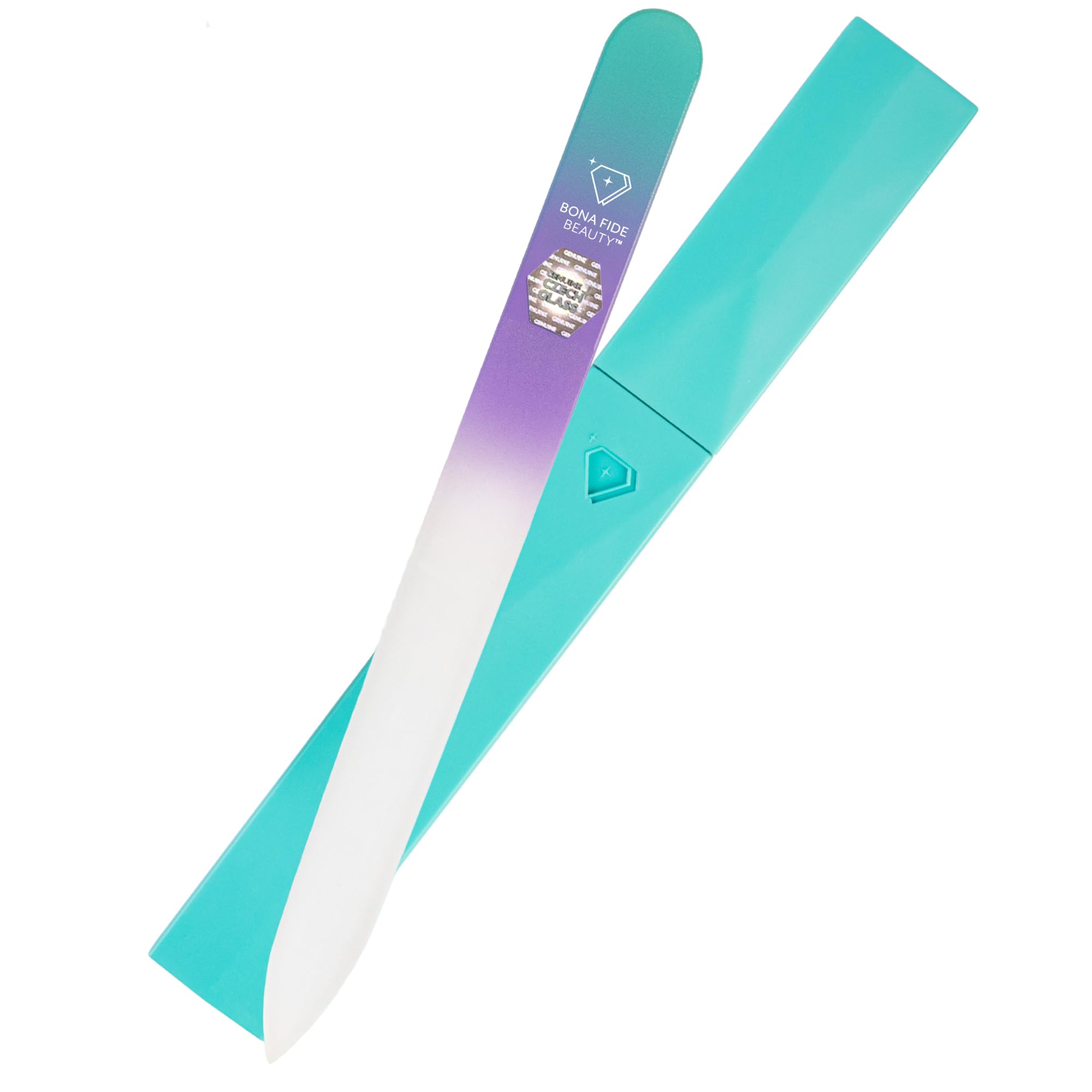
We recommend this glass file if you want a long‑lasting, gentle tool that leaves nails smooth without splitting.
Pros
- Feels sturdy and files in both directions.
- Smooth finish that seals nail edges.
- Comes with a hard case for travel.
Cons
- Can break if dropped on hard surfaces.
- Slight learning curve on pressure for best results.
- Not ideal if you prefer very coarse shaping.
We used this file for several weeks and liked how gentle it felt on thin nails. The fine grit smoothed rough edges quickly and left a clean, sealed finish that reduced peeling.
Handling felt precise. The pastel glass is comfortable to hold and the case made it easy to toss in a bag without worrying about scratching the surface. Filing both directions saved time compared with emery boards.
We noticed that you must start light and find the right pressure, or the filing feels slow. A tempered glass still risks cracking if it hits tile or a sink, so we treated it carefully during use and storage.
Overall, this file gave us salon‑like results at home and lasted longer than disposable files we tried. Consider it if you want a reusable, gentle option that looks nice and travels well.
Buy the Bona Fide Glass File on Amazon
HeeYaa 10-Pack Emery Nail Files
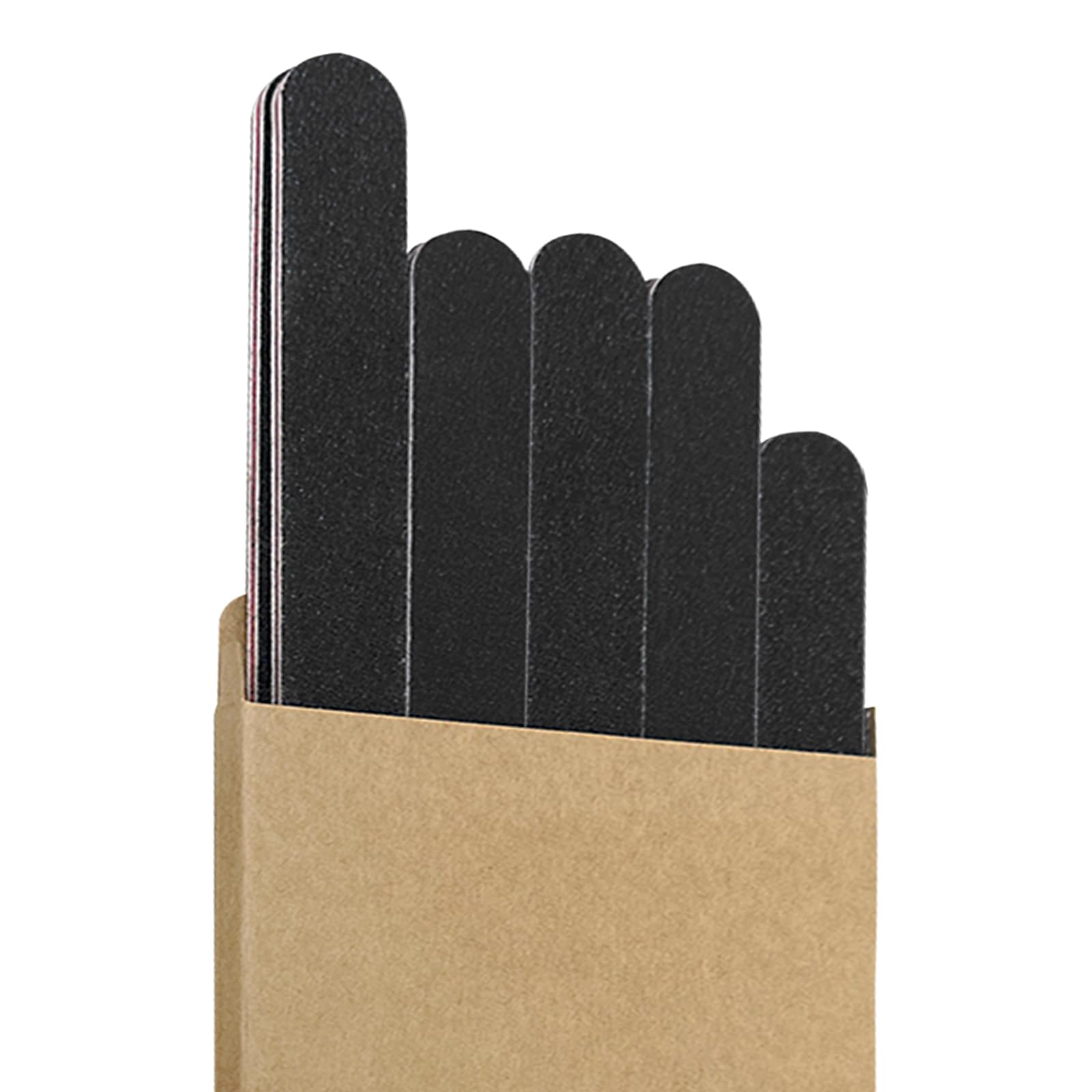
We recommend this pack if you want sturdy, reusable emery files that work for home and salon use.
Pros
- Durable PP core holds up to repeated use.
- Double-sided 100/180 grit covers shaping and smoothing.
- Comes in neat kraft box, good for storage or gifts.
Cons
- Coarse side can feel rough on thin nails.
- Black grit shows dust and nail bits easily.
- Files are basic—no fancy buffer finish.
We used these after a few at-home manicures and liked how solid they felt. The red plastic core keeps each file from bending while you work. That made filing faster and more predictable than flimsy emery boards.
The 100 grit reshaped thick nails quickly, and the 180 grit smoothed edges without over-thinning. We took care to use light strokes with the coarse side to avoid splitting delicate nails.
Packing ten in a compact kraft box made it easy to grab a fresh file when one dulled. These aren’t luxury buffers, but they are reliable, reusable, and a good value for regular use.
HeeYaa 10-Pack Emery Nail Files
Soft Touch Nail File – 5 Pack

We recommend this file if you want a simple, durable tool for shaping natural nails without harsh scratching.
Pros
- Feels sturdy and long lasting
- Dual grits handle smoothing and edging
- Washable and easy to disinfect
Cons
- Grit may be too fine for heavy acrylic work
- Plastic core can bend under heavy pressure
- Limited color choices
We used these files for several weeks and liked how they smoothed ridges gently. The 280/320 grit removed small bumps and left a clean edge without over-filing.
Handling felt comfortable in hand, and the length gave good reach for thumbs and pinkies. After washing, the surface stayed intact and did not flake like cheaper emery boards.
When filing thicker nail enhancements, we found the grit too gentle and the board flexed if we pushed hard. For natural nails, though, these strike a good balance between control and gentleness.
Overall, these work well for salon touch-ups or home care when you need a reliable, simple file that lasts a while.
Makartt Nail Files 100/180 Grit
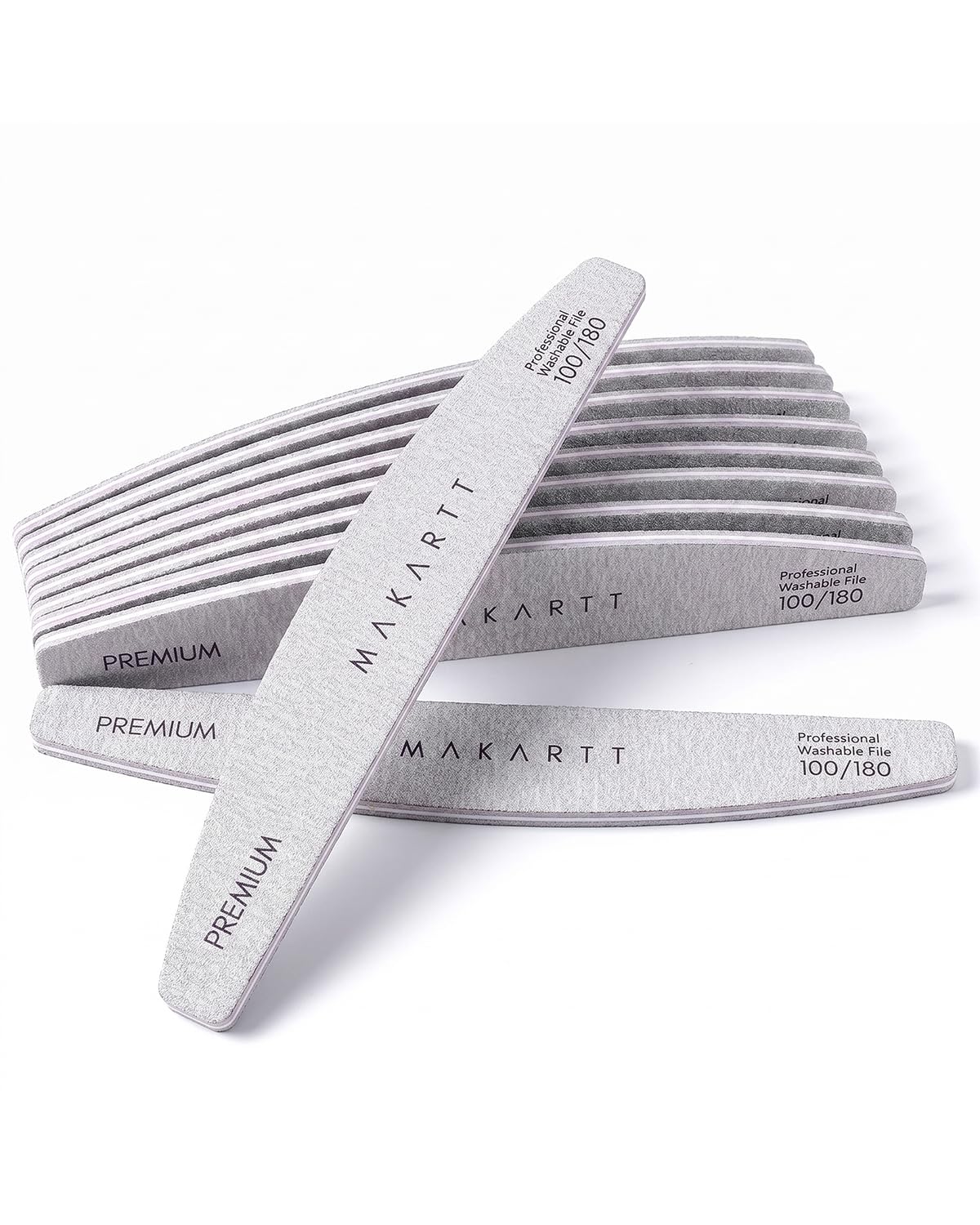
We recommend these if you want a tough, reliable file for acrylics, gels, and thick natural nails because they shape fast and hold up to repeated use.
Pros
- Fast shaping with coarse side
- Smooth finish from the finer side
- Durable and washable for many uses
Cons
- Coarse grit can feel rough on thin nails
- Emery may wear down after heavy use
- Ten-pack may be more than some need
We used these Makartt files on both acrylic sets and our own thick toenails. The 100 side cut through length quickly, and the 180 side left a neat edge without sanding forever.
The curved half-moon shape fit the nail line and made corner work easier. The pre-buffed edges did reduce nagging snags near the cuticle, which saved time and kept the skin calmer.
They felt sturdy and didn’t bend while filing. After washing a few times they stayed intact and kept a useful amount of grit, though after heavy weekly use you’ll notice mellowing.
For a DIY kit or a salon needing a simple, low-cost tool set, these files worked well for us. They balance aggressive shaping and a decent finish, so they suit many nail types and skill levels.
Makartt Nail Files 100/180 Grit
Tropical Shine Colossal Files

We recommend this set if you want sturdy, long files that cover most nail needs without breaking the bank.
Pros
- Durable grits for natural and acrylic nails
- Good grip and large surface for fast shaping
- Washable and easy to clean
Cons
- Coarse side can feel aggressive on thin nails
- Larger size may be bulky for travel
- Grit edges can wear with heavy use
We used these files on both our natural nails and acrylic tips. The 8.5-inch length feels solid in hand and gives enough surface to shape quickly. The pink fine side smoothed edges without over-thinning the nail.
The blue medium grit worked well for bringing shape to natural nails and for shaping shorter acrylics. We noticed the black coarse side removes product fast, so we took extra care on thin nails to avoid over-filing.
Cleaning was simple — a quick rinse and disinfect made them ready for the next use. For at-home or pro touch-ups, they save time and hold up better than flimsy emery boards.
Buy Tropical Shine Colossal Files on Amazon
Canvalite Half-Moon Nail Files (10 pcs)

We recommend this set if you want a simple, durable emery board that files both natural and fake nails without fuss.
Pros
- Dual 100/180 grit covers rough shaping and smooth finishing.
- Half-moon shape feels easy to control around cuticles.
- Ten reusable boards give good value for salon or home use.
Cons
- Grit can wear down after heavy use.
- Edges feel a bit rough when stored loosely.
- Not as gentle as glass or crystal files on weak nails.
We used these in a small group session and they held up through many nails before showing wear. The half-moon curve made it easier to follow the nail edge, which cut down filing time.
The 100 grit tackled extensions and thick edges fast, while the 180 grit left a neat finish. We noticed the abrasive surface cleans off with a quick brush, so they stayed usable between clients.
They felt sturdy in the hand and the size gives good control for toe and finger work. For anyone doing basic salon work or consistent home care, these are a solid, budget-friendly pick.
MR.GREEN Stainless Steel Nail File
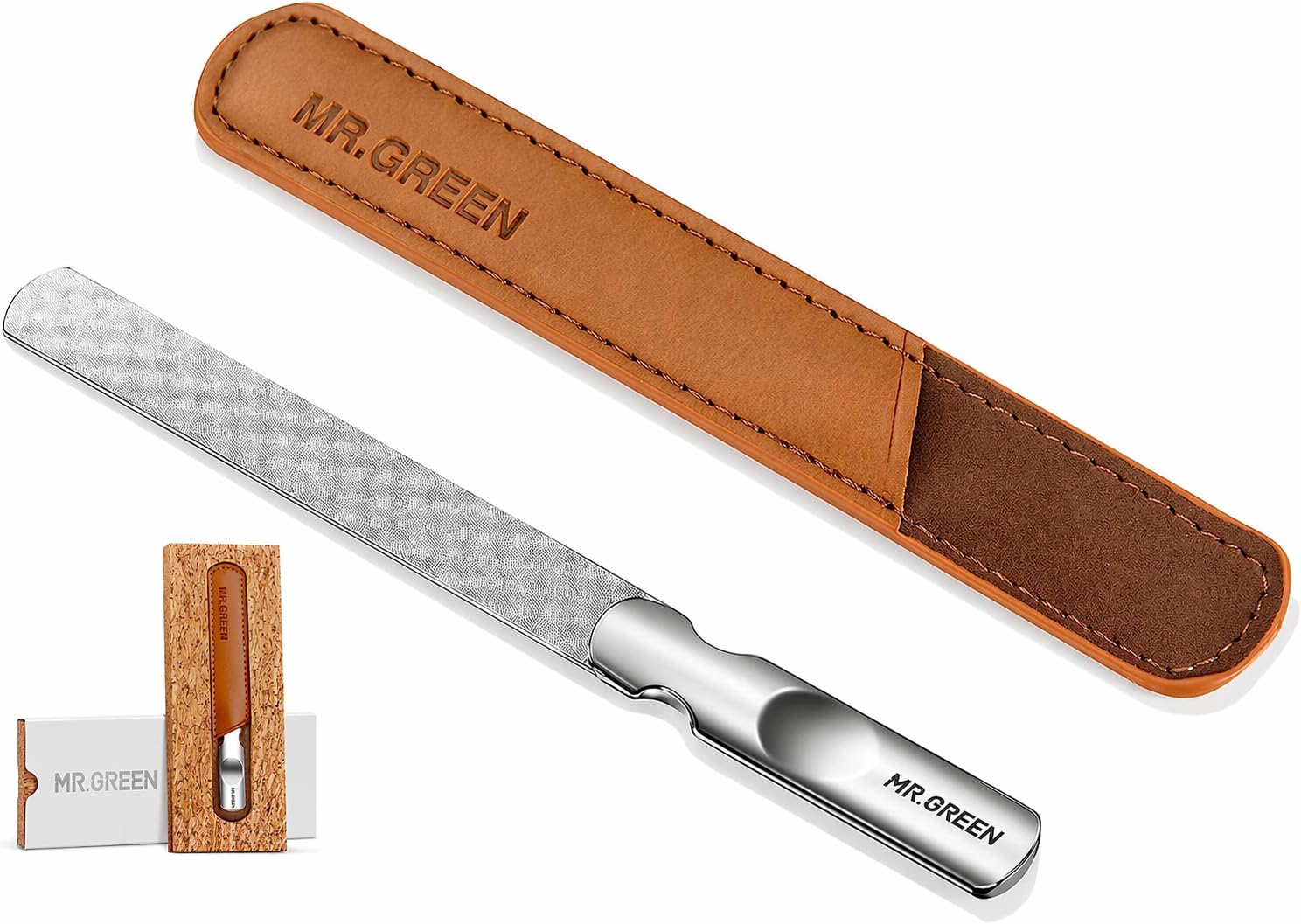
We recommend this file if you want a durable, easy-to-clean tool that gives precise shaping and lasts longer than disposable files.
Pros
- Very sturdy stainless steel, won’t bend or chip.
- Double-sided grit lets us shape and smooth with one tool.
- Comes with a leather case for safe carrying.
Cons
- Metal grit feels coarse at first on delicate nails.
- Small size can be awkward for very large hands.
- Needs rinsing and drying after use to avoid water spots.
We used this file for both my nails and my partner’s. The metal tip cut through rough edges fast and kept its shape after multiple uses. It felt professional compared with thin emery boards.
The anti-slip handle gave good control when filing at odd angles. The finer side left a smooth finish that didn’t tear the nail layers. It took a couple tries to get used to the metal texture, but results were consistent.
Cleaning was easy—just rinse and dry, then slip it into the leather case. The case kept it safe in a travel kit and kept the file from dinging other items. Overall, it’s a solid pick if you want a reusable, long-lasting nail file.
Onsen Nail File 6-Pack

We recommend this pack if you want a simple, disposable file that works well on both natural and acrylic nails.
Pros
- Dual grit covers shaping and smoothing.
- Lightweight and pocket-friendly.
- Feels sturdy for a disposable file.
Cons
- Not made for heavy-duty smoothing.
- Grit wears after many uses.
- Only six files in the pack.
We used these files on both our natural nails and tips. The 120 grit handles quick shaping on acrylics, while the 180 side tames rough edges on natural nails. Filing felt controlled and gave a clean edge when we moved in one direction.
The files are thin and easy to tuck into a travel case. They worked well after a soak and quick trim, and we liked how little dust flew compared with coarse metal files.
They are disposable, so we didn’t expect lifetime performance. After a few uses the abrasive felt softer, but they stayed useful for touch-ups and trips. If you want something cheap, portable, and simple, this pack does the job.
Buying Guide
We look for the right grit for the job. Coarse grits (80–100) shape nails fast but can damage natural nails. Medium grits (180–240) work well for most nails. Fine grits (300+) smooth and finish without roughing the nail.
We weigh material and durability. Emery boards are cheap and simple, while glass, ceramic, and crystal files last longer and are gentler. Metal files are strong but can be harsh on natural nails.
We check file shape and size for control. Straight files give even edges. Rounded or curved tips follow the nail shape better. Smaller files work well for nails and cuticles; longer files help with longer nails.
We consider grit labeling and safety. Look for clear grit numbers and whether a file suits natural or artificial nails. Avoid files that feel excessively rough on the first pass.
We value comfort and grip. Non-slip handles or textured grips reduce slips and improve precision. Lightweight tools feel easier to use during longer sessions.
We compare care and cleaning needs. Some files are washable and reusable; others are disposable. Washable materials help hygiene and save money over time.
We assess price versus life span. Higher upfront cost can be worth it if the file lasts much longer. Balance cost with how often we file and whether we need a travel or a salon-grade tool.
Editor’s Choice
We picked a ceramic nail file as our top choice because it balances durability and gentle shaping. It lasts longer than emery boards and stays consistent without splintering.
The surface is fine enough to smooth edges without damaging nails. We like that it suits natural and artificial nails, making it a versatile tool for home use.
Key features we value:
- Material: Ceramic for long life and smooth filing.
- Grit: Medium-fine grit for safe shaping.
- Care: Easy to clean with water and a soft brush.
We recommend a ceramic file with a protective case and a rounded tip for safer use. Replace it only if the surface wears unevenly or chips, which keeps nail health steady.
For those who travel, a compact ceramic file fits well in a kit. We suggest pairing it with a soft buffer for shine and a cuticle tool for neat edges.
Conclusion
We chose nail files based on grit, material, and purpose. That helps us match the tool to our nail type and routine.
We prefer glass or crystal files for daily shaping because they are gentle and last long. For heavy shaping or acrylics, we use coarse emery boards or metal files sparingly.
We keep a soft buffer or 240–400 grit file for smoothing and a finer 600+ grit for finishing. This combo reduces splits and gives a polished edge.
We replace disposable files when they fray and sanitize reusable files after each use. Proper care extends life and keeps nails healthy.
We balance price with performance. A modest investment in a few quality files beats constant replacement of cheap ones.
Key takeaways:
- Match grit to the task.
- Pick material for nail strength and comfort.
- Clean and replace files regularly.
We stick to these simple rules to get neat, healthy nails without fuss.
FAQS
What file grit should we use?
We choose coarse grits (80–100) for heavy shaping and medium grits (180–240) for regular shaping. Fine grits (320+) work best for finishing and smoothing.
How often should we replace a nail file?
Replace disposable emery files after 5–10 uses or when they fray. Metal or glass files last longer; replace when they show rust, chips, or reduced effectiveness.
Can we use the same file on natural and artificial nails?
We avoid using the same file for both to prevent cross-contamination and damage. Use gentler grits on natural nails and stronger grits on acrylics or gels.
How do we file without splitting nails?
We file in one direction with light pressure. Avoid sawing back and forth and keep the file angle steady to reduce splitting.
Are glass files better than emery boards?
Glass files are gentler and last longer. Emery boards are cheap and disposable. We pick glass for durability and emery for travel or quick use.
How should we clean a reusable file?
Rinse metal or glass files with warm water and mild soap, then dry fully. Disinfect with isopropyl alcohol if we share files.
Quick tips:
- Store files dry to prevent rust.
- Match grit to nail type.
- Use light, single-direction strokes.

