
Best Nail Files for Beginners: Simple, Durable Picks for Flawless Home Manicures

Nail files help shape, smooth, and finish nails at home or in a salon. They come in many types—emery boards, glass files, metal files, and buffers—and each type removes nail material in a different way. For beginners, a gentle, easy-to-control file makes learning safe and quick.
Choosing the right file means thinking about grit, durability, and how the file affects your natural nails. Lower grit numbers remove more nail quickly but can split or thin nails; higher grit numbers smooth and finish without damage. We tested and compared common file types to find the ones that are forgiving for new users while still delivering neat, long-lasting results.
Best Nail Files for Beginners
Below is our full list of the best nail files for beginners. We chose easy-to-use, gentle, and durable options that help shape nails without damage. Use our picks to find a file that fits your skill level and nail type.
Teenitor 6‑Piece Nail File & Buffer Set

We recommend this set for beginners who want a full, simple at-home nail routine because it gives several grits and a shine step at a low price.
Pros
- Good variety of grits for shaping, smoothing, and shining.
- Feels sturdy and washable for repeated use.
- Easy to follow three-step process for beginners.
Cons
- Coarser grits can feel too rough if you press hard.
- Some lower-grit pieces seemed less useful to us.
- Shape and size may not suit every hand or toe.
We started using this set to learn basic nail care and liked how each piece has a clear role. The files cut and shape nails quickly, the buffer blocks smooth ridges, and the fine polisher gives a real shine. It made our at-home routine feel more like a salon step-by-step.
The emery and EVA materials held up through rinsing and a bit of soap. We noticed the coarse 150 grit works best only for acrylic or thick edges, while the finer grits are gentle on natural nails. A few of the rougher files seemed redundant for our natural nails, so we skipped them after a few uses.
Handling felt comfortable and predictable, although the narrow rhombus shape took some getting used to on toes. The polish side did produce a quick glossy finish that lasted several days on us. For the price and variety, this set makes a good starter kit for people learning nail shaping and buffing.
Cliganic Nail Files 12-Pack
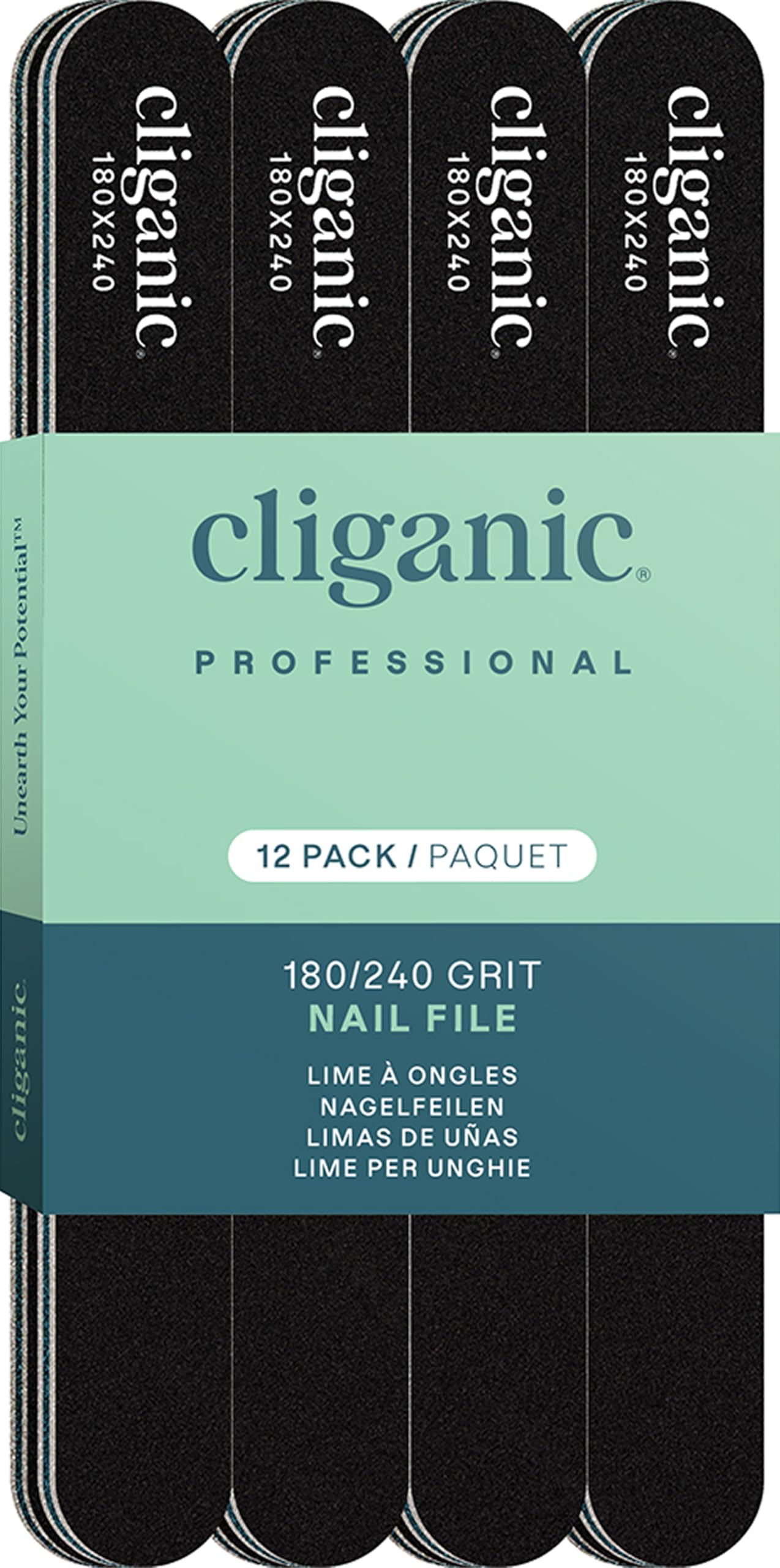
We recommend this set if you want a simple, budget-friendly pack that holds up for both natural nails and light acrylic work.
Pros
- Long-lasting grit that stays usable after several files
- Double-sided 180/240 grit for shaping and finishing
- Big value with 12 sturdy, washable boards
Cons
- Might feel too rough on very thin natural nails
- Not as smooth as a fine buffer finish
- All boards are the same color and size—no variety
We used these for a weekend of at-home manicures and a quick pedicure session. The 180 side cuts through the length fast, and the 240 side smooths edges well enough to skip another tool most times.
The boards felt stiff and solid in our hands. They didn’t flake or peel the grit after several uses, and rinsing them under soap cleared nail dust easily.
For beginners, the extra count means we could practice without worrying about wasting files. Just take care on delicate nails and finish with a softer buffer if you want a glossy edge.
AhaTopia Nail File & Buffer Set

We recommend this set for beginners who want an affordable, all-in-one kit that covers shaping, smoothing, and shine.
Pros
- Good value — lots of files and two buffers for practice.
- Easy to use — buffers give quick natural shine.
- Portable — light and travel-friendly.
Cons
- Buffer could be a bit firmer for faster buffing.
- Coarse grit may feel strong on very thin nails.
- Files wear down with heavy use.
We used this kit over a few weeks while learning basic manicures. The emery boards shaped acrylic and natural nails without much fuss. Having ten files meant we could practice and still leave extras in bags.
The four-way buffer made polishing simple. Each side did what it promised: shape, smooth, buff, and shine. The shine lasted a few days on our nails without polish and looked natural.
Files felt grippy and easy to hold, though the coarser side can be harsh if you press too hard. Buffers are soft and gentle, which is great for beginners but slower if you want a mirror finish fast.
This set works well for home use and learning. We liked the mix of grit for practice and the lightweight design for travel. If you want a cheap kit to learn filing and buffing, this one is worth trying.
Fandamei Nail Kit

We recommend this kit for beginners who want an affordable, complete set to practice basic manicures and pedicures at home.
Pros
- Lots of tools in one kit so you can do both mani and pedi.
- Coarse 100/180 files work well to remove gel or shape toenails.
- Stainless tools feel sturdy and washable.
Cons
- Some plastic smell when first opened.
- A few pieces felt a bit tight or needed small adjustments.
- Not specialized for advanced nail art or salon use.
We liked how everything arrived in one pouch. We used the 100/180 files to take down a gel edge and they cut through quickly without shredding the nail. The buffer made nails feel smooth afterward.
The cuticle nippers and pusher gave a neat finish. We found the curved nippers easy to control and the triangular peeler got under stubborn polish. The small brush cleaned debris well.
A couple items needed a gentle bend or break-in, and the pouch released a plastic smell at first. Still, for the price and the number of tools, this kit got us through multiple at-home manicures and pedicures with useful results.
HomeyEra 100/180 Nail Files (12-Pack)

We recommend this pack if you want sturdy, long nail files that work on both natural and acrylic nails for a low price.
Pros
- Durable, does not bend easily
- Dual 100/180 grit covers shaping and smoothing
- Long, square shape gives a good grip and control
Cons
- Emery surface can wear after many uses
- Coarse side may feel rough on very thin nails
- Bulk pack means storage or sharing is needed
We used these for a few weeks and liked how solid they felt in hand. The length and square shape made it easy to hold while shaping both fingernails and thicker toenails.
The coarse 100 grit quickly trimmed acrylic and long nails. We switched to the 180 side to smooth edges and remove ridges. That two-step approach saved time compared with single-grit files.
After repeated use the grit softened a bit, so we treated some files as backups and kept a fresh one for precision work. Overall, they handled salon-style filing at home without breaking or bending.
MORGLES Nail Kit
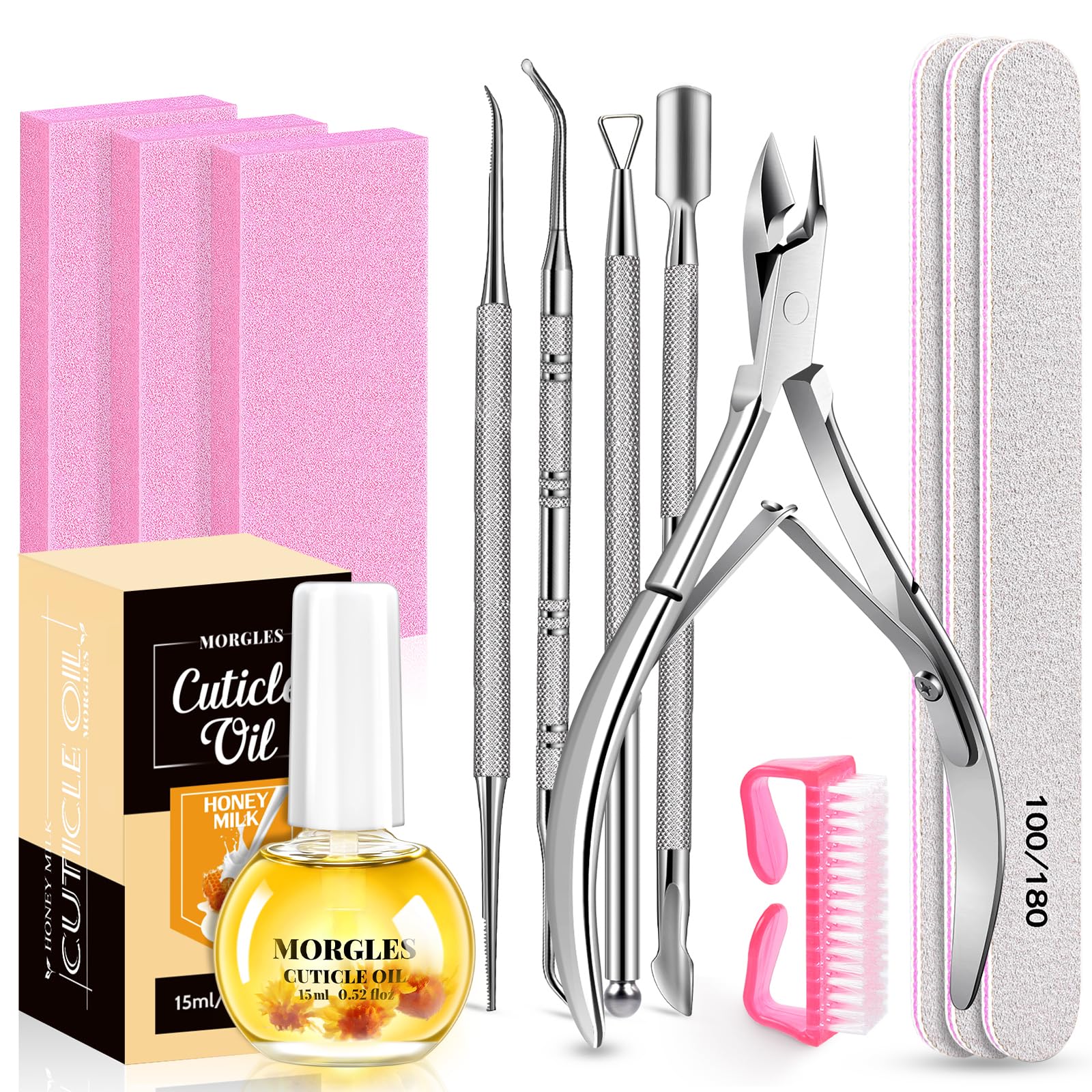
We recommend this kit for beginners because it bundles every basic tool, the files work well, and the cuticle oil smells nice.
Pros
- Comes with many useful tools for a full at-home manicure.
- Files and buffers feel sturdy and do their job without much effort.
- Cuticle oil softens skin and adds a pleasant scent.
Cons
- Some tools feel small and need careful handling.
- Metal clippers can be very sharp for first-time users.
- Case isn’t very protective for travel.
We used the files and buffers across several sessions and found they shape nails quickly. The 100/180 grit files take off length without tearing, and the rectangular buffers give a smooth finish that looks neat under polish.
Pushing back cuticles and trimming felt efficient with the stainless steel tools. We liked the cuticle oil the most — it softened the skin fast and left a light milk-and-honey scent that wasn’t overpowering.
This kit shines for beginners who want one set that covers clipping, filing, buffing, and cuticle care. Handle the sharper tools gently and store them safely if you plan to travel.
TsMADDTs Manicure Kit

We recommend this kit for beginners who want a complete, low-cost set to practice basic nail care at home.
Pros
- Lots of tools for one price
- Soft-feeling cuticle oil that soaks in fast
- Multiple grit options for step-by-step filing
Cons
- Cuticle nipper is very sharp and can feel aggressive
- Some pieces feel basic compared to pro tools
- Small items can be hard to store neatly
We used this kit on our own nails and found it covers almost every basic step. The half-moon files and multi-surface buffer let us shape and smooth nails from coarse to fine without switching brands. The rose-scented oil absorbed quickly and left cuticles soft.
The cuticle nipper cut clean but felt too sharp the first few uses; we had to slow down and be careful around the skin. The buffer blocks show all seven steps clearly by color, which helped when we were learning what grit to use next.
This kit works well for practice and regular at-home care. Expect sturdy but budget-friendly quality, and store the small tools in a pouch so you don’t misplace anything.
Bona Fide Glass Nail File (Pastel Green Violet)
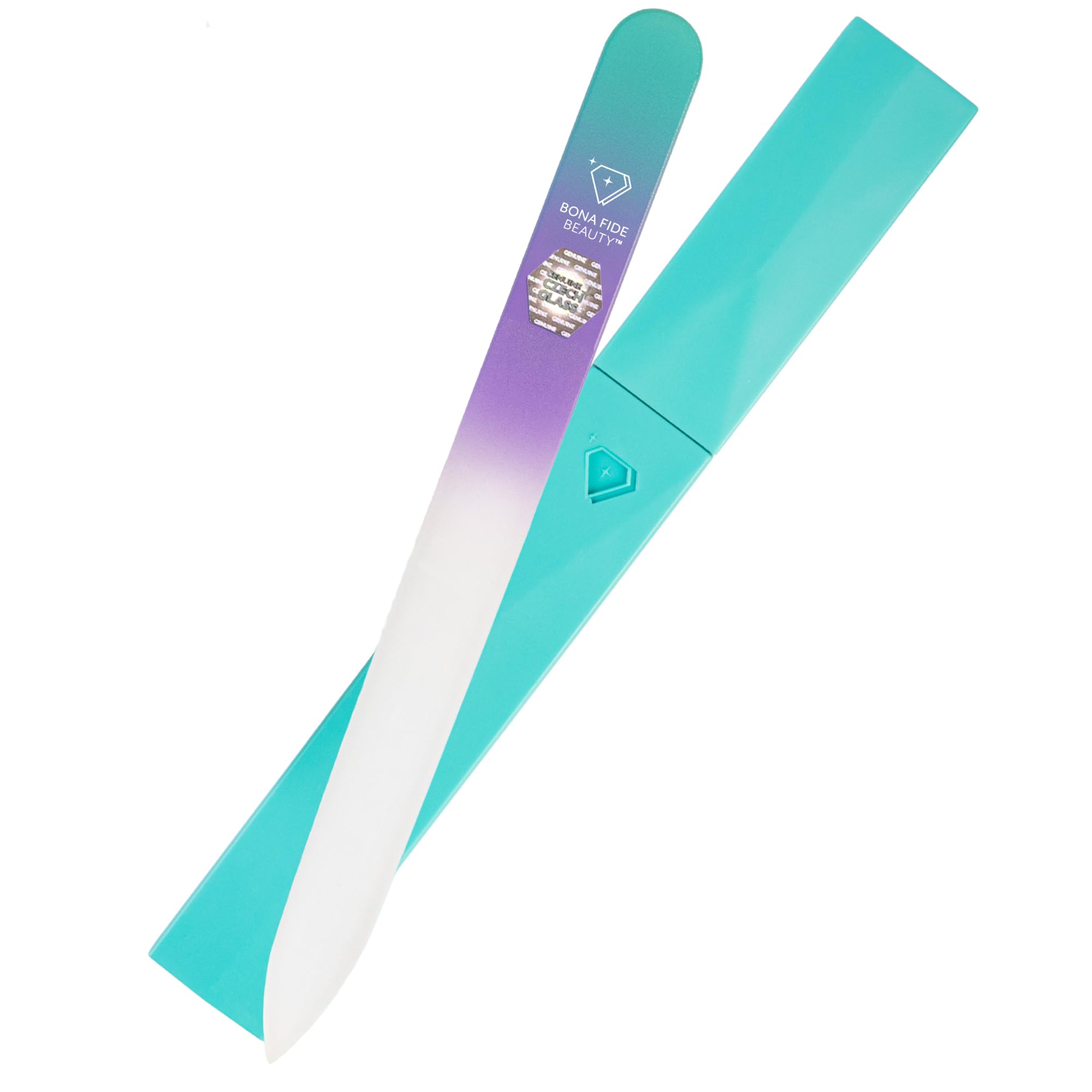
We recommend this if you want a gentle, long-lasting file that seals and smooths natural nails without shredding them.
Pros
- Files smoothly with minimal snagging.
- Reusable and easy to clean.
- Comes with a protective hard case for travel.
Cons
- Can break if dropped on hard surfaces.
- Feels fragile to handle at first.
- Slightly slower shaping compared with coarse files.
We used this Czech glass file for several weeks and liked how it left nail edges sealed and smooth. The fine grit felt gentle on thin nails and did not cause peeling like emery boards did for us.
The pastel finish is pleasant and the file fits our hand comfortably. Filing both directions cut our shaping time, though we went light at first until we got used to the feel.
Cleaning was simple — warm water and a quick rinse kept it looking new. The hard case protected it in our bag, but we still treated it like fragile glass to avoid chips or breaks.
Overall, this file felt salon-grade in our home routine and helped reduce splitting when we used it regularly.
Buying Guide
We look for files that feel safe and are easy to use. Start with the grit: lower numbers remove more material, higher numbers smooth the edge. For beginners, a medium grit (about 100–180) plus a finer file (180–240) covers most needs.
We check file shape and size next. A straight or slightly curved file works well for most nails. Shorter files give more control; longer files can be faster but harder to maneuver.
We pay attention to the file material and surface. Emery boards are gentle and cheap. Glass or crystal files last longer and are gentle on nails. Metal files are aggressive and suit thicker nails, but they can split soft nails.
We consider handle and grip for comfort and safety. A non-slip handle helps when we work with wet hands. Lightweight tools reduce hand fatigue during longer sessions.
We value ease of cleaning and durability. Washable or disinfectable files cut down on bacteria. Replaceable or long-lasting surfaces save money and reduce waste.
We compare price against quality and maintenance. Cheaper files might need frequent replacement. Slightly higher cost for a durable, washable file often proves more economical.
We use a simple checklist when buying:
| Feature | Why it matters |
|---|---|
| Grit range | Controls how much nail is removed |
| Shape/size | Affects control and fit to nail |
| Material | Impacts durability and gentleness |
| Handle/grip | Improves comfort and safety |
| Cleanability | Reduces infection risk and lasts longer |
Editor’s Choice
We picked a file that balances ease of use, safety, and value for beginners. It feels comfortable in the hand and gives consistent results without damaging the nail edge.
The top pick is a medium-grit emery board with a cushioned core. It files steadily, so users learn proper strokes and pressure without snagging or splitting.
We also recommend a fine-grit glass file as a second option for finishing. Glass files seal the nail edge and last much longer than disposable emery boards.
Key reasons we chose these:
- Comfort: Soft core reduces slipping and fatigue.
- Control: Medium grit teaches safe shaping; fine grit refines edges.
- Durability: Glass file for long-term use and hygiene.
Use the medium-grit board to shape and the glass file to smooth. File in one direction with light pressure. Replace emery boards when worn; sanitize glass files between uses.
Conclusion
We chose files that balance ease, safety, and reliable results for beginners. A soft buffer and a medium grit emery file work well for everyday shaping without damaging nails.
We recommend starting with a glass or cushioned emery file for control. They last longer and reduce splitting, which helps build confidence as you learn techniques.
We suggest keeping at least two grits: one for shaping and one for smoothing. That simple setup covers most needs and keeps the process fast and predictable.
We encourage regular, gentle filing toward the nail edge. Small, single-direction strokes help prevent tears and keep nails strong.
We included care tips so tools last and stay sanitary. Clean files after use, store them dry, and replace any that fray or lose grit.
We stand by practical choices over fancy trends. Good technique, the right basic tools, and simple maintenance give the best results for new nail care routines.
FAQS
What grit nail file should beginners use?
We recommend starting with a 180-grit file for natural nails. It smooths edges without removing too much nail.
How often should we file our nails?
File every 7–10 days or when edges feel rough. Filing more often can thin nails if done aggressively.
Glass, metal, or emery board — which is best for beginners?
Glass files are gentle and long-lasting. Emery boards are cheap and easy to find. We avoid metal files for natural nails because they can be too harsh.
Can filing replace clipping?
Yes. Filing shapes nails and prevents splitting. Clipping works too, but filing gives more control.
How do we file without causing splits?
File in one direction, from the outer edge toward the center. Use light pressure and avoid sawing back and forth.
How do we clean our files?
Rinse glass files with soap and water, then dry. Replace emery boards when they wear down or become frayed.
Are electric nail files safe for beginners?
They can be, if set to low speed and used gently. We suggest practicing on a fake nail or seeking professional guidance first.
Which shape should we choose?
Oval and square-oval shapes suit most people. We pick a shape that fits our daily activities and fingertip size.

