
Best Nail Files for BIAB: Top Picks and Buying Guide

Nail files help shape and refine nails, and for BIAB (Builder In A Bottle) nails they play an even bigger role. BIAB creates thicker, stronger nails than regular polish, so shaping, thinning, and smoothing take more careful work. We tested different file grits and shapes to find tools that give a smooth finish without damaging the BIAB layers.
When choosing a nail file for BIAB, grit, durability, and edge shape matter most. Coarse grits remove bulk faster but can split layers if used wrongly; fine grits finish and smooth without over-filing. The best BIAB files balance an efficient grit progression, a durable surface, and a shape that lets you control pressure so the builder gel stays strong and even. We narrowed options to the files that make shaping faster, safer, and neater, and we explain why each one stands out.
Best Nail Files for BIAB
Below is our full list of the best nail files for BIAB. We tested files for strength, grit options, and how they shape and finish builder in a bottle nails to help you get a smooth, long-lasting result. Use our picks to find a file that fits your skill level and nail routine.
3 Swords Germany Sapphire File Set

We recommend this set if you want a long-lasting, precise metal file with a handy buffer for BIAB maintenance.
Pros
- Lasts for months of regular use
- Dual grit lets us shape and smooth without switching tools
- Comfortable grip with a built-in cuticle pusher
Cons
- Metal files feel firmer than emery boards on natural nails
- Buffer is small compared to some 3-way blocks
- Higher upfront cost than disposable files
We used these files on cured BIAB and found the sapphire coating files easily shape thick gel without glazing or burrs. The coarse side removes length and bulk quickly, and the fine side refines edges without burning the nail plate.
The ergonomic grip gave us good control when working close to the cuticle. The small integrated cuticle pusher is useful for quick tidying between fills, though it’s not a replacement for a full metal pusher.
After weeks of regular at-home and travel use, the files showed far less wear than disposable files. They feel rigid, so we took extra care on natural free edges to avoid over-filing, but for BIAB they handled layers and hard product very well.
Buy it: 3 Swords Germany Sapphire File Set
Makartt Zebra 100/180 Nail Files (10-Pack)
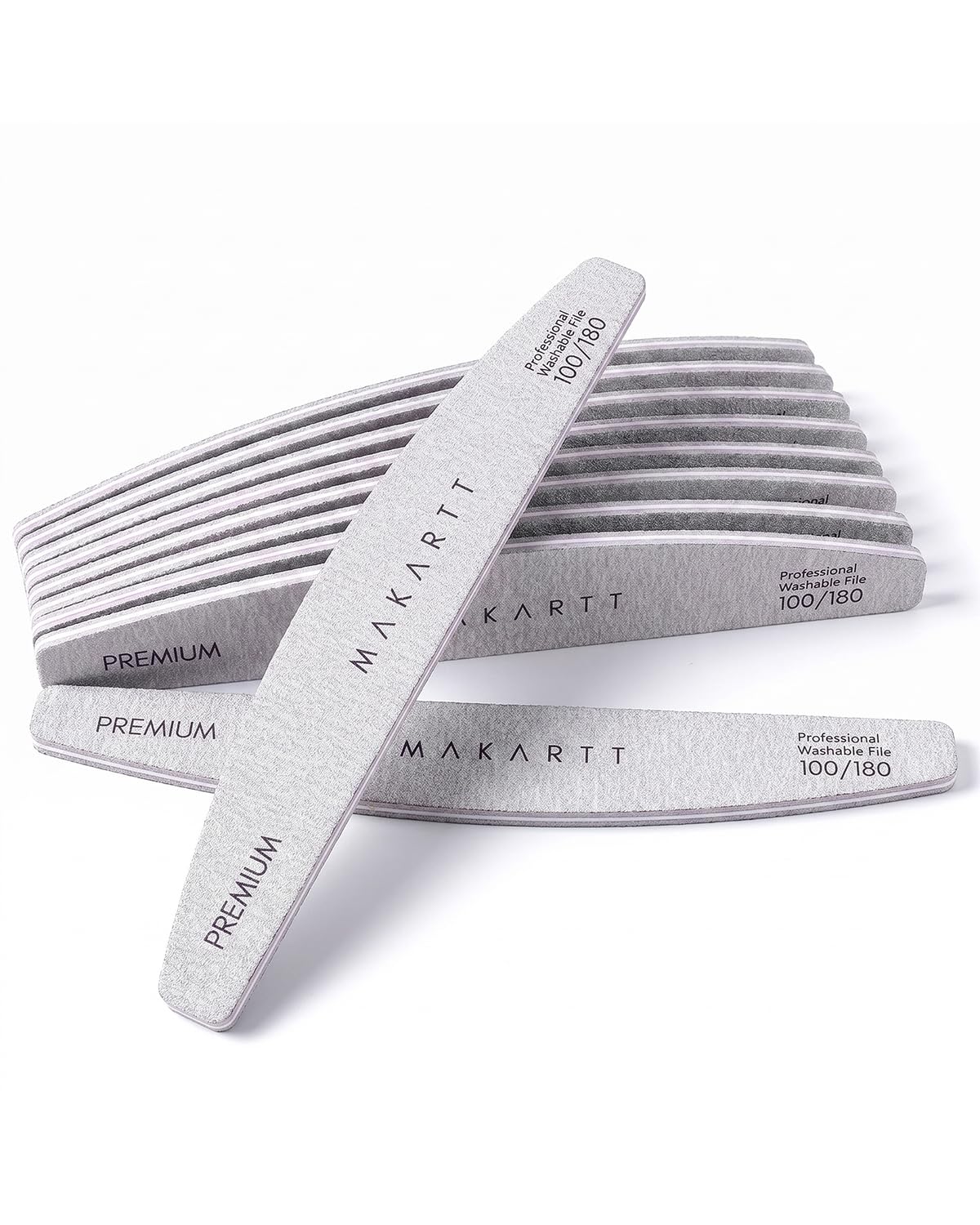
We recommend this set if you want sturdy, dual-grit files that handle both acrylic and natural nails without breaking the bank.
Pros
- Durable; feels solid and holds up through heavy filing.
- Dual 100/180 grits for fast shaping and a smoother finish.
- Pre-buffed edges reduce irritation near cuticles.
Cons
- Emery surface can wear after many washes.
- Not as fast as an electric file for very thick gel.
- Ten small boards may feel thin for salon stations that need bulk supplies.
We used these files for both removal and shaping. The 100 side shaves down acrylic and old gel quickly, and the 180 side tidies edges so nails look neat. The zebra texture stays grippy under pressure and the boards didn’t flex much while we filed.
They feel cleaner than cheap drugstore emery boards. The half-moon shape follows the nail curve, which made corner work easier. We noticed the pre-buffed edges helped avoid scraping the skin at the nail bed.
For home use and travel these are handy and light. Professionals who file dozens of sets daily might prefer a heavier-duty tool or electric file. Overall, these gave us reliable results for DIY and client touch-ups without fuss.
Cliganic Nail Files (12-Pack)
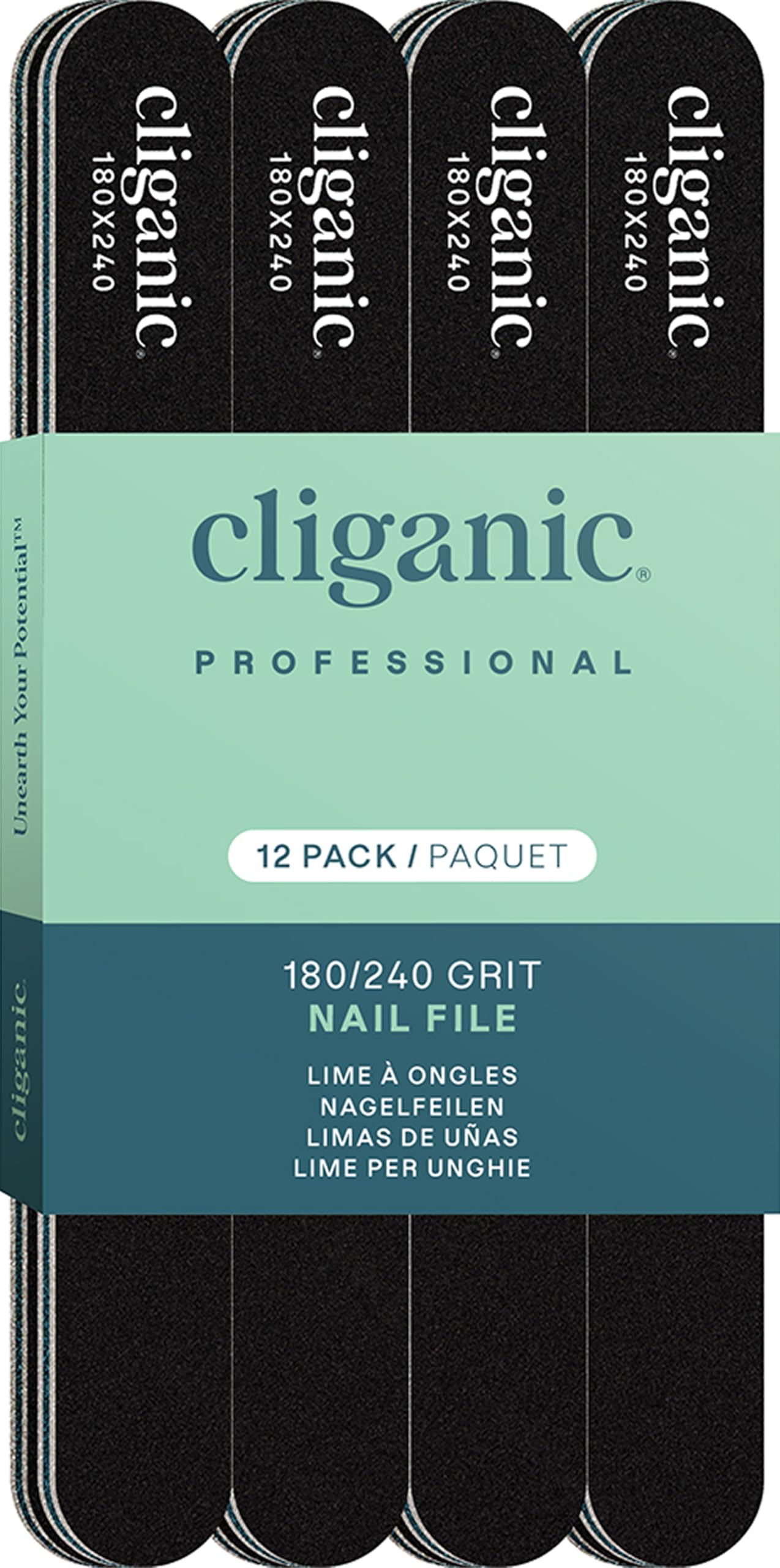
We recommend this set if you want durable, washable emery boards that handle BIAB shaping without breaking the bank.
Pros
- Double-sided grits let us shape and finish with one tool.
- Sturdy construction; they held up across many uses.
- Big pack gives good value for regular at-home BIAB work.
Cons
- 180 grit can feel a bit coarse on very thin natural nails.
- Emery edges sometimes need a light smoothing for a finer finish.
- Paper core means they wear faster than glass or metal files.
We used these on fresh BIAB overlays and found the 180 side moved product quickly. That grit made shortening and shaping fast, so we spent less time filing down bulk.
The 240 side gave a decent finish before buffing. It smoothed edges well for prepping topcoat, though we still did a final soft buffer for a glassy look.
Cleaning was simple — a quick rinse and dry between uses kept them hygienic. For the price and quantity, this set fits well in a home kit or small salon that files a lot.
HeeYaa 100/180 Reusable Nail Files

We recommend this set if you want sturdy, washable files that shape BIAB and acrylics without breaking the bank.
Pros
- Durable double-sided grit for shaping and smoothing.
- Washable and reusable, so they last through many fills.
- Good value—12 pieces means we always have a spare.
Cons
- Grit can wear unevenly after heavy use.
- Not a replacement for a fine buffer on glossy finishes.
- Edges feel a bit rough on delicate natural nails.
We used these on BIAB overlays and found the 100 side removes bulk fast while the 180 side refines the shape. Filing felt steady in our hand and the boards didn’t collapse under pressure like cheap emery files.
Cleaning was easy—soap and water did the job and the files dried quickly. After several uses they still performed well, though very heavy filing left one or two boards a bit worn.
These work best as a shaping and maintenance tool in our kit, not the final high-shine step. For a glossy finish after BIAB, pair them with a fine buffer or a glass file for a smoother topcoat.
Teenitor 6‑Piece Nail File & Buffer Set

We recommend this set if you want a full at-home BIAB routine with easy shaping, smoothing, and shining steps.
Pros
- Lots of grit options for each step of filing and polishing.
- Feels sturdy and cleans easily after use.
- Good value for the number of pieces.
Cons
- Coarser grits can feel too rough if you press hard.
- Some lower grits seemed less effective for us.
- Emery edges wear faster than metal files over time.
We used the Teenitor set for a full BIAB remove-and-refill session. The different grits let us take nail length down, smooth ridges, and finish with a quick shine without switching brands. The green 1000/4000 side gives a respectable gloss that lasts several days.
Shaping with the 150/180/240 files felt efficient. The 150 cut through bulk fast, so we used light strokes to avoid over-filing. The mid and fine grits helped refine the shape into neat ovals and squovals.
Buffing with the blocks smoothed the BIAB surface well before adding product. The blocks are firm but forgiving, and they rinse clean when we used soap. For heavy-duty salon work, a metal file may last longer, but this set works great for regular home use.
BTYMS 80/80 Nail File

We recommend this pack when you need heavy-duty shaping fast and want a bulk stash for salon or home use.
Pros
- Fast at reducing length and shaping acrylic or gel.
- Durable—holds up over multiple uses and resists moisture.
- Good value with 25 files in the box.
Cons
- Too coarse for natural nails or final smoothing.
- Rough edges can nick sidewalls until you “season” the file.
- Not ideal if you want a very fine finish without follow-up buffing.
We used these in a busy refill session and they cut through plateaus and tips quickly. The coarse 80/80 grit feels aggressive, so you get shape and length control in fewer strokes than finer files.
On acrylic sets the file saved time and left a clean profile, but we always followed with a finer buffer before polish. When working on natural nails we treated the BTYMS more like a prep tool—not a finishing file—because the grit is too strong for delicate nail beds.
The pack size is a real perk for salons or regular at-home use. We liked how the boards stayed intact after repeated use, though the edges can feel sharp at first and need a light sanding or “seasoning” to avoid catching skin.
HomeyEra 100/180 Nail Files (12 Pack)

We recommend this pack if you want durable, salon-style emery boards at a low cost and in a useful 100/180 grit combo.
Pros
- Long, sturdy files that feel good in hand.
- Dual grit handles thick acrylic and natural nail finishing.
- Reusable and holds up across several uses.
Cons
- Square shape can feel bulky for very small nail beds.
- Emery surface sheds a little after heavy use.
- Not as cushioned as foam-backed files for extra gentle buffing.
We used these HomeyEra files for a few weekly BIAB sessions and they handled thick layers without bending. The 100 grit shaped the overlay fast, and flipping to 180 smoothed ridges quickly. Holding them felt secure thanks to the size and thickness.
On natural nails the fine side leaves a clean finish without over-thinning. For heavier BIAB filing, replace sooner than with salon metal files to avoid grit wearing down, but they still lasted longer than drugstore emery boards we tried. The square edge made controlled corner work a bit clumsy at first.
These files felt consistent across the whole pack, so stocking up was convenient for multiple clients or regular at-home use. We would pick them when we need a reliable, affordable bulk option for shaping and refining BIAB.
Tammy Taylor Zebra Peel N Stick Files
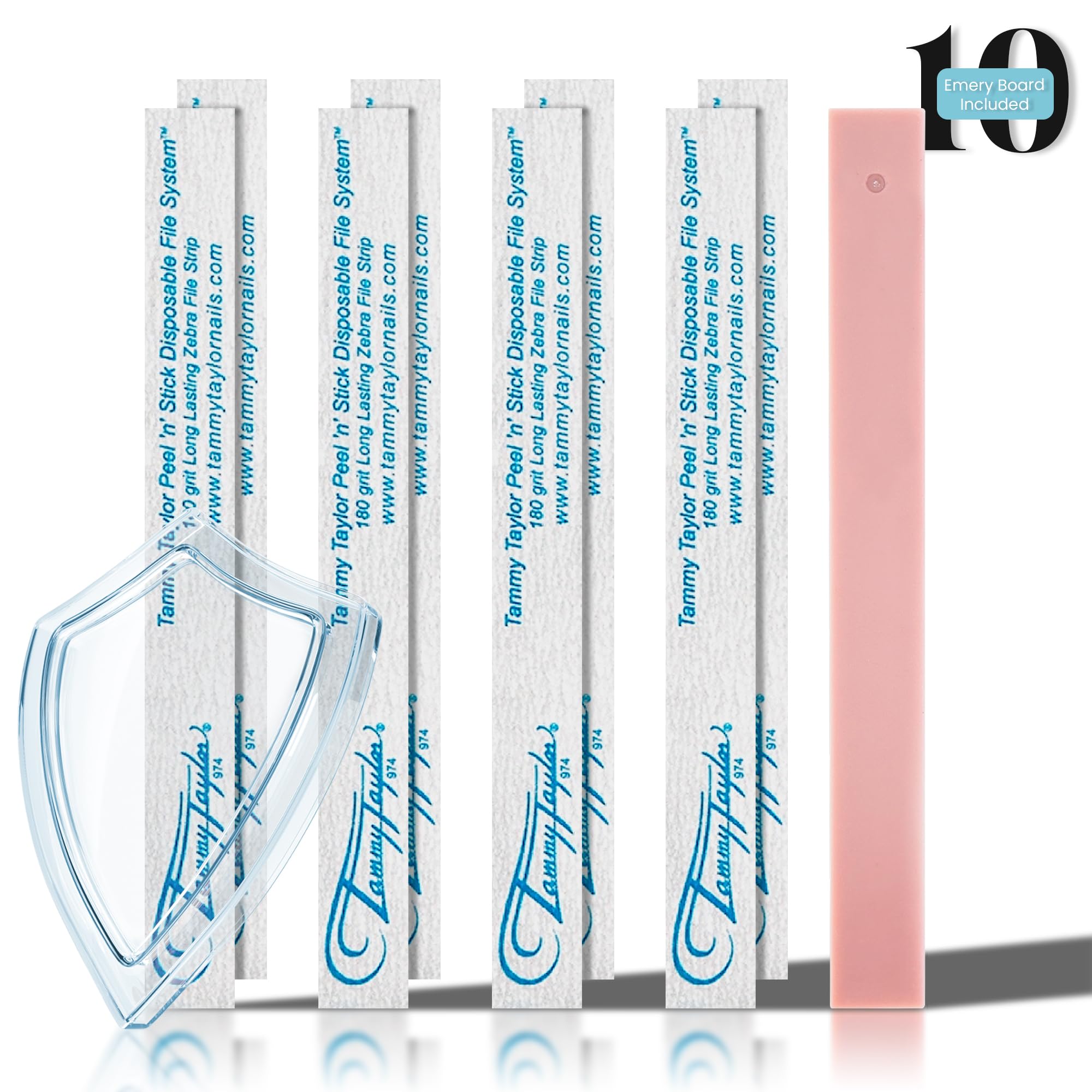
We recommend this if you want a durable, refillable file system that makes BIAB shaping quick and tidy.
Pros
- Refillable abrasive strips save time and waste.
- Grit choice (100/180) handles both BIAB edges and natural shaping.
- Feels sturdy in hand for controlled filing.
Cons
- Only one grit pair in the pack — you may want more variety.
- Peel-off strips can lift if not pressed firmly.
- Slightly pricier than simple disposable emery boards.
We used these on BIAB overlays and found the board holds well under pressure. The 180 side smooths the free edge without tearing the BIAB, and the 100 side trims thick tips and extensions fast.
Changing the strips felt like a salon move — just peel and stick. That kept our station cleaner and saved us from carrying extra files for every client.
Grip felt solid even with heavier filing, which helped us keep even lines on sculpted nails. A few strips needed a firmer press to stay put, but they lasted through several nails before we replaced them.
Bona Fide Glass Nail File
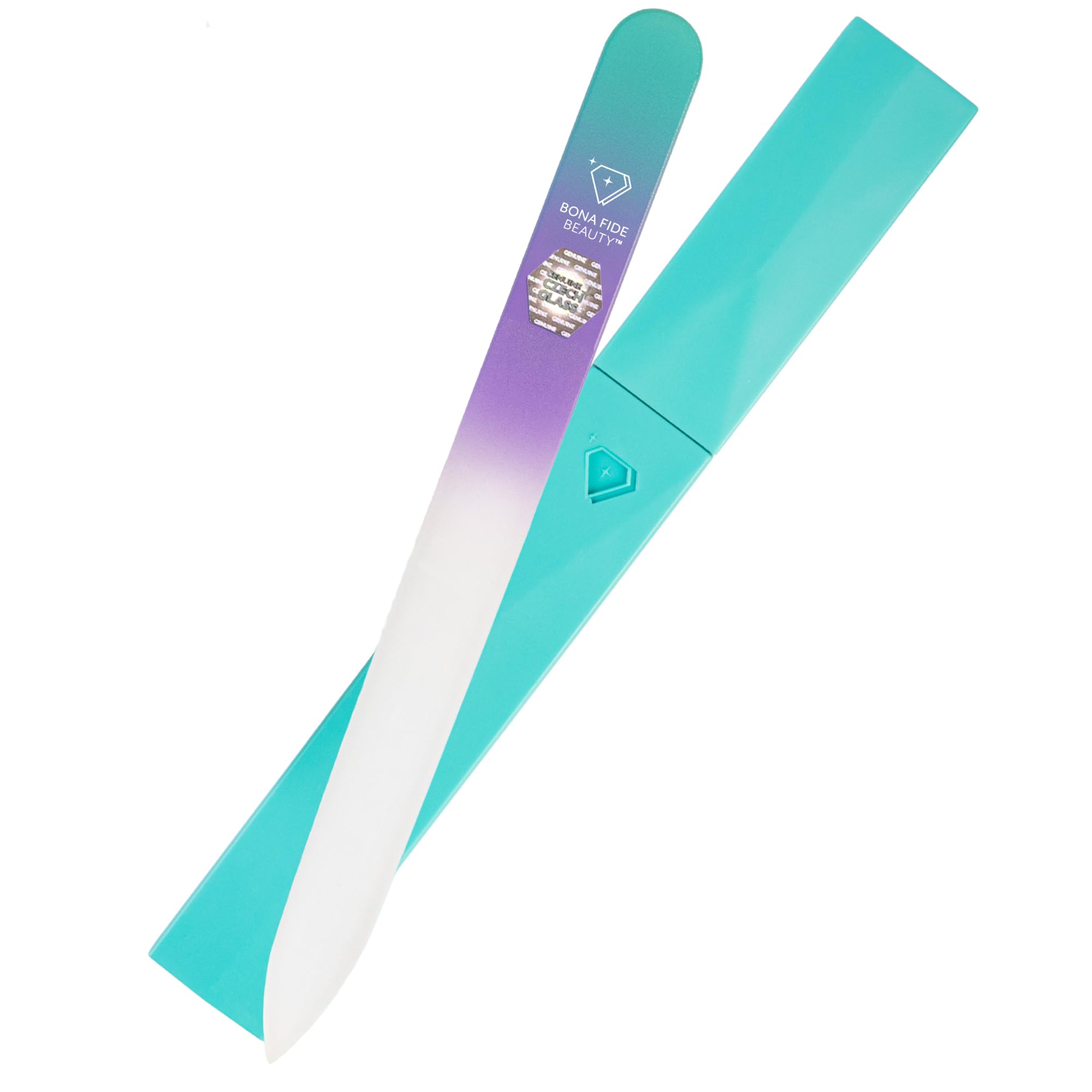
We recommend this if you want a gentle, long-lasting file that seals and smooths natural BIAB edges.
Pros
- Files smoothly without tearing or splitting
- Cleans easily and stays sharp for months
- Comes with a protective hard case for travel
Cons
- Glass can break if dropped
- Feels fragile compared to emery boards
- Takes gentle pressure at first to avoid overfilling
We used this pastel green-violet Czech glass file on cured BIAB tips and natural nail edges. It gave a very even shape and left the rim feeling sealed instead of ragged. Filing in both directions felt natural, and we didn’t get the usual peeling or flaking.
The grit is fine, so it works best for shaping and smoothing, not heavy reduction. We found it quick to refine the free edge after shaping with a coarser tool. The protective case kept the file safe in our bag, but we still handled it carefully.
Cleaning the file was simple — a quick rinse removed dust and it looked like new. After weeks of use it stayed sharp and consistent. Treat it like glass: it performs well, but won’t survive hard knocks.
Treamlyn 10-Pack Rough Nail Files

We recommend this pack if you want strong, cheap files that handle BIAB prep and shaping but expect to replace them sometimes.
Pros
- Cuts bulk fast with the 100 grit side.
- Sturdy feel — they don’t bend when filing thicker gel or BIAB.
- Ten pieces give good value for home or salon use.
Cons
- Grit wears down after repeated heavy use.
- Paper-type finish can shed nail dust over time.
- Not waterproof — cleaning with water shortens life.
We used these on fresh BIAB overlays and found the 100 grit made quick work of reducing thickness. The boards stayed firm under pressure, so we could shape without the file folding or flexing.
Smoothing with the 180 grit left a clean edge that prepped well for buffing and top coat. We noticed the 100 side loses roughness after a few heavy sessions, so keep extras on hand.
Handling and storage are simple. For best life, brush off dust instead of rinsing, and swap files when they feel smooth to keep your BIAB work consistent.
Buying Guide
We look for nail files that balance gentleness and strength. BIAB needs files that shape the product without thinning the base too much.
We check grit first. Lower grit (80–100) removes product fast. Higher grit (180–240+) smooths and finishes. Choose grit based on whether we are shaping, shortening, or finishing.
We value file shape and size. A long, curved file fits the nail contour and gives control. A narrow file helps at the sides and cuticle area. Pick a shape that matches our filing style.
We consider material and durability. Metal files last but can be too harsh. Glass or crystal files are gentler and clean easily. Emery boards are cheap but wear fast. Think about how often we will reuse the file.
We pay attention to ergonomics and handle. Comfortable grip reduces slipping and gives steady pressure. A non-slip handle helps when we work wet or with product on the nail.
We look for easy cleaning and sanitation. Removable or washable surfaces reduce infection risk. Files that tolerate alcohol or brush cleaning let us keep them hygienic.
We weigh value and lifespan. A slightly pricier file that lasts and cleans well can cost less over time. Also consider if replaceable abrasive pads are available.
We check packaging and instructions. Clear guidance on grit and use helps prevent mistakes. Good labeling makes it easier for us to pick the right tool.
Editor’s Choice
We picked the top nail files for BIAB based on grit, durability, and ease of use. We tested each file on natural nails, cured BIAB, and during buffing to see how they held up.
Our favorite is the 180/240 dual-grit glass file. It adds control for shaping and a fine side for smoothing without removing too much BIAB. We liked that it stays gentle on the nail plate and cleans easily.
We also recommend a 100/180 abrasive file for initial shaping when the BIAB is thick. It cuts quickly but still allows precise shaping. Use the coarser grit for form removal and the finer grit for blending.
We included a soft buffer for finishing. It gives a smooth surface before top coat and reduces scratches. We use it last to create a consistent shine.
Key picks at a glance:
- 180/240 Glass File — Best for shaping and gentle finishing.
- 100/180 Abrasive File — Best for bulk removal and shaping.
- Soft Buffer Block — Best for final smoothing.
We advise replacing files when they clog or lose grit. Keeping a small kit with these three tools covers most BIAB needs.
Conclusion
We picked files that balance grit, shape, and durability for BIAB work. A medium 180/240 file works well for shaping, while a 100/180 or 240/240 buffer helps refine and finish without damaging the overlay.
We prefer diamond and high-quality ceramic files for BIAB because they last longer and give consistent results. They reduce snagging and avoid over-thinning the product when used with steady, gentle strokes.
We recommend having at least two files: one for shaping and one for refining. Using separate tools keeps edges clean and makes the process faster and safer.
We suggest replacing or sanitizing files regularly to stop contamination and keep performance steady. Store files flat and dry to avoid warping and to extend their life.
Our picks suit beginners and pros. They work for natural nails and extended BIAB layers. Choose the grit and shape that match your technique and nail strength.
FAQS
What grit file should we use for Biab?
We usually recommend a 180 to 240 grit file for shaping Biab. Use finer grits (240+) for smoothing and a buffer to finish.
Can we use metal files on Biab?
No. Metal files are too harsh and can damage the gel layer. Stick to glass or high-quality emery boards designed for gel.
How often should we file Biab?
File only when needed, such as during fills or to change shape. Excessive filing thins the Biab and weakens the nail.
Do we sanitize files between clients?
Yes. Use disposable files or disinfect reusable files per salon protocols. This prevents infection and keeps results consistent.
Should we file before or after curing?
We file after curing for shaping and smoothing. Light buffing before application helps adhesion, but final shaping must wait until fully cured.
How do we avoid lifting when filing?
File gently with the correct angle and pressure. Avoid over-buffing the natural nail and keep the filing surface flat for even thickness.
What file types do we prefer?
We favor glass files for longevity and smooth finish, and 180/240 emery boards for initial shaping. Choose tools marked safe for gel and Biab.

