
Best Nail Files for Hard Nails: Top Picks and Expert Guidance

Hard nails break, split, and chip more easily than softer nails, so choosing the right file can save time and keep nails healthy. Nail files for hard nails are usually stiffer and have coarser grits or reinforced edges to reshape and thin without tearing layers. They come in metal, glass, ceramic, and multi-grit emery options, each giving a different balance of durability and gentleness.
When buying a file for hard nails, focus on grit level, material, and edge strength — coarser grits remove thickness faster, while glass or ceramic files finish smooth without splitting. A good file will remove bulk without causing micro-tears or weakening the nail plate, so pick one that matches how much shaping you need and how often you’ll use it. We tested a range of files to find the best balance of speed, control, and nail safety to guide our recommendations.
Best Nail Files for Hard Nails
We tested and reviewed nail files that hold up to thick, strong nails without shredding or bending. Below is our list of the best nail files that give smooth, precise shaping and long-lasting edges.
Cliganic 12-Pack Nail Files
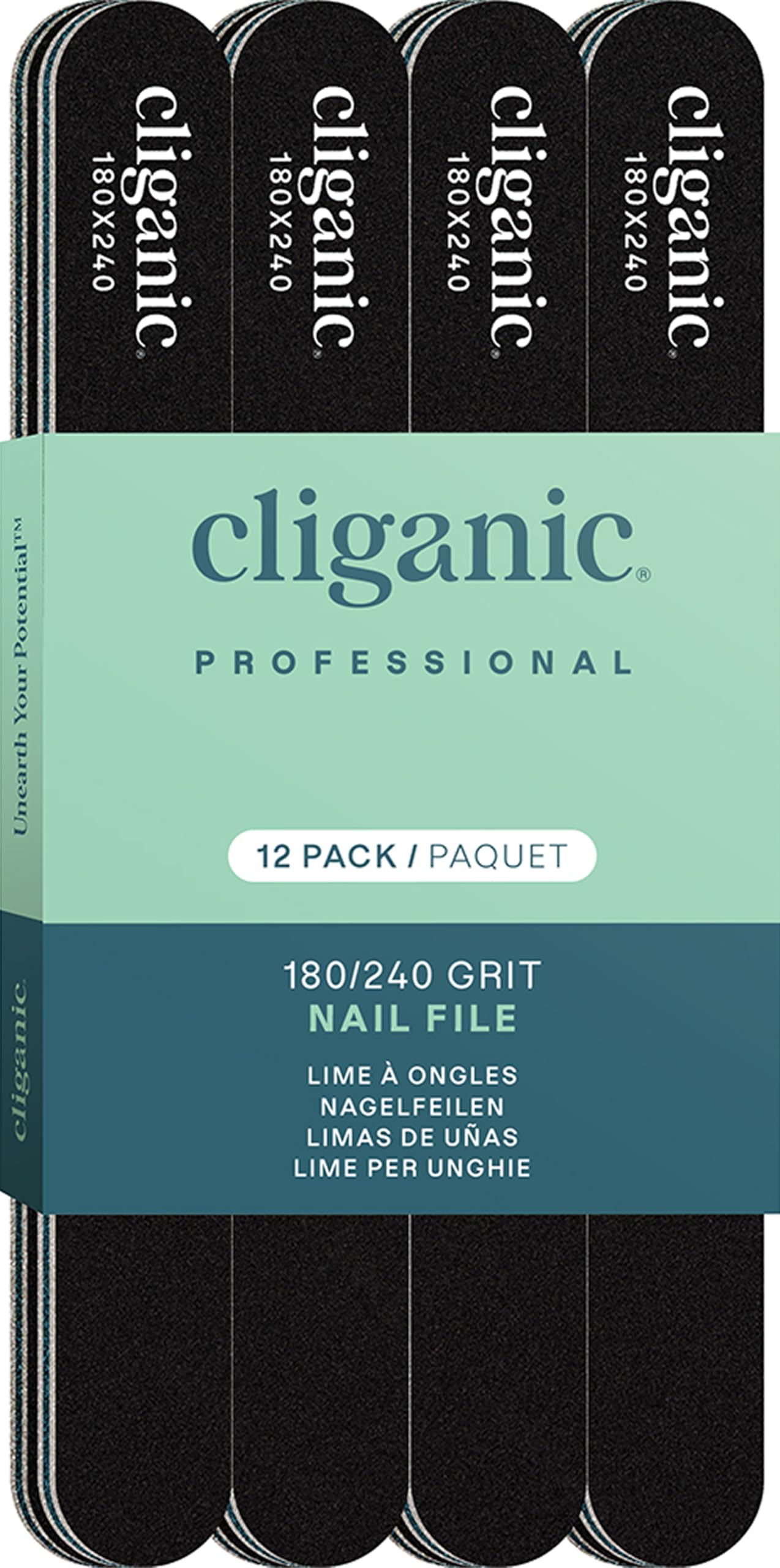
We recommend this set if you want durable, double-sided emery boards that handle hard nails without breaking the bank.
Pros
- Tough grit that shapes hard or acrylic nails well
- Double-sided (180/240) covers shaping and finishing
- Large 12-pack gives good value and lasts longer
Cons
- 180 side can feel rough on natural, thin nails
- Emery boards may need a light finish for a smooth edge
- Not reusable like metal or glass files for very long-term use
We used these on both my partner’s thick nails and our acrylic tips. The 180 grit took down length fast and felt solid under pressure. It didn’t flex or fall apart when working on tough edges.
The 240 side smoothed and neatened the free edge after shaping. It left a cleaner finish than cheaper single-grit boards, though we still tapped a finer buffer to remove tiny snags on fragile nails.
Cleaning was easy—warm water and soap rinsed grit residue right off, and the boards held up across multiple uses. For people who bite, garden, or do heavy work, this pack saved us trips to the store and kept replacement files handy.
3 Swords Germany Sapphire Nail File Set

We recommend this set if you want hard-wearing metal files that shape fast and last for years.
Pros
- Extremely durable — still sharp after heavy use
- Dual grit lets us shape quickly and finish smoothly
- Comfortable grip and balanced feel for steady filing
Cons
- Metal grit can feel rough at first on delicate nails
- Slightly pricier than disposable emery boards
- Buffer is small compared to the files
We used these files for several weeks and liked how quickly they take down thick, hard nails. The coarse side shapes stubborn edges without tearing, while the fine side leaves a clean finish. Filing felt controlled thanks to the black grip and slim profile.
The files stay effective much longer than paper boards. We packed one in a travel kit and another stayed at home; after repeated use they still worked without going bald. That makes them a good buy if you hate replacing flimsy files often.
The buffer works for quick shine, but it’s smaller and less robust than the metal files. For heavy-duty smoothing we relied on the fine side of the sapphire file more than the buffer. Overall, these feel like a tool built to last rather than a single-use item.
HomeyEra 100/180 Nail Files (12 Pack)

We recommend this pack when you need sturdy, long-lasting files that handle thick or natural nails without breaking.
Pros
- Very durable and won’t bend easily
- Useful 100/180 grit combo for shaping then smoothing
- Large size gives a comfortable, steady grip
Cons
- Coarse side can feel aggressive if you press too hard
- Emery coating may wear after heavy use
- Not as fancy as salon-only tools
We used these files on both acrylic tips and our own natural nails. The 100-grit side took down length fast, and the 180-grit smoothed the edges without snagging. The square shape and 7.1-inch length made the files easy to hold and control.
The bulk pack of 12 felt like good value for the price. Each file felt thicker and less flimsy than drugstore emery boards. They washed up fine after use and stayed usable for several sessions.
For thick toenails and layered acrylics, these files saved time. We noticed a slight dust after heavy shaping, so work over a towel. Overall, they performed like simple, reliable salon-grade emery boards we’d keep in our kit.
Treamlyn 10-Pack Rough Nail Files (100/180)

We recommend this set if you want a sturdy, affordable pack that speeds up shaping thick or acrylic nails.
Pros
- Fast at removing length and bulk with the 100 grit.
- Durable, does not bend while filing.
- Good value — ten files in one pack.
Cons
- Grit wears down after repeated heavy use.
- Not washable — cleaning shortens life.
- Coarse texture may be too rough for very thin nails.
We used these files on both acrylic and natural nails and found them honest workhorses. The 100 grit takes down length quickly without feeling flimsy, and the 180 side smooths the edge into a decent finish.
In a salon-like session we appreciated that the boards stayed rigid and gave consistent results. Filing felt controlled; we could shape and refine without the file folding or catching.
After a few heavy jobs the grit dulled a bit, so we treated these as semi-disposable salon supplies. For home users who don’t want to spend much, the ten-pack lasted several sessions and kept costs low.
If you want gentle shaping or a reusable metal file, choose something finer. For fast shaping of thick, hard nails — especially acrylics — this set does the job well.
MR.GREEN Steel Nail File
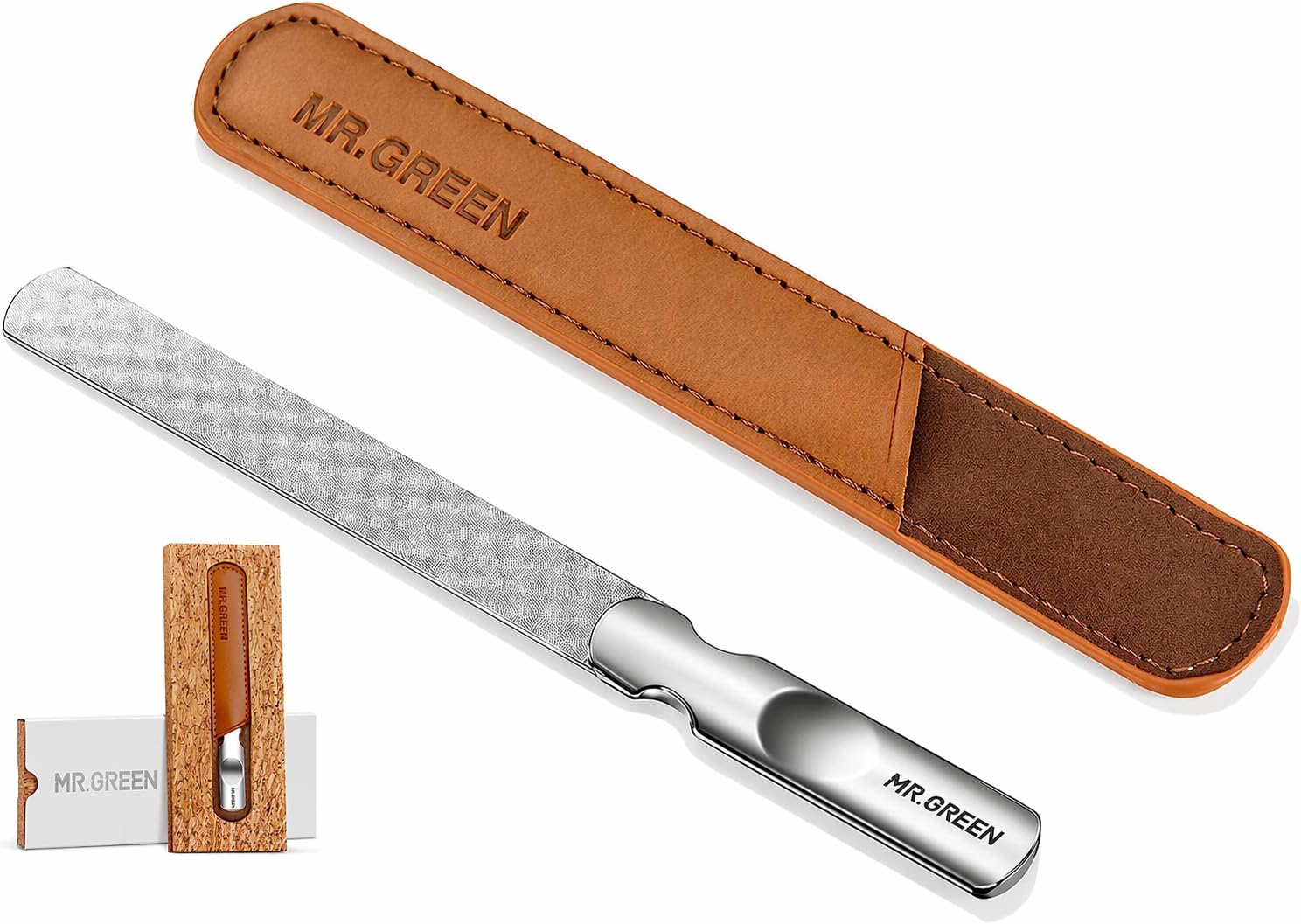
We recommend this if you want a durable, reusable metal file that shapes hard nails fast.
Pros
- Lasts much longer than emery boards
- Double-sided for quick shaping and smooth finishing
- Small, easy to carry with a leather case
Cons
- Edges can feel sharp if you’re not careful
- Heavier than disposable files
- Fine grit may be slow on very thick nails
We used this metal file for several weeks and it handled my partner’s thick nails without bending. The coarse side removes length fast and the fine side leaves a neat, smooth edge. Using it felt efficient compared with paper files that wear out.
The anti-slip handle gives good control when we file at odd angles. The metal is solid and washes easily, which makes it feel hygienic. The leather sleeve keeps it protected in our travel kit.
One caution: the metal edges are a bit sharp near the tip, so we avoided scraping close to the skin. If you like a light, flexible file this may feel heavy, but for long-term use it performs well and saves money over throwaway files.
Bona Fide Glass Files, 5-Pack
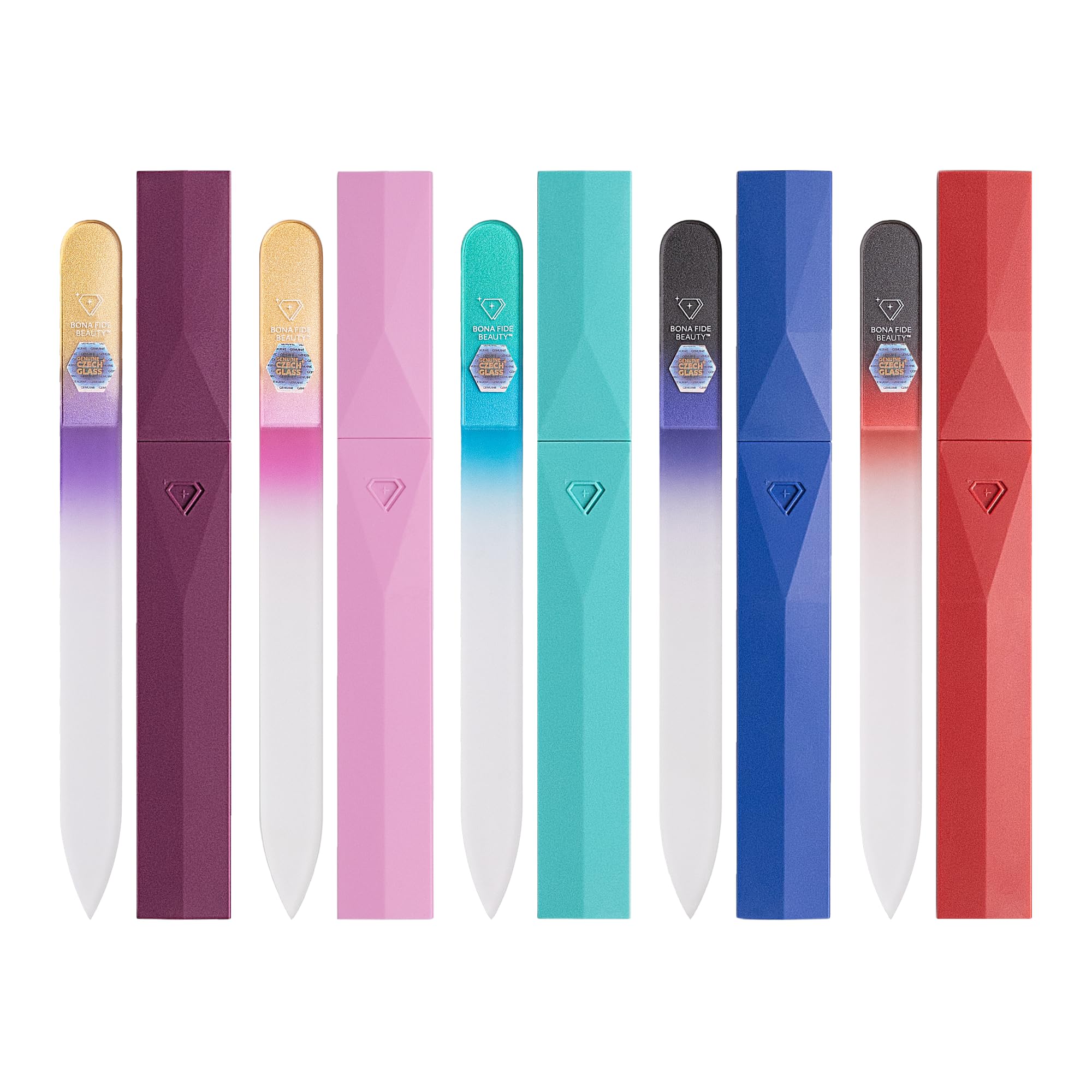
We recommend this set if you want gentle, long-lasting files that tame hard nails without ripping or splintering.
Pros
- Feels very smooth and files without rough scraping.
- Comes with five protective hard cases for travel and backups.
- Reusable and easy to clean, so they last much longer than disposable files.
Cons
- Glass can break if dropped or stored carelessly.
- Slightly slower at shortening very thick nails compared with coarse files.
- Cases look a bit cheap for the price.
We used these on several friends with naturally strong nails and noticed the edge became smooth fast. The fine etched grit sealed the keratin layers instead of shaving them, which cut down on snags and splits.
The set includes multiple files so we kept one in a purse, one at work, and spares at home. Each file stayed sharp after rinsing; a quick cold-water wash removes dust and keeps the texture consistent.
If you need to shorten very thick, hard nails quickly, pair these with a coarser file first. For shaping, finishing, and maintaining healthy edges, these felt more gentle and controlled than metal or emery boards.
Makartt Zebra 100/180 Nail Files
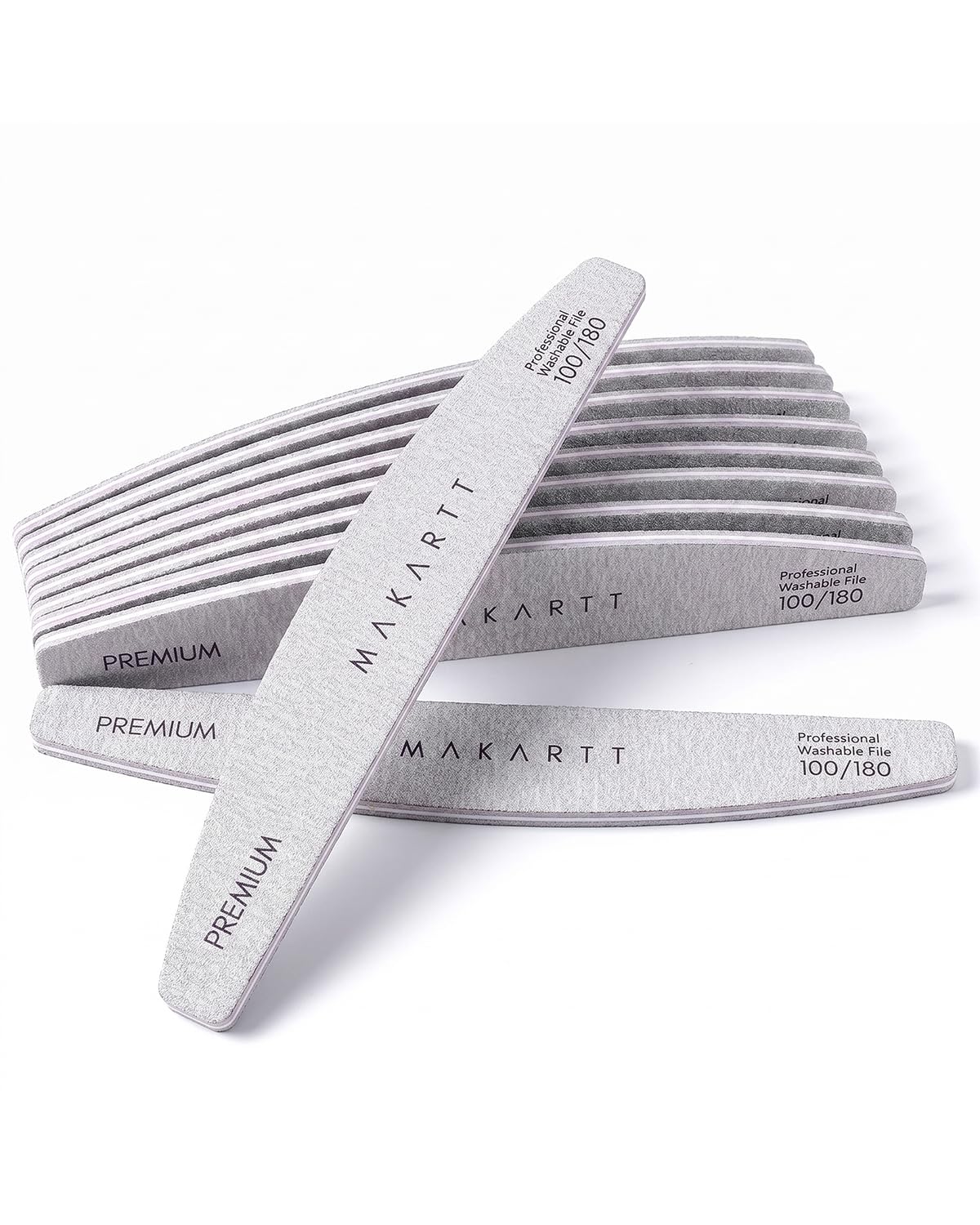
We recommend this set if you want a sturdy, dual-grit file that handles thick nails and acrylics without falling apart.
Pros
- Sturdy feel that holds up to heavy filing
- Dual 100/180 grit covers rough shaping and fine finishing
- Curved edge makes corner work easier and gentler on cuticles
Cons
- 100 grit can feel aggressive on very thin nails
- Grit may dull after lots of water washing
- Not as smooth as a fine glass file for final polish
We used these Makartt files on both natural thick nails and acrylic tips. The coarse side tackled length and heavy shaping fast, and the finer side left a clean edge that needed little extra buffing.
The half-moon curve fit the nail line and helped when we filed sidewalls and corners. They felt solid under pressure and didn’t bend or flake like cheaper emery boards we’ve tried.
Ten in a pack means we kept spares in the drawer and one in the travel bag. For folks who do DIY acrylics or have thick toenails, these worked reliably and saved time.
If you want a gentler finish, add a glass or fine buffer after using these. For heavy-duty shaping and regular home use, these gave us the best balance of durability and control.
Makartt Zebra 100/180 Nail Files on Amazon
Teenitor Nail File Set

We recommend this set if you want a full at-home kit that handles hard nails with a clear stepping process from shaping to shine.
Pros
- Lots of grit options for shaping, smoothing, and shining.
- Durable emery and EVA build that feels sturdy in hand.
- Washable and easy to disinfect after use.
Cons
- Coarser grits can feel aggressive on very thin nails.
- Some lower-grit files seemed unnecessary for our routine.
- The set includes more pieces than beginners may need.
We used the 150/180 grits to reshape thick, hard nails and they cut through quickly without excessive pressure. Holding the rhombus shape felt natural and gave good control when rounding the free edge.
Next we tried the buffer blocks to even out ridges. The 100/180 side smooths rough spots fast, and the higher-grit blocks left a visibly smoother surface before polishing.
The 1000/4000 filer surprised us by creating a glossy finish in seconds. It didn’t replace a salon lamp for gel, but it made natural nails look polished and healthy for days.
Overall, this kit feels like a salon routine compressed into six pieces. We liked having clear steps: file, smooth, then shine, and the materials cleaned up easily after use.
AhaTopia Nail File & Buffer Kit

We recommend this kit if you want an affordable, all-in-one set that handles thick, hard nails and gives a nice natural shine.
Pros
- Good grit mix — strong side for thick nails, finer side for smoothing.
- Buffers give quick shine without polish.
- Lots of files so you won’t run out.
Cons
- Buffer could be a bit firmer for very stubborn ridges.
- Files are basic; not as long-lasting as salon metal files.
- Not shaped for intricate nail art or cuticle work.
We used this set for several at-home manicures and found it solid for hard nails. The coarse 100 grit side shaped acrylic and thick natural nails fast. It felt sturdy in our hands and didn’t tear or fray right away.
The four-way buffer surprised us with how much shine it gave after one pass. The EVA foam felt gentle, so our nails didn’t thin out. Still, when we hit deep ridges we wished the buffing side had more bite.
Travel and sharing work well with this kit. Ten emery boards mean one for each bag, glove, or family member, and the blocks fit neatly in a small pouch. For the price, it’s a practical pick for routine home care and quick touch-ups.
IDOU Heavy-Duty Toenail File (7″)
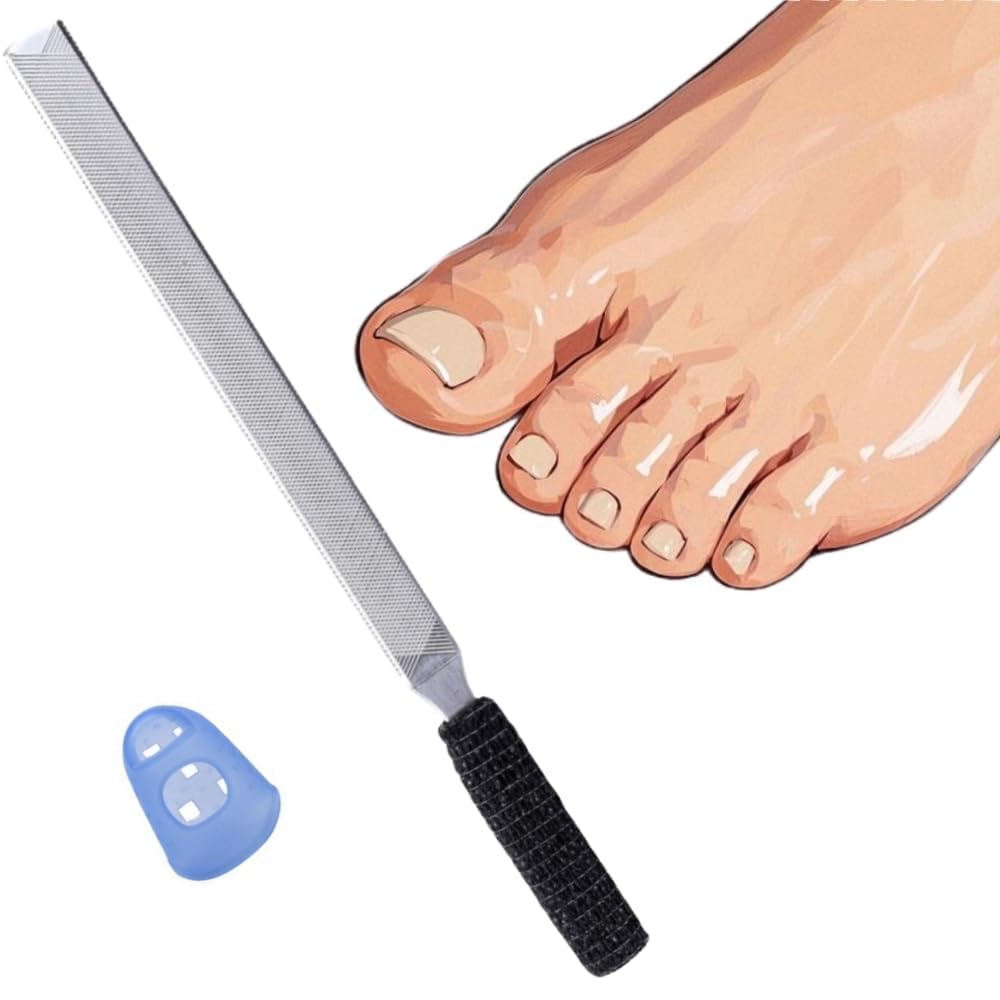
We recommend this file if you need a tough, long-lasting tool that handles very thick toenails and holds up over time.
Pros
- Really strong metal file that cuts through thick nails fast
- Non-slip handle makes it easy to control even on stubborn toes
- Four-sided surface gives coarse and finer options in one tool
Cons
- Coarse grit can feel too rough on thin or brittle nails
- Short length can make hard-to-reach nails awkward for some people
- Metal is stiff, so it can feel unforgiving if you push too hard
We used the IDOU file on several thick toenails and it worked like a mini tool. It removed bulk quickly without shredding the nail. The coarse face chewed through tough spots that emery boards could not touch.
Holding the handle felt secure and confident. The grip kept slipping to a minimum when our hands were slightly damp. The four sides let us switch to a less aggressive surface for shaping after heavy filing.
Reaching one or two nails was still tricky because of the file’s short length. We had to adjust foot position and angle to avoid straining. Also, be careful on thin nails—this one is made to be tough, not gentle.
Buying Guide
We look for files that match our nail type and grooming style. Hard nails need durable materials and a grit that shapes without cracking.
We check file material first. Glass and ceramic files are gentle and last long. Metal files shape fast but can be rough. Choose based on how much filing we do and how careful we must be.
We assess grit carefully. Lower numbers remove material quickly; higher numbers refine the edge. A medium grit (around 180–240) works for shaping hard nails, while a finer grit (300+) smooths the edge. We often keep two grits on hand.
We consider shape and size. Longer files give control for straight edges. Curved or short files reach tight spots. Pick a shape that fits our hand and the nail curve.
We value ergonomic design and safety. Non-slip handles and rounded tips reduce slips and injury. Sealed edges help prevent chipping.
We check maintenance needs. Some files need gentle washing; others can be disinfected. Reusable files with replaceable parts save money and waste.
We compare price versus lifespan. A pricier, durable file may cost less over time than cheap ones that wear out. We balance budget, frequency of use, and how long we expect the file to last.
We read product specs and user instructions before use. Proper technique—filing in one direction, not sawing—helps prevent damage to hard nails.
Editor’s Choice
We chose a top nail file that balances grit, durability, and comfort for hard nails. It files quickly without splintering the nail edge, so you get a smooth shape with fewer strokes.
We liked files with a dual-grit design: coarse for shaping and fine for smoothing. That mix helps remove bulk fast and finish gently, which cuts down on cracks and splits.
Our pick has a reinforced core to resist bending and a textured surface that lasts longer than cheap emery sticks. It fits easily in a hand and in a travel kit.
Key features:
- Grit combo: 180/240 or 100/180 for very thick nails
- Durability: reinforced or layered construction
- Comfort: ergonomic shape and cushioned backing
We recommend replacing the file when the surface feels smooth or clogged. Replace more often after use with artificial nails or heavy filing.
If you prefer electric tools, look for low-speed devices with diamond or ceramic bits. They offer control and reduce pressure on the nail plate.
Conclusion
We chose files that balance strength and gentleness for hard nails. A coarser grit shapes quickly, while a finer grit smooths without splitting. Using both types gives the best results.
We recommend keeping a glass or ceramic file for daily shaping and a metal or coarse emery file only for thick, stubborn edges. This reduces damage and keeps nails healthy longer.
We advise filing in one direction and avoiding sawing motions. That simple habit cuts down on peeling and breakage.
We encourage regular light maintenance instead of heavy, rare filing. Consistent care keeps nails strong and makes styling easier.
Our picks suit different budgets and routines. Pick the one that fits how you file, how often you groom, and how much force your nails need.
FAQS
What grit works best for hard nails?
We recommend starting with 180–240 grit for shaping and 240–400 grit for smoothing. Coarser grits remove material fast but can weaken the nail if overused.
How often should we file hard nails?
File every 1–2 weeks to maintain shape and prevent splits. Frequent, gentle filing beats occasional aggressive filing.
Can electric files damage hard nails?
They can if used at high speed or with the wrong bit. Use low speed, a fine-grit bit, and light pressure to avoid heat and thinning.
Should we use glass, metal, or emery boards?
Glass files give a smooth edge and less splitting. Emery boards are cheap but wear fast. Metal files can be too harsh for natural nails.
How do we prevent splitting after filing?
File in one direction with light strokes and seal the edge with a nail oil or clear polish. Keep nails hydrated and avoid harsh chemicals.
Can hard nails be softened safely?
Yes. Soak hands in warm water for a few minutes, then apply a cuticle oil or a moisturizer. Avoid prolonged soaking, which can weaken nails.
What tools should we avoid?
Avoid coarse blades and aggressive e-files if we don’t have training. Also skip back-and-forth sawing with rough files.
How do we clean and disinfect files?
Wipe metal or glass files with soap and water, then alcohol. Replace disposable emery boards when worn or after infections.

