
Can Castor Oil Help Nail Growth? What It Can and Can’t Do for Weak, Dry Nails

If you’re asking whether castor oil can help with nail growth, the short answer is: it’s more likely to improve nail hydration and reduce breakage than to increase growth speed.
That distinction matters. Many people notice castor oil makes nails feel less dry, less brittle, and less likely to split. When that happens, nails can seem to “grow better” because they break less often. But that is not the same as speeding up the growth rate of the nail itself.
For weak, peeling, or dehydrated nails, castor oil can still be worth trying as a simple moisture-focused treatment. Just keep the goal realistic: think supporting the nail environment, not forcing growth.
What Castor Oil Can Realistically Do for Nails
Castor oil is a thick, rich plant oil often used in beauty routines because it sits well on the skin and nails. In nail care, its main value is practical: it helps reduce dryness and adds a protective layer over the nail plate and cuticles.
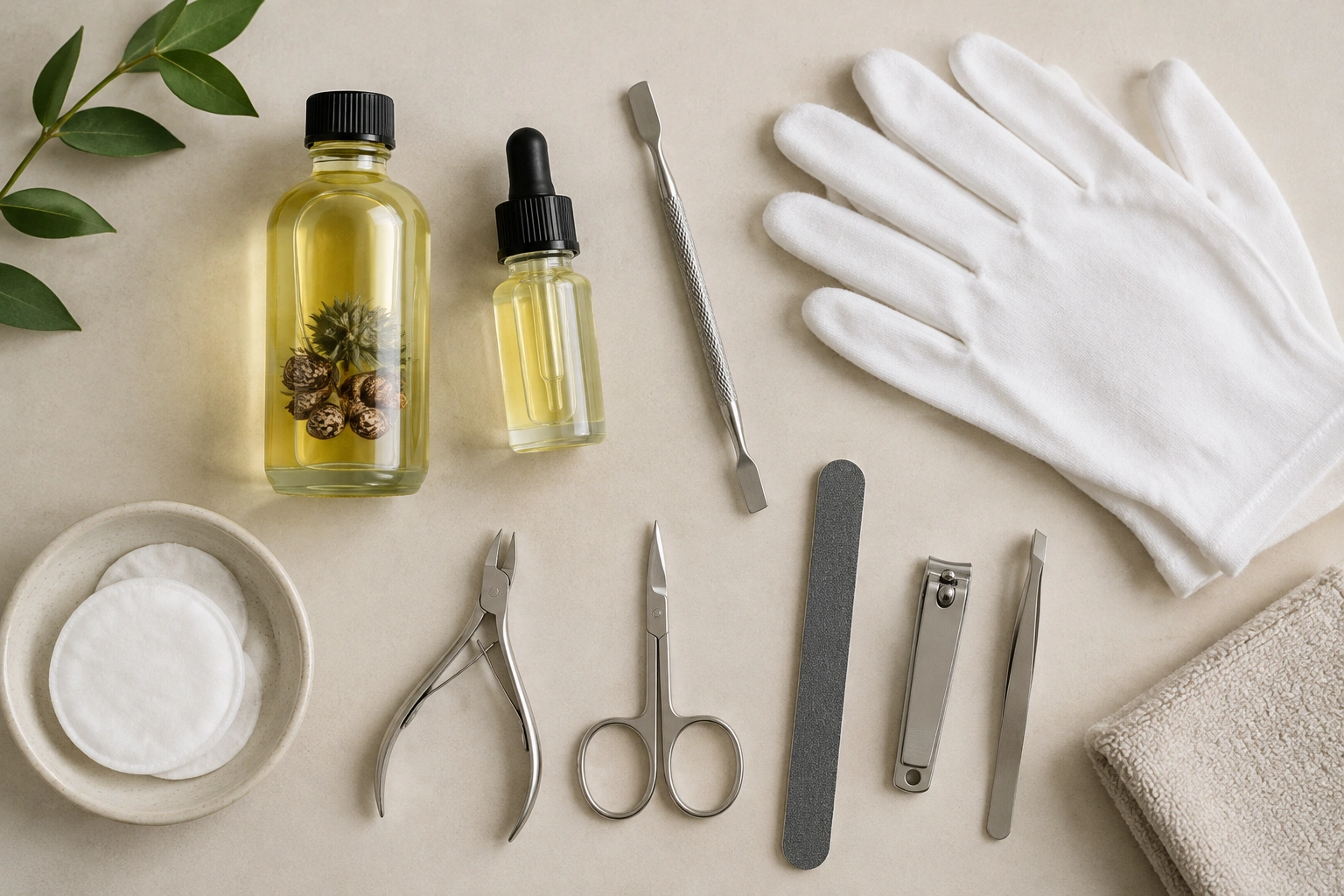
That matters because dry nails are more likely to peel, split, and chip. If your nails keep breaking before they get any length, a moisturizing oil may help you retain the growth you already have. That can make a visible difference over time, even if the oil itself is not changing the speed of growth.
A useful way to think about castor oil is this:
- It may help reduce breakage
- It may improve flexibility and smoothness
- It may support cuticle comfort
- It is not proven to accelerate nail growth
A cautious reading of the available evidence is that castor oil may help create a better moisture environment for nails, but it has not been shown to make them grow faster.
Nail Growth vs. Nail Strength vs. Nail Hydration
These three things are easy to mix up, but they are not the same.
Nail growth
This is how quickly the nail grows from the matrix under the skin. If growth is slow, oil alone usually won’t change that much.
Nail strength
This is how well the nail resists splitting, peeling, bending, and breaking. Oils can support strength indirectly by reducing dryness.
Nail hydration
This is the moisture level of the nail plate and surrounding skin. Hydrated nails tend to look smoother and feel less fragile.
A person with peeling nails may think an oil “made their nails grow,” when what really happened is the nails stopped flaking apart. That’s still a win. It just needs the right label.
If your goal is to keep nails intact long enough to reach a longer length, castor oil may help more with retention than with speed.
How to Use Castor Oil on Nails and Cuticles
For nail care, castor oil works best when applied to both the nail plate and the cuticle area.
Simple routine
- Wash and dry your hands well.
- Put a small drop of castor oil on each nail.
- Massage it into the nail plate, the sidewalls, and the cuticles.
- Let it sit for a few minutes.
- Wipe away excess if your hands feel greasy.
You do not need a large amount. Castor oil is thick, so too much can leave a heavy film without adding more benefit. A thin layer is usually enough.
Where to focus
- Cuticles: This is often the most useful area because dryness here can make nails look ragged and feel tight.
- Nail plate: Helps reduce the dry, chalky look that often goes with peeling or brittle nails.
- Under the free edge: If the nail is long enough, a tiny amount can help protect the edge from dryness.
If you dislike the sticky feel of pure castor oil, apply it at night and wear cotton gloves for a short period. That can make it less messy and help it stay in place. This can be especially helpful for nails that are recovering after gel polish or acrylics, since moisture and time often matter more than any single product.
For readers who use polish regularly, it can also help to understand how oil behaves on painted nails. This guide on whether nail oil can penetrate nail polish is useful if you want to keep a manicure looking neat while still caring for the nail underneath.
How Often to Apply It and How Long Results May Take
Consistency matters more than quantity.
A practical routine is:
– Once daily for maintenance
– Twice daily if nails are very dry, peeling, or recovering from repeated polish removal
Most people will not see dramatic change overnight. What you may notice first is:
– less roughness around the cuticles
– less snagging at the free edge
– a smoother surface
– fewer small splits
Give it enough time to judge fairly. Nails grow slowly, so the visible benefits of any routine usually show up gradually as the nail grows out. If you use castor oil for only a few days, it’s too soon to know whether it helps.
A simple test: use it consistently on one hand for a few weeks and compare that hand with the other. You’re looking for differences in dryness, peeling, and breakage, not just shine.
Signs Castor Oil Is Helping—and Signs It Isn’t
Signs it may be helping
- Your nails are peeling less at the ends
- The cuticles look less dry or cracked
- Nails feel more flexible instead of brittle
- You’re getting fewer breaks during normal daily tasks
- The nail surface looks smoother after regular use
Signs it may not be the right fit
- Your nails still split easily despite consistent use
- The oil feels too heavy and you stop using it
- Your skin gets red, itchy, or irritated
- The nail problem is getting worse instead of improving
If the main issue is dryness, castor oil has a better chance of helping. If the issue is deep splitting, lifting, discoloration, or pain, oil alone is unlikely to solve it.
Castor Oil vs. Jojoba Oil, Coconut Oil, Vitamin E Oil, and Nail Hardeners
Different nail products solve different problems. Castor oil is not automatically the best choice just because it is natural.
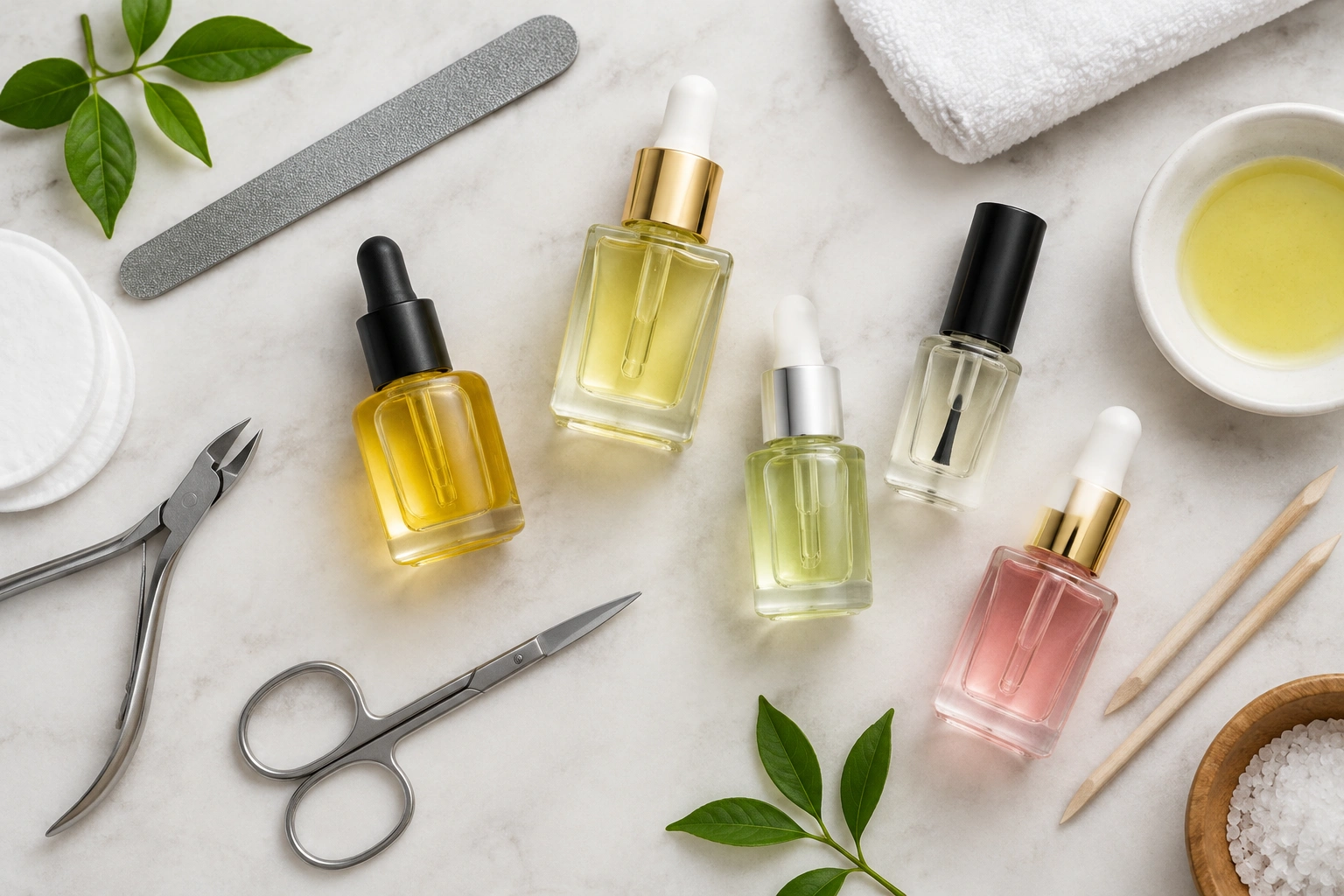
| Option | Texture | Absorption | Feel on Nails | Best Use Case |
|---|---|---|---|---|
| Castor oil | Thick and occlusive | Slower | Heavier, more protective | Very dry, brittle nails that need moisture retention |
| Jojoba oil | Lightweight | Faster | Less greasy | Daily use and cuticle care when you want easier wear |
| Coconut oil | Medium thickness | Moderate | Softer, less sticky than castor oil | General moisturising routine and simple home care |
| Vitamin E oil | Rich and concentrated | Variable | Can feel heavy or slick | Dry, stressed nails when used carefully |
| Nail hardeners | Product-dependent | Not usually oily | Can feel firm or coating-like | Temporary cosmetic strengthening, but not a moisture treatment |
Clear recommendation matrix
- Best for hydration: Castor oil or jojoba oil, with jojoba usually easier for regular use
- Best for daily wear: Jojoba oil
- Best for brittle nails: Castor oil if the main issue is dryness and breakage; a hardener may help the feel of the nail, but it does not replace moisture care
- Best for heavy nighttime use: Castor oil
Castor oil vs. jojoba oil
Jojoba oil usually wins for everyday comfort because it absorbs more easily. Castor oil may feel more protective, but that also makes it messier.
Castor oil vs. coconut oil
Coconut oil is often easier to spread and less sticky. Castor oil is thicker and may stay on the nail longer, which some people prefer for night use.
Castor oil vs. vitamin E oil
Vitamin E oil is popular for damaged nails, but it can feel greasy. Castor oil is also rich and occlusive, so the choice often comes down to texture and tolerance.
Castor oil vs. nail hardeners
A hardener may make nails feel firmer faster, but it does not replace the moisture support that oils provide. If your nails are brittle because they are dry, a hardener alone may not address the real problem.
If you’re still deciding which oil fits your routine, this guide to what oils are good for nail growth support can help you compare options by feel, absorption, and ease of use.
When Castor Oil May Be Too Heavy or Not the Best Choice
Castor oil is not ideal for everyone.
It may be a poor fit if:
– you dislike greasy products
– you need something that absorbs quickly during the day
– you want a lightweight oil for frequent reapplication
– your nails are already coated with products that make oil harder to use
People who use their hands a lot during the day often do better with lighter oils like jojoba. Castor oil can still work, but it is usually easiest to manage as a night treatment or a short-contact treatment before handwashing.
There is also a trade-off with thickness: the same texture that makes castor oil feel protective can also make it inconvenient. If you won’t use it consistently because it feels too heavy, a lighter oil is the better choice.
Safety, Patch Testing, and When to Stop Using It
Even natural oils can irritate skin.
Before using castor oil regularly, patch test it on a small area of skin near the inner forearm or along the side of the hand. Wait to see whether redness, itching, or stinging develops. If it does, stop using it.
Be cautious if:
– the skin around the nails is cracked or inflamed
– the nail bed is sore
– you have a history of product sensitivity
– the nail is already damaged from picking, over-filing, or harsh removal methods
If irritation appears after you begin using castor oil, there is no reason to push through it. Nail care should not make the skin around the nails feel worse.
For basic ingredient safety and product labeling, the FDA’s overview of cosmetic safety is a useful reference point. FDA cosmetics information
When to See a Nail Technician or Dermatologist
Castor oil is a cosmetic care step, not a treatment for every nail problem.
Make an appointment if you notice:
– persistent discoloration
– pain or swelling
– nail lifting from the nail bed
– thickening, crumbling, or odd texture that keeps returning
– one nail that repeatedly breaks in the same place
– signs that suggest a fungal issue or another underlying condition
A nail technician can help with routine care, shaping, and damage prevention. A dermatologist is the better choice if the nail looks infected, painful, or structurally abnormal. Oil may support comfort, but it should not delay proper evaluation.
Bottom Line: Is Castor Oil Worth Trying for Nail Growth?
If your main question is whether castor oil can help with nail growth, the most accurate answer is that it may help your nails stay healthier while they grow, but it is not proven to make them grow faster.
That makes it a reasonable option for:
– dry nails
– peeling nails
– brittle nails that break before they reach length
– cuticles that need more moisture
If you want a simple, low-cost routine, castor oil is worth a trial. If you want the easiest daily wear, jojoba oil may be more practical. If you want firmer-looking nails quickly, a hardener may seem appealing, but it won’t replace hydration.
For many readers, the best result is not a faster growth rate. It is nails that feel less fragile, stay smoother, and hold onto length more reliably.
Frequently Asked Questions
Can castor oil make nails grow faster?
There is no solid scientific proof that it speeds up nail growth. It may still help nails look healthier by reducing dryness and breakage.
Is castor oil good for brittle nails?
Yes, it can be useful for brittle nails because it helps seal in moisture and may reduce splitting. Results are usually gradual.
Should I apply castor oil to the nail or the cuticle?
Both. The cuticle area and the nail plate each benefit from moisture support.
How long should I use it before deciding if it works?
Give it a few weeks of consistent use. Look for less peeling, fewer breaks, and better flexibility rather than expecting instant length.
Can I mix castor oil with other oils?
Yes. Many people blend it with a lighter oil like jojoba to make it easier to apply while keeping some of the richer feel.
Is castor oil better than coconut oil for nails?
Not always. Castor oil is thicker and more occlusive, while coconut oil is usually easier to spread and less messy.

