
Do You Need a Base Coat for Nail Polish? A Beginner-Friendly Guide

If you’re asking do you need a base coat, the short answer is: usually yes, if you want better wear and less staining. For a quick one-night manicure, you can sometimes skip it. But for most beginners, a base coat is the simplest way to make polish behave better on the nail.
Think of it as a prep layer. Colored polish goes on top of it, and your natural nail sits underneath it. That extra layer can help create a smoother surface, give polish something to grip, and add a bit of protection between pigment and nail plate.
Quick Answer: Do You Need a Base Coat?
Here’s the easiest rule to follow:
- Use a base coat if you want your manicure to last longer, if you wear dark or bright polish, or if you want to reduce the chance of staining.
- You can skip it sometimes if you’re doing a very short-term manicure and don’t mind faster wear or possible discoloration.
- Do not confuse it with top coat. They do different jobs, and one does not replace the other.
If you’re just learning, I’d treat base coat as the default. It adds one step, but it can save you from the most common beginner frustrations: patchy color, chips, and stained nails.
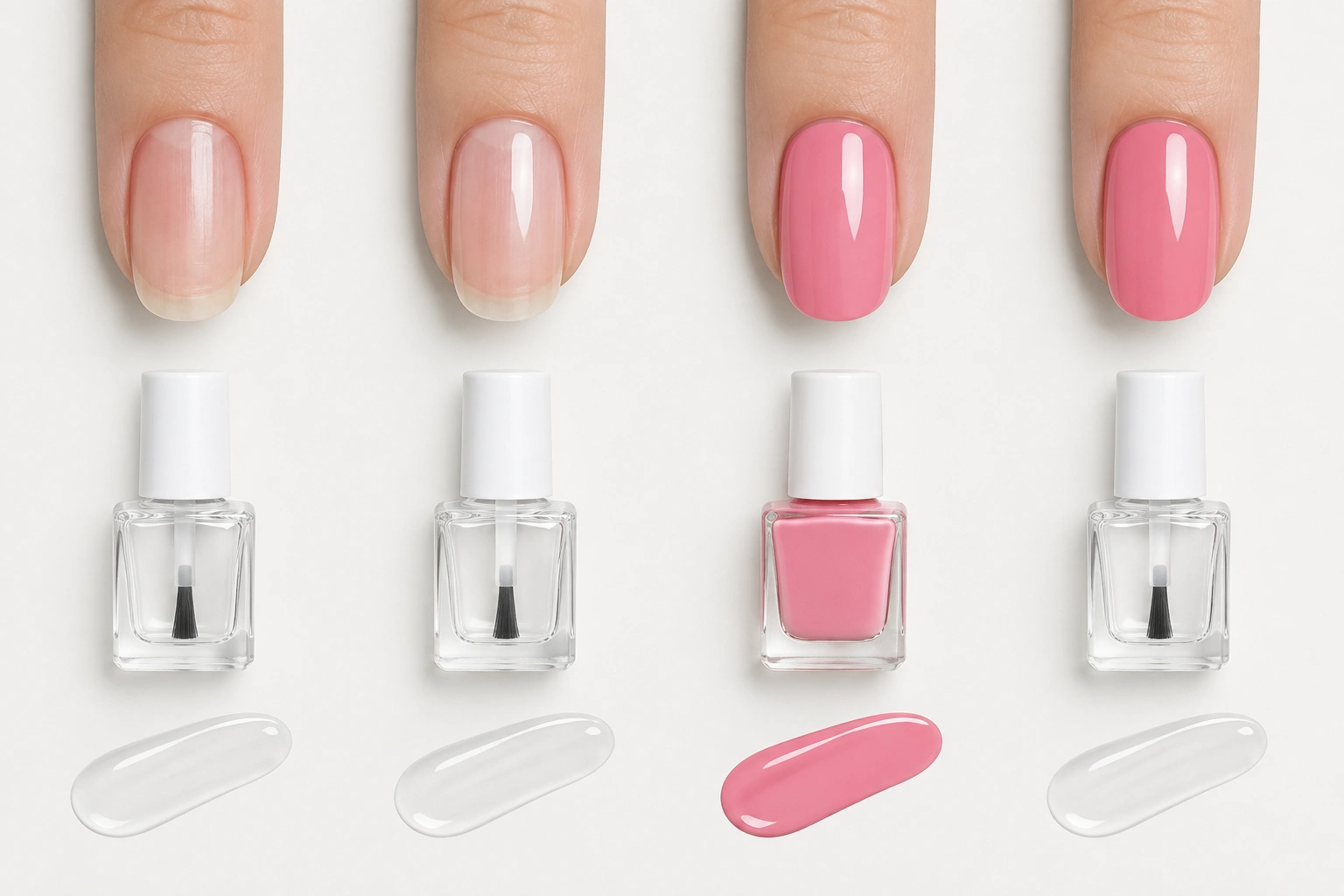
For a deeper look at how base coats fit into a manicure routine, see Nailprime’s guide on how long base coat takes to dry and the related comparison in how long top coat takes to dry.
What a Base Coat Is and What It Does
A base coat is the first polish layer you apply after nail prep and before color. It’s usually clear, though some formulas are lightly tinted or designed for a specific purpose.
The three main jobs of a base coat
A base coat may help in three practical ways:
-
Improves grip for polish
It gives colored polish a more even surface to cling to. -
Creates a barrier
It sits between your natural nail and the pigment in your polish. -
Helps the manicure look smoother
Some base coats can make color apply more evenly, especially on slightly uneven nails.
That’s the basic idea. It is not magic, and it will not make every polish last forever. But it often makes a manicure easier to wear and easier to remove later.
If you want to understand where base coat fits in the bigger prep picture, Nailprime also covers whether nails need to breathe and whether you need dehydrator and primer. Those are different products, and beginners often mix them up.
Why Base Coat Matters for Staining, Yellowing, and Chipping
The biggest reason people use base coat is simple: it can help protect the nail from colored polish.
Staining and yellowing
Dark reds, blues, purples, and some very pigmented shades are more likely to leave color behind on the nail surface. A base coat can act as a barrier, so pigment has less direct contact with the natural nail.
That does not mean staining can never happen. It may still happen with some formulas, especially if polish sits on the nail for a long time. But base coat is usually the first line of defense.
Chipping and peeling
A base coat may also help polish wear more evenly. If color has a better surface to hold onto, it can be less likely to lift at the edges right away.
Still, base coat is not a guarantee. Chips can happen because of:
- oily nail prep
- thick polish layers
- rushed drying
- frequent water exposure
- using the wrong remover later
So if your polish chips quickly, base coat may help, but it works best as part of a good routine.
What base coat cannot do
It cannot fully fix:
- very rough or peeling nails
- a formula that already chips easily
- poor prep
- overloading the nail with thick coats
That’s why it helps to keep expectations realistic. Base coat is a useful support step, not a cure-all.
For readers who like product comparisons, this is the same practical logic behind choosing a formula for a specific job, which Nailprime also discusses in its beetles base coat review and lavender violets base and top coat kit review.
When You Can Skip Base Coat and When You Should Not
There are times when skipping base coat is fine. There are also times when it’s the wrong shortcut.
Skipping base coat is mainly about convenience: it saves a step and gets you to color faster. Using base coat is about protection and longer wear, so the tradeoff is simple—less effort now versus better-looking nails for longer.
You can usually skip it when:
- you’re doing a very short wear manicure
- you’re using a pale shade and do not care much about stain risk
- you only need polish to look nice for a day or two
- you’re testing a color on yourself and plan to remove it soon
In those cases, skipping base coat is mostly a convenience choice.
You should not skip it when:
- you wear dark or highly pigmented polish
- your nails stain easily
- your manicure usually chips fast
- your nail surface is uneven or dry-looking
- you want the cleanest, most predictable result
If you want the safest beginner routine, use base coat every time. If you want a shortcut, skip it only when the manicure is temporary and you can live with the trade-off.
A simple decision rule: if you care about wear or nail color staying clean, use base coat. If you only care about speed, you can leave it out.
Base Coat vs Top Coat: What’s the Difference?
This is one of the most common beginner questions, and it matters because the two products are not interchangeable.
| Product | Main job | When it goes on | When it’s useful |
|---|---|---|---|
| Base coat | Helps polish grip and may protect the natural nail | First, after prep | Before color, especially for stain-prone or short-wearing nails |
| Top coat | Seals and finishes the manicure | Last, over color | For shine, smoothness, and helping the manicure look finished |
| Ridge filler | Smooths visible texture or ridges | Usually before color | When the nail surface is uneven |
| Strengthening base coat | A base coat with a support-focused formula | First, after prep | When nails feel weak or bendy |
The easiest way to remember it: base coat prepares the nail, top coat finishes the manicure.
If you only use top coat, you may get shine, but you miss the prep layer that helps color sit better on the nail. If you only use base coat, the manicure may not get the sealed finish that top coat provides.
How to Apply Base Coat in a Simple Manicure Routine
You do not need a complicated routine to use base coat correctly. A clean, thin application is enough for most beginners.
Step 1: Prep the nails

Make sure nails are:
- clean
- dry
- free of old polish
- free of lotion or oil
If the nail surface is damp or greasy, polish may not stick as well.
Step 2: Apply a thin layer
Use a small amount and brush it on in a thin, even coat. Cover the whole nail, including near the edge, but do not flood the skin.
Thick base coat is a common beginner mistake. It can take longer to dry and may make later layers feel messy.
Step 3: Let it settle
Give the base coat a moment to dry or at least become tacky enough for color, depending on the product instructions. This is one place where reading the bottle matters, because drying times vary.
Step 4: Add color
Apply your polish in thin coats over the base coat. Two thin color coats are usually easier to manage than one heavy one.
Step 5: Finish with top coat
If you want the manicure to last and look polished, finish with top coat.
For timing questions, Nailprime has separate guides on how long base coat takes to dry and how long top coat takes to dry, which can help you avoid smudges.
How to Choose the Right Base Coat
Not every base coat does the same thing. Pick the one that matches the problem you actually have.
Regular base coat
Choose this if you want a basic all-purpose layer for most manicures. It’s the simplest choice for beginners.
For example, if you’re wearing a medium pink or nude polish and just want a standard prep layer, a regular base coat is usually enough.
Strengthening base coat
Choose this if your nails feel soft, weak, or bendy. Keep in mind that “strengthening” can mean different things depending on the formula, so it’s best to use it as a supportive manicure product, not as a promised fix for damaged nails.
A strengthening base coat may be unnecessary if your nails are already fairly firm and your main goal is just to help polish last or reduce staining.
Ridge-filling base coat
Choose this if the nail surface looks uneven or has visible ridges. This type can help color go on more smoothly.
For example, if a sheer or glossy polish keeps looking streaky because your nails have texture, a ridge filler is often more useful than a regular base coat. If your nails are smooth and you mostly want stain protection, a ridge filler is usually overkill.
A simple picking rule
- Staining concern: regular base coat
- Weak-feeling nails: strengthening base coat
- Uneven texture: ridge filler
- No real issue, just a quick manicure: regular base coat or skip it
That keeps the choice practical instead of overwhelming.
Common Mistakes to Avoid
Beginners usually run into the same few problems with base coat.
Applying it too thickly
More product does not mean better performance. Thick layers dry slowly and can make the manicure less even.
Using it on oily or wet nails
A base coat works best on clean, dry nails. If you apply it over lotion residue or moisture, adhesion may suffer.
Treating base coat and top coat as the same thing
They are not the same, and swapping them changes the result. Base coat goes under color; top coat goes on top.
Choosing a specialty formula without a reason
A strengthening base coat is not automatically better than a regular one. A ridge filler is not needed unless the nail surface actually has texture you want to smooth.
Expecting it to solve everything
If polish chips quickly because coats are too thick or the nails were not prepped well, base coat alone will not fix that. It helps most when the rest of the manicure is done cleanly.
For product selection and prep, professional beauty education sources such as Essie’s nail care guidance and general safety information from the U.S. Food and Drug Administration can be useful starting points when you want to read more about cosmetics and nail product use.
When to See a Nail Technician or Dermatologist
A base coat question is usually a simple manicure question. But if your nails are very brittle, painful, deeply discolored, lifting, or changing in a way that seems unusual, that is not just about polish wear.
In that case, a nail technician can help you choose a safer cosmetic routine, and a dermatologist can check whether something else is going on. Don’t keep covering a serious nail issue with polish and assume a base coat will solve it.
Simple Takeaway: The Best Default for Beginners
For most beginners, the easiest choice is to use base coat as your default, especially if you want a cleaner finish and less staining.
It’s the safer option when you care about:
- cleaner-looking natural nails
- less staining from pigmented polish
- a smoother base for color
- a better chance of longer wear
You can skip it for a very short-term manicure, but that shortcut is mainly about convenience, while base coat is about protection and longer wear. For everyday use, a basic base coat is one of the simplest habits that can make nail polish easier to wear and easier to enjoy.

