
Do You Need a Top Coat for Nail Polish? A Beginner’s Guide

If you’re asking do you need a top coat, the short answer is: not always, but it is often worth using.
For a simple at-home manicure, a top coat is the finishing layer that helps your polish look smoother and more complete. It can add shine, help protect the color from everyday wear, and make the manicure look more finished. If you want the fastest possible nail paint job and do not care much about wear time, you can skip it. If you want your manicure to last longer or look more polished, a top coat is usually the better choice.
For beginners, a simple rule is: use a top coat for regular polish if you want more durability; skip it only for speed or a very short-term manicure.
A helpful way to think about it is this: base coat helps the polish go on, color polish gives you the shade, and top coat helps finish the look.

Quick Answer: Do You Need a Top Coat?
You do not need a top coat every single time you paint your nails.
Here’s the simple rule I give beginners:
- Use a top coat if you want more shine, better everyday protection, or a longer-lasting manicure.
- Skip it if you want a very quick manicure and you do not mind more chips or a less glossy finish.
For regular nail polish, top coat is usually the step that makes the manicure look more finished and helps it wear better. For gel polish, the system often includes a required finishing layer as part of the process, so the advice is not the same as it is for regular polish. If you want to compare drying times for finishing layers, our guide on how long top coat takes to dry can help.
If you only remember one thing, remember this: top coat is optional in the strict sense for many regular manicures, but useful in the practical sense.
What a Top Coat Is
A top coat is a clear finishing layer that goes over nail polish. It sits on top of the color and helps seal in the manicure.
Most beginners first meet top coat as the shiny clear polish that goes on last. Some formulas are glossy, some are matte, and some are made to dry faster or feel a little thicker for extra protection. The exact result depends on the formula, but the basic job is the same: finish the manicure.
Top coat is different from base coat. A base coat goes under color polish, while top coat goes over it. If you want a deeper look at the base layer, see our guide on whether you need a base coat for polish prep basics.
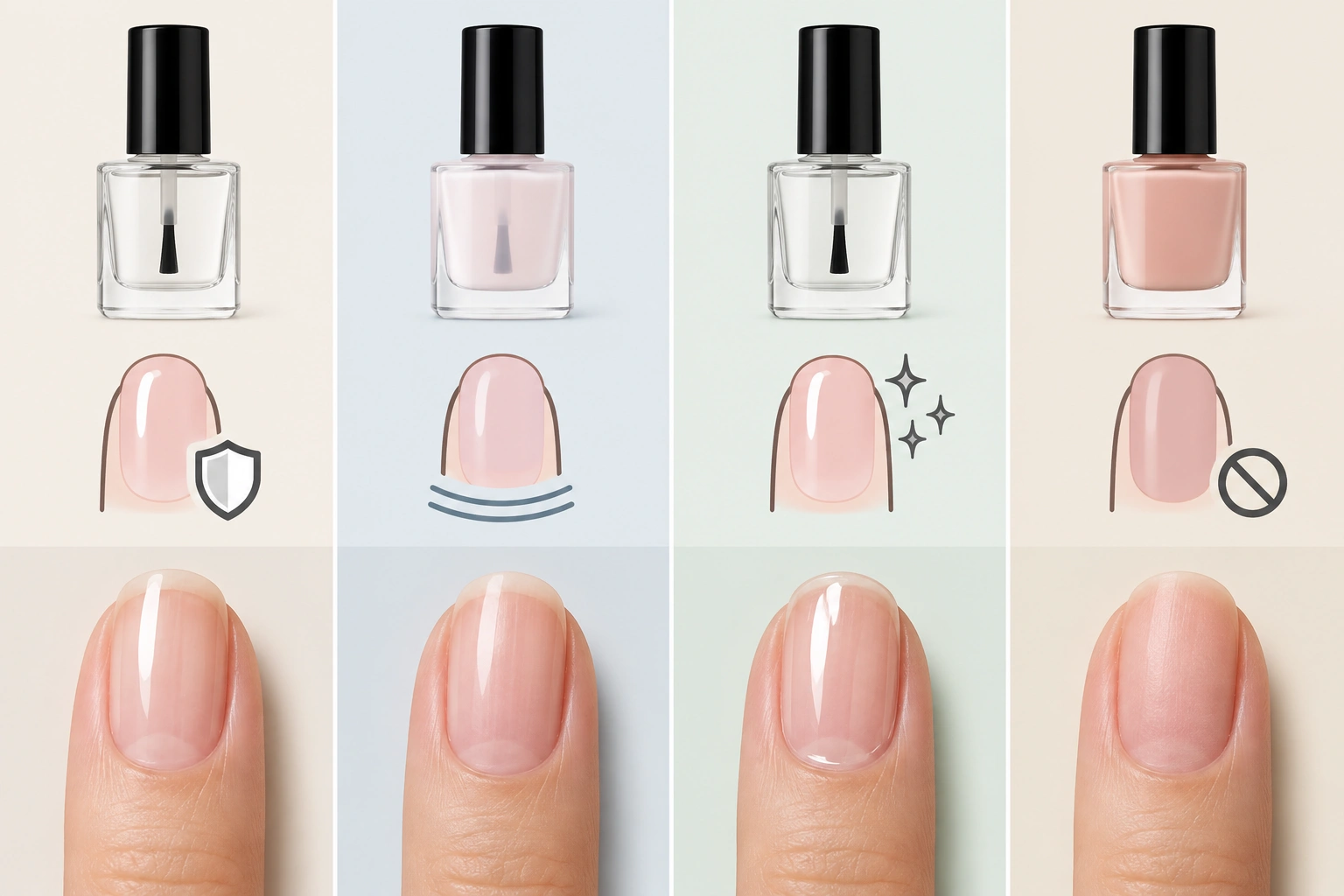
What a Top Coat Does for Your Nails
A top coat does a few useful things, even though it may seem like a small step.
Adds shine or changes the finish
The most obvious benefit is appearance. A glossy top coat can make color look brighter and more even. A matte top coat does the opposite and gives the manicure a flat finish.
If your polish looks a little dull after it dries, top coat is often what makes it look “done.”
Helps protect the color layer
Top coat forms a layer over the polish, which can help shield it from everyday wear like typing, washing hands, or light contact with hard surfaces. That does not make the manicure indestructible, but it can help the polish hold up better than color alone.
Can improve chip resistance
A top coat may help reduce chips and edge wear. That matters most if you use regular polish and want the manicure to last beyond a day or two. It is not a guarantee, but it can make a noticeable difference in how the polish wears.
Affects drying and the “set” feeling
Some top coats are made to dry faster on the surface, which can help the manicure feel less sticky sooner. But surface-dry is not always the same as fully set, so beginners should still be careful with pressure and contact right after application.
Smooths the final look
If the color coat is slightly streaky or textured, a top coat can soften the look. It will not fix a badly applied polish job, but it can make the finish look more even.
For beginners, that smoothing effect is one of the biggest reasons to use it. A manicure often looks more professional with one final clear layer.
When Top Coat Is Worth Using
Top coat is especially useful in these situations:
You are wearing regular nail polish
Regular polish usually benefits the most from a top coat. It can help the manicure look shinier and last longer, which is especially useful if you spent time getting the color even.
You want the manicure to last a little longer
If you are painting your nails for a weekend, event, or vacation, top coat is a smart extra step. It gives the manicure a more finished feel and may help it wear better than color alone.
You want a smoother, cleaner finish
If you like your nails to look neat and glossy, top coat is the easiest way to get there. Even a simple one-color manicure looks more intentional with a finishing layer.
You are using nail art or stickers
For basic nail art, top coat can help protect the design and keep edges from lifting as quickly. Just make sure the design underneath is set enough before you brush over it.
When You Can Skip Top Coat
There are also times when skipping top coat makes sense.
You want the fastest possible manicure
If you are in a hurry and just want color on your nails, leaving off top coat saves a step. That can be useful if you are doing a quick refresh before bed or before heading out.
You do not mind a more casual finish
Some people are fine with a softer, less glossy look. If shine is not important to you, top coat is less necessary.
You are doing a very short-term manicure
If you are only wearing polish for a day or so, a top coat may not feel worth the extra time. In that case, the trade-off is simple: less effort now, less durability later.
Your polish system already includes a finishing layer
Some gel systems are designed with a built-in final layer as part of the process. In that case, regular top coat advice does not always apply the same way.
Top Coat vs Base Coat vs Clear Polish
Beginners often mix these up, but they are not interchangeable.
| Product | Where it goes | Main job | Beginner takeaway |
|---|---|---|---|
| Base coat | Under color polish | Helps create a better surface for color | Use it before polish |
| Top coat | Over color polish | Adds shine, protection, and a finished look | Use it last |
| Clear polish | Usually sold as clear nail color | May look similar, but not always the same as a true top coat | Check the label; it is not always a replacement |
| No top coat | Nothing over the color | Fastest option, least protection | Fine for a quick manicure |
A common mistake is assuming any clear polish can replace a top coat. Sometimes it looks similar, but clear polish is not always formulated to give the same wear, shine, or finish as a true top coat. If your goal is a proper finished manicure, a true top coat is usually the safer choice.
Top Coat for Regular Polish vs Gel Polish
This is where beginner advice needs a little care, because regular polish and gel polish do not work the same way.
Regular polish
For regular nail polish, top coat is usually optional but strongly recommended. It helps the manicure look better and can improve wear.
If you are using regular polish and wondering whether the extra step is worth it, the answer is usually yes unless you are in a real rush.
Gel polish
Gel polish is different because the system often includes a final layer that is part of how the manicure is finished and cured. In other words, top coat is often not just optional in gel systems — it is part of the system itself.
That is why standard regular-polish advice does not fully apply. The right top coat depends on the product system and instructions you are following.
For a related beginner topic, our article on how long base coat takes to dry explains why each layer needs its own timing.
Does Top Coat Change Drying Time and Finish?
Yes, but not always in the way beginners expect.
A top coat can make the manicure feel more complete, but it does not always mean the nails are fully ready to use right away. Some formulas are made to dry faster, while others are designed more for protection or shine.
A few practical things to know:
- Glossy top coats usually give the most shine.
- Matte top coats change the look completely.
- Quick-dry top coats are made for convenience, but the exact result depends on the formula.
- Thicker top coats may feel more protective, but they can also take more care to apply evenly.
If your main goal is speed, choose a quick-dry formula. If your main goal is durability, choose a top coat made for protection. If your main goal is appearance, choose the finish you want — glossy or matte.
The trade-off is simple: more finish and protection often means one more step and a little more patience.
If you are curious about whether nails really need a break between manicures, our article on whether nails need to breathe is a helpful next read.
How to Apply Top Coat Without Smudging the Color
This is where many beginners run into trouble. The good news is that the fix is simple.
Use a light hand
Do not press hard with the brush. A gentle stroke is enough. Heavy brushing can drag the color underneath, especially if the polish is still soft.
Wait a little before sealing
The color layer should be set enough that it will not slide around easily. It does not have to be completely hard, but it should not feel wet and mobile.
Sweep the brush in smooth strokes
Apply the top coat in thin, even strokes from near the cuticle toward the tip. Try to cover the whole nail without scrubbing back and forth.
Seal the edge if you can
A light swipe across the free edge can help the manicure wear better. Keep it delicate so you do not flood the tip with too much product.
Avoid overworking the nail
One or two smooth passes are usually better than repeated brushing. The more you go back over the nail, the more likely you are to disturb the polish.
If you want the simplest beginner routine, think of it as: paint, wait a bit, then float the top coat on gently.
How to Remove Top Coat
Top coat comes off as part of normal polish removal.
For regular polish, use your usual remover and let it do the work. Avoid scrubbing hard, because that can rough up the nail surface and make the process messier than it needs to be.
For gel polish, follow the removal method for that specific system. Gel does not come off the same way as regular polish, and forcing it can damage the manicure and make removal unpleasant.
A calm, patient removal is better than trying to scrape everything off quickly.
When to See a Nail Technician or Dermatologist
Most top coat questions are simple manicure questions, but it is worth seeing a professional if your nails or skin react badly to polish products.
Get advice if you notice:
- repeated redness or itching after polish use
- lifting, splitting, or unusual nail changes that do not improve
- irritation that seems linked to a specific product
- trouble removing gel or other long-wear products safely
A nail technician can help you choose a better product or application method. A dermatologist is the better choice if you think you may be dealing with a skin or nail reaction.
Bottom Line: Should You Use One?
If you want the shortest answer possible: yes, use a top coat when you want your manicure to look better and last longer; skip it when you want speed and do not mind a simpler result.
For most beginners painting regular polish at home, top coat is worth the extra minute or two. It gives the manicure a more finished look and usually makes the whole thing feel more polished. For a rushed, one-and-done manicure, it is optional.
If you are still deciding, ask yourself one question: Do I want this manicure to look pretty good, or do I want it to look as finished and durable as possible? If the second option matters, use the top coat.

