
Does Nail Polish Expire? A Beginner-Friendly Guide to Shelf Life and Storage

If you’ve ever found an old bottle in the back of a drawer and wondered whether it’s still good, you’re not alone. The short answer is yes, nail polish does go bad over time — but not in the same way food does. It usually doesn’t have a strict “use by” date for everyday users. Instead, it slowly changes in texture, smell, and performance until it becomes harder to use well.
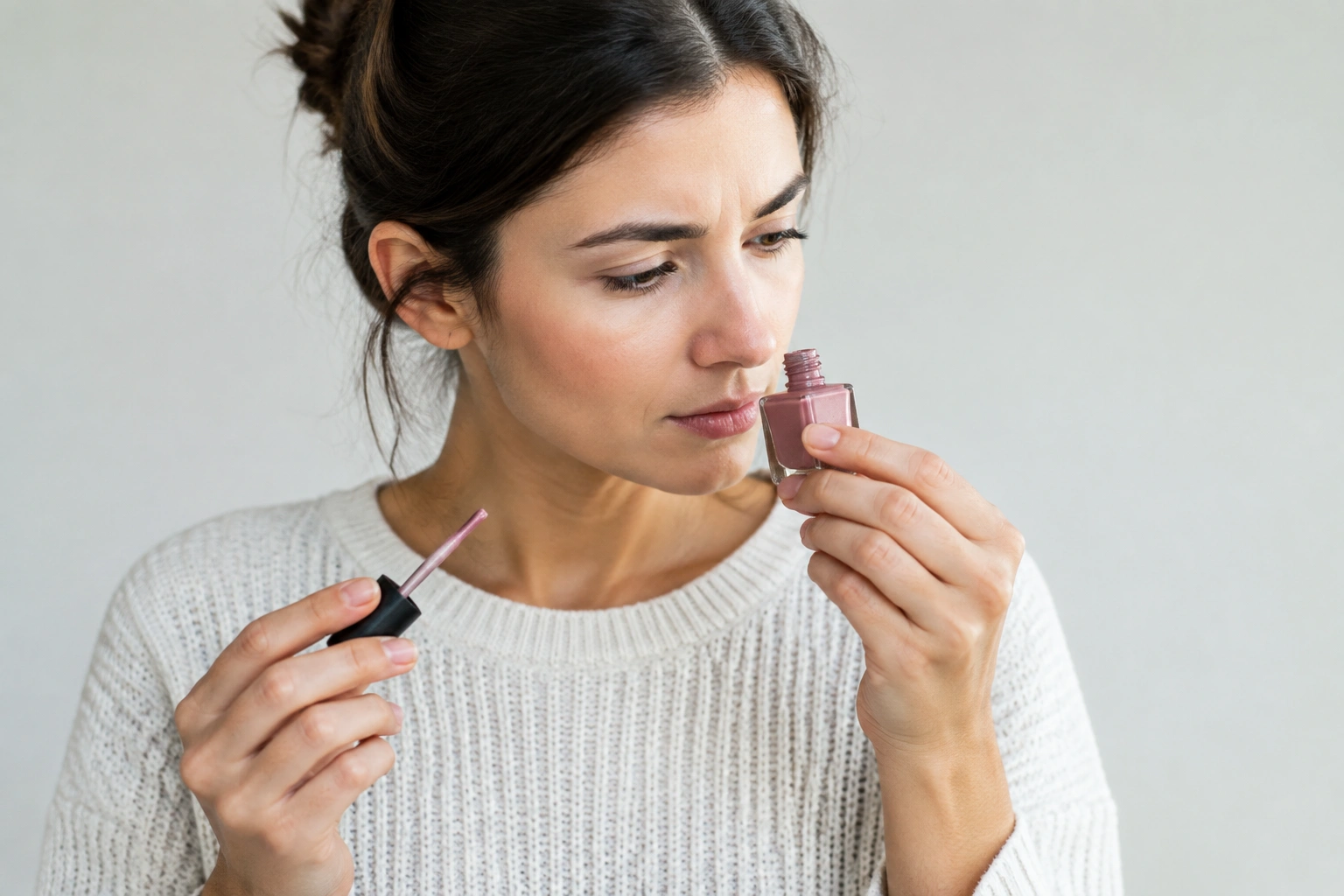
For beginners, that means the real question is not just “does nail polish expire?” but “is this bottle still usable?” That’s a much easier question to answer once you know what to look for.
Quick Answer: Does Nail Polish Expire?
Nail polish doesn’t usually expire on a hard deadline like milk or bread. Most bottles can sit for a while, especially if they are sealed and stored well. But over time, the solvents in the polish can evaporate, the formula can thicken, and the pigments can separate.
That’s why older polish may still be technically in the bottle but no longer apply smoothly. A bottle can look fine at first glance and still be too thick, stringy, or uneven to give a good manicure.
If you want a broader look at how polish dries and changes after opening, our guide on how nail polish dries explains the basics in simple terms.
How Long Nail Polish Usually Lasts
There isn’t one universal shelf life for every brand and formula. Storage matters a lot, and so does whether the bottle has been opened.
As a beginner-friendly rule of thumb, unopened regular nail polish can often last for several years if it is stored well, while opened regular nail polish is more likely to stay in good shape for about 1 to 2 years. Those are broad estimates, not strict expiration dates, and storage conditions can shorten or extend them.
Unopened bottles
An unopened bottle usually lasts longer because less air gets inside. If it’s been kept in a cool, dry place away from sunlight, it may stay usable for several years. Even so, “unopened” does not mean “forever.” Over time, the formula can still change slowly inside the bottle.
Opened bottles
Once a bottle has been opened, it is more exposed to air every time you use it. That makes evaporation more likely, which is why opened polish often thickens sooner than sealed polish. The more often you open it, the more likely it is to change.
A simple rule of thumb
If a bottle still looks normal, smells normal, and applies evenly, it may still be usable even if it’s older. If it has changed in several ways at once, it’s usually time to replace it.
Opened vs. Unopened Nail Polish
Here’s the easiest way to think about it: air is the enemy of polish freshness.
| Bottle type | What usually happens | What to check |
|---|---|---|
| Unopened | Slower change, less evaporation | Color, smell, and whether the formula still mixes smoothly |
| Opened | Faster thickening and separation | Texture, stringiness, clumping, and how well it applies |
An unopened bottle is more likely to stay stable because the formula has been protected from repeated air exposure. An opened bottle can still be perfectly fine, but it needs more attention.
If you’ve ever wondered why one polish turns thick much faster than another, our article on why nail polish gets thick breaks that down clearly.
Signs Your Nail Polish Has Gone Bad
The easiest signs are the ones you can see, smell, and feel.
Thick or stringy texture
If the polish feels gloopy, pulls into strings, or drags instead of flowing smoothly, the formula has likely changed. A little thickness can happen with age, but heavy stringiness usually means the bottle is past its best.
Separation that won’t mix back together
Some separation is normal, especially in older polish. Pigments can settle at the bottom. But if the polish stays uneven after gentle rolling or mixing, that’s a warning sign.
Clumping
Clumps are a stronger sign that the formula is breaking down. If you can see tiny lumps or flakes that don’t dissolve back into the polish, it may no longer apply well.
Color changes
A slight change in appearance can happen over time, but a noticeable shift in color is a sign the bottle has aged. This matters most if you want the shade to look the same on the nail as it did when you bought it.
Unusual smell
Nail polish has a smell to begin with, so the goal is not “no smell.” What matters is whether it smells unusually sharp, off, or different from how it used to smell. A strong change in odor is a good reason to stop and inspect the bottle more closely.
How to Tell If It Is Still Usable
Use this simple check:
- Open the bottle.
- Look at the surface and the brush.
- Stir or roll the bottle gently if needed.
- Paint one nail or a nail wheel if you have one.
Quick keep/discard checklist:
– Keep it if it mixes smoothly, smells normal, and applies evenly.
– Discard it if it is stringy, clumpy, strongly off-smelling, or contaminated.
If the polish smells normal, mixes smoothly, and applies in an even layer, it’s probably still usable. If it drags, leaves lumps, or looks patchy, it may be too far gone.
A slightly older polish can still work fine if it only needs minor thinning and the rest of the formula looks normal. But if several things seem off at once, the bottle is telling you it’s time to let it go.
Is Old Nail Polish Safe to Use?
For most people, old polish is more of a performance issue than a serious health issue. The bigger problem is that it may not apply well, dry evenly, or look the way you want.
That said, do not ignore a bottle that smells unusual, looks contaminated, or has changed a lot in texture. If something seems clearly off, it’s better to discard it than to keep testing it.
Also, use polish in a well-ventilated area, especially if an older bottle smells stronger than expected. If you want a general consumer-safety reference on cosmetic use and storage, the FDA’s cosmetics information is a helpful place to start.
Can Thick or Separated Polish Be Revived?
Sometimes, yes — but only if the polish is only mildly changed.

When gentle mixing may help
If the pigment has settled and the polish still looks otherwise normal, gentle rolling between your hands can help. You can also slowly turn the bottle upside down and back again before opening it, then check whether the formula looks more even.
When nail polish thinner can help
If the polish is just a little thick, nail polish thinner may restore a better consistency. Use a product made for polish, not a random substitute.
Why remover is the wrong choice
Nail polish remover is not the same thing as thinner. Remover can change the formula in ways that make it worse, not better. It may break down the polish instead of restoring it.
If you want to understand the difference between products that remove polish and products that affect nail condition, see our guide on does nail polish remover damage nails.
When not to try saving it
If the polish is badly clumped, has a strong off smell, or looks contaminated, skip the rescue attempt. At that point, the bottle is usually not worth the effort.
How to Store Nail Polish So It Lasts Longer
Good storage makes a noticeable difference.
Keep bottles:
– in a cool place
– in a dry place
– away from direct sunlight
– closed tightly after each use
A bathroom cabinet may seem convenient, but heat and humidity can work against polish. A drawer or box in a stable room is usually better.
Another practical habit: wipe the neck of the bottle before closing it. That helps the cap seal properly and reduces the chance of the bottle getting stuck later.
If you’re curious about drying behavior in different conditions, our post on does quick dry nail polish really dry faster may also help you understand how formula and environment affect results.
Regular Polish vs. Gel Polish
Regular polish and gel polish do not age in exactly the same way.
Regular polish is more likely to thicken from solvent evaporation over time. That means opened bottles often need more attention as they get older.
Gel polish is a different formula and is usually treated differently from standard polish. In practice, that means gel polish may not “dry out” in the same way regular polish does, but it can still become unusable if it gets too thick, separates, or is exposed to the wrong light or storage conditions. It also has a different application and curing process, so the signs of aging and the way you use it are not identical to regular polish.
If you use gel products, it helps to remember that not every polish formula is meant to be judged by the same signs. For a basic overview of another common difference, our article on does gel nail polish air dry can help clarify how gel behaves.
When to Replace the Bottle
Replace the polish if:
– it is badly clumped
– the smell has changed noticeably
– the formula will not mix back together
– it applies unevenly even after careful thinning
– you suspect contamination
– the cap or bottle no longer seals well
A bottle that is only slightly old can still be worth keeping if it performs well. But if you have to fight with it every time you use it, buying a fresh replacement is usually the better choice.
Simple Takeaway for Beginners
Nail polish does expire in the practical sense: it changes over time and eventually stops performing well. Opened bottles age faster than sealed ones, and the main warning signs are thickening, separation, clumping, and a strange smell.
If the polish still looks normal, smells normal, and applies smoothly, you can probably keep using it. If it has changed a lot, toss it and move on. That simple check will save you a lot of frustration at your next manicure.
FAQ
Can I use nail polish if it is a little thick?
Sometimes. If the polish is only slightly thick and still smells normal, nail polish thinner may help. If it is very stringy or lumpy, it’s usually not worth trying to rescue.
Does old nail polish smell bad?
It can. A stronger or unusual smell is one of the signs that a bottle has aged or changed. If the odor seems off, don’t keep using it.
Is separation always a sign that polish is expired?
No. Some separation is normal, especially in older bottles. The problem is when it will not mix back together smoothly or keeps separating quickly.
Should I throw away nail polish that is years old?
Not automatically. Check the smell, texture, and application first. If it still behaves normally, it may still be usable. If it has changed a lot, replace it.
Can I thin polish with remover?
No. Use nail polish thinner made for that purpose. Remover can damage the formula and make the polish perform worse.
Do gel and regular polish go bad at the same rate?
Not necessarily. They are different formulas, so they may age differently and need different storage habits.
When should I stop trying to save a bottle?
Stop if the polish is badly clumped, smells unusual, seems contaminated, or still applies poorly after careful thinning. At that point, a fresh bottle is the practical answer.
When to See a Nail Technician or Dermatologist
If a product causes irritation, or if you notice repeated reactions after using nail products, stop using that polish and speak with a professional. A nail technician can also help you judge whether a bottle is worth saving or replacing.

