
How to Fix Streaky Nail Polish and Get a Smooth Finish

Streaky nail polish is one of the most common beginner frustrations. You apply a coat, it looks uneven, and suddenly the manicure seems ruined. The good news is that streaks are usually fixable if you know what caused them.
As a nail technician, I like to break this problem into two questions: Is the polish still fresh enough to improve? and Is the streaking coming from the formula or the application? Once you answer those, the next step becomes much easier.
Why Nail Polish Looks Streaky
Streaking usually comes from one of a few simple issues.
The coat is too thin in some spots
If the brush does not carry enough polish, the color can look sheer in the middle or along the sides of the nail. That often leaves visible brush marks or patchy areas after the coat dries.
The coat is too thick
A thick coat may look more even at first, but it can dry unevenly and leave ridges or drag marks. Thick layers also take longer to dry, which makes them easier to disturb.
The polish formula is sheer
Some colors are meant to be translucent, especially soft pinks, milky neutrals, and jelly-style formulas. With those shades, a little streakiness can be normal after the first coat or two. The goal is often even translucency, not full opacity right away.
The polish has thickened or separated
Older polish often applies less smoothly. If the formula has become stringy, clumpy, or uneven, the brush may leave visible lines no matter how carefully you apply it. If you want to understand that problem in more detail, see how to fix thick nail polish and how to fix separated nail polish.
The brush pressure is uneven
Pressing too hard can spread the polish too thin in some places and pile it up in others. That creates streaks even when the formula is fine.
The nail surface is not smooth
Rough ridges, leftover product, or a skipped base coat can make color look uneven. A base coat often helps create a more even starting surface, though it will not correct a badly streaked color coat.
First Decide: Can This Manicure Be Fixed?
Before you keep layering, check the state of the polish.
| Polish state | Best next move | Why |
|---|---|---|
| Fresh and still workable | Add one thin coat | A light second coat often evens out the first layer |
| Partially dry but not fully set | Wait a little longer | Touching it now may drag the color and make streaks worse |
| Dry enough to feel tacky or patchy in places | Restart if the surface is damaged | More polish may not blend cleanly |
| Severely streaky after multiple coats | Remove and begin again | The problem is likely formula or technique, not coat count |
A simple beginner path helps:
- After one thin coat, look closely under good light.
- If the polish is still fresh and you only see light streaking or translucency, add one more thin coat.
- If the second coat still looks sheer but even, stop there or add a third thin coat only for sheer formulas.
- This is normal for translucent, jelly, or very light colors.
- If the brush starts dragging, pulling, or lifting the color, stop.
- Wait for the coat to dry fully before deciding whether to add another layer.
- If the surface is already damaged, patchy, or full of bald spots, remove and restart.
- More polish usually will not smooth out a coat that is no longer workable.
A simple rule helps: if the polish still looks wet and smooth, you may be able to fix it; if it is dragging, pulling, or leaving bald spots, stop and reassess.
Quick Fixes for Fresh Streaky Polish
If the polish is still fresh, the safest fix is usually one careful coat rather than several rushed ones.
1. Load the brush lightly, not heavily
Wipe off excess polish only if the brush is overloaded. You want enough polish to cover the nail in a few strokes, but not so much that it floods the cuticle.
2. Apply one thin coat
Use gentle strokes from near the cuticle toward the free edge. Try to cover the center first, then the sides. If the first coat looked streaky, the second thin coat often smooths it out.
3. Avoid going back and forth too much
Once the polish starts to set, repeated brushing can pull color away from the nail and create bald patches. Smooth the coat, then leave it alone.
4. Let it level and dry
Even a good coat needs time to settle. If you add another layer too soon, the brush can drag the first one.
If the first coat is very sheer but even, that is usually normal. A second or third thin coat may be needed for full color. That is especially true with pale, translucent, or jelly-like formulas.
What to Do If the Polish Has Started to Dry
Partially dried polish is the tricky stage. It may look fixable, but touching it can make the surface worse.
If the brush starts leaving lines instead of smoothing them out, stop. That usually means the coat is no longer workable. Adding more polish at this stage can create ridges, holes, or a rough surface that is harder to hide later.
If only one area is streaky and the rest still looks smooth, you can sometimes wait for the coat to dry fully and then apply a thin second coat. But if the surface is already dragging, restarting is usually faster than trying to rescue it.
For a manicure that has become sticky or refuses to set properly, this related guide may help: how to fix nail polish that won’t dry.
How to Apply Nail Polish Without Streaks Next Time
A smooth finish usually comes from small habits, not one big trick.
Use thin coats
Thin coats usually level better than thick ones. They dry more evenly and are less likely to show ridges. Two thin coats often look cleaner than one heavy coat.
Keep the brush pressure light
Think of the brush as gliding, not pressing. Heavy pressure can push polish out of the center of the stroke and leave faint lines behind.
Use enough polish on the brush
A brush that is too dry can skip across the nail and leave streaks. If you notice that happening, reload before the next nail instead of trying to stretch one tiny dip of polish across several nails.
Work in a simple stroke pattern
A beginner-friendly method is to place polish near the center of the nail, then guide it toward each side. Finish by lightly pulling the color toward the free edge. This helps the coat look more even without overworking it.
Stay close to the cuticle without flooding it
Leave a tiny gap at the cuticle area. You do not need to pack polish right against the skin. A neat edge looks smoother and makes the manicure easier to clean up.
Seal the free edge
Brushing a little polish across the tip can help the manicure look more finished. It may also reduce early wear at the edge, though it will not fix streaks by itself.
How Many Thin Coats You Really Need
There is no single number that works for every polish.
Most opaque colors look best with two thin coats, but some sheer shades need more. Very light pinks, milky formulas, and translucent finishes may still look streaky after two coats because they are designed to be see-through.
A helpful way to judge is this:
– If the color looks even but translucent, you may just need another coat.
– If the color looks uneven, patchy, or dragged, the problem is probably application or formula.
For beginners, a good stopping point is often:
– Stop at two coats if the color looks smooth and the translucency is even.
– Add a third thin coat if the polish is a sheer formula and the finish still looks evenly see-through rather than patchy.
– Restart if extra coats are only making the manicure thicker, rougher, or more streaked.
Adding coat after coat is not always the answer. Too many layers can make the manicure bulky and slower to dry. If you are already on coat three or four and the color still looks patchy, something else is going wrong.
How Polish Formula Affects Streaking
Sometimes the issue is not your technique at all.
Sheer polish
Sheer formulas can look streaky by nature. That does not always mean you did anything wrong. The question is whether the finish looks evenly translucent. Even translucency means the color looks soft and see-through in a consistent way across the nail. A problem looks patchy, with darker and lighter bands, visible drag marks, or bald-looking areas.
Thickened polish
Older polish often becomes harder to spread. It may drag, skip, or leave visible brush lines. If the bottle is only slightly thick, try warming it in your hands and applying a thin coat. If it is stringy, clumpy, or still dragging after mixing, it is usually better to replace it than keep layering. For more detail, compare how to fix clumpy nail polish.
Separated polish
If the pigment and base have pulled apart in the bottle, the color may apply unevenly from nail to nail. First, roll the bottle gently between your hands to recombine it. If it still looks uneven after mixing, or if the formula keeps separating quickly, the polish may be past its best. For that situation, see how to fix separated nail polish.
Too-thin polish
If the polish seems watery or slides around without covering well, it may be too thin. Try applying a smaller amount and letting the first coat dry fully before the next one. If the formula is still streaky because it is too sheer or runny, a third thin coat may help only if each layer is drying evenly. If it keeps looking patchy, the bottle may simply be a poor match for opaque coverage.
Formula versus technique
If every nail streaks in the same way, the formula may be the issue. If only some nails look bad, your application is probably inconsistent. That difference matters because technique can be improved right away, while an aging formula may need to be replaced.
How Base Coat and Top Coat Affect the Final Look
A base coat and top coat each do a different job.
A base coat helps create a smoother surface for color and can improve grip. It may reduce the look of unevenness, especially on nails with ridges or texture. It does not, however, erase a badly streaked color coat.
A top coat adds shine and can make the final manicure look more polished. It may help the surface look a little more blended, but it will not hide major streaks underneath.
If you are using a streaky formula, do not expect the top coat to rescue it. Think of top coat as the finishing layer, not the correction layer.
For a broader comparison of product types, you may also find nail polish vs nail lacquer useful.
When to Start Over Instead of Layering More Polish
Sometimes the cleanest fix is a fresh start.
Remove and restart if:
– the polish is dragging instead of spreading
– the surface has bald patches that keep reappearing
– several coats still look uneven
– the formula seems old, thick, or separated
– the manicure has become lumpy from too many layers
Starting over takes more time at first, but it often saves frustration. A badly streaked manicure usually does not improve just because you keep adding polish.
If you do restart, remove the old color gently and avoid aggressive scrubbing. Repeated heavy rubbing can dry out the nail and surrounding skin.
When to See a Nail Technician or Dermatologist
If your nails are very rough, split, discolored, or difficult to polish smoothly every time, it may be worth asking a professional to look at them. A nail technician can help you adjust your prep and application technique. A dermatologist is the better choice if you suspect a skin or nail concern that is affecting the nail plate itself.
Simple Troubleshooting Recap
If the polish is fresh, try one thin coat.
If it is dragging, stop and let it dry or remove it.
If it is sheer, expect more than one coat.
If it is old or thickened, the formula may be the problem.
If several coats still look patchy, restart rather than piling on more color.
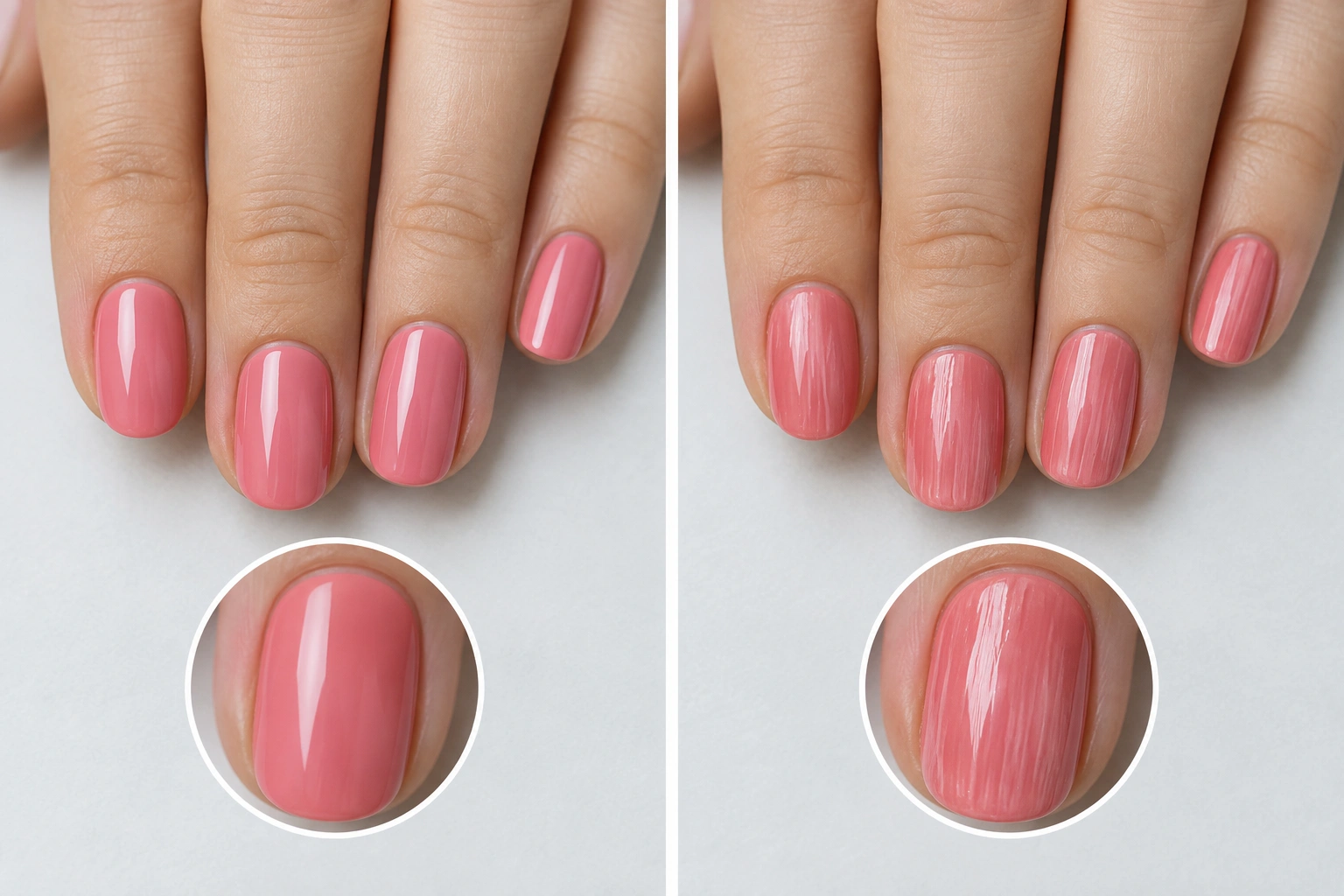
A smooth manicure is usually the result of thin coats, light pressure, and enough drying time between layers. Once you get those basics in place, streaky polish becomes much easier to control.
