
Why Nail Polish Feels Sticky After Drying: A Beginner’s Guide to What’s Normal and What’s Not

If your nails feel sticky after drying, you are not alone. This is one of the most common beginner questions in nail care, and the answer is usually simpler than it seems: nail polish can feel dry on the surface while still being soft underneath.
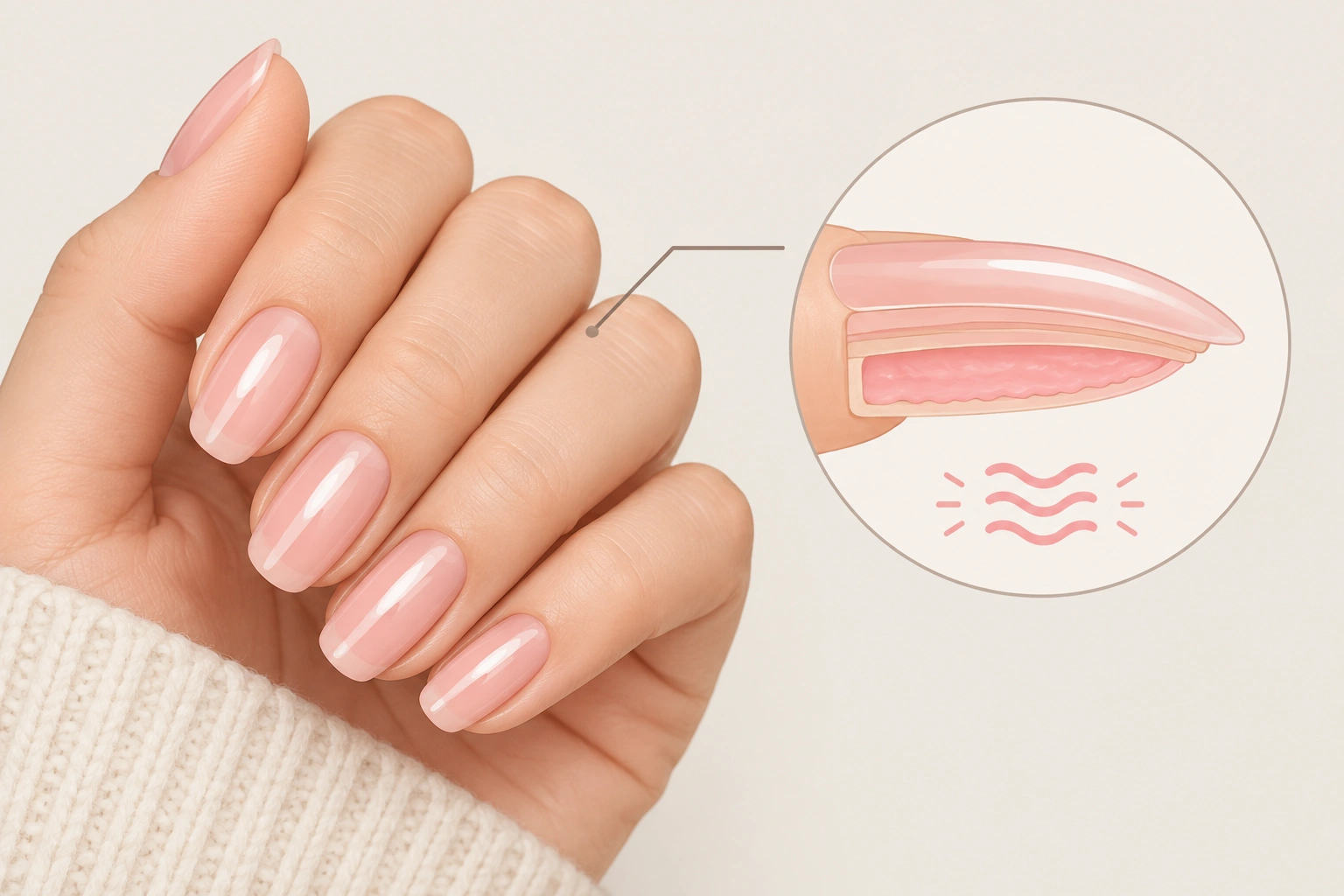
That difference matters. A manicure may look finished, but if the layers below are still setting, the polish can feel tacky, dent easily, or smudge when you touch it. In some cases, a slightly sticky feel is normal. In others, it means the polish was applied too thickly, not given enough time, or used with a formula that needs a different drying method.
This guide will help you figure out which situation you have, what to do right now, and how to avoid the problem next time.
Why nail polish can feel sticky after it dries
Nail polish dries in layers. The top may feel set first because the surface loses solvent faster than the layers underneath. That can create a confusing result: the nail seems dry, but it still feels sticky, soft, or easy to mark.
A simple way to think about it is this: the outside of the polish can harden before the inside does. If you press too soon, you may leave a dent even though the shine looks normal.
This is especially common when:
– the coats are thick
– too many layers were applied
– the room is humid
– the polish is older or thickened
– the top coat is designed to stay tacky for a short time
If you want a deeper look at the opposite problem, see why nail polish is not drying. If your polish is smudging while you wait, this guide on how to prevent nail polish smudging while drying can help too.
Dry, touch-dry, and fully cured: what each one means
These three terms sound similar, but they are not the same.
Touch-dry
Touch-dry means the surface no longer feels wet when you lightly tap it. This is the first stage, and it does not mean the manicure is ready for normal use.
For regular polish in normal home conditions, touch-dry can happen in roughly 5 to 15 minutes for thin coats, but it can take longer if the coats are thicker, the room is humid, or the polish was applied quickly.
Dry
Dry usually means the polish has set enough that it is less likely to smudge with light contact. Even then, the layers underneath may still be soft.
For regular polish, a manicure may feel mostly dry in about 20 to 60 minutes, but that does not always mean it is fully hardened. Thick coats can take longer.
Fully cured
Fully cured means the polish has hardened as much as it is meant to. This matters most with gel polish, which needs the right lamp and curing time. Regular polish does not “cure” in the same way gel does; it dries by evaporation.
For regular polish, “fully dry” can take a few hours, and sometimes longer for thicker manicures. Gel polish is different: it cures rather than air-dries.
Here is the beginner shortcut: if your nails feel okay but dent when you press them, they are not fully set yet.
When sticky polish is normal and when it is a problem
A little tackiness is not always a mistake.
Some top coats are meant to feel slightly sticky at first. That tacky layer helps the next step bond properly or finish setting. If the product directions say to wait, then the stickiness may be part of the formula rather than a problem.
Some base coats and ridge-filling products can also feel a little tacky, especially if they are applied too heavily. That does not always mean something is wrong.
But sticky polish is more likely to be a problem when:
– it stays tacky far longer than expected
– it dents easily after plenty of waiting
– it feels gummy instead of smooth
– only some nails dry while others stay soft
– the polish goes on unevenly or stringy
A good rule: if the polish is only slightly tacky and the brand instructions mention that behavior, wait longer. If it remains soft, thick, or dent-prone, something likely went wrong in the application.
For gel-specific tackiness after lamp curing, this article on why gel polish is sticky after curing explains that situation more clearly.
Common reasons nail polish stays tacky too long
Thick coats trap wet polish underneath
This is the most common beginner mistake. A thick coat can look glossy and smooth on top while staying wet below. The surface may seem fine, but the lower layer has not had enough time to let solvent escape.
If you want a fuller-looking manicure, two thin coats usually work better than one heavy coat. Thin layers dry more evenly and are less likely to wrinkle or stay soft.
Too many layers slow everything down
Base coat, color coats, and top coat all add drying time. If each layer is applied before the one below has set enough, the manicure can end up soft for a long time.
A practical example: three thick color coats plus a heavy top coat is much more likely to stay tacky than two thin coats with enough wait time between them.
Humidity slows evaporation
Regular polish dries as solvents leave the film. In a humid room, that process slows down. If the air is damp or there is little airflow, the polish can feel sticky much longer than it would in a drier space.
Old or thickened polish may not level well
An older bottle can become stringy, clumpy, or uneven. When that happens, it may not spread smoothly, and the finish can dry poorly. If the formula looks separated, unusually thick, or smells off, replacing it is usually the safer choice.
Coats were applied too quickly
Even thin coats need a little time to settle. If you rush from one layer to the next, you can trap wet product underneath. That often creates a manicure that feels dry on top but soft for hours.
How base coat, color coats, top coat, and gel polish affect drying
Each product in a manicure has a different job, and that affects drying behavior.
Base coat
The base coat helps polish grip the nail and creates a smoother surface. It should be dry enough before color goes on, or the next layer may drag and stay uneven.
Color coats
Color coats provide the main coverage. These are the layers most likely to cause sticky buildup if they are applied too thickly.
Top coat
Top coat seals the color and adds shine. Some top coats dry quickly, while others need more time. A quick-dry top coat can help a thin manicure set faster, but it will not rescue a heavy, overloaded application.
If you are comparing options, the trade-off is simple: quick-dry formulas can be useful for thin manicures, but standard top coats may give you a little more working time. For beginners, the bigger win usually comes from thinner layers, not from changing products every time.
Regular polish vs gel polish
Regular polish dries in air. Gel polish needs curing under a UV or LED lamp. That means the two systems behave differently.
If you use regular polish and expect gel-style hardening, it can seem like the manicure is “stuck” when it is actually still evaporating. If you use gel polish and it stays tacky after curing, the issue may be incomplete curing, product compatibility, or a top coat that needs proper lamp exposure.
For product guidance, official instructions matter. The FDA’s cosmetics information is a good place to start when you want general safety and labeling context, and product-specific directions should always come first.
What to do right now if your nail polish is still sticky

1. Stop testing it with your fingertips
Every time you press, tap, or rub the surface, you risk smudging the finish. If the manicure is still soft, leave it alone for a while.
2. Check whether it is only slightly tacky or actually soft
If the polish is just a little tacky on the surface, wait longer. If it dents, feels gummy, or leaves marks easily, it is not ready yet.
3. Give it more time in a dry space
Move to a room with lower humidity if you can, and let the nails sit undisturbed. Gentle airflow may help the air around the nails move, but it should not be the main fix.
4. Look at the thickness of the layers
If the polish was applied in heavy coats, more waiting may help only a little. Thick layers often need much longer than beginners expect. If the manicure is visibly bulky or uneven, it may be better to remove and redo it.
5. Decide whether to wait or start over
If the polish is only a little tacky and not denting, keep waiting. If it still dents easily after a reasonable wait, or if the layers were applied very thickly, remove and reapply instead of trying to save it.
6. Do not scrape it off
Picking or scraping can rough up the nail surface and make the next manicure harder to apply smoothly.
For drying aids, read product instructions carefully. If you use a drying product, this guide on do nail polish drying drops work can help you understand what they can and cannot do.
How to prevent sticky nail polish next time
The easiest fix is usually a better application pattern, not a different color.
Use thinner coats
Thin coats are the most reliable way to reduce tackiness. They dry more evenly and are less likely to trap wet polish underneath.
Wait between layers
Give each coat a short moment to settle before adding the next one. For many beginner manicures, a brief pause between thin coats is more practical than rushing straight through.
Keep the brush lightly loaded
Wipe off excess polish before painting each nail. An overloaded brush makes it much easier to lay down a thick coat by accident.
Keep the room as dry as possible
If you paint your nails on a humid day, expect slower drying. A room with less moisture usually gives better results.
Choose formulas that match your routine
If you often rush, a quick-dry top coat may be useful. If you enjoy slower, careful application, a standard top coat may be fine. The key is matching the product to your habits.
Replace old polish
If a bottle has become thick, stringy, or difficult to spread, it can make the whole manicure harder to dry well. Fresh polish usually applies more evenly.
Keep the layers simple
Beginners often think more coats mean better coverage. In practice, more layers often mean more waiting and more risk of soft polish underneath.
Signs you should remove and reapply the manicure
Sometimes waiting is not the answer.
Consider starting over if:
– the polish is still soft after a reasonable wait
– the surface dents with light pressure
– the layers were applied very thickly
– the polish looks lumpy or uneven
– the formula seems old, separated, or contaminated
– the top coat and color seem to react badly together
A redo is frustrating, but it is often faster than trying to rescue a manicure that was built too heavily from the start. If you need a broader troubleshooting guide, see why nail polish is not drying after application.
When to See a Nail Technician or Dermatologist
See a nail technician if you keep having the same drying problem even when you use thin coats and follow the product directions. A technician can often spot an application issue quickly, such as layering too soon or using an incompatible top coat.
See a dermatologist if your nails or surrounding skin become irritated after polish use, or if you notice a reaction that seems related to a product. The polish may not be the only issue, and it is better to get proper advice than to keep experimenting.
FAQ
Is nail polish supposed to feel sticky after drying?
Sometimes, yes. A slight tacky feel can be normal with certain top coats or while the polish is still setting. If the polish dents easily or stays sticky for a long time, that usually means it needs more time or was applied too heavily.
Why is my nail polish sticky after drying even though it looks shiny?
Shine does not always mean the polish is fully set. The surface can look finished while the lower layers are still soft. Thick coats and humid air make this more likely.
How long should nail polish take to dry?
For regular polish in normal home conditions, thin coats are often touch-dry in about 5 to 15 minutes, but they may still be soft underneath. A manicure may feel mostly dry in about 20 to 60 minutes, while full hardness can take a few hours or longer, especially with thicker layers. Gel polish is different because it cures under a lamp rather than air-dries.
What is the difference between dry and cured polish?
Regular polish dries as solvents evaporate. Gel polish cures under a lamp. Dry polish may still be soft underneath, while cured gel should be set according to the product’s instructions.
Can I put on another top coat to fix sticky polish?
Not usually. If the layers underneath are still soft, another coat can trap more moisture and make the problem worse. It is better to wait, or remove and restart if the manicure was applied too thickly.
Why does one hand dry faster than the other?
Small differences in coat thickness, room airflow, and how you use your hands can all affect drying. If one hand was painted more heavily, it may stay tacky longer.
Does quick-dry top coat always solve the problem?
No. It can help a thin, well-applied manicure set faster, but it will not fix thick layers or a formula that is already struggling to dry properly.
Should I use heat to dry sticky polish faster?
Avoid strong heat close to the nails. Gentle airflow is safer and more useful than trying to warm the polish aggressively.

