
Why Does My Cat Chew Nail Files? Causes, Risks, and Safe Fixes

You set your nail file beside you for a moment, and your cat immediately grabs it, licks the rough surface, or starts chewing the edge.
It is strange enough to make you wonder: why does my cat chew nail files?
In many cases, the answer is simple curiosity. Nail files have an unusual texture, carry your scent, collect tiny amounts of nail dust, and move like tempting little toys when you use them. But repeated chewing—especially if your cat swallows pieces—deserves more attention.
Below, we will look at the most likely reasons cats chew nail files, which file types create the biggest risks, what to do if your cat eats part of one, and how to keep your manicure supplies safely out of feline reach.
Quick Answer
Cats may chew nail files because they like the rough texture, smell, movement, or traces of your scent and nail dust. Some cats also chew objects from boredom or behavioral habits. Repeatedly swallowing nail-file material can be dangerous and may be associated with pica, so persistent chewing should be discussed with a veterinarian.
Why Does My Cat Chew Nail Files?
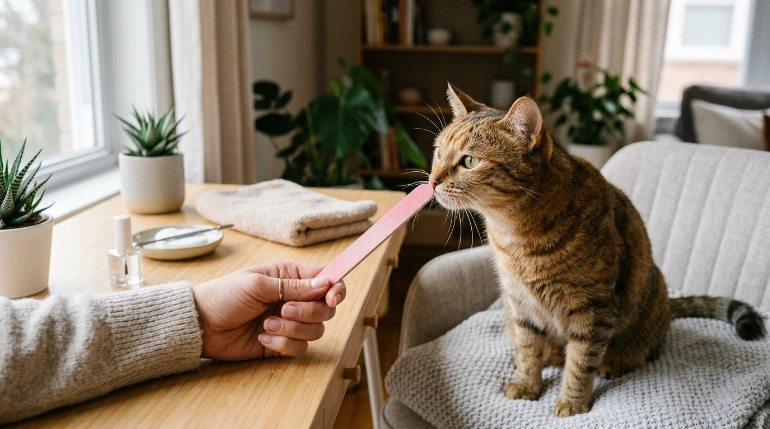
There is probably no single explanation that applies to every cat.
A nail file combines several things cats naturally investigate: scent, texture, movement, sound, and an object small enough to grab with their paws and teeth.
Watching how your cat interacts with the file can help you understand what is attracting her.
1. The Rough Texture Feels Interesting
An emery board has a gritty surface unlike most objects around your home.
Your cat may test that texture by rubbing against it, licking it, or gently biting it. Cats explore their surroundings with their noses, paws, and mouths, so an unfamiliar rough object may simply invite investigation.
A lightweight emery board is especially tempting because it is easy to:
- Bat across a table
- Pick up with the mouth
- Bend or bite
- Chase across the floor
- Hold between the paws
If your cat only takes a few curious bites and loses interest once you put the file down, texture and play are reasonable explanations.
2. A Used Nail File Smells Like You
A used nail file is not odorless from your cat’s point of view.
You hold it in your hands, so it can collect skin oils and your personal scent. Filing also leaves microscopic amounts of nail material on the abrasive surface.
If your cat seems more interested in an old file than a brand-new one, scent may be part of the attraction.
NailPrime’s guide to why cats like the smell of nail files explains how human scent, nail dust, texture, movement, and other sensory cues can all contribute to a cat’s interest.
This does not mean your cat needs to eat anything found on the file.
3. The Movement Looks Like Play
Think about what happens while you file your nails.
The file moves quickly back and forth. Your fingers move. The tool occasionally disappears behind your hand and reappears. It also produces a repetitive scraping sound.
To a playful cat, that may look more like prey or a small toy than a beauty tool.
You may notice this pattern if your cat ignores a nail file left motionless on the vanity but suddenly pounces on it once you begin your manicure.
In that situation, redirecting your cat to a wand toy or another safe activity can work better than repeatedly pulling the file away.
4. Your Cat May Be Bored and Looking for Stimulation
Some cats chew or attack household objects simply because those objects are available and entertaining.
Cornell University’s Feline Health Center notes that cats with destructive chewing habits can benefit from reducing access to inappropriate items and increasing appropriate play and environmental enrichment.
That may include:
- Interactive play sessions
- Food puzzles
- Climbing spaces
- Scratching surfaces
- Cat-safe toys with different textures
- Rotating toys so they remain interesting
If the nail file is the most exciting thing on your desk, your cat may keep returning to it.
5. Repeated Eating Can Be a Sign of Pica
There is an important difference between chewing something and repeatedly eating it.
Pica refers to persistent consumption of non-food materials. International Cat Care explains that pica can involve materials such as fabric, cardboard, plastic, or other inedible objects and may have behavioral or medical contributors.
If your cat repeatedly searches for nail files and actually swallows pieces, pay attention to whether she also eats:
- Plastic
- Paper or cardboard
- Fabric
- String
- Rubber
- Cat litter
- Foam
- Other non-food materials
Our related guide on why cats eat nail files goes deeper into the difference between occasional investigation and repeated ingestion.
Do not assume pica means a vitamin or mineral deficiency. Medical conditions are only one possible contributor. A veterinarian should evaluate persistent behavior rather than relying on supplements or dietary changes based on guesswork.
Are Nail Files Dangerous for Cats to Chew?
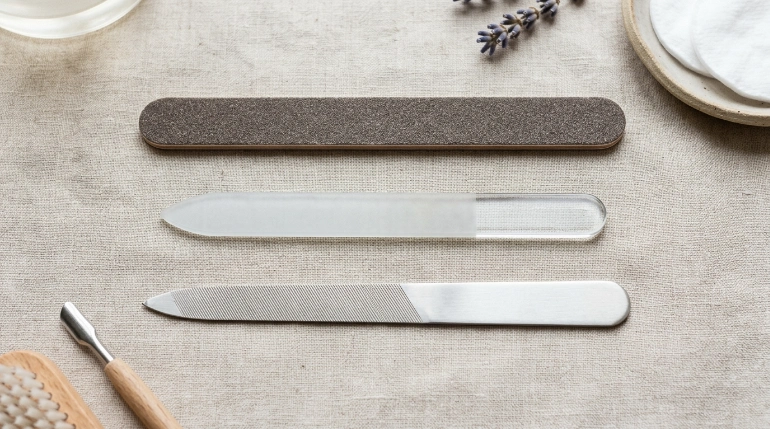
Yes, they can be.
The risk depends on the material, how aggressively your cat chews it, and whether any pieces are swallowed.
| Nail File Type | Main Material | Main Risk to a Cat | Hygiene Concern | Typical Cost |
|---|---|---|---|---|
| Emery board | Cardboard/wood core with abrasive surface | Can shred into swallowable pieces | Porous and difficult to sanitize fully | Low |
| Foam buffer | Foam with abrasive coating | Foam or coating may be torn off and swallowed | Absorbs oils and debris | Low |
| Glass file | Tempered/crystal glass | May chip or break if damaged | Easy to clean when intact | Medium |
| Metal file | Stainless steel or similar metal | Hard edges can hurt teeth or mouth | Reusable and washable | Low to medium |
| Electric file/bits | Metal or abrasive rotating components | Moving parts, cords, small bits, heat | Requires careful cleaning | Higher |
Emery Boards
Disposable emery boards are probably among the easiest files for a determined cat to destroy.
Once wet from saliva, the layers can soften and separate. Small pieces may then be swallowed.
For a broader look at this issue, see NailPrime’s guide to whether nail files are toxic to cats.
Glass Nail Files
Glass files do not shred like cardboard, but that does not make them cat toys.
A damaged glass file could chip or break. Keep it in its protective case and away from surfaces where your cat can knock it to the floor.
Metal Nail Files
Metal files are much harder to destroy, but chewing a rigid abrasive edge can still hurt your cat’s mouth or teeth.
They should be stored like any other manicure tool.
Electric Nail Files
Keep cats away while an electric nail file is operating.
The moving bit, cord, small attachments, and nail dust all create unnecessary hazards. Never let a cat paw at a rotating bit.
And if you were considering filing your cat’s own claws, our guide on using nail files on cats safely explains why human manicure tools are not automatically the right choice for feline grooming.
What Should I Do If My Cat Chews a Nail File?
If you catch your cat chewing one, stay calm and take a few simple steps.
1. Take the File Away
Remove the nail file without turning the situation into a chase.
If your cat is reluctant to release it, offer a favorite toy or treat as a trade.
2. Check the Nail File
Look closely at the tool.
Ask yourself:
- Is a corner missing?
- Has the board been shredded?
- Did a glass file chip?
- Are pieces of foam missing?
- Is a metal file bent or damaged?
- Was the file covered with manicure-product residue?
Knowing what may have been swallowed will help your veterinarian assess the situation.
3. Look for Obvious Mouth Problems
If your cat allows it safely, look for signs such as:
- Bleeding
- Excessive drooling
- Repeated licking of the mouth
- Pawing at the face
- Difficulty closing the mouth
- Trouble swallowing
Do not force your cat’s mouth open if she is distressed or likely to bite.
4. Call Your Veterinarian If Material Is Missing
Swallowed foreign material can sometimes lodge in the digestive tract.
The MSD Veterinary Manual’s guidance on gastrointestinal obstruction notes that foreign-body obstruction can produce signs including vomiting, pain, diarrhea, and other gastrointestinal problems.
A noticeable chunk of file material, glass, metal, foam, or another hard object deserves prompt veterinary advice even if your cat currently seems normal.
5. Do Not Try to Make Your Cat Vomit Yourself
Do not give hydrogen peroxide, oil, salt, or other home remedies to induce vomiting.
ASPCA guidance warns that attempts to make pets vomit without professional direction can cause additional complications.
If a manicure product was also swallowed and you are concerned about poisoning, contact your veterinarian or an appropriate veterinary poison-control service.
6. Replace a Contaminated Disposable File
If your cat thoroughly licked or chewed a porous emery board, replacing it is usually the simplest hygiene choice.
A disposable file costs far less than trying to clean a damaged porous surface.
How to Stop Your Cat From Chewing Nail Files
The easiest solution is prevention rather than repeatedly correcting the behavior.
Store Nail Files in a Closed Container
Use a manicure case, drawer, cabinet, or lidded box.
Do the same for:
- Buffers
- Nail clippings
- False nail tips
- Electric-file bits
- Cuticle tools
- Cotton pads
- Nail glue
- Polish remover materials
Small manicure supplies can become toys very quickly when left on a table.
Clean Up Nail Dust After Filing
Wipe down your manicure surface when you finish.
This removes nail dust and reduces the number of interesting objects and smells available to your cat.
Give Your Cat Something Better to Do
If she approaches whenever you begin filing, redirect her before she reaches the nail file.
Try a short play session or offer a safe toy in another part of the room.
For cats that chew household objects frequently, Cornell recommends limiting access to dangerous chewing targets while providing safer alternatives and enrichment.
Do Not Encourage the Behavior for Entertainment
It may be funny when your cat steals an emery board and runs.
But laughing, chasing her, waving the file around, or repeatedly giving it back can make the behavior more rewarding.
Stay calm. Trade the file for something safe. Then store it.
Expert Tip: Keep a small lidded manicure container beside the place where you usually do your nails. Put files, clippings, cotton pads, and small tools inside as soon as you finish using them. Removing access is easier than trying to teach a curious cat that one specific gritty object is off-limits.
Does Chewing Nail Files Mean My Cat Has a Deficiency?
Not necessarily.
A cat sniffing, licking, or occasionally biting a nail file does not provide enough evidence to diagnose a nutritional deficiency.
Persistent ingestion of non-food materials is more significant.
International Cat Care notes that pica may sometimes occur alongside medical problems, including anemia, while behavioral factors can also play a role.
If your cat repeatedly eats unusual objects, do not start vitamins or minerals on your own.
A veterinarian can assess diet, behavior, medical history, and any other symptoms before deciding whether testing or treatment is appropriate.
When Should I Call a Veterinarian?
Contact your veterinarian promptly if you know your cat swallowed a substantial piece of a nail file, especially if it was sharp, hard, glass, or metal.
Also watch for:
- Repeated vomiting or retching
- Loss of appetite
- Lethargy
- Abdominal pain
- Diarrhea or difficulty passing stool
- Excessive drooling
- Gagging
- Difficulty swallowing
- Persistent pawing at the mouth
- Visible mouth bleeding
- Sudden behavioral changes
Foreign-body obstruction can become an emergency. Vomiting, abdominal discomfort, and appetite changes are among the signs described in veterinary guidance.
You should also schedule a non-emergency veterinary discussion if your cat routinely chews or consumes many different non-food objects, even when no immediate symptoms are present.
When to See a Nail Technician or Dermatologist
Your cat’s nail-file habit is a veterinary or behavior question—not something a nail technician can diagnose.
However, there are situations where your own nail care may need professional attention.
Consider a nail technician if you need help choosing an appropriate file grit, shaping your nails without over-filing, or improving sanitation practices for reusable manicure tools.
A dermatologist or other medical professional is more appropriate if you have:
- Persistent redness around a nail
- Swelling
- Pus or drainage
- Significant nail separation
- Unexplained discoloration
- Pain that does not improve
- Repeated splitting or crumbling
- Ongoing irritation around the nail folds
A salon can help with cosmetic nail care, but it cannot diagnose or treat an infection or other medical nail condition.
If your cat bites or scratches you hard enough to break the skin, clean the area promptly and seek medical advice when appropriate, particularly if redness, swelling, warmth, drainage, or increasing pain develops.
Common Mistakes to Avoid
A few seemingly harmless responses can make nail-file chewing riskier.
- Giving your cat an old nail file as a toy. A worn-out file can still break apart or injure the mouth.
- Assuming a metal file is automatically safe. Hard abrasive surfaces can damage teeth or soft tissue.
- Letting your cat play near an operating electric file. Rotating bits and cords are not safe feline entertainment.
- Turning theft into a chase game. The extra attention can make stealing your nail file more rewarding.
- Reusing a heavily chewed disposable file. Replace porous emery boards once contaminated or damaged.
- Ignoring missing pieces. If part of the file is gone, consider the possibility that it was swallowed.
- Diagnosing a nutritional deficiency yourself. Persistent pica deserves veterinary evaluation.
- Leaving manicure chemicals nearby. Polish remover, glue, gel products, and other manicure supplies create separate ingestion hazards.
FAQs
Why does my cat bite my nail file when I use it?
The moving file may trigger your cat’s curiosity or play response. Its rough texture, scent, and scraping sound may also make it interesting. Keep the file out of reach and redirect your cat to a safe toy.
Why does my cat chew only used nail files?
Used nail files carry more scent than new ones. They may contain your skin oils, personal scent, nail dust, and traces of hand or manicure products. Your cat may find that combination more interesting than a clean file.
Is it safe to let my cat lick an emery board?
It is better not to encourage it. Emery boards are porous, can soften with saliva, and may shed pieces if chewed. Store them away after your manicure.
Can chewing a nail file hurt my cat’s teeth?
Potentially. Hard metal or glass files can put pressure on the teeth, while abrasive surfaces may irritate the mouth. If your cat shows mouth pain, drooling, bleeding, or difficulty eating afterward, contact your veterinarian.
What happens if my cat eats part of a nail file?
The outcome depends on the material and amount swallowed. Small pieces may pass, but foreign material can also irritate or obstruct the digestive tract. Contact your veterinarian if a noticeable piece is missing or your cat develops vomiting, appetite loss, pain, lethargy, or other concerning symptoms.
Does chewing nail files mean my cat has pica?
Not automatically. Occasional chewing without swallowing may simply be curiosity or play. Pica involves persistent consumption of non-food material. Repeated swallowing of nail files or other household objects should be discussed with your veterinarian.
How do I keep my cat away while I do my nails?
Give your cat a safe activity before you begin, keep manicure supplies together in a closed container, and put each tool away after use. Avoid waving nail files around your cat or turning attempts to steal them into a game.
Conclusion
So, why does my cat chew nail files?
For many cats, the attraction probably comes from a combination of rough texture, your scent, nail dust, movement, sound, curiosity, and play. An occasional attempt to bite a file does not automatically mean something is medically wrong.
The bigger concern is swallowing.
Emery boards can shred, glass can break, and hard tools can injure the mouth. Repeatedly eating nail files or other non-food items can also warrant evaluation for pica or another underlying issue.
Your safest next step is simple: keep nail files inside a closed manicure case, redirect your cat to appropriate toys, and pay attention to any missing file material or repeated non-food eating.
That lets you enjoy your nail routine without turning your favorite file into your cat’s newest chew toy.

