
Are Crystal Nail Files Better for Your Nails? A Practical Guide

If your nails tend to peel, split, or feel rough around the edges after filing, the type of nail file you use may be part of the problem. Traditional emery boards work well for many people, but they can feel surprisingly aggressive on thin or fragile natural nails.
So, are crystal nail files better for your nails? For many people with natural nails, yes. A good-quality crystal or glass nail file usually has a fine, even filing surface that gives you more control and can leave the nail edge feeling smoother.
That does not mean a crystal file is automatically the best tool for every manicure. Your nail condition, filing technique, grit, hygiene habits, and whether you wear acrylic, gel, or natural nails all matter.
Here is what you should know before switching.
Quick Answer
Yes, crystal nail files are often better for your nails, especially if your natural nails are thin, peeling, or prone to splitting. Their fine filing surface can shape the nail gently and leave a smoother edge. However, they cost more, can break if dropped, and may be too slow for thick enhancements.
What Is a Crystal Nail File?
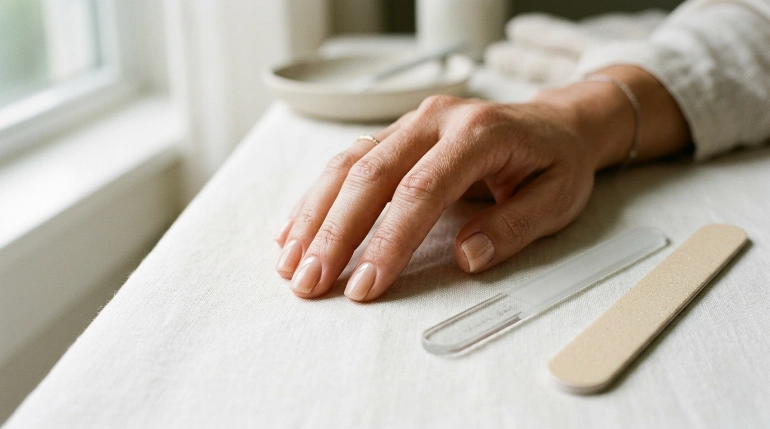
A crystal nail file is a reusable nail-shaping tool made from glass with a textured filing surface.
In beauty stores, the terms crystal nail file and glass nail file are often used for very similar products, although manufacturing methods and quality can vary between brands.
Unlike a disposable emery board, which normally has abrasive material attached to a flexible base, a quality crystal file has its abrasive texture formed on the glass surface itself.
This creates a very different filing experience.
Crystal files typically feel:
- Fine rather than scratchy
- Firm rather than flexible
- Smooth and controlled
- Gentle on natural nail edges
- Easy to rinse and clean
If the numbers printed on ordinary files confuse you, our guide explaining what nail file grit means can help you understand why some files remove nail material much more aggressively than others.
Are Crystal Nail Files Better for Your Nails Than Emery Boards?
For everyday shaping of natural nails, a good crystal file has several advantages over a typical coarse emery board.
The biggest difference is control.
A rough file can remove nail material quickly. That can be useful when shaping thick artificial enhancements, but it is not always ideal when you only need to smooth a tiny snag on a natural fingernail.
A crystal file generally removes material more gradually, making accidental over-filing less likely when you use light pressure.
That matters because repetitive mechanical trauma can damage nails. A published case report documented nail-plate thinning associated with excessive filing following acrylic removal, showing why filing technique is just as important as the tool itself.
Crystal File vs. Emery Board
| Feature | Crystal Nail File | Emery Board |
|---|---|---|
| Natural nail gentleness | Usually very gentle | Depends heavily on grit |
| Edge finish | Very smooth | Can range from rough to smooth |
| Durability | Long-lasting if protected | Wears down relatively quickly |
| Washable | Usually yes | Many are not designed for repeated washing |
| Price | Higher upfront | Usually inexpensive |
| Travel | Needs protective case | Easy to carry |
| Thick acrylic/gel removal | Usually slow | Coarse versions work faster |
| Fragile nails | Excellent option | Fine grit only |
| Breakage risk | Can chip or break if dropped | Very low |
Neither option is automatically bad.
A fine emery board used correctly can work perfectly well. The problem usually comes from combining a rough file with too much pressure or repeated back-and-forth filing.
Why Crystal Nail Files Can Be Gentler on Natural Nails
Natural nails are layers of keratin. When the edge becomes rough or damaged, layers can begin separating and create the familiar peeling appearance around the tip.
People with brittle nails may already be more vulnerable to splitting, flaking, and breakage. Medical literature describes brittle nails as nails with increased fragility that can split, peel, or crumble for many different reasons, including environmental exposure and repeated trauma.
A fine crystal file helps because you can remove very small amounts of nail while refining the edge.
Instead of trying to grind the nail into shape quickly, you can gradually create the shape you want.
That makes crystal files especially appealing for:
- Thin natural nails
- Peeling nail tips
- Nails that snag easily
- Short manicures
- People growing out nail damage
- Anyone who frequently makes small nail-shape corrections
You can also compare file materials in our guide to the best nail files for real nails, which covers glass, emery, metal, and other common options.
Are Crystal Nail Files Better for Brittle or Peeling Nails?
They can be.
If your nails constantly peel at the free edge—the white portion extending beyond your fingertip—a gentle file gives you more control when removing snags.
However, a crystal nail file cannot cure brittle nails.
Brittleness can have many causes, including repeated water exposure, chemicals, physical trauma, aging, nail conditions, and occasionally health issues. The NHS guidance on nail problems recommends seeking medical advice when nail color, shape, or attachment changes without an obvious explanation.
So think of a crystal file as a nail-care tool, not a treatment.
If your nails suddenly become extremely brittle, painful, discolored, thick, detached, or significantly different from normal, changing files should not be your only response.
Crystal Nail File vs. Glass Nail File: Is There Really a Difference?
For everyday shopping purposes, you will often see the words glass and crystal used for similar nail files.
The more useful questions are:
- How fine is the filing surface?
- Is the surface permanently textured or coated?
- Can it be washed?
- Is the glass durable?
- Does it come with a protective sleeve or case?
- Does the manufacturer explain how to clean it?
Do not assume the word crystal automatically means premium quality.
Two products with similar-looking glass bodies can still feel quite different during use.
If possible, choose a reputable file with a fine, consistent texture intended for natural nails.
Benefits of Using a Crystal Nail File
1. Smoother Nail Edges
The main reason people love crystal files is the finish.
A fine filing surface can remove tiny irregularities around the nail tip without leaving the edge feeling scratchy.
This is especially helpful if your nails catch on hair, knitwear, bedding, or clothing.
2. More Control
Crystal files usually remove natural nail gradually.
That gives beginners more time to check the shape before accidentally removing too much length.
3. Good for Thin Nails
Someone with thin nails rarely needs an extremely aggressive file.
A gentle crystal file can make everyday maintenance easier without requiring heavy pressure.
4. Long-Lasting
A traditional disposable file gradually loses its abrasive surface.
A quality glass file may remain usable much longer when properly cared for.
That higher upfront cost can therefore make more sense if you regularly file your nails.
5. Easier to Keep Clean
Glass is a non-porous material, making many glass nail files easier to wash than disposable cardboard or foam files.
Still, always follow the manufacturer’s instructions.
Our guide on how to clean nail tools safely at home explains why washable, non-porous tools and disposable porous tools often need different cleaning routines.
Are There Any Downsides?
Absolutely.
Crystal files are useful, but they are not perfect.
They Can Break
Glass is glass.
Even a strong file can chip or break after being dropped onto tile or another hard surface.
A protective case is worth using.
Never continue using a chipped or cracked glass file. Sharp damaged edges could injure your skin.
They Cost More Upfront
A basic emery board may cost very little, while a well-made crystal file usually costs more.
However, reusable files may offer better long-term value if they last for years.
They Are Not Ideal for Heavy Product Removal
If you need to remove significant bulk from acrylic, hard gel, or another thick enhancement, a fine crystal file can feel painfully slow.
A more appropriate abrasive file or professional e-file technique may be needed.
The American Academy of Dermatology also warns that filing natural nails aggressively during artificial-nail application or removal can thin and weaken them. Their guidance for reducing artificial nail damage is a useful reminder not to confuse product removal with ordinary natural-nail shaping.
How to Use a Crystal Nail File Without Damaging Your Nails
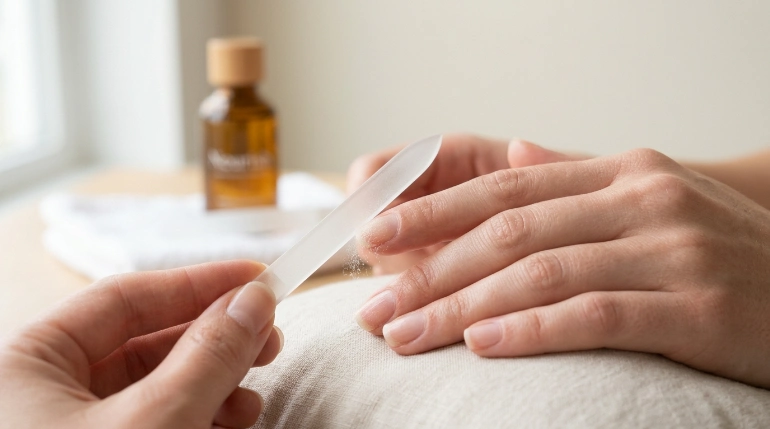
The file may be gentle, but technique still matters.
Step 1: Start With Dry Nails
Shape your nails when they are clean and dry.
You want enough visibility to see exactly where the edge is uneven or peeling.
Step 2: Decide on Your Shape Before Filing
Choose whether you want:
- Round
- Oval
- Squoval
- Almond
- Square
This prevents unnecessary repeated filing.
Step 3: Use Light Pressure
Let the abrasive surface do the work.
You should not need to press hard.
Heavy pressure makes it easier to remove more nail than intended and can feel uncomfortable on thin nails.
Step 4: File From the Outer Edge Toward the Center
Work slowly and check your nail after several strokes.
The American Academy of Dermatology recommends smoothing uneven edges with a nail file and advises filing in the same direction rather than aggressively sawing back and forth. You can see their full nail-trimming recommendations here.
Step 5: Stop When the Edge Feels Smooth
More filing is not better filing.
Once you achieve your shape and remove the snag, stop.
Step 6: Moisturize
Finish with hand cream or cuticle oil around the nails.
AAD guidance also recommends moisturizing after trimming because dry nails can split more easily.
Expert Tip: Keep your crystal file somewhere convenient and fix tiny snags early. A few gentle strokes are usually better than waiting until a rough edge catches on something and tears farther into the nail.
What Type of Nails Benefit Most From Crystal Files?
Healthy Natural Nails
Crystal files work beautifully for normal maintenance, especially when you only need to refine shape or shorten nails slightly.
Thin Nails
The controlled filing action makes them a good option when aggressive files feel uncomfortable.
Peeling Nails
A smooth file can help remove rough loose edges without aggressively grinding the surrounding nail.
Brittle Nails
Crystal files are useful for careful shaping, but remember that persistent brittleness may need more than a tool change.
Short Nails
Their precision makes them convenient when you have very little free edge to work with.
When an Emery File May Be Better
Crystal is not automatically superior for every job.
You may prefer an abrasive nail file when:
- You need to remove substantial artificial-nail length.
- You are shaping thick acrylic.
- You need several grit levels.
- You want an inexpensive disposable option.
- You need salon single-use files for hygiene protocols.
- You travel frequently and worry about breaking glass.
A quality fine-grit emery board can also work well on natural nails when used carefully.
For a wider comparison of crystal, ceramic, and conventional options, see our guide to choosing a nail file for natural nails.
Nail File Hygiene Matters Too
A nail file touches the nail edge, surrounding skin, nail dust, polish residue, and sometimes damaged areas.
That makes hygiene important regardless of which file material you choose.
For your personal crystal file:
- Remove visible nail dust.
- Wash the file according to the manufacturer’s instructions.
- Rinse it thoroughly if appropriate for the product.
- Dry it completely.
- Store it in a clean protective case.
Avoid casually sharing personal nail tools.
If you use multiple manicure products at home, follow their individual safety directions as well. The FDA’s nail-care product safety guidance notes that nail products should be used according to their labels and that some products can cause irritation or allergic reactions.
Common Mistakes to Avoid
Even an excellent crystal file can give poor results when used incorrectly.
- Pressing too hard: Gentle pressure is usually enough.
- Filing endlessly: Repeated filing can thin or shorten the nail unnecessarily.
- Using a cracked file: Replace chipped or damaged glass immediately.
- Trying to remove thick enhancements with a fine file: Use a tool designed for that job.
- Filing already painful nails: Pain may signal injury or another problem.
- Ignoring nail discoloration: A cosmetic tool cannot diagnose or treat nail disease.
- Sharing files without appropriate hygiene: Keep personal tools personal whenever possible.
- Picking peeling layers after filing: This can make splitting extend farther into the nail.
- Using the file on irritated skin: Nail files are designed primarily for nail shaping, not aggressively sanding skin.
How Much Should You Spend on a Crystal Nail File?
You do not need the most expensive file in the beauty aisle.
Instead of choosing entirely by price, look at:
- Filing surface quality
- Intended nail type
- Durability
- Cleaning instructions
- Protective storage case
- Brand reputation
- Replacement policy if relevant
A low-cost disposable file can make more sense if you rarely do your nails.
A reusable crystal file can offer better value if you shape natural nails every week and take good care of your tools.
Pay for useful construction and durability—not fancy packaging alone.
When to See a Nail Technician or Dermatologist
A nail technician can help when you are struggling with nail shape, enhancement removal, product thickness, or choosing the right professional filing technique.
A dermatologist is more appropriate when the problem appears to involve the nail itself rather than your manicure technique.
Consider medical evaluation if you notice:
- Persistent pain or tenderness
- Red, swollen, or warm skin around the nail
- Pus or other signs of infection
- A nail lifting away from the nail bed
- Significant unexplained discoloration
- Sudden changes in nail shape
- Severe or ongoing splitting
- Thickening or crumbling nails
- A dark streak or unusual pigment change
- Nail problems that continue despite gentle care
The NHS advises getting medical help when a nail changes shape or color, falls off without an obvious cause, or when surrounding skin becomes sore, red, swollen, and warm.
Do not keep buffing, polishing, or filing a suspicious nail in an attempt to make it look normal.
FAQs
Are crystal nail files actually better than regular nail files?
For many natural nails, yes. Crystal files are usually fine and controlled, making them particularly useful for smoothing fragile or peeling edges. A regular file can still work well if you choose an appropriate grit and use gentle technique.
Can crystal nail files damage your nails?
Yes, if you overuse them. Any abrasive tool can remove too much nail material when you file aggressively or repeatedly. Use light pressure and stop once the nail is smooth and shaped.
Are crystal nail files good for thin nails?
They are often an excellent choice for thin natural nails because their fine surface allows controlled shaping without requiring heavy pressure.
Can you use a crystal nail file on acrylic nails?
You can make small refinements, but a fine crystal file is generally inefficient for removing large amounts of acrylic. Professional enhancements often require more appropriate grit or professional removal techniques.
Can I file back and forth with a crystal nail file?
Some product manufacturers may advertise their glass files as suitable for multidirectional filing, but a conservative approach is to file gently in one direction. AAD nail-care guidance recommends one-direction filing to reduce weakening.
How often should I replace a crystal nail file?
There is no universal replacement schedule. Replace it if it cracks, chips, becomes damaged, or no longer files properly. A quality file can last much longer than a disposable emery board when stored and cleaned correctly.
Can I wash a crystal nail file?
Many glass files are washable because glass is non-porous, but always check the manufacturer’s instructions before cleaning or disinfecting a specific product.
Conclusion
So, are crystal nail files better for your nails?
For natural nails—especially thin, brittle, peeling, or snag-prone nails—a quality crystal file is often one of the most practical choices. It gives you excellent control, produces a smooth edge, lasts longer than many disposable files, and is usually easy to keep clean.
But the file alone cannot protect your nails.
Use gentle pressure, avoid unnecessary filing, choose the right tool when working with artificial enhancements, moisturize regularly, and pay attention to changes that may signal a nail-health problem.
If your current emery board leaves your natural nails feeling rough or makes you nervous about over-filing, trying a good crystal nail file is a sensible next step. Choose a quality file, protect it from breakage, and focus on gentle technique rather than filing faster.

