
Quick Answer
If your nails are peeling after nail dehydrator use, the nail plate may be too dry, over-prepped, or already weakened by filing, gel removal, acetone, or repeated manicures. Stop using the dehydrator temporarily, minimize aggressive prep, and follow dermatologist-recommended nail care practices while the damaged portion grows out.
Signs your nail prep may be too harsh
- Layered peeling: Thin flakes separate from the free edge or surface of the nail.
- New brittleness: Nails snap or split more easily after manicures.
- Rough texture: The nail feels papery, chalky, or unusually thin.
- Skin irritation: Redness, itching, swelling, or burning appears around the nail.
- Increasing sensitivity: Water, pressure, or nail products suddenly feel uncomfortable.
What to do first
- Pause dehydrator, gel, acrylic, and aggressive buffing until the nails feel stronger.
- Keep peeling edges short and smooth so they do not catch and tear farther.
- Moisturize nails and surrounding skin regularly and protect your hands during wet work.
Seeing layers peel from a nail after a manicure can make the dehydrator look like the obvious culprit. Sometimes it contributes, but it is rarely the only thing worth checking.
I look at the whole prep and removal routine first. Filing, buffing, solvents, product removal, water exposure, and repeated enhancements can all affect how strong the nail plate feels.
In This Guide
- Can nail dehydrator cause nails to peel?
- Why are my nails peeling after nail prep?
- How can you tell dryness from actual nail damage?
- What should you do when your nails start peeling?
- How do you prevent peeling when using nail dehydrator?
- Could peeling be irritation or an allergy?
- When should peeling nails be checked by a dermatologist?
- Frequently asked questions
Can Nail Dehydrator Cause Nails to Peel?
Yes, nail dehydrator can contribute to peeling when it is used too aggressively or on nails that are already dry and fragile. Its job is to temporarily remove surface oils and moisture so gel, acrylic, glue, or other products can adhere better.
A nail dehydrator is a nail-preparation product designed to leave the nail plate cleaner, drier, and less oily before product application. It is not supposed to remove layers of the natural nail.
Why dryness matters
The nail plate is made from compact layers of keratin. When those layers become dry or mechanically damaged, the free edge can start separating into thin sheets.
This type of splitting is often described as peeling or lamellar splitting. It can become more noticeable after repeated manicures.
- One light application: Usually enough for routine nail preparation when the product directions call for dehydrator.
- Repeated applications: May create unnecessary dryness, especially on naturally brittle nails.
- Skin contact: Can cause burning or irritation depending on the formula and individual sensitivity.
- Already damaged nails: May tolerate solvent-heavy prep poorly.
The dehydrator may not be working alone
I would not blame the bottle immediately. Nail prep often involves several potentially drying or thinning steps within minutes.
For example, a person may buff the nail heavily, wipe it repeatedly, apply dehydrator, wear gel for weeks, and later soak the product in acetone. The resulting peeling may reflect that entire cycle rather than one step.
Dermatology note: Persistent nail splitting, pain, lifting, or skin inflammation deserves professional evaluation rather than repeated cosmetic treatment.
Why Are My Nails Peeling After Nail Prep?
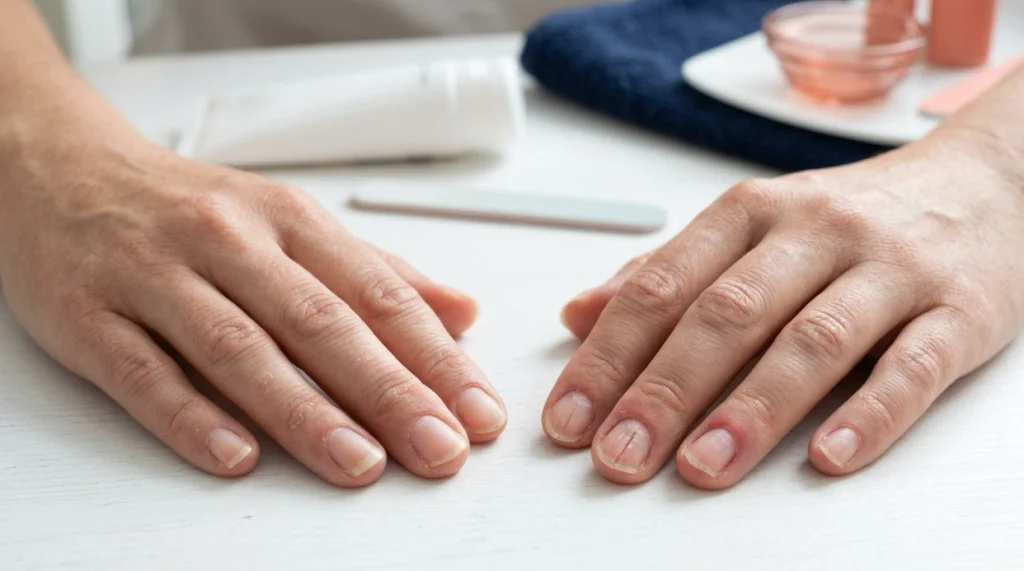
Peeling after nail prep usually points to a combination of dryness, mechanical thinning, chemical exposure, or removal damage. Identifying the pattern makes prevention much easier.
1. The natural nail was over-filed
Buffing removes part of the nail surface. A little smoothing and aggressive thinning are not the same thing.
If the natural nail becomes noticeably flexible, hot, sore, or thin during prep, too much material may have been removed.
2. Dehydrator was applied more than necessary
More dehydrator does not automatically create better adhesion. Repeated coats may expose the nail and surrounding skin to more solvent than the routine requires.
Follow the manufacturer’s directions instead of trying to make the nail look extremely dry or chalky.
3. Gel or artificial nails were removed aggressively
Peeling gel from the natural nail can pull superficial nail layers with it. Scraping softened product too forcefully may do the same.
The American Academy of Dermatology notes that artificial and gel nail services can leave natural nails brittle, peeling, or cracked, especially when application and removal repeatedly stress the nail.
4. Acetone and other solvents added more dryness
Solvent exposure can temporarily leave the nails and surrounding skin feeling dry. DermNet also notes that strong nail-cosmetic solvents can irritate and dry the nail plate when overused.
The effect becomes more noticeable when removal, filing, and dehydration happen frequently.
5. Your nails were already prone to splitting
Some people arrive at a manicure with thin or brittle free edges. Frequent handwashing, sanitizers, household cleaners, and repeated wet-dry cycles may add to the problem.
That means a routine tolerated by stronger nails may feel harsh on yours.
Section Takeaway: Peeling after nail dehydrator usually makes more sense when you examine the complete manicure cycle. Prep, wear, removal, filing, and everyday exposure can all contribute.
How Can You Tell Dryness From Actual Nail Damage?
Mild surface dryness and significant nail damage can look similar at first. The difference is easier to spot by checking texture, pain, depth, and whether the problem continues.
| What you notice | More consistent with mild dryness | More concerning for damage or irritation |
|---|---|---|
| Free edge | Small dry flakes | Repeated deep splitting or large layers separating |
| Nail thickness | Feels mostly normal | Feels unusually thin, soft, or bendable |
| Sensation | No pain | Tenderness, burning, throbbing, or pain |
| Surrounding skin | Normal appearance | Red, itchy, swollen, blistered, or cracked |
| After a manicure break | Gradually feels better | Continues worsening or new nail changes appear |
Damaged nail does not instantly repair itself
A peeled section of nail cannot simply fuse back together like a cut in skin. Your goal is to protect it while healthier nail grows forward.
That takes patience. Fingernails grow gradually, so visible damage has to move toward the free edge before you can trim it away.
Do not buff peeling layers smooth
It is tempting to buff until the surface looks perfect. That can remove even more nail and make the plate thinner.
Instead, gently file rough free edges and leave attached nail layers alone.
What Should You Do When Your Nails Start Peeling?
Stop the cycle that is creating new damage before trying to improve appearance. A simple routine usually makes more sense than adding another strong nail product.
- Pause the dehydrator. Give the nails a break if peeling started after repeated nail-prep sessions.
- Remove enhancements gently. Do not peel gel, acrylic, dip, or press-on adhesive from the nail surface.
- Trim damaged edges. Keep nails shorter while fragile areas grow forward.
- File carefully. Smooth snagging edges without thinning the top of the nail plate.
- Moisturize consistently. Apply hand cream or a bland moisturizer to the nails and surrounding skin.
- Protect against water and cleaners. Wear suitable gloves during prolonged wet work or household cleaning.
- Watch the new growth. Healthy-looking growth from the base is more useful than judging the already damaged tip.
Should you apply cuticle oil?
Cuticle oil can help keep the surrounding skin and nail area conditioned. It does not glue separated nail layers back together.
Think of it as supportive care rather than an instant repair treatment.
Should you use a nail hardener?
Be cautious. A product that makes the nail feel harder is not automatically suitable for every type of peeling.
If a hardener burns, irritates the skin, or seems to increase splitting, stop using it.
How Do You Prevent Peeling When Using Nail Dehydrator?
The safest approach is to use the least aggressive prep that still works with your chosen nail system. Nail dehydrator should be one controlled step, not a substitute for careful technique.
Use a thin application
Apply only the amount recommended by the manufacturer. Flooding the nail or surrounding skin does not improve nail health.
Avoid touching the skin
Keep prep products on the nail plate unless their directions specifically say otherwise. Product repeatedly touching cuticles or sidewalls can increase irritation.
Do not combine dehydrator with aggressive buffing
You generally should not need to grind the natural nail until it becomes thin. The goal is appropriate preparation, not removal of the nail surface.
Review your manicure frequency
A damaged nail may need time without enhancements. Covering peeling nails immediately with another service can also hide changes you need to monitor.
- Before application: Check for peeling, soreness, redness, or lifting.
- During prep: Stop if filing produces pain or unusual heat.
- After removal: Look at the natural nail before starting another set.
- Between manicures: Moisturize and reduce unnecessary chemical exposure.
As of 2026, my preferred approach is still simple: nail prep should be controlled and conservative. Better adhesion is not worth repeatedly thinning or irritating the natural nail.
Could Peeling Be Irritation or an Allergy?
Yes. Nail problems accompanied by redness, itching, swelling, blistering, or a rash may involve irritant contact dermatitis or allergic contact dermatitis rather than ordinary dryness.
DermNet notes that nail cosmetics can trigger both irritant and allergic reactions. Acrylates used in artificial nail systems are particularly important potential allergens.
Watch the skin, not just the nail
An allergic reaction does not always stay on the nail itself. Dermatitis from nail products may appear around the fingertips or on areas touched by the hands.
That makes new itching or rash an important clue.
- Redness: Especially around several nails after product exposure.
- Itching: More suggestive of dermatitis than simple nail dryness.
- Swelling: May indicate a stronger inflammatory reaction.
- Blisters or cracking: Stop cosmetic exposure and seek medical advice.
- Nail lifting: Needs attention when persistent or accompanied by skin symptoms.
Do not keep testing a product that causes a reaction
Repeated exposure can make an allergic problem harder to manage. Stop the suspected cosmetic and avoid experimenting on already inflamed skin.
A dermatologist may use patch testing when contact allergy is suspected. This helps identify specific substances that trigger the reaction.
Dermatology note: Burning, swelling, blistering, spreading rash, significant nail lifting, or persistent inflammation should be assessed by a healthcare professional.
Section Takeaway: Peeling without skin symptoms may fit dryness or mechanical damage, but peeling plus itching, redness, swelling, or rash raises concern for irritation or allergy.
When Should Peeling Nails Be Checked by a Dermatologist?
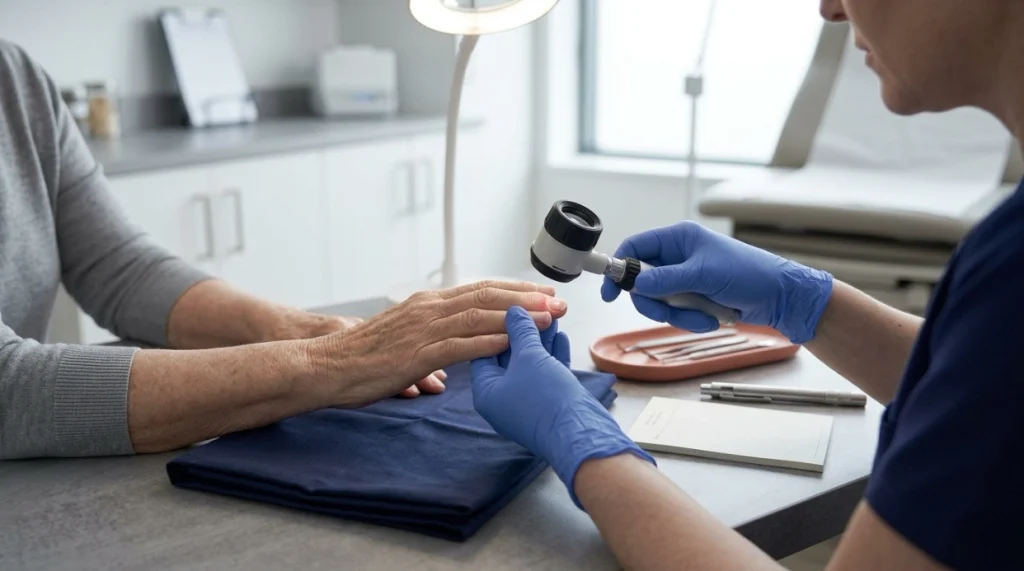
Occasional dry peeling can often be managed with gentler nail care. Persistent, painful, or unusual changes deserve more attention.
Do not assume every nail problem comes from your manicure simply because you noticed it afterward.
Arrange professional evaluation if you notice:
- Increasing pain instead of gradual improvement.
- Redness or swelling around the nail folds.
- Pus or drainage that could indicate infection.
- Persistent nail lifting from the nail bed.
- Major color changes that cannot be explained by polish staining.
- Thickening or crumbling of the nail.
- Peeling across many nails without a clear cosmetic trigger.
- Changes that continue despite taking a break from nail products.
The American Academy of Dermatology is a useful starting point for dermatologist-reviewed nail-care information.
For information about cosmetic reactions and contact dermatitis, DermNet provides detailed dermatology guidance.
General health information about brittle nails is also available through Cleveland Clinic Health Essentials.
Frequently Asked Questions
Can nail dehydrator permanently damage nails?
Normal, careful use should not involve intentionally removing natural nail layers. However, excessive drying combined with repeated filing, enhancements, and harsh removal can leave nails thin, brittle, or peeling until the affected nail grows out.
Should I stop using nail dehydrator if my nails peel?
Yes, taking a temporary break is sensible if peeling appears after use. Let the nails stabilize, reduce aggressive prep, and re-evaluate your entire manicure routine before deciding whether to use the dehydrator again.
How long should I give peeling nails a break from gel?
There is no universal number of days that fits every nail. Instead, watch for stronger new growth, less splitting, and no pain or inflammation before returning to cosmetic services.
Can I put gel polish over peeling nails?
Covering peeling nails may hide the damage without correcting it. If the nail is thin, sore, lifting, or actively splitting, pausing gel services is a safer choice until the nail condition improves.
Why do only some of my nails peel?
Individual nails may experience different amounts of filing, product adhesion, picking, water exposure, or everyday trauma. One or two nails can therefore show damage while the others appear normal.
Is nail dehydrator the same as nail primer?
No. A dehydrator primarily removes surface moisture and oils, while a primer is designed to improve bonding between the natural nail and a nail-enhancement system. Some manicure systems use both, while others do not.
Can an allergy to nail products look like damaged nails?
Yes. Contact allergy or irritation can cause nail changes along with itching, redness, swelling, cracking, or lifting. If skin symptoms occur with peeling, stop the suspected product and consider a dermatologist evaluation.
Final Takeaway: Protect the Nail Before the Manicure
If your nails are peeling after nail dehydrator use, do not keep adding more prep products to solve the problem. Reduce the stress on the natural nail first.
Pause harsh prep, avoid peeling off enhancements, moisturize regularly, protect your hands from repeated wet work, and let damaged areas grow forward naturally.
Most importantly, pay attention to pain, inflammation, lifting, and unusual color or texture changes. Those signs deserve more than another manicure.
Your next nail set can wait. Protecting healthy new growth is the priority.