
Does Ice Water Dry Nail Polish Faster? A Beginner-Friendly Guide

Fresh nail polish can feel like it takes forever to dry. That is why the ice water trick gets so much attention. It sounds simple: paint your nails, dip them in cold water, and wait for the polish to set. But does ice water dry nail polish faster in a way that actually helps?
The short answer is: it may help the surface feel firmer, but it does not magically fully dry nail polish. In other words, ice water can sometimes help a manicure feel more set on top, but it is not a guaranteed shortcut for complete drying. If you want a smoother, safer result, it helps to understand what drying really means before you try the method.
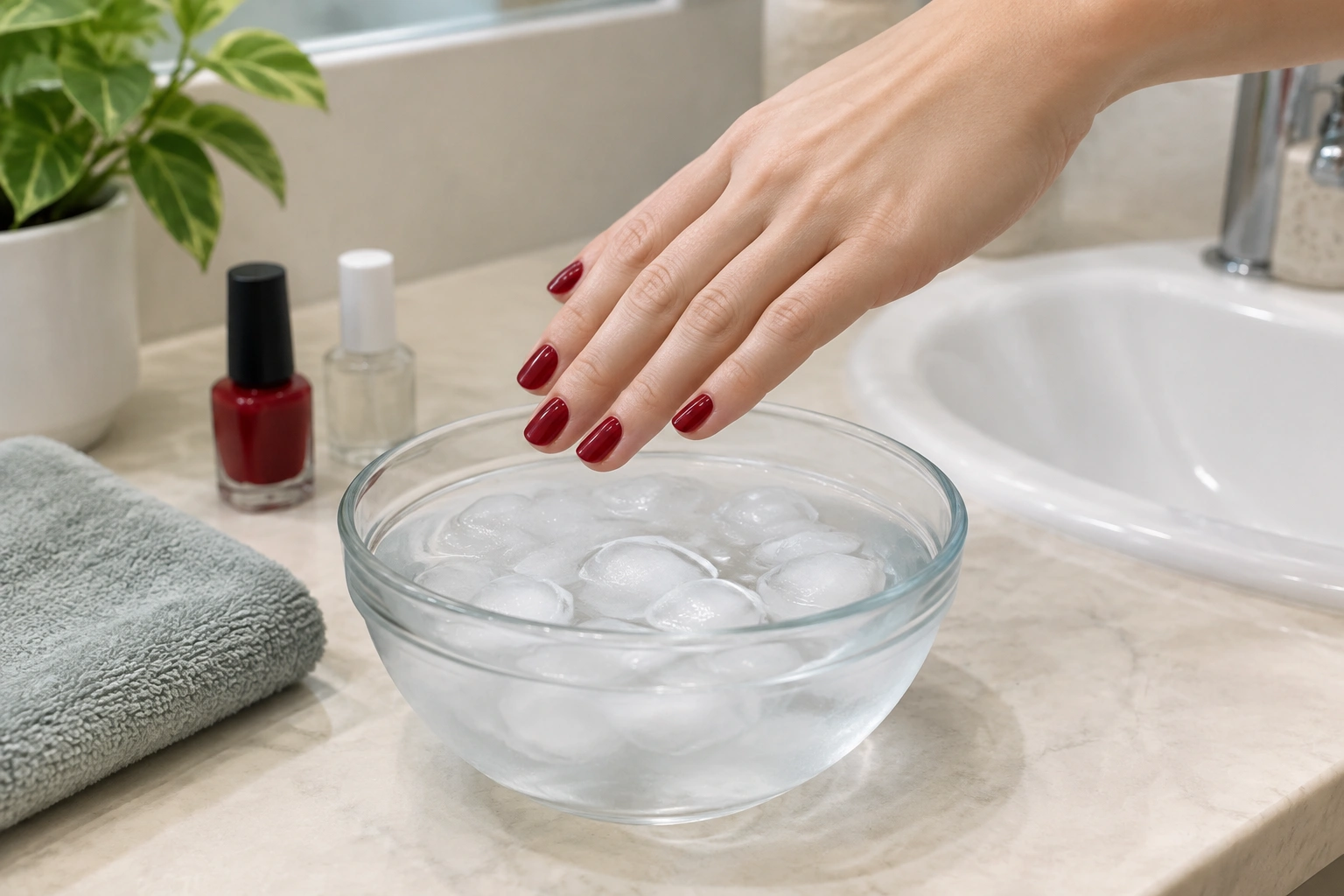
For a broader look at drying times and practical shortcuts, you may also find Nail Prime’s guides on how long regular nail polish takes to dry and simple ways to make nail polish dry faster useful.
Quick Answer: Does Ice Water Dry Nail Polish Faster?
Sometimes, but only partly. Ice water is commonly suggested because cold can help the top layer of polish feel more set. That can make the manicure seem less fragile sooner. But it does not replace the normal drying process, and it does not guarantee that the polish is fully cured.
That matters because nails can feel dry on the surface while still denting underneath. If you press too soon, you can still leave a mark even after the ice water step. So if you try this method, think of it as a possible helper, not a final fix.
How Nail Polish Actually Dries
Nail polish does not dry all at once. The top layer usually becomes less tacky first, while the layers underneath take longer to harden. That is why a manicure can look finished but still smudge if you bump it.
There are two stages beginners should know:
- Surface-dry: The top feels dry enough that it is less sticky.
- Fully cured: The polish has hardened more completely through the layers.
Ice water, if it helps at all, is more likely to influence the surface-dry stage. It is not a shortcut to full curing. That is also why thick coats are a problem: the top can seem fine while the lower layers stay soft for much longer.
If you want a clearer breakdown of this difference, Nail Prime’s guide on how long regular polish takes to fully dry is a helpful companion read.
What Ice Water Can and Cannot Do
Cold water may help polish feel firmer sooner, but it has limits.
What it may do
- Help the top layer feel less soft
- Make the manicure easier to handle after waiting a bit
- Possibly reduce the chance of a light surface smudge if used carefully
What it cannot do
- Fully dry thick polish instantly
- Fix a coat that was applied too heavily
- Prevent dents if the polish is still soft underneath
- Replace waiting time between layers
A useful way to think about it: ice water may help the polish set, but it does not make the polish done. That is why some people like the method and others find it disappointing. It depends a lot on how the polish was applied in the first place.
When to Try the Ice Water Method
Do not put freshly painted nails into ice water immediately. If the polish is still very wet, the water can disturb the finish, and you may end up with ripples or smudges instead of a smoother manicure.
A practical beginner rule is to wait about 1 to 3 minutes after your last coat before dipping your nails, or until the polish looks glossy but no longer looks runny or visibly liquid. That is the earliest point where the method has a chance to help without disturbing the finish.
Thin coats dry more predictably than thick ones, so the way you apply the polish matters as much as the water itself. If the polish still looks wet enough to move around when you tilt your hand, wait longer.
How to Use the Ice Water Method Safely
Here is a simple, beginner-friendly way to try it:
- Paint your nails in thin coats.
- Wait about 1 to 3 minutes after the final coat, or until the polish no longer looks visibly wet or runny.
- Fill a small bowl with ice-cold water: cold tap water with several ice cubes is best.
- Make sure the water is cold enough that it feels very chilly, not just cool.
- Gently place your nails in the water without bumping them against the bowl.
- Keep your nails in the water for about 30 seconds to 1 minute.
- Remove them carefully and let them air dry for a bit before testing the finish.
A few practical notes make a big difference:
- Do not swirl your fingers around. Motion can disturb the polish.
- Do not press on the nails afterward. That is how dents happen.
- Do not expect a full cure. The manicure may feel firmer, but it is not instantly ready for rough use.
- If the polish looks cloudy, dull, or wrinkled after dipping, stop using the method. That usually means the polish was still too wet or the water step was too aggressive.
If you want more background on faster drying habits, Nail Prime also has a step-by-step guide on how to make nail polish dry faster.
Common Mistakes That Ruin the Result
The ice water trick usually fails for avoidable reasons.
1. Using thick coats
Thick polish takes longer to dry no matter what you do. If the layers are heavy, the top may seem set while the polish underneath stays soft.
2. Using water that is only slightly cool
If the water is not cold enough, the trick is less likely to do anything noticeable. For this method, use ice-cold water, not just cool water from the tap.
3. Leaving nails in water too long
A short dip is enough. Keeping your hands submerged far longer than a minute does not make the polish dry faster and can make the step uncomfortable.
4. Testing the polish too early
Pressing a fingertip or tapping a nail to “check” it is a fast way to leave a mark. Give the manicure more time than your impatience wants.
5. Expecting it to work like a product
Ice water is a low-cost experiment, not a highly reliable drying system. If you need consistent results, a drying product is usually the better choice.
Ice Water vs. Other Fast-Drying Options
The easiest way to choose a drying method is to compare what each one does well.
| Method | Speed | Reliability | Cost |
|---|---|---|---|
| Air drying | Slowest | Most predictable if you wait long enough | Free |
| Ice water | Can make the surface feel firmer sooner, but results are inconsistent | Low to moderate | Free or very low |
| Quick-dry top coat | Faster than air drying and usually more dependable than ice water | High | Moderate |
| Drying drops or spray | Fast and convenient | High | Moderate |
For beginners, the big question is not just “What is fastest?” It is also “What is most dependable for my manicure?”
Ice water vs. air drying
Air drying is the simplest option and avoids extra steps. It is also the slowest. If you are patient, it is the least fussy choice.
Ice water vs. quick-dry top coat
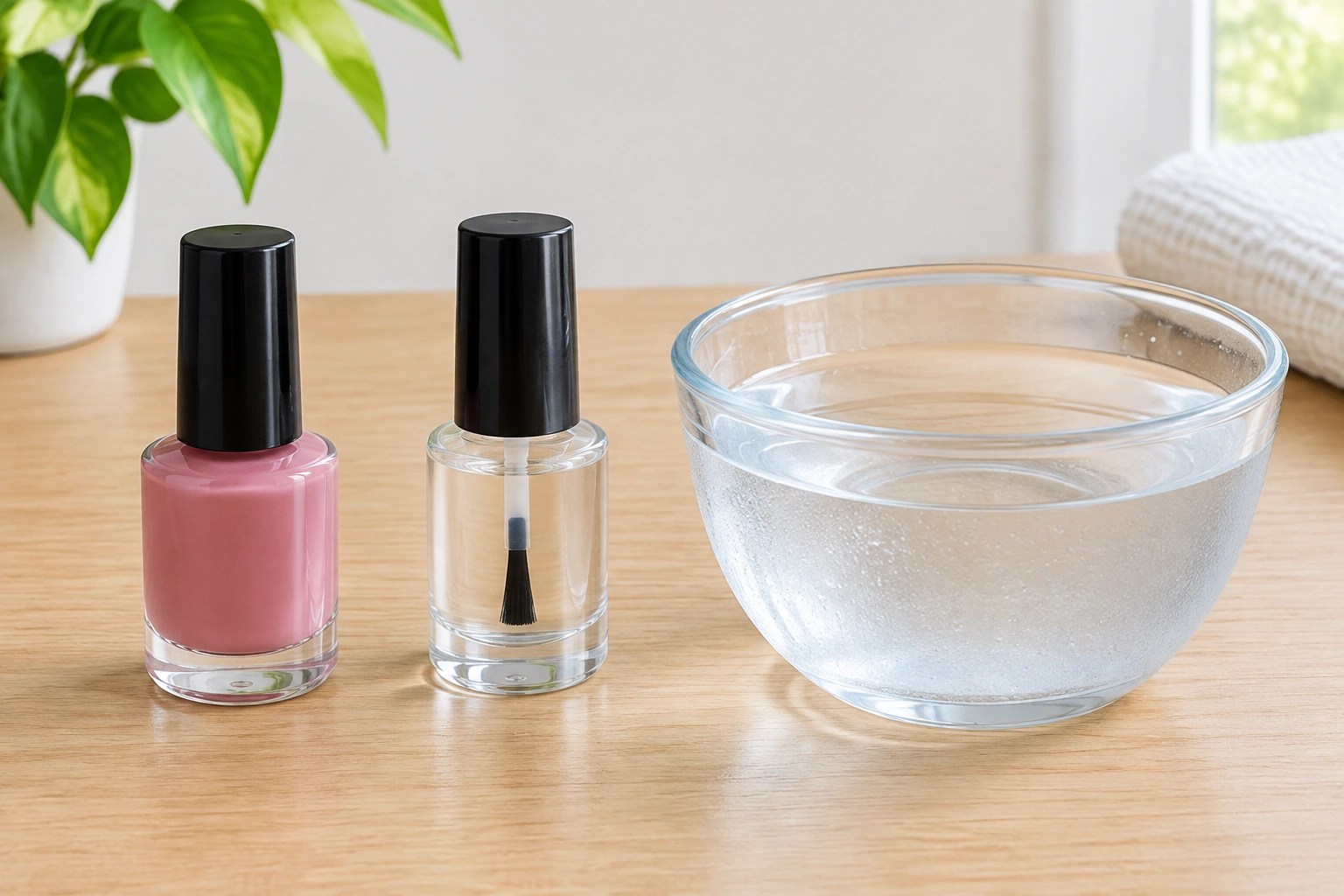
A quick-dry top coat is usually the more reliable shortcut. It is designed for this job, so it usually gives more consistent results than cold water alone. Ice water is cheaper, but it is also less dependable.
Ice water vs. drying drops or spray
Drying drops or sprays are convenient if you want something cleaner than a bowl of water. They are not free, though, so they make more sense if you paint your nails often.
If you are comparing product-based shortcuts, Nail Prime’s article on whether quick-dry nail polish really dries faster may help you decide whether a product is worth it.
Which Method Is Best for Your Manicure?
Here is the simplest decision rule:
- Choose air drying if you are not in a rush and want the lowest-effort option.
- Try ice water if you want a low-cost trick and do not mind that results can be mixed.
- Use a quick-dry top coat if you want the most dependable faster-drying option.
- Choose drying drops or spray if you like convenience and do not mind buying a product.
For regular polish, a quick-dry product is often the safer bet if you need the manicure to last without dents. For quick-dry polish, ice water usually adds little benefit, because the polish is already designed to speed up drying on its own.
If your schedule is tight, a quick-dry top coat or drying drops will usually give you more confidence than a bowl of ice water.
Simple Tips to Help Polish Dry Faster Either Way
Whatever drying method you use, these habits make the biggest difference:
- Apply thin coats instead of thick ones.
- Let each coat settle before adding the next.
- Avoid heavy layers near the cuticle and free edge.
- Keep your hands still while the polish is setting.
- Plan extra time before showering, washing dishes, or doing anything with water.
These basics matter because drying starts with application. A neat, thin manicure will usually dry more smoothly than a rushed one, even if you never use the ice water trick.
When to See a Nail Technician or Dermatologist
If your polish consistently stays tacky for a long time, peels in unusual ways, or seems to react badly every time you use a product, a nail technician can help you troubleshoot your application method. A dermatologist is the right person if you notice skin irritation, persistent redness, or other reactions around the nails.
Bottom Line
So, does ice water dry nail polish faster? It can help the surface feel firmer, but it is not a guaranteed fast-dry solution. If you want to try it, use ice-cold water only after the polish has had a chance to settle, keep the coats thin, and avoid testing the manicure too early.
For the most reliable results, a quick-dry top coat or drying drops usually beats ice water. Still, if you are looking for a low-cost trick and you understand its limits, the ice water method is worth trying carefully.

