
Can a Nail Salon Remove an Ingrown Toenail? What’s Safe, What Isn’t, and When to See a Podiatrist

An ingrown toenail can make even a simple walk feel miserable, so it makes sense to look for the fastest fix. The short answer is this: a nail salon can help with cosmetic foot care and sometimes mild comfort measures, but it is generally not the right place for true ingrown toenail removal. If the nail is digging into skin, especially if there is redness, swelling, drainage, or worsening pain, that moves out of salon territory and into medical care.
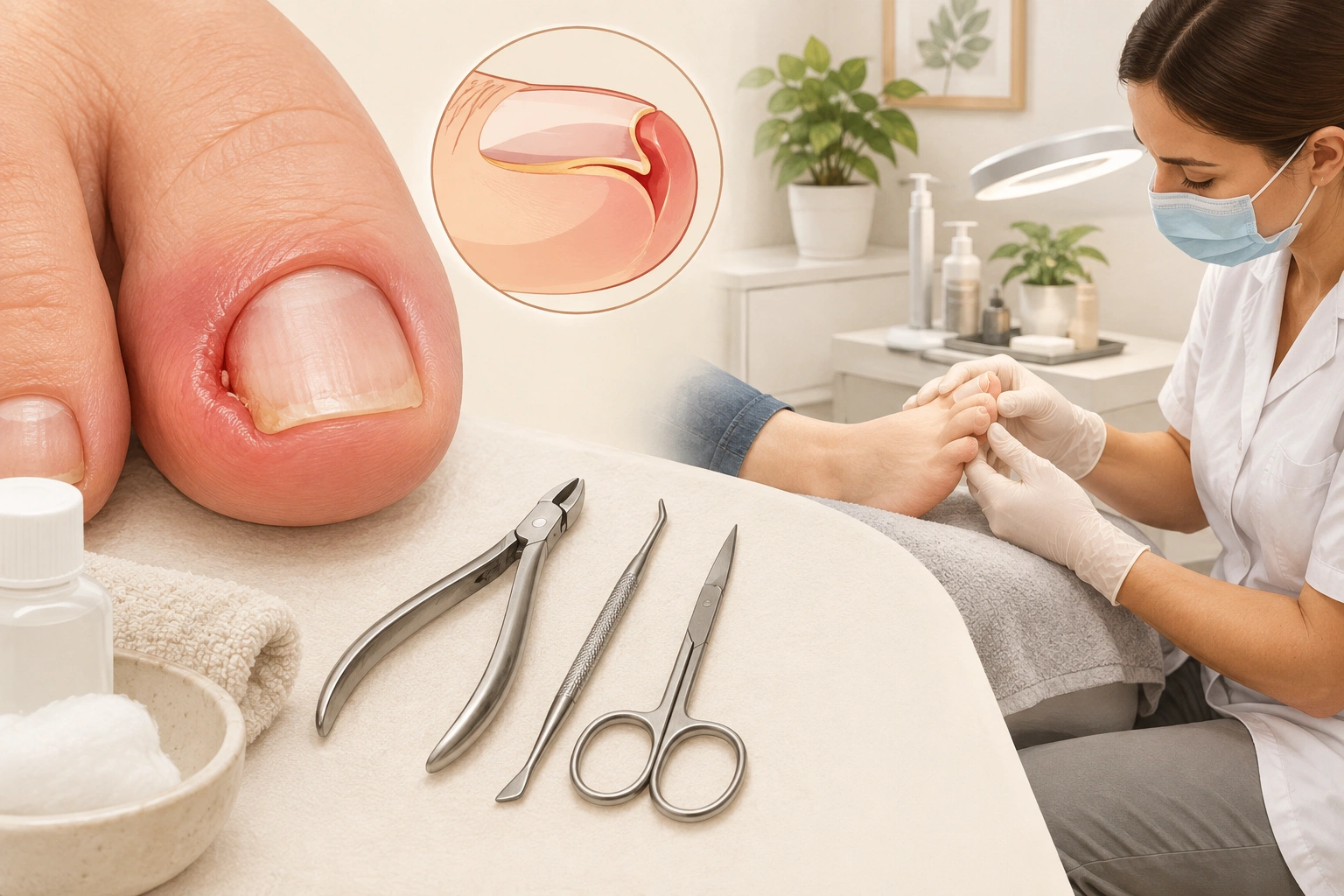
That distinction matters because the safest next step depends on what is actually happening at the toe. A healthy-looking nail that just feels a little tender is very different from a toe that is inflamed or infected. The first can sometimes be monitored briefly or cleaned up carefully; the second should be evaluated by a podiatrist, doctor, or urgent care clinician.
Can a Nail Salon Remove an Ingrown Toenail?
In general, no. Nail salons are set up for cosmetic nail care, not medical procedures. A salon may be able to tidy the area, trim healthy nail edges, or provide relief around a mildly irritated toe, but it should not cut out the ingrown portion of the nail or remove tissue from the skin.
That boundary is more than a technicality. Scope-of-practice rules vary by location, but in many places a nail technician is not allowed to perform invasive nail removal or cut into living tissue. If you are unsure what is permitted where you live, the safest assumption is that a salon should not attempt to remove an ingrown nail.
If you want a simple decision rule, use this: if the goal is to make the nail look neat, a salon may be appropriate; if the goal is to remove nail from skin, you need medical care.
For background on how ingrown toenails are treated medically, the Mayo Clinic’s treatment guidance is a useful reference.
What an Ingrown Toenail Is and Why It Hurts
An ingrown toenail happens when the edge of the nail grows into the surrounding skin. That pressure can cause tenderness first, then redness, swelling, and sometimes drainage if the skin breaks down.
The pain can feel sharp because the skin around the nail is sensitive and the nail edge keeps pressing into it every time you walk, wear shoes, or bump the toe. A toe that feels “just a little sore” in the morning can become much more painful by the end of the day if it keeps rubbing in footwear.
Mild irritation and a true ingrown toenail are not always the same thing. Mild irritation may just mean the nail edge is a little too long or the skin is slightly inflamed. A true ingrown toenail usually means the nail is actually embedded in the skin and needs a more careful approach.
What a Nail Salon Can Safely Do vs. What Requires Medical Care
A salon can stay safely in cosmetic territory by focusing on the parts of the nail that are not embedded in skin. In some cases, that may include:
- gently trimming healthy nail length
- smoothing rough edges
- cleaning around the nail surface
- removing dead skin that is not attached to live tissue
For a non-inflamed toe, that can mean avoiding the affected corner entirely and only cleaning intact surrounding skin. Once the skin is broken, swollen, warm, or tender to the touch, a technician should not cut into it, lift it, probe under the nail, or try to “dig out” the ingrown edge.
A podiatrist or other medical professional can do more than a salon can. Mayo Clinic notes that for a slightly ingrown nail, a health care provider may carefully lift the ingrowing edge and place cotton, dental floss, or a splint underneath it. That helps the nail grow above the skin edge, usually in 2 to 12 weeks. If the toenail is very ingrown, Kaiser Permanente says a doctor might suggest minor surgery to remove all or part of the ingrown nail, and antibiotics may be prescribed if needed.
Here’s the practical difference:
| Option | What it can do | Best for | Main trade-off |
|---|---|---|---|
| Nail salon | Cosmetic trimming, filing, cleaning around healthy nail | Mild irritation with no signs of infection | Limited relief; cannot remove the ingrown nail |
| Podiatrist / doctor | Medical evaluation, lifting the nail edge, partial removal, medication if needed | Painful, recurring, or infected ingrown toenails | Requires an appointment and may cost more |
| Urgent care | Faster evaluation for worsening symptoms or infection concerns | Open wounds, pus, spreading redness, severe pain, fever | Not ideal for routine nail care; focused on medical safety |
Why You Shouldn’t Let a Salon Cut Out an Ingrown Toenail
The biggest risk is making the problem worse. If a technician cuts too deeply or tries to remove the ingrown edge from skin, the toe can become more inflamed, more painful, or more likely to get infected. Even if the toe feels better for a day, the underlying issue may still be there and may flare up again.
There is also a training issue. Nail technicians are trained for nail care, not medical diagnosis or minor surgery. That matters because an ingrown toenail is not always just a nail problem. It can involve broken skin, infection, or tissue that needs medical attention.
Some podiatry sources also caution that salons and whirlpools can expose people to bacteria, which is one reason infected or open toes should not be treated as routine pedicure cases. If the skin is broken, the safest response is to stop the cosmetic service and shift to medical evaluation.
The bottom line: a salon may make the toe look cleaner, but it cannot reliably fix the problem—and it can create new ones if it cuts where it shouldn’t.
Signs Your Ingrown Toenail Needs a Podiatrist or Doctor
If the toe has only slight discomfort and there is no redness, swelling, or drainage, it may be reasonable to monitor it briefly and use gentle home care. Once symptoms move beyond that, medical care is the better choice.
Watch for these signs:
- redness that is getting worse
- swelling around the nail
- drainage or pus
- warmth around the toe
- pain that is increasing instead of easing
- trouble wearing shoes or walking normally
- fever or feeling unwell
These are the kinds of changes that suggest the problem may be infected or more advanced. Kaiser Permanente notes that if home care does not work or symptoms worsen, a doctor may be needed, and antibiotics may be prescribed. That is a much better path than trying to “clean it up” at a salon.
A simple rule helps here: if the toe is hot, wet, swollen, or increasingly painful, skip the salon and book medical care.
Nail Salon vs. Podiatrist: Which Is the Better Choice?
This is really a question of purpose.
Choose a nail salon when:
– the nail is healthy
– the toe is not red, swollen, or draining
– you want cosmetic trimming or a pedicure for non-problem nails
– the technician can stay away from the irritated area
Choose a podiatrist or doctor when:
– the nail is actually growing into the skin
– pain is persistent or worsening
– there is any sign of infection
– the toe keeps becoming ingrown again
– you want the problem treated, not just hidden
The trade-off is convenience versus safety. A salon is usually easier to book and may feel less clinical, but it cannot provide medical treatment. A podiatry visit may take more effort, yet it is the correct setting for nail removal, infection management, and longer-term relief.
If you are unsure, ask yourself one question: Am I looking for grooming, or am I looking for treatment? If it’s treatment, skip the salon.
What You Can Do at Home for Short-Term Relief
Home care can help while you wait for an appointment, but it should stay gentle. The goal is to reduce pressure, not to cut, dig, or force the nail out.
Try these low-risk steps:
- Soak the toe in warm water for comfort, then dry it carefully.
- Wear roomy shoes or sandals so the nail edge is not pressed into the skin.
- Keep the toe clean and dry between soaks.
- Avoid squeezing, picking, or cutting deeply into the nail corner.
- Monitor the toe daily for redness, swelling, drainage, or worsening pain.
If the toe is only slightly ingrown, Mayo Clinic notes that a health care provider may lift the nail edge and place cotton, dental floss, or a splint underneath it. That is a medical technique, not a DIY shortcut, and it shows why trying to pry the nail up at home can be risky.
A helpful mindset is to use home care as a bridge, not a cure. If the toe improves and stays calm, great. If not, the next step is medical evaluation rather than more trimming.
When to Avoid Home Care and Go Straight to Medical Help
Home care is not the right choice for everyone. It should be avoided altogether, or used only with direct medical guidance, if you have diabetes, poor circulation, neuropathy, or a weakened immune system. In those situations, even a small toe problem can become serious more quickly than expected.
You should also skip home treatment if the skin is already open, the toe is swollen, or there is drainage. Those signs suggest the problem may need professional care rather than soaking and waiting.
How to Choose a Safe Salon for Non-Medical Foot Care
If you still want a pedicure for healthy nails, choose the salon carefully. You are not looking for someone to treat the ingrown toenail; you are looking for a place that will respect the boundary between cosmetic care and medical care.
Look for these signs:
– technicians who refuse to cut into inflamed skin
– clean workstations and visibly sanitized tools
– a willingness to skip the affected toe
– clear communication about what they can and cannot do
– a salon that does not pressure you to “just let them fix it”
A good technician should be comfortable saying, “This needs a podiatrist.” That is not bad service; it is professional judgment.
For general salon hygiene standards, the CDC’s infection prevention resources and the FDA’s consumer guidance on cosmetics and personal care products are useful places to learn what safe care should look like in a broader sense.
When to Skip the Salon and Get Urgent Care
Some ingrown toenails need faster attention than a routine podiatry appointment, especially if infection is spreading or the skin is open. Go sooner if you notice:
- pus or active drainage
- rapidly increasing redness
- severe throbbing pain
- a wound that will not stay closed
- fever
- red streaking or swelling beyond the toe
At that point, the issue is no longer about nail grooming. It is about stopping a potentially serious infection or complication. Urgent care is appropriate when you need medical attention quickly and cannot wait for a specialist appointment.
When to See a Nail Technician or Dermatologist
A nail technician can be helpful when the nails are healthy and you want routine cosmetic care, but not when the toe is actively inflamed or infected. If the problem is recurring, painful, or suspicious for infection, a podiatrist is usually the better fit. A dermatologist may be appropriate when the skin around the nail is the main concern, such as if you suspect a skin condition, unusual rash, or chronic inflammation rather than a straightforward nail-edge problem.
Use this final rule to decide:
– nail technician for healthy, non-medical grooming
– podiatrist or doctor for ingrown toenail treatment
– dermatologist when the surrounding skin condition needs evaluation
– urgent care for infection signs, severe pain, fever, or open drainage
That order keeps the problem in the right hands.

