
Tweezerman Professional Nail Files Review: Are They Worth It?

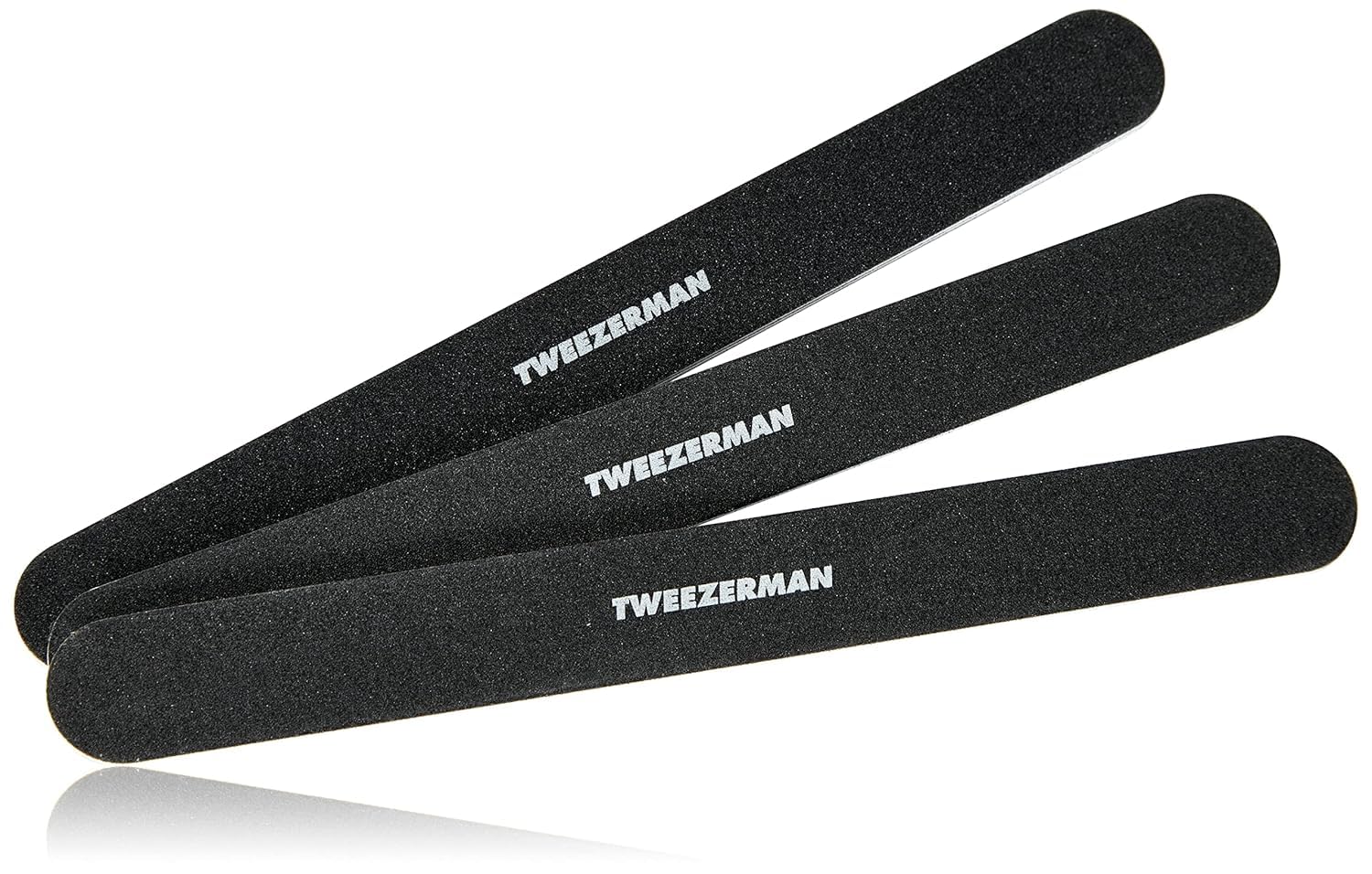
Tweezerman Professional Nail Files are dual-sided manicure files designed to shape and finish natural and acrylic nails. Their main use is controlled edge shaping with a 180-grit side for shaping and a finer 240-grit side for smoothing.
This Tweezerman Professional Nail Files review focuses on buyers who want a simple, compact manual file rather than a multi-step buffer or electric tool. The three-file pack fits everyday home manicures, travel kits, and routine maintenance without adding unnecessary complexity.
🏆 My Quick Verdict
💡 Best For: Home users who want a straightforward reusable pack for shaping and smoothing natural or acrylic nails.
⚡ Key Specs:
3 files; dual-sided 180/240 grit; approximately 7 inches long; suitable for natural and acrylic nails.
✅ Bottom Line: This is a practical choice for buyers who value predictable grit levels and a familiar full-size file. The main trade-off is that these are wear items, so regular users should expect periodic replacement rather than permanent service.
At a Glance
- Three professional-quality nail files are included in the pack.
- The 180-grit side handles shaping and general edge reduction.
- The 240-grit side refines and smooths the finished nail edge.
- The files are intended for both natural and acrylic nails.
- Each file is approximately 7 inches long for full-hand control.
- Tweezerman recommends replacing them after about three months of regular use or when worn.
Specifications
| Specification | Verified Detail |
|---|---|
| Pack size | 3 nail files |
| Grit | 180/240 dual-sided |
| Length | Approximately 7 inches |
| Nail compatibility | Natural and acrylic nails |
| Care | Replace after about 3 months of regular use or when worn |
Design & Build Quality
The design is deliberately simple: a full-length, dual-sided file with two clearly different working grits. That format gives you enough surface area for controlled strokes without the bulk of a block buffer or powered manicure device.
The 180/240 pairing is useful because it separates shaping from finishing. Buyers unfamiliar with grit numbers can read our guide to nail file types and grits for a broader explanation of how abrasive levels change the job.
Tweezerman does not publish detailed substrate or coating specifications on the official product page, so those details should not be assumed. What is verifiable is the dual-sided grit, three-file quantity, and intended use on natural and acrylic nails.
Setup, Installation & Ease of Use
- Remove a file from the pack and inspect both surfaces before use.
- Use the 180-grit side when you need to shape the nail edge.
- Switch to the 240-grit side to refine and smooth the finished edge.
- File in one direction rather than sawing back and forth, following Tweezerman’s own usage guidance.
- Use light, controlled pressure on natural nails to avoid removing more nail than intended.
- Store the files dry and protected from crushing or heavy abrasion between uses.
Core Performance & Feature Breakdown
The strongest performance advantage is the two-step grit progression. The 180 side removes edge material more efficiently, while the 240 side gives you a finer finishing surface without needing a second tool.
On natural nails, that makes the file more versatile than a single coarse board. It also suits acrylic maintenance because Tweezerman explicitly lists acrylic nails among the intended uses, though heavy enhancement removal may call for a coarser professional file.
Expert Insight
Use grit as a job selector: shape first with 180, then finish with 240. That sequence is more controlled than repeatedly pressing harder with one abrasive surface.
For thin or easily peeling natural nails, pressure matters as much as grit. A finer file or glass file may feel gentler for frequent maintenance, especially if your main goal is smoothing tiny snags rather than changing length.
Key Features Explained
180-Grit Shaping Surface
The 180-grit side is the working surface for shaping and shortening edges with controlled strokes. It is useful when a finer finishing surface would remove material too slowly.
240-Grit Finishing Surface
The 240-grit side is intended to smooth nail edges after shaping. It matters because a cleaner edge feels better and reduces the rough snags that can catch on fabric.
Three-File Pack
Three files let you keep one in a primary manicure kit and place extras where you actually need them. The pack is practical, but it remains a consumable format rather than a permanently reusable glass tool.
Natural and Acrylic Nail Use
Tweezerman lists both natural and acrylic nails as compatible. The limitation is that 180 grit is not an aggressive bulk-removal grit, so major acrylic reduction can require a different file.
Real-World Usability & Maintenance
For routine home manicures, the file is easy to understand because each side has a clear purpose. The full-size length also gives your hand room to guide longer strokes rather than forcing tiny wrist movements.
Maintenance is mostly about knowing when to retire a worn file. Tweezerman advises replacement after roughly three months of regular use or sooner if the abrasive surface is worn out.
If you are comparing filing tools, remember that a file and buffer are not interchangeable; our nail file vs. buffer guide explains the difference.
Pros & Cons
Pros
- Dual 180/240 grit covers both shaping and finishing.
- Three-file pack is convenient for home, travel, or backup use.
- Officially intended for both natural and acrylic nails.
- Seven-inch length provides a generous working surface.
Cons
- The files wear out and require periodic replacement.
- The 180-grit side is not ideal for fast removal of thick enhancement product.
- Buyers seeking a washable long-life file may prefer glass.
Common Issues & Fixes
The file seems slow on acrylic
A 180-grit surface may feel slow when removing substantial enhancement thickness. Use it for controlled shaping, and choose a coarser enhancement-specific file for major product reduction.
The edge still feels rough
Stopping after the 180-grit side can leave a less refined finish. Switch to the 240-grit side for final smoothing with lighter pressure.
The file no longer cuts efficiently
A worn abrasive surface naturally becomes less effective. Replace the file when worn, with Tweezerman suggesting about three months as a regular-use benchmark.
What to Know Before You Buy
This product makes the most sense if you want familiar abrasive files with clearly defined grit levels. Buyers who prefer washable, long-life tools should compare glass or crystal files instead.
Also match the file to your nail condition rather than choosing by brand alone. For everyday natural-nail shaping, our guide to the best nail files for natural nails explains when finer or glass options may be preferable.
No product-specific warranty information was verified on the official product page reviewed for this article. If warranty coverage matters to you, confirm current terms with the manufacturer or seller before purchase.
Who Should Buy It / Who Should Skip It
✅ Who Should Buy It
- Home manicure users who want simple dual-grit control.
- People maintaining natural nails with regular shaping and smoothing.
- Acrylic wearers who need moderate edge shaping and refinement.
- Travelers who like having spare files in different kits.
✗ Who Should Skip It
- Buyers who want a washable file designed for long-term reuse.
- Users who need very coarse grit for rapid enhancement removal.
- People who strongly prefer compact pocket-size manicure tools.
Alternatives to Consider
OPI Crystal File
Best For: Buyers who prioritize a reusable, washable file for natural nails.
Main Advantage: OPI describes it as sanitizable, reusable, travel-friendly, and designed to help prevent chipping and peeling.
Trade-off: It does not provide separate labeled 180/240 grit sides.
Key Spec: Crystal filing surface.
GERMANIKURE Original Glass Nail File
Best For: Buyers seeking a durable etched-glass alternative for natural nails and acrylics.
Main Advantage: Its filing texture is chemically etched into tempered Bohemian glass rather than applied as glued abrasive.
Trade-off: Glass requires more careful handling than a flexible disposable file.
Key Spec: 3 mm thick Bohemian glass.
Is It Worth It?
Yes, for buyers who want a straightforward dual-grit nail file set, the Tweezerman pack offers a sensible combination of shaping and finishing in one familiar tool. The three-file quantity also reduces the inconvenience of replacing or relocating a single everyday file.
The value case is weaker if your priority is maximum longevity or washability. In that situation, a quality glass file may better match your ownership preferences even if the initial format is different.
Final Verdict
Tweezerman Professional Nail Files are a strong fit for routine home manicures, especially when you want clearly separated 180-grit shaping and 240-grit smoothing. Choose them for simplicity and control; choose glass instead if reusability and easy sanitation matter more.
Frequently Asked Questions
Can Tweezerman Professional Nail Files be used on natural nails?
Yes, they are designed for natural nails as well as acrylic nails. Use the 180-grit side to shape and the 240-grit side to smooth the edge.
What size are the files?
Each file is approximately 7 inches long according to Tweezerman International. That full-size format gives you a generous working surface for controlled filing strokes.
How often should I replace them?
Tweezerman recommends replacement after about three months of regular use or when the file is worn out. Replace sooner if the abrasive surface stops cutting efficiently.
Do these files have a warranty?
No product-specific warranty was verified on the official product page reviewed for this article. Check current manufacturer or seller terms before buying if warranty coverage is important to you.
Can I use the 180-grit side on acrylic nails?
Yes, Tweezerman lists the files for acrylic nails. For heavy acrylic bulk removal, however, a coarser enhancement-specific file may work faster.
How should I maintain the files?
Keep them dry, protected, and replace them when the abrasive surface wears down. The manufacturer gives replacement guidance rather than a sanitizing protocol for repeated professional-client use.
Affiliate disclosure: nailprime.com earns a small commission when you purchase through links on this page — at no extra cost to you. Our editorial process is independent: affiliate relationships never influence which products we recommend or how we rank them.

