
9 Daily Nail Care Ideas for Healthier, Stronger Nails

Healthy nails rarely come from one dramatic fix. They improve through small, repeatable habits: washing gently, keeping moisture in, trimming before splits start, and protecting nails from everyday wear.
That matters whether you wear polish or prefer bare nails. It also matters if your main concern is brittle edges, peeling layers, dry cuticles, yellowing, or discoloration that seems minor at first but keeps coming back.
Below are 9 practical ideas to care for your nails every day, plus a simple way to tell when a nail change needs more than home care.
9 Daily Nail Care Ideas for Healthier Nails
1. Wash Your Hands and Nails Gently
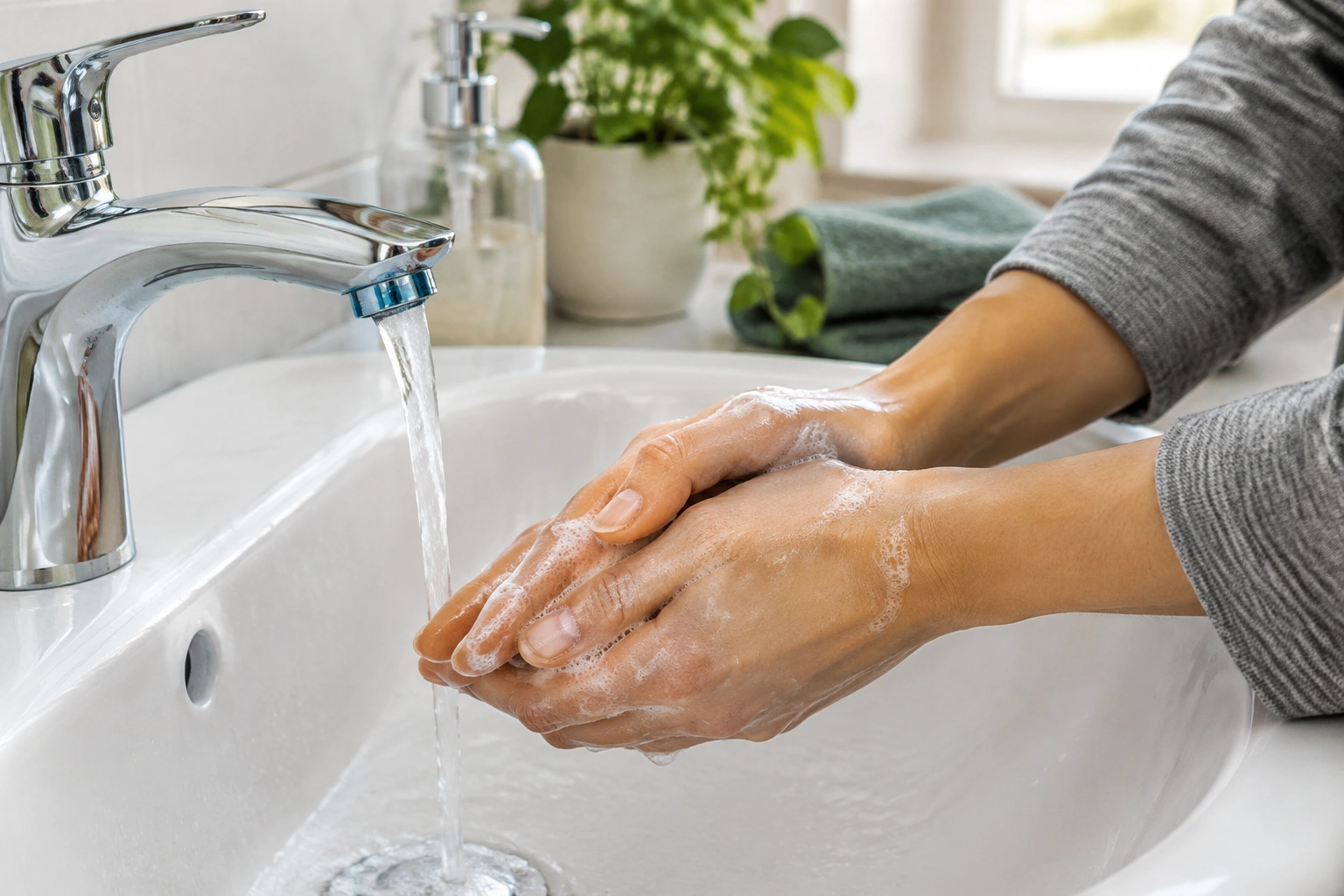
Clean nails are healthier nails, but the goal is not harsh scrubbing. Wash with mild soap and lukewarm water, then clean around the nail edges with your fingertips rather than digging under the nail plate.
This helps remove dirt, lotion residue, and product buildup without roughing up the nail surface or drying the skin around it. As a general hygiene principle, keeping hands and nails clean and dry can help reduce the buildup of germs and moisture around the nails. Read the AAD’s healthy nail tips.
If you work with food, handle tools, or spend the day touching shared surfaces, a quick wash before bed is especially useful. Just avoid long soaks unless you are treating a specific issue, because repeated wetting and drying can leave nails more fragile.
2. Moisturize After Every Wash
Water alone does not keep nails flexible. In fact, frequent washing can leave both the nail plate and the skin around it feeling tight and rough. A hand moisturizer after washing helps replace some of that lost softness.
Use hand cream when your hands feel dry overall, especially after soap, sanitizer, or cold weather. Use cuticle oil when the skin at the nail base is the main problem—flaking cuticles, hangnails, or a dry edge around the nail fold. Think of hand cream as the general moisturizer and cuticle oil as the targeted treatment.
If you only choose one product for a busy day, hand cream gives the broader benefit. If your nails are peeling or the cuticle area cracks easily, adding oil at night can make a noticeable difference in comfort and appearance.
3. Keep Nails Trimmed to a Practical Length
Long nails snag more easily, and snags often become splits. Keeping nails at a length that matches your routine is one of the easiest ways to prevent breakage.
For people who type all day, lift boxes, wash dishes, or care for children, shorter nails usually hold up better. That does not mean ultra-short nails are required. It means the free edge should be short enough that it does not catch on fabric, gloves, or hair.
If your nails are already weak, trim them before they start bending or peeling. That gives the edge less chance to tear. A small, regular trim is usually easier on the nail than waiting until one corner breaks off and forces you to shorten everything unevenly.
How often: trim every 1 to 2 weeks, or sooner if the tips start snagging.
4. File Nails in One Direction
When you shape your nails, a gentle file is often kinder than repeated clipping, especially if your nails split or peel at the edges. Clipping is useful for removing length quickly, but filing lets you refine the shape without creating as much stress on the tip.
The key is to file in one direction with light pressure instead of sawing back and forth. Fast, aggressive filing can rough up the edge and encourage peeling. If your nails are fragile, a fine-grit file is usually the safer choice for everyday maintenance.
A simple rule works well: use nail clippers first only if you need to remove a lot of length, then finish with a file to smooth the edge. If you only need to tidy the shape, filing alone is often enough.
How often: file lightly once a week or whenever you notice a rough edge.
5. Protect Nails from Water and Chemicals
Repeated wet work is hard on nails. Dishwashing, cleaning, and frequent handwashing can soften the nail plate, then leave it dry again once the water evaporates. That cycle can make nails more prone to splitting.
Gloves are the practical fix. Wear them for dishwashing, bathroom cleaning, gardening, and any job that exposes your hands to detergents or cleaning sprays. If you are doing a lot of wet work, keep a pair near the sink so you actually use them.
The same logic applies to long showers and soaking tasks: the more time nails spend wet, the more likely they are to weaken over time. Keeping nails clean and dry is a basic habit, not a cosmetic extra.
6. Avoid Using Nails as Tools
A nail is not a scraper, pry bar, or package opener. Using nails to lift tabs, peel labels, or dig into tight packaging creates tiny bends and chips that can turn into visible damage later.
This habit is easy to miss because the damage is often gradual. One rough edge becomes another, and then the nail starts splitting at the corner or lifting at the tip. If you catch yourself using your nails this way often, keep a small tool nearby instead—scissors, a key, or a box opener does less damage than your nail plate.
This is one of the simplest behavior changes you can make, and it helps both polished and bare nails. Even strong nails are not meant to do the work of a tool.
7. Choose Nail-Friendly Products and Removers
If you wear polish, the remover you choose matters. Acetone removes polish quickly, which can be convenient, but it is often more drying. Acetone-free remover is usually gentler for frequent use, especially if your nails already feel brittle or stripped.
That trade-off is straightforward: acetone is faster; acetone-free is often kinder to dry, fragile nails. If you remove polish often, the gentler option is usually the better everyday choice. If you only remove polish occasionally and need a fast clean finish, acetone may still be useful—just follow with moisturizer.
Polish itself is not automatically harmful. The issue is usually the removal process, the dryness that follows, or overusing harsh treatments and strengtheners. If your nails are recovering from peeling or splitting, a break from polish can be a practical way to see how your nails look and feel without added product.
8. Care for Cuticles Without Cutting Them
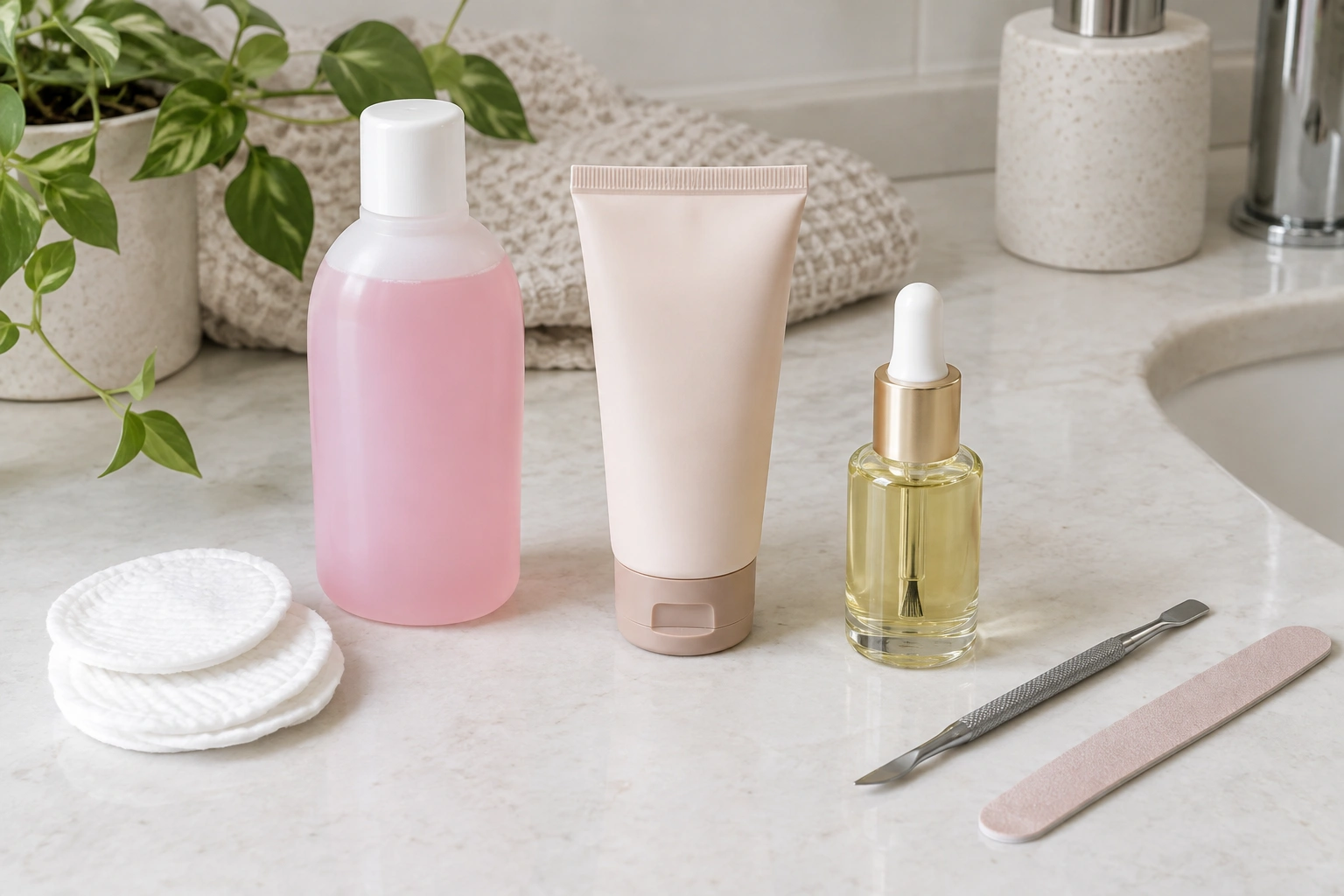
Cuticles help protect the nail area, so aggressive cutting can leave the skin irritated and more vulnerable to infection. That is why daily cuticle care should be gentle, not aggressive.
The safest routine is simple: soften the area with moisturizer or cuticle oil, then gently push back only loose skin if needed after a shower or hand wash. Avoid cutting healthy cuticle tissue unless a trained professional is dealing with a hangnail or a true snag that needs careful trimming.
If your cuticles are dry, focus on softness rather than removal. A little oil massaged around the nail base is often enough to reduce roughness and improve the look of the whole hand. Dry cuticles can make even healthy nails appear tired, so this small step has a big visual payoff.
How often: apply cuticle oil daily if possible, or at least at night; use hand cream after every hand wash.
9. Support Nail Health from the Inside
Nails are made of keratin, so your body needs enough building blocks to support normal growth. A balanced diet with enough protein, iron, zinc, and overall hydration can support stronger-looking nails over time.
Biotin is often mentioned in nail care, but supplements are not a quick fix for everyone and are not usually necessary unless a clinician recommends them. It is better to think of nutrition as support, not a guaranteed repair system. If your diet is very limited, or if you have other symptoms such as fatigue, brittle hair, or frequent breakage, it is worth discussing that with a clinician rather than guessing at supplements.
For everyday care, the practical version is simple: drink water regularly, eat protein at meals, and do not assume one vitamin will solve a nail issue that may be caused by dryness, trauma, or a health condition.
A Simple Daily Nail Routine You Can Actually Follow
If you want a routine that fits real life, keep it short:
- Wash hands and nails gently.
- Dry thoroughly, including around the nail folds.
- Apply hand cream after washing.
- Add cuticle oil when the nail base feels dry.
- Keep nails short enough to avoid snagging.
- File rough edges before they split further.
- Wear gloves for dishes and cleaning.
- Skip using nails as tools.
- Remove polish gently and give nails a break if they feel dry.
That routine works for men and women alike. It is not about having “perfect” nails. It is about keeping them comfortable, neat, and less likely to break at the worst possible moment.
Natural Nails vs. Polished or Gel Nails for Daily Care
Bare nails are usually the easiest to maintain because they expose the nail surface to less product and less removal stress. That makes them a sensible choice when nails are already weak, peeling, or recovering from damage.
Polished nails can still be part of a healthy routine if you remove polish carefully and keep the nail and skin moisturized. The challenge is usually not color itself, but drying removers, rough removal, or leaving damaged nails covered up while the problem gets worse.
If you wear gel frequently, be honest about what your nails are telling you. Frequent gel removal can contribute to dryness and thinning, especially if the nails are already fragile. If they look fine and feel strong, your routine may be working. If they become thin, tender, or flaky after repeated removal, scaling back is often the smarter move.
What Can Cause Yellow, Weak, Split, or Discolored Nails?
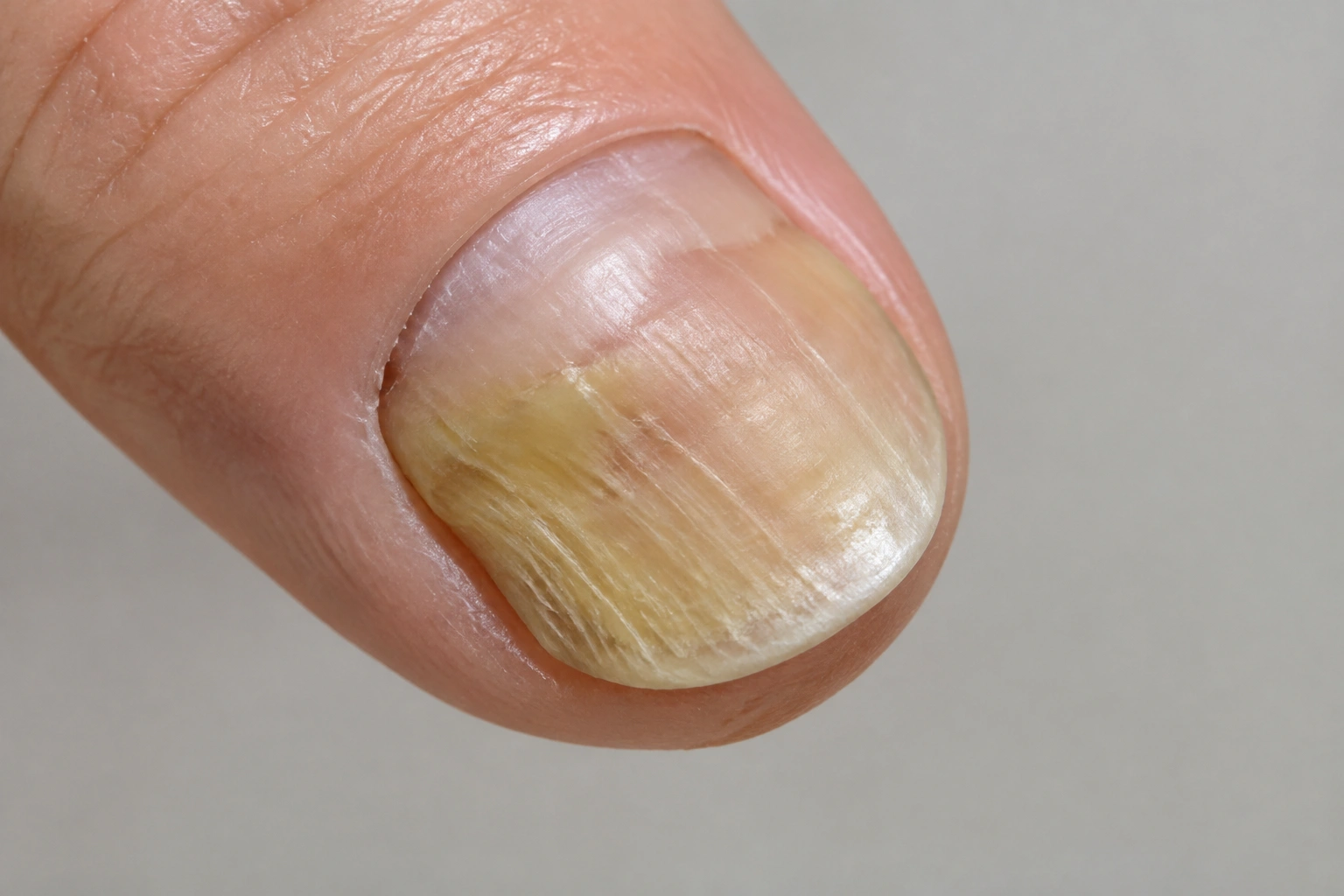
Dryness and trauma are common causes of nail changes, but they are not the only ones. Yellow nails can sometimes come from polish staining, repeated product use, or smoking, but persistent yellowing can also be linked to fungal infection. Weak, split nails may be related to repeated wet work, harsh removal, over-buffing, or everyday wear and tear.
Discoloration can also happen with psoriasis, eczema, or other skin conditions that affect the nail area. In some cases, nail changes can reflect a nutrient deficiency or another medical issue, especially if several nails are affected or the change keeps spreading.
If a nail becomes suddenly discolored, thick, crumbly, painful, swollen, or detached from the nail bed, it is worth medical evaluation sooner rather than later. Home care is reasonable for mild cosmetic damage, but persistent or worsening changes should be checked.
When to See a Nail Technician or Dermatologist
Some nail changes are cosmetic. Others deserve a closer look.
Make an appointment if you notice:
– persistent yellowing or dark streaks
– thickening or crumbling
– pain, swelling, or tenderness
– nail lifting from the nail bed
– changes affecting several nails at once without a clear cause
– an ingrown toenail that is sore or infected
The AAD advises not to dig out an ingrown toenail, especially if it is infected and sore; that is a situation for a dermatologist, not a home fix. See the AAD guidance on healthy nail care.
If a nail change is sudden, worsening, or not improving with better care, treat it as more than a beauty issue.
Small Habits Beat Big Fixes
Nails usually respond best to consistency. Gentle washing, regular moisture, safer filing, and protection during wet work do more than occasional “repair” products ever will.
Avoid over-buffing, and be cautious with harsh nail hardeners or strengtheners if your nails are already brittle, because too much of either can make the problem worse. If a product promises instant reinforcement but leaves nails feeling drier or thinner over time, that is a sign to scale back.
If you build the basics into your day, your nails have a better chance of staying smooth, comfortable, and strong enough for real life.
FAQ
How often should I trim my nails?
Most people do well trimming every 1 to 2 weeks, or sooner if the tips start snagging or splitting.
Should I file or clip my nails?
Use clippers when you need to remove length quickly, then smooth the edge with a fine-grit file. If you only need a small shape adjustment, filing alone is usually enough.
How often should I moisturize my nails and cuticles?
Use hand cream after every hand wash if you can. Apply cuticle oil daily or at night, especially if the nail area feels dry or rough.
Do I need a nail strengthener?
Not necessarily. If your nails are brittle, avoid harsh strengtheners and hardeners unless a clinician or nail professional has suggested a specific product for your situation.
When should I worry about nail discoloration?
If discoloration is persistent, spreading, painful, thick, crumbly, or affecting several nails, it should be checked by a dermatologist or clinician.

