
Does a Hair Dryer Dry Nail Polish Faster? A Beginner’s Guide

If you’re hoping a hair dryer will save a freshly painted manicure, the short answer is: sometimes a little, but for most beginners it is not the best choice. A cool air setting may help nail polish set a bit faster by moving air across the nail, but hot air can make polish worse by softening it, causing bubbles, or leaving the top dry while the layers underneath stay wet.
If you want the direct verdict: yes, a hair dryer can be worth using only as a gentle cool-air helper when you do not have a quick-dry product or fan nearby. For most people, though, quick-dry top coats, drops, or sprays are faster and safer.
For beginners, the safest mindset is this: airflow can help, heat usually hurts. If speed matters most, quick-dry top coats, drops, or sprays are usually better choices than blasting your nails with hot air.

How Nail Polish Dries: What Actually Happens
Regular nail polish does not “dry” the way paint on a wall does. It dries mostly as the liquid solvents in the polish evaporate. As that happens, the polish changes from wet and glossy to firmer and less tacky.
That also means there are two different stages to think about:
- Surface dry: the top feels less sticky
- Fully set: the polish is much less likely to dent, wrinkle, or smudge
That’s why a nail can get marked just from putting on socks, closing a bag, or brushing against a blanket.
If you want a clearer breakdown of drying time in general, you may also find how long regular nail polish takes to dry helpful.
Why a Hair Dryer Can Help or Hurt
A hair dryer can move air over the nail, and moving air can help solvents leave the polish a little faster. But the dryer’s heat changes the picture.
Why heat can backfire
Warm or hot air may:
- soften the polish instead of setting it
- create tiny bubbles
- cause streaking if the surface shifts while still wet
Why airflow alone is not magic
Even cool air does not “cure” regular polish instantly. It can only help it set more comfortably than still air. Think of it as a gentle assist, not a shortcut that replaces drying time.
If you’re comparing methods, our guide on how to dry nail polish faster gives a broader look at the most practical options.
If You Use a Hair Dryer, Use These Safe Settings
If a hair dryer is all you have, the safest approach is to use it carefully and keep expectations modest.
Best settings to try
- Use cool air if your dryer has it
- Avoid hot or warm settings
- Hold the dryer about 12 to 18 inches away from the nails
- Use a gentle airflow, not a strong blast
- Move the air around instead of aiming one nail for too long
The goal is to help the polish set without disturbing it. Strong heat or forceful air can do the opposite.
A simple beginner method
- Paint thin coats rather than one thick coat.
- After each coat, wait about 2 to 5 minutes before adding the next one.
- After the final coat, let the polish sit for about 5 to 10 minutes.
- Use cool air from about 12 to 18 inches away for 30 to 60 seconds per hand.
- Stop if the polish looks rippled, bubbly, or uneven.
If the polish is still very wet, even cool air can push it around. Thin layers make a bigger difference than any dryer setting.
How Long to Wait Between Coats and After the Top Coat
A lot of drying problems come from layering polish too quickly.
Between coats
A coat should be dry enough that the next layer does not drag it around. If the brush leaves streaks or pulls color, the layer below needs more time.
A thin first coat usually sets more quickly than a thick one. The same is true for color coats and top coat. Thick polish traps more solvent, which means it stays soft longer.
A practical beginner range is:
- Between thin coats: about 2 to 5 minutes
- Before top coat: wait until the color coat is no longer easily smeared, usually another 2 to 5 minutes if the layer is thin
After the top coat
The top coat may feel smoother first, but the manicure can still dent if you press on it too soon. A good general rule is to avoid heavy hand use for about 15 to 30 minutes after the top coat, and longer if the coats were thick.
If you can leave your nails alone for a bit after painting them, do it. That extra buffer helps protect the finish.
For a more detailed timing guide, see how long regular nail polish takes to fully dry.
Hair Dryer vs Fan vs Quick-Dry Products
Here’s a simple comparison to help you choose.
| Method | Speed | Safety for Beginners | Effectiveness | Best Use |
|---|---|---|---|---|
| Quick-dry top coat | Fastest | Very good | Usually better than airflow alone | Best for regular polish manicures |
| Quick-dry drops or spray | Very fast | Very good | Helpful for finishing | Good when you want a low-fuss speed boost |
| Small fan | Moderate | Good | Gentle and reliable | When you want airflow without heat |
| Hair dryer on cool air | Moderate | Fair, if used carefully | Can help a little | When you already own one and need gentle airflow |
| Hair dryer on warm/hot air | Not recommended | Lower | Can make polish worse | Usually not worth it |
What usually works best
If speed matters most, quick-dry products usually beat a hair dryer. They are made to help the surface set more efficiently, while a dryer only moves air around.
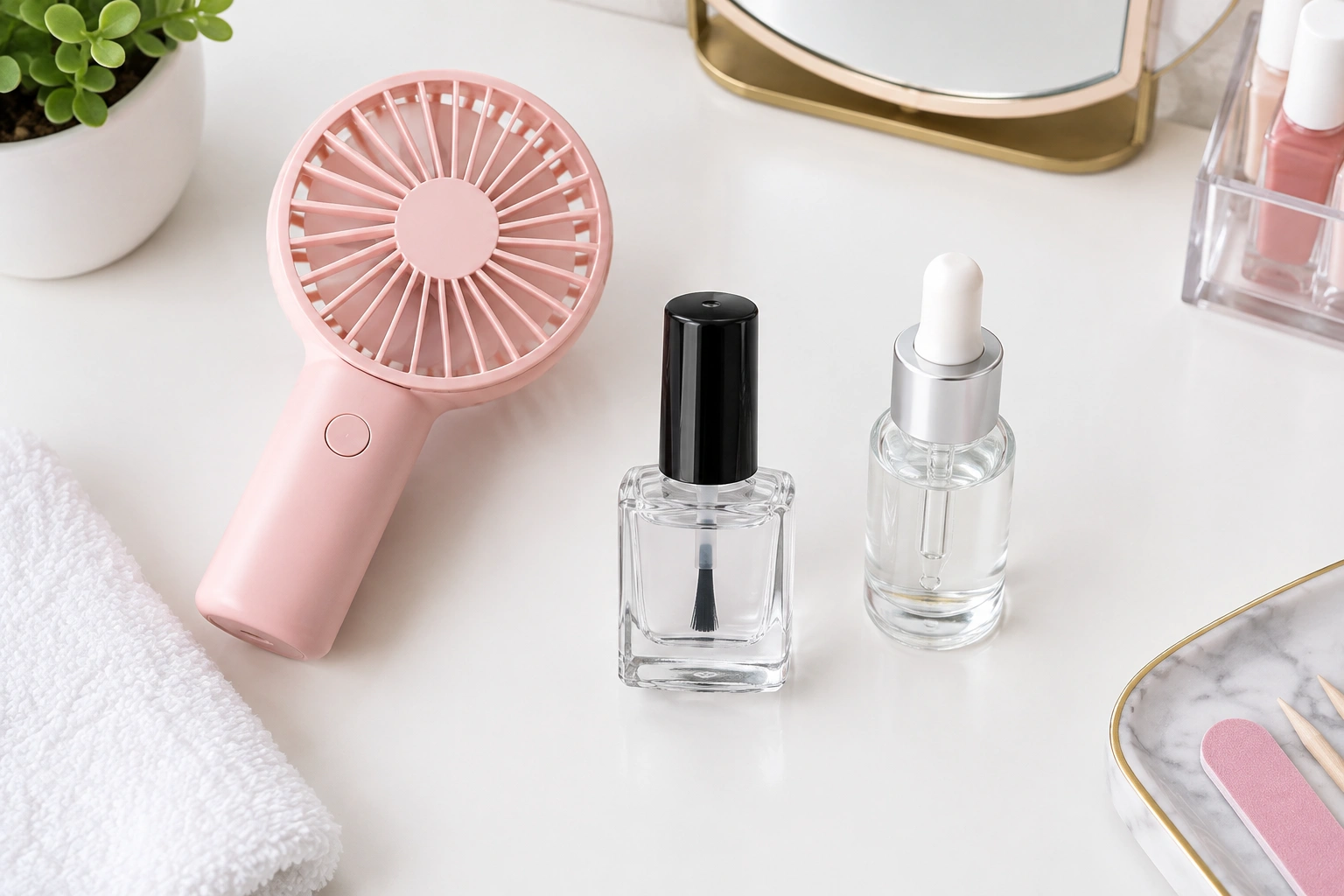
For most beginners, the usual order is:
- Quick-dry top coat — best all-around speed and ease
- Quick-dry drops or spray — very fast and convenient
- Fan — simple, gentle airflow
- Hair dryer on cool air — only a limited help
- Warm or hot air — not recommended
For readers comparing specific quick-dry methods, does quick-dry nail polish really dry faster is a useful next step.
What to Do for Regular Polish vs Gel Polish
This part matters because the wrong drying method can waste time.
Regular nail polish
Regular polish can air dry, and it can also benefit from:
- thin coats
- cool airflow
- quick-dry top coats
- quick-dry drops or sprays
That makes it the type of polish where a hair dryer may have some limited use, especially on cool air.
Gel polish
Gel polish is different. It does not dry the same way regular polish does. It needs a UV/LED lamp to cure properly.
A hair dryer is not a substitute for that lamp. If you use one on gel polish, you may end up with a manicure that feels wrong, wears badly, or stays uncured.
Common Mistakes That Make Polish Dry Slower or Smudge
Most drying problems come from a few simple habits.
Thick coats
Thick polish takes longer to set and is more likely to wrinkle or dent. Two thin coats usually behave better than one heavy coat.
Hot air too soon
Blasting fresh polish with hot air can make the surface look set while the polish underneath stays soft.
Too much brushing and reworking
Going back over polish that is already starting to set can leave marks. It is better to apply the coat smoothly once and leave it alone.
Rushing the final test
Just because a nail looks shiny does not mean it is ready for heavy use. Try not to press, tap, or grab things right away.
Fastest Safe Way to Dry Nail Polish
If you want the simplest answer, here it is:
- Use regular polish in thin coats
- Choose a quick-dry top coat if you have one
- Use quick-dry drops or spray if you want the fastest finish
- Use a fan or cool air next
- Treat gel polish separately and cure it with the correct lamp
If you only have a hair dryer, use cool air from 12 to 18 inches away and keep the airflow gentle for 30 to 60 seconds per hand. That is the safest way to try it. But if you want the best mix of speed and reliability, quick-dry top coats or drops are usually the better choice.
When to See a Nail Technician or Dermatologist
If your polish always bubbles, peels, or stays tacky no matter what you do, a nail technician can help you check your technique and product choices. If you notice a reaction to polish, remover, or nail products, a dermatologist is the right person to ask.
For most beginners, though, the fix is usually simple: thinner coats, less heat, and a little more patience.
FAQ
Does a hair dryer dry nail polish faster?
It can help a little if you use cool air, but it is not the fastest or safest method for most people. Hot air can make the polish behave worse.
Should I use hot or cool air on nail polish?
Cool air is the safer choice. Warm or hot air can soften polish and cause bubbles.
How far should I hold the dryer from my nails?
Hold it about 12 to 18 inches away so the airflow stays gentle. If the stream of air is strong enough to move the polish, it is too close.
Will a hair dryer make nail polish bubble or smear?
It can, especially if the air is hot or the coat is thick. Fresh polish is easy to disturb, so gentle airflow is much safer than a strong blast.
Is a fan better than a hair dryer?
For many beginners, yes. A fan gives you airflow without heat, so it is usually gentler and less likely to cause problems.
Can I use a hair dryer on gel polish?
No. Gel polish needs a UV/LED lamp to cure. A hair dryer will not do the job.
What is the fastest safe way to dry regular nail polish?
The best mix of speed and safety is usually thin coats + quick-dry top coat + quick-dry drops or spray. If you need one tool only, a fan is often a better choice than hot air from a dryer.
Are quick-dry drops or sprays better than a hair dryer?
Usually yes. They are designed to help regular polish set faster and more evenly than airflow alone.

