
If you are tired of throwing away worn-out emery boards, a diamond nail file can look like a smart upgrade. But the higher price may leave you wondering: how long do diamond nail files last?
A good diamond nail file can last for years with normal home use. Some high-quality genuine-diamond files may last much longer. The actual lifespan depends on the abrasive coating, how often you file, how much pressure you use, what type of nails you file, and how well you clean and store the tool.
The good news is that you usually do not need to track its age. Your file will give you clear signs when its filing surface is wearing out.
This guide explains how long you can expect a diamond nail file to last, what makes one wear out faster, how to clean it, and when replacing it is the safer choice.
Quick Answer
How long do diamond nail files last? A quality diamond nail file can often last several years with normal personal use, while premium genuine-diamond files may last much longer. Heavy use, hard artificial nails, poor cleaning, or damage to the abrasive surface can shorten its life. Replace it when filing becomes slow, uneven, or uncomfortable.
Why Diamond Nail Files Last So Long
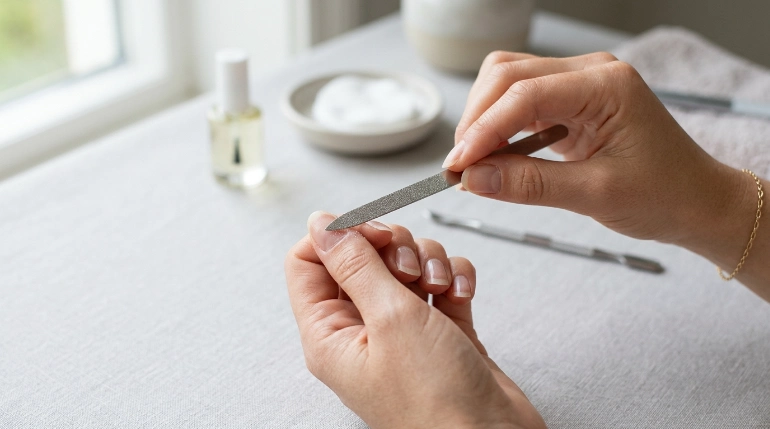
The main reason is the abrasive surface.
Instead of relying on paper or foam covered with abrasive particles, a true diamond file uses very hard abrasive particles attached to a reusable base. Depending on the product, that base may be flexible fiberglass, metal, or another durable material.
Diamond is extremely hard, so a well-made abrasive surface does not become smooth as quickly as a disposable emery board.
For perspective, the manufacturer Diamancel says in its diamond file FAQ that its genuine-diamond files can last a lifetime with regular personal use. It gives an average of about 3,500 uses for professional manicurists. That is a manufacturer-specific claim, however, and should not be treated as the expected lifespan of every product labeled “diamond.”
Quality matters a lot.
A premium file with a firmly bonded abrasive surface may stay useful for years. A cheaper coated file may lose noticeable grit much sooner.
So, How Many Years Should You Expect?
There is no universal expiration date for a diamond nail file.
For a typical home user, thinking in terms of years rather than weeks or months is reasonable for a well-made tool. You may get much longer service when you use it gently and mainly file natural nails.
Here is a practical way to think about lifespan:
| How You Use the File | What to Expect | What Usually Wears It Faster |
|---|---|---|
| Occasional home manicures | Potentially many years | Poor storage, dropping, moisture left on unsuitable materials |
| Weekly natural-nail filing | Several years or longer with a quality file | Heavy pressure and clogged abrasive |
| Frequent artificial-nail shaping | Faster wear | Thick acrylic or hard enhancements |
| Professional salon use | Much heavier wear than home use | Multiple clients and repeated sanitizing |
| Toenail filing | Varies widely | Very thick or hardened nails |
These are practical expectations, not guaranteed replacement schedules.
Performance matters more than age.
A five-year-old file that still shapes nails evenly may be perfectly useful. A much newer file with a damaged or peeling abrasive surface should be replaced.
What Does “Diamond Nail File” Actually Mean?
This is worth checking before estimating lifespan.
Not every product marketed with the word diamond has the same construction.
Genuine Diamond Abrasive Files
These use actual diamond abrasive particles bonded to a base.
They tend to cost more, but durability is one of their biggest advantages.
Diamond-Coated Metal Files
Some files use a rigid metal base with an abrasive coating. Their useful life depends heavily on how securely that coating is bonded.
Once the abrasive starts wearing away from the base, the file becomes less effective.
“Diamond” as a Product Description
On inexpensive beauty tools, product names do not always tell you exactly how the abrasive surface was made.
If longevity matters to you, check the manufacturer’s material description rather than relying only on the word diamond on the packaging.
Look for information about:
- Abrasive material
- Base material
- Washability
- Grit level
- Sanitizing instructions
- Warranty
- Recommended nail type
A clear description is usually more useful than a flashy product name.
What Makes a Diamond Nail File Wear Out Faster?
Even a durable file can lose performance early if it is used roughly.
Filing With Too Much Pressure
A diamond abrasive should do most of the work.
Pressing hard does not necessarily give you a better nail shape. It may simply remove more nail than you intended and place extra stress on both your nail and the filing surface.
Use light, controlled strokes.
Using the Wrong Grit
A very coarse file may be too aggressive for thin natural nails.
Fine or medium grit is usually easier to control for routine shaping. Coarser surfaces are more appropriate when the manufacturer specifically recommends them for thicker nails or nail enhancements.
Filing Thick Artificial Nails Constantly
Acrylic, hard gel, and other enhancements can demand more filing than natural nails.
That does not automatically mean a diamond file is unsuitable, but intensive shaping can put much more wear on the abrasive surface.
Letting Nail Dust Build Up
Sometimes a file that seems “worn out” is simply clogged.
Fine nail dust can settle between abrasive particles. The tool then feels smoother and removes less material.
Cleaning it may restore much of its filing ability.
Poor Storage
Throwing a file loose into a crowded manicure drawer or makeup bag can allow other metal tools to scrape against its abrasive surface.
A case or protective sleeve helps protect the file between uses.
How to Tell When a Diamond Nail File Needs Replacing
Do not replace your file just because it has reached a certain birthday.
Check how it performs.
Common signs include:
- The abrasive surface feels noticeably smoother than before.
- Filing the same nail takes much longer.
- Some areas file well while other areas barely work.
- The abrasive coating looks patchy.
- The file catches instead of moving smoothly.
- The base is bent, cracked, corroded, or damaged.
- Sharp edges have developed.
- The surface cannot be cleaned properly.
- The tool was used on an infected nail and cannot be safely disinfected according to its instructions.
A worn file may tempt you to press harder. That is usually a good sign that replacement makes more sense.
How to Make a Diamond Nail File Last Longer
A few simple habits can make a big difference.
1. Use Light Pressure
Start gently.
You can always make another pass, but you cannot put nail material back after you remove too much.
2. Let the Grit Do the Work
Avoid aggressive sawing.
For natural nails, the American Academy of Dermatology’s nail-trimming guidance recommends smoothing rough edges with a file and filing in the same direction because repeated back-and-forth filing can weaken the nail.
Unless your file’s manufacturer gives different instructions for its specific surface, one-direction filing is a gentle default for natural nails.
3. Clean Off Nail Dust
A clogged file can seem dull even when the abrasive is still in good condition.
Clean it according to the manufacturer’s instructions instead of replacing it immediately.
4. Dry It Properly
If your file is washable, rinse away residue and allow it to dry fully before putting it back into a closed case.
Do not assume every coated or metal file can be soaked for long periods.
5. Use a Protective Sleeve
A sleeve is especially helpful if you keep your nail tools in a handbag, cosmetic pouch, or drawer.
It protects the abrasive surface and keeps the file cleaner.
6. Avoid Using One File for Everything
A delicate natural fingernail and a thick acrylic enhancement do not need the same amount of filing.
If you regularly wear enhancements, consider keeping different files or grit levels for different jobs.
How to Clean a Diamond Nail File Safely
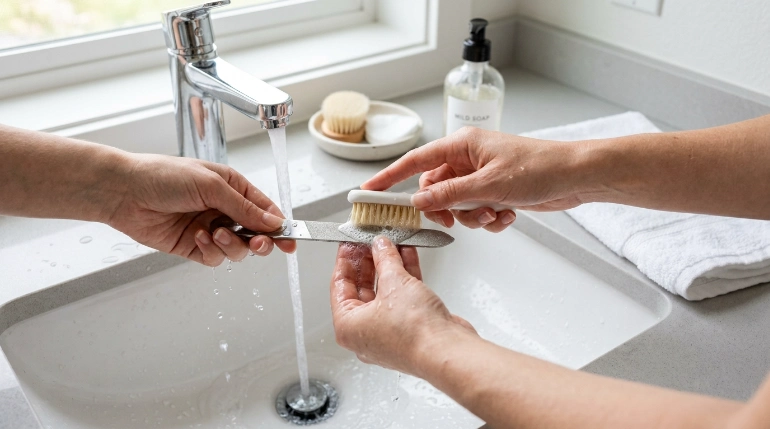
Cleaning helps with both performance and hygiene.
The CDC advises cleaning nail grooming tools, including files, before use. Tools shared in professional environments require even stricter infection-control practices. You can review the CDC’s nail hygiene recommendations for more guidance.
For a washable personal diamond file, the basic routine is usually simple:
- Remove loose nail dust.
- Wash the surface gently with mild soap and water if the manufacturer allows it.
- Use a soft brush for debris trapped in the abrasive.
- Rinse thoroughly.
- Let the file dry completely.
- Store it in a clean protective case.
Always follow the cleaning instructions that came with your particular file.
Do not automatically use bleach, acetone, alcohol, or salon disinfectant on a file unless its manufacturer says the material can tolerate it. A chemical that is safe for one file may damage the coating, backing, handle, or printed finish of another.
Should You Share Your Diamond Nail File?
For home use, keeping personal nail tools personal is the simplest option.
Sharing files can expose the tool to skin cells, nail debris, and microorganisms from another person.
If several people must use the same reusable tool, proper cleaning and disinfection become much more important.
Is a Diamond Nail File Safe for Natural Nails?
It can be, provided the grit is suitable and you use gentle pressure.
The biggest mistake is assuming that a durable abrasive should be used aggressively.
Your natural nail plate is made of layers of keratin. Excessive filing can leave it thinner and more vulnerable to peeling, splitting, or sensitivity.
Stop filing if you notice:
- Pain
- Burning
- Tenderness
- Severe thinning
- Peeling layers
- Bleeding
- Skin damage around the nail
Filing should shape your nail, not hurt it.
If your nails are naturally thin or brittle, choose a finer grit and use fewer strokes.
Diamond Nail File vs. Other Nail Files
Longevity is only one part of choosing a nail file.
| File Type | Durability | Cleaning | Best For | Main Limitation |
|---|---|---|---|---|
| Diamond file | High | Often reusable/washable | Long-term home nail care | Higher upfront cost |
| Glass/crystal file | High | Usually easy to clean | Gentle natural-nail shaping | Can break if dropped |
| Metal/sapphire file | High | Often reusable | General shaping and thicker nails | Some surfaces feel aggressive |
| Emery board | Low | Usually disposable | Cheap, quick filing | Wears down quickly |
| Foam file/buffer | Low to moderate | Depends on design | Smoothing and buffing | Abrasive wears relatively quickly |
If your priority is a tool you can keep in your manicure kit for a long time, diamond and quality glass files are both worth considering.
If you only file your nails occasionally and prefer a very low upfront cost, disposable boards may still make sense.
Is a Diamond Nail File Worth the Higher Cost?
It depends on your habits.
Diamond files normally make the most sense for someone who:
- Files her nails regularly
- Wants a reusable tool
- Dislikes replacing emery boards
- Wants a washable filing surface
- Is willing to care for the tool properly
- Uses the correct grit for her nails
A more expensive file is not automatically better.
What matters is whether the abrasive stays consistent, the tool feels comfortable, and the grit is appropriate for your nails.
Think about cost per use, not just purchase price.
If you repeatedly buy disposable files but keep one quality diamond file for years, the reusable option may offer better long-term value.
On the other hand, buying an expensive file makes little sense if it is too coarse for your nails or you rarely use it.
Expert Tip: Before replacing a diamond nail file that suddenly feels dull, clean the abrasive surface first. Packed nail dust can reduce its cutting action and make a perfectly usable file feel worn out.
When to See a Nail Technician or Dermatologist
A nail file is a grooming tool. It cannot diagnose or treat nail disease.
Do not keep filing aggressively in an attempt to remove discoloration, deep ridges, lifting, painful thickening, or other unexplained changes.
The American Academy of Dermatology advises having certain changes in nail color, texture, or shape assessed because some can be associated with infection or other medical conditions. Its guide to nail changes a dermatologist should examine explains several warning signs.
Consider professional help if you have:
- Persistent pain or swelling
- Redness or warmth around the nail
- Pus or drainage
- A nail lifting away from the nail bed
- Significant yellow, green, brown, or black discoloration
- Thick, crumbly nails
- Bleeding or an open wound
- Repeated ingrown toenails
- A nail change you cannot explain
A licensed nail technician can help with normal grooming and shaping. A dermatologist or other healthcare professional is the better choice when you suspect infection, injury, or disease.
Do not file over broken or infected skin just to improve how the nail looks.
Common Mistakes to Avoid
Even a very durable file can give poor results when used incorrectly.
Avoid these common mistakes:
- Pressing too hard. Gentle filing gives you more control.
- Using a coarse file on thin nails. Match the grit to the nail.
- Assuming dull means worn out. Clean away nail dust first.
- Filing painful or damaged areas. Stop if filing hurts.
- Sharing personal files without proper hygiene.
- Putting a wet file directly into a closed case.
- Ignoring peeling or damaged abrasive coating.
- Using the file on skin unless it was specifically designed for that purpose.
- Trying to file away unexplained nail discoloration.
- Buying based only on the word “diamond.” Check the actual material and care instructions.
FAQs
Do diamond nail files wear out?
Yes. Although they can be much more durable than disposable nail files, the abrasive surface can eventually wear, become damaged, or lose effectiveness. A quality file may remain useful for many years.
Can a diamond nail file last a lifetime?
Some premium manufacturers make lifetime-use claims for their genuine-diamond files under normal personal use. That does not mean every diamond nail file will last forever. Construction quality, frequency of use, cleaning, and storage all affect lifespan.
How do I know if my diamond nail file is dull?
Compare how much effort filing takes. If a clean file suddenly requires much more pressure or many more strokes, or if parts of its surface no longer remove nail evenly, it may be wearing out.
Should I wash my diamond nail file after every use?
Follow the manufacturer’s care instructions. At minimum, remove visible nail dust and keep the tool clean and dry. If it is designed to be washed, soap, water, and a soft brush may help clear debris from the abrasive surface.
Can I use a diamond nail file on acrylic nails?
Some diamond files are designed for acrylic, gel, or other artificial nails, but grit matters. Check the manufacturer’s recommended use. A fine file meant for delicate natural nails may be inefficient for major acrylic shaping.
Are diamond nail files better than glass files?
Neither is automatically best for everyone. Diamond files stand out for durability and effective abrasion, while quality glass files are popular for gentle natural-nail shaping. Your nail thickness, preferred feel, budget, and filing habits matter more than the name of the material.
When should I throw away my diamond nail file?
Replace it if the abrasive has become patchy or ineffective, the base is damaged, the file has sharp or unsafe edges, or you cannot clean it adequately. Do not keep a damaged file simply because it was expensive.
Final Thoughts
So, how long do diamond nail files last?
For most home users, a quality diamond nail file should be viewed as a long-term manicure tool rather than a disposable one. A good file can stay useful for years, and some premium genuine-diamond products are designed for much longer service.
The key is not watching the calendar.
Watch the file.
Keep it clean, use gentle pressure, protect the abrasive surface, and replace it when filing becomes uneven or the tool is physically damaged. Just as important, choose a grit that suits your natural nails instead of assuming the strongest file will give the best results.
Take care of the file, but take even better care of your nails. If you notice pain, swelling, infection signs, or unexplained changes, put the DIY tools down and get appropriate professional advice.
