
How Long Does Top Coat Take to Dry? A Beginner’s Guide to Safer, Smudge-Free Nails

If you’ve just finished painting your nails, the biggest question is usually simple: how long does top coat take to dry before you can use your hands normally?
Here’s a practical starting point for beginners: regular top coat often takes about 20 to 30 minutes to feel surface-dry and closer to 1 to 2 hours to be safer for normal light use; quick-dry top coat may feel dry in about 5 to 10 minutes and is often safer for gentle use after roughly 15 to 30 minutes; gel top coat usually cures under a UV/LED lamp in the time listed on the product, often around 30 to 60 seconds per layer, though the manicure can still feel warm or slightly tacky right after curing depending on the system.
For beginners, the most useful rule is this: surface-dry is not the same as fully dry. A nail can feel okay to the light touch and still dent if you press, grab, or put on shoes too soon.
If you want a related breakdown of the layers underneath, you can also read how long base coat takes to dry and how long regular nail polish takes to dry.
Quick Answer: What to Expect From Top Coat Drying Time
Most beginners want a practical answer, not a chemistry lesson.
Here’s the safest way to think about it:
- Regular top coat: usually needs the longest wait; expect about 20 to 30 minutes for surface dryness and roughly 1 to 2 hours before you treat it as fairly safe for light routine use.
- Quick-dry top coat: dries faster than regular top coat; many formulas feel surface-dry in about 5 to 10 minutes and are often easier to use gently after 15 to 30 minutes.
- Gel top coat: cures under a UV/LED lamp, so the timing depends on the product instructions and lamp type, not just air exposure.
A simple beginner rule is to treat the manicure as delicate for longer than you think. If you are deciding between “probably dry” and “definitely safe,” choose more time.
Fast comparison table
| Top coat type | How it dries | Beginner-friendly expectation | Best for |
|---|---|---|---|
| Regular top coat | Air-dries | Slowest; often surface-dry in 20 to 30 minutes | People who don’t mind waiting |
| Quick-dry top coat | Air-dries faster | Often surface-dry in 5 to 10 minutes | Busy routines |
| Gel top coat | Cures under UV/LED lamp | Ready only after proper curing | Longer-lasting manicures with the right setup |
If you want the shortest wait, quick-dry formulas usually make life easier. If you want a stronger, more durable finish and already use gel products correctly, gel top coat may fit better. The trade-off is that gel needs the right lamp and proper product matching.
Dry, Touch-Dry, and Fully Cured: What the Difference Means
These words get mixed up all the time, and that is where many smudges happen.
Surface-dry
This means the top of the polish no longer looks wet. It may seem fine, but the layer underneath can still be soft.
What you can safely do: very light, careful movement with your hands if you avoid pressure and friction.
Touch-dry
This means a very light touch may not leave a mark. Even then, the polish may still dent if you press it, catch it on fabric, or stack pressure on top of it.
What you can safely do: light typing, holding your phone carefully, or sitting still with your hands relaxed. Avoid shoes, tight clothing, and anything that presses on the nails.
Fully cured
This means the product has reached its finished hardened state. For regular polish, that happens over time as solvents evaporate. For gel polish, curing usually happens under a UV/LED lamp according to the product’s directions.
What you can safely do: normal routine tasks with much less worry about dents, though very hard impact can still damage any manicure.
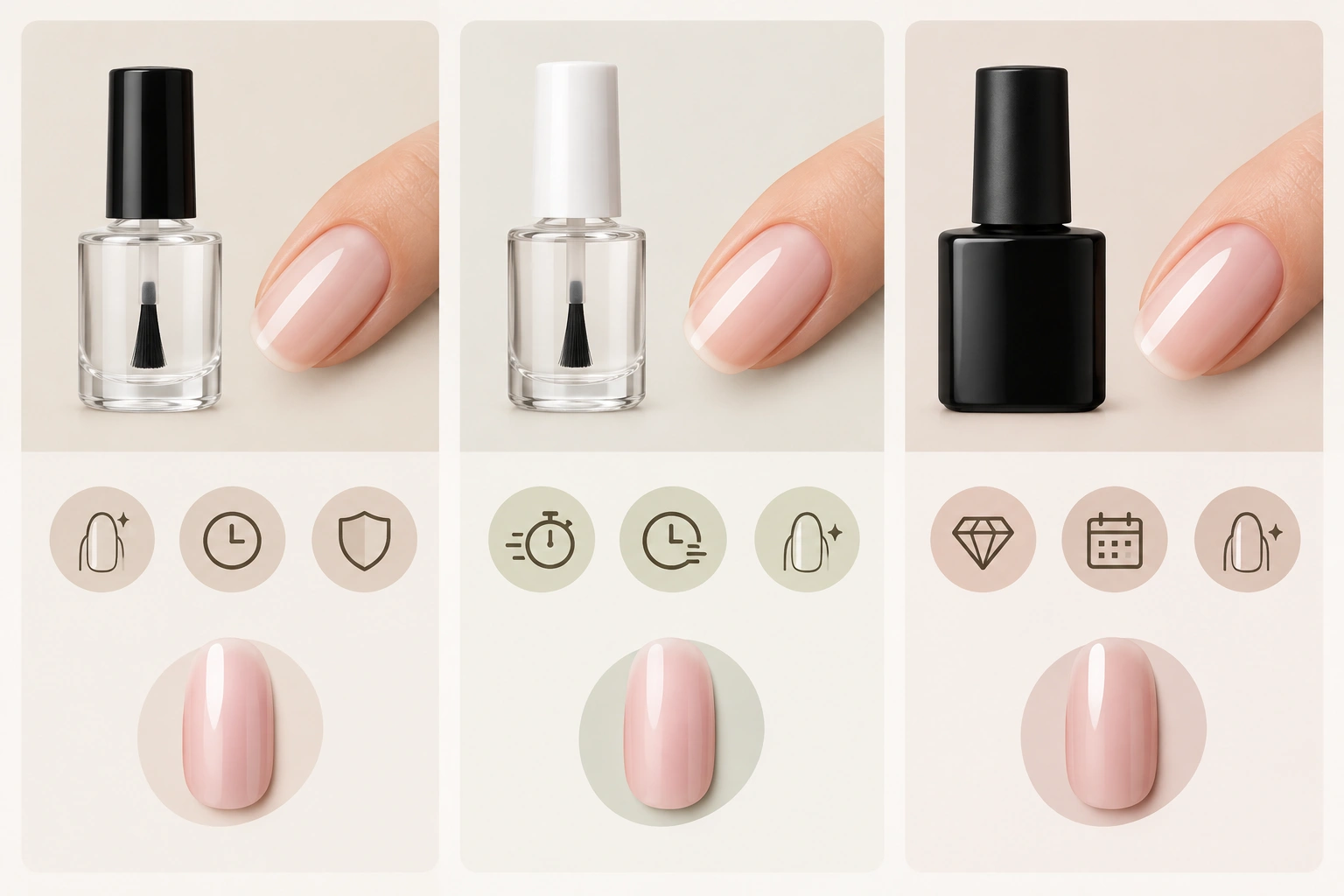
The important takeaway is simple: a manicure can look dry before it is truly ready for normal use. That is why someone can test a nail with a fingertip and still end up with a thumbprint, sheet mark, or shoe dent later.
If you are unsure, act as though the polish is still setting.
Average Drying Times by Top Coat Type
Exact timing varies by brand, coat thickness, room conditions, and how many layers are underneath. So instead of one fixed number, think in ranges and product instructions.
Regular top coat
Regular top coat usually takes the longest because it is air-dried. A thin layer may feel dry sooner than a thick one, but it can still stay vulnerable for a while.
A practical beginner range is 20 to 30 minutes for surface dryness, with 1 to 2 hours being a safer window before you go back to normal hand use.
This is where beginners often get tripped up: the nail may seem fine when you are sitting still, then smudge the moment you use your hands normally.
Quick-dry top coat
Quick-dry formulas are made to reduce waiting time. They are helpful if you paint your nails before bed or need to get back to daily tasks sooner.
A realistic beginner range is 5 to 10 minutes for surface dryness, with 15 to 30 minutes often being enough for gentle use like careful typing or holding light items.
Even so, “quick-dry” does not mean “instant.” It usually means faster than regular polish, not fully immune to dents right away.
Gel top coat
Gel top coat is different. It typically does not air-dry in the same way regular polish does. Instead, it cures under a UV/LED lamp if the product is made for that system.
Many gel top coats cure in about 30 to 60 seconds per layer, but the exact time depends on the formula and lamp. Some systems need a little longer, so the label matters.
Do not use a lamp unless the product is labeled for it. Gel and regular polish are not interchangeable in the way beginners sometimes assume.
For safety and product-use basics, the FDA’s consumer guidance on nail products is a useful place to check general information about proper use and product labeling.
What Makes Top Coat Dry Faster or Slower
A top coat does not dry in a vacuum. A few everyday factors make a big difference.
Coat thickness
This is the biggest beginner mistake. A thick top coat traps more solvent and takes longer to set. It can also skin over on top while staying soft underneath.
A thin, even coat is usually the safer choice.
Humidity and ventilation
A more humid room can slow drying, especially if the air feels still and closed in. Better airflow helps solvents escape more efficiently.
You do not need a salon setup. Even moving to a less humid room or sitting near gentle airflow can help.
Temperature
A normal indoor room is usually easier to work with than extremes. If a room feels very cold or very hot, the polish may not set as evenly, especially when the coat is thick.
Number of layers
A top coat sits on top of base coat and color polish. If those layers are still soft, the top coat may appear to dry while the whole manicure remains vulnerable.
That is why patience between coats matters. Rushing the whole stack is more likely to cause dents than saving a few minutes.
How to Tell When Top Coat Is Dry Enough
You do not need to poke your nails repeatedly. In fact, that usually causes the problem you are trying to avoid.
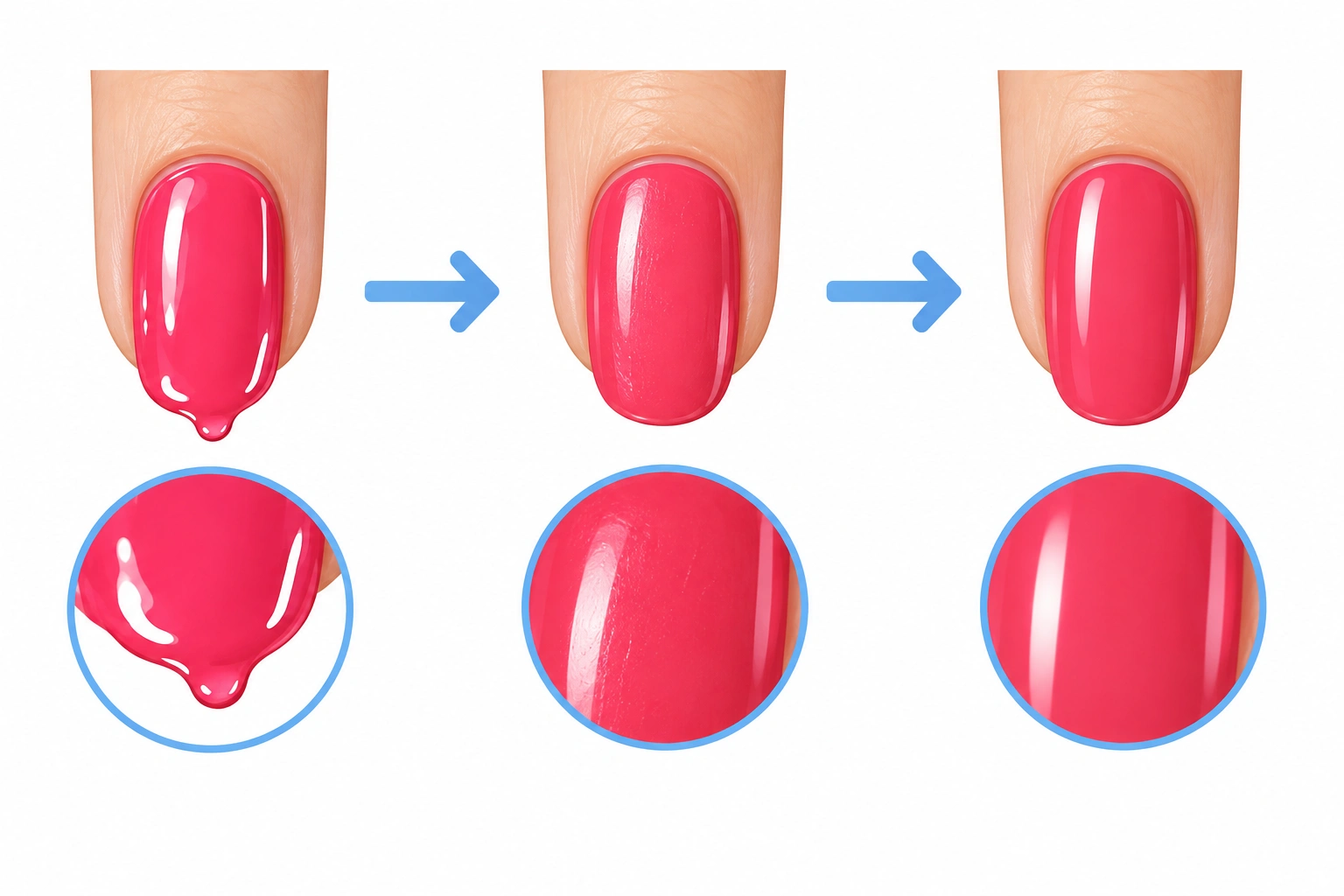
Safe signs to look for
- The surface no longer looks wet or streaky
- The polish does not shift when you hold your hands still
- A very light touch does not leave an obvious mark
- The nail feels firm enough that you are not worried about brushing it accidentally
What not to do
- Do not press hard to “check”
- Do not rub the nail with another finger
- Do not assume one dry nail means every nail is ready
- Do not test by touching fabric, hair, or a phone case
A polished nail that seems ready can still dent under pressure. If you need to decide between using your hands and waiting another little while, wait.
If your top coat still feels tacky after the expected time, the safest move is usually to give it more time rather than trying to force it dry. If it stays sticky for much longer than the label suggests, the likely causes are a thick coat, too many layers underneath, or a product/application issue.
How to Make Top Coat Dry Faster Without Ruining the Manicure
There are safe ways to cut down the wait, but the goal is to help the polish dry evenly — not trap wet polish underneath.
Use thinner coats
This is the most reliable step. Thin coats dry more evenly and are less likely to stay soft under the surface.
Leave time between layers
If the color coat is still tacky or soft, the top coat has more work to do. A little patience before sealing the manicure helps.
Choose a quick-dry formula
If you regularly paint your nails when you are short on time, a quick-dry top coat may be worth buying instead of relying on a regular one.
Use drying aids correctly
Drying drops or sprays can help, but only when used as directed. They are not a fix for a very thick manicure.
Keep the environment simple
Avoid dusty areas, avoid humid spaces, and try not to keep handling objects right away. Sitting still for a few extra minutes is often more helpful than moving around and testing the polish.
The main idea is simple: speeding up drying works best when the polish layers are already thin and even.
Common Mistakes That Cause Smudges, Dents, or Sticky Top Coat
Most top coat problems come from a few repeat errors.
Applying too much product
A thick top coat is the fastest way to create a false sense of dryness. The outside may seem ready while the inside is still soft.
Using “dry to the touch” as the finish line
This is the classic beginner trap. Touch-dry is only one stage, not the end of the process.
Getting dressed too soon
Socks, shoes, gloves, and tight sleeves can all press into fresh polish. This is especially common when people paint toes or do nails before leaving the house.
Going to bed too early
Sheets and blankets can leave texture marks even when the polish seems okay. Nighttime is one of the easiest ways to damage a fresh manicure.
Repeatedly testing the nails
Every test adds risk. If you keep checking, you are more likely to smudge the surface than if you had simply waited.
If your polish stays sticky much longer than expected, the issue is often product-related, coat thickness-related, or linked to how the layers were applied.
When Your Manicure Is Ready for Normal Activity
“Normal activity” is different from “gently dry.”
Light activities first
Once the top coat is dry to the touch, you can usually handle very light tasks with care, like careful typing or holding your phone. These are the kinds of activities that put little direct pressure on the nail surface.
Activities that need more caution
Give extra time before:
– putting on closed-toe shoes
– pulling on socks or gloves
– washing dishes or soaking hands
– carrying bags that press against nails
– going to bed
These tasks add pressure, friction, or fabric contact, which is enough to dent polish that still seems fine on the surface.
A practical rule: if the task can press, rub, or cover the nails, wait longer than you would for simply picking up a light object.
For beginners, a useful rule of thumb is:
– after surface-dry: okay for very gentle handling only
– after touch-dry: okay for light typing and careful phone use
– after more time has passed: safer for shoes, bed, and normal daily routines
Choosing the Right Top Coat for Your Routine
The best top coat is the one that matches your real life.
Choose regular top coat if:
- you do not mind waiting longer
- you already own it and use it occasionally
- you prefer a simple air-dried routine
Choose quick-dry top coat if:
- you want less waiting time
- you often paint your nails before bed or before getting ready
- you want a better fit for beginner home manicures
Choose gel top coat if:
- you already use gel products
- you have the correct UV/LED lamp
- you want a cured system and understand the product instructions
For most beginners, quick-dry top coat is the easiest upgrade if time is the main issue. Regular top coat is fine too, as long as you give it more breathing room. Gel is a different system entirely and should only be used with the proper matching products and lamp.
If you want to compare drying behavior more broadly, this guide to fully dry regular nail polish and this overview of how long nail polish takes to dry completely can help you understand the layers underneath the top coat.
When to See a Nail Technician or Dermatologist
Most drying issues are just product or application problems. Still, it makes sense to get help if you notice repeated problems that do not improve with thinner coats, better ventilation, or a different top coat.
See a nail technician if:
– your manicure keeps wrinkling or denting even when you wait
– the top coat stays sticky far longer than the label suggests
– you are unsure whether you are using the product correctly
See a dermatologist if:
– you develop irritation, redness, itching, or swelling around the nails
– you suspect a product reaction
– your nails or surrounding skin change in a way that worries you
Final Takeaway
If you are wondering how long top coat takes to dry, the most useful answer is not just “wait longer” — it is to match the wait to the product. Regular top coat usually needs the most time, quick-dry formulas shorten the wait, and gel top coat cures under a lamp instead of simply air-drying.
For beginners, the safest habit is to use thin coats, give the manicure time, and treat touch-dry as only a halfway point. That one shift prevents a lot of smudges and makes everyday tasks much less risky.

