
How Nail Polish Dries: A Beginner’s Guide to Faster, Smudge-Free Nails

If you’ve ever painted your nails, admired them for a minute, and then dented one by accident, you’ve already met the biggest lesson in polish: dry on the surface does not always mean dry underneath.
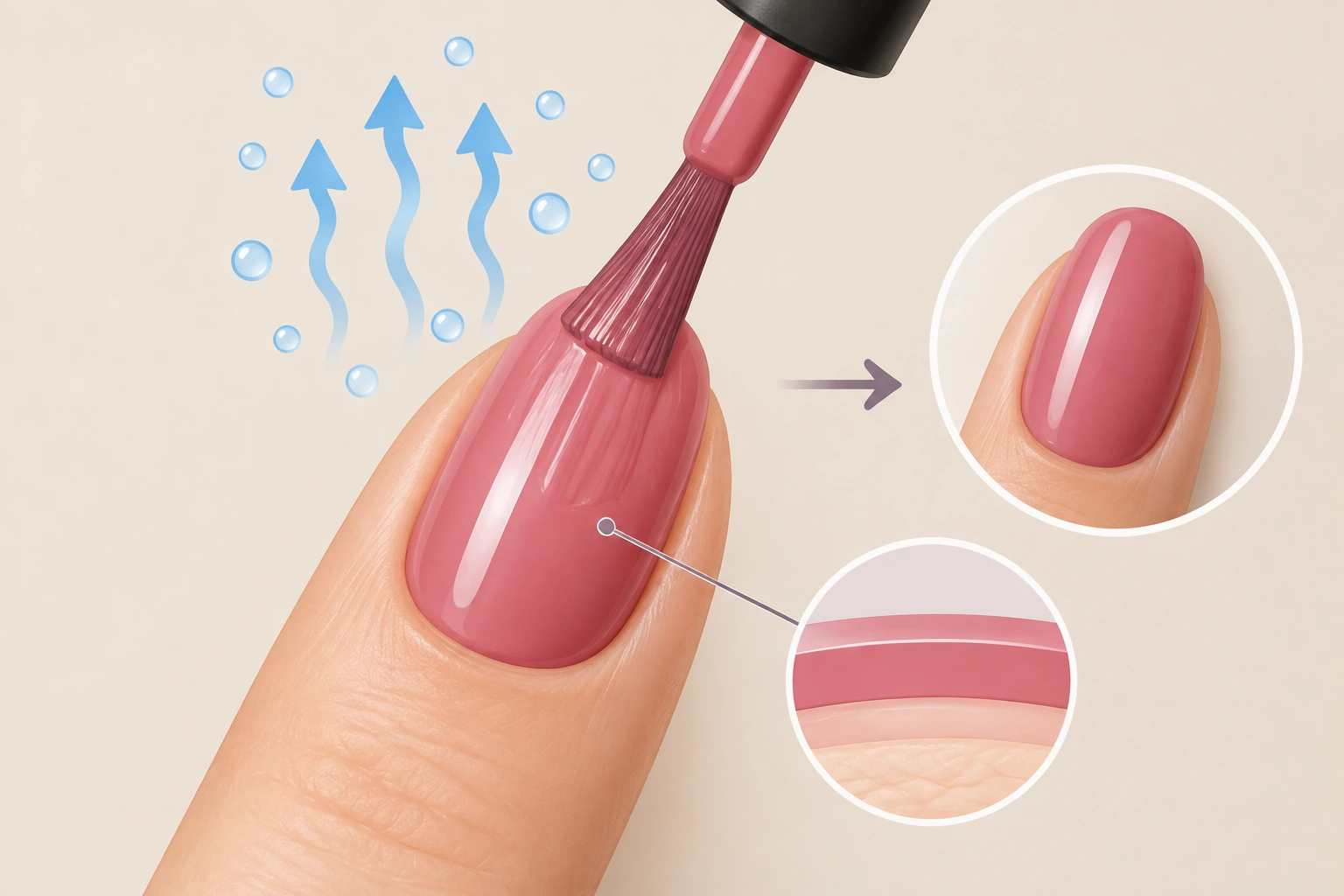
In simple terms, nail polish dries because the liquid ingredients called solvents evaporate. As that happens, the polish left on your nail turns into a solid film. That film is what gives you color and shine. The tricky part is that the top can set first while the layers below are still soft, which is why a manicure can look ready long before it truly is.
This guide breaks that down in plain language so you can choose the right polish, apply it with less frustration, and know when your nails are actually safe to use normally.
How Nail Polish Dries: The Simple Version
Regular nail polish is made from color, film-forming ingredients, and solvents. The solvents keep the polish fluid in the bottle and easy to brush on. Once the polish is on your nail, those solvents begin to evaporate into the air.
As the solvents leave, the remaining ingredients form a thin solid layer. That is the “drying” process. If the coat is thin, the solvents escape more easily. If the coat is thick, they get trapped longer, so the polish stays soft for more time.
A simple way to picture it: nail polish is like a wet paint film that has to lose its liquid before it can harden. The surface may set first, but the lower part can still be movable for a while.
Dry to the Touch vs. Fully Cured: What Each Stage Means
Beginners often hear “wait until it’s dry,” but that phrase hides three different stages.
Surface-dry
This means the top layer no longer feels wet. You may be able to lightly tap the surface without picking up polish on your finger. That does not mean the manicure is ready for normal use.
Touch-dry
Touch-dry is a little better: the polish feels dry when you gently touch it, but it can still dent from pressure. This is the stage where many smudges happen, because the nail looks done but the film underneath is still soft.
Fully cured
Fully cured means the polish has hardened as much as it reasonably will. For regular polish, this can take longer than people expect. For gel polish, curing means a different process altogether: it hardens under a UV/LED lamp instead of air-drying.
A useful rule: if you can press into the nail and leave a mark, it is not fully set yet, even if it looks glossy and dry.
How Long Nail Polish Usually Takes to Dry
There is no single exact time that fits every polish, but beginners do better with realistic ranges than with vague advice.
Approximate drying times for regular polish
These are rough beginner-friendly ranges for regular nail polish:
- Surface-dry: about 5 to 15 minutes after the final coat
- Touch-dry: about 15 to 30 minutes
- Safe for light use: about 30 to 60 minutes
- Fully cured: often several hours, and sometimes up to a full day for the manicure to harden as much as it reasonably will
These ranges are only estimates. Thick coats, humid air, and multiple layers can push them longer.
A practical timeline to think about
- Thin coat: often becomes surface-dry first and may feel safer to the touch fairly soon
- Two or more coats: needs more time, because each layer adds more solvent and more film to set
- Thick coats: take much longer and are more likely to dent
- Normal daily use: usually needs more patience than just “it looks dry”
For everyday planning, it is reasonable to expect that a regular manicure may need around 30 to 60 minutes before light use and longer before normal hand use. If you rush the next layer before the one below it has set, the whole manicure stays soft longer.
If you want a deeper breakdown of timing, see our guides on how long nail polish takes to dry and how long it takes to dry completely.
What Makes Nail Polish Dry Faster or Slower
Several simple things change drying speed. Once you know them, it becomes much easier to predict why one manicure behaves well and another smudges.
Coat thickness matters most
Thin coats dry faster because the solvents can evaporate more easily. Thick coats trap more liquid, so the top may set while the lower layer stays soft.
If you prefer full coverage, it is usually better to use two thin coats than one heavy coat. The finish tends to look smoother too.
More coats mean more waiting
Every extra layer adds drying time. Base coat, color coat, second color coat, and top coat all need a chance to settle. If they are applied too quickly, the manicure can stay soft for much longer than expected.
Formula type changes the pace
Some formulas are made to dry faster than standard polish. Others are designed for shine, long wear, or rich color and may take longer to set. That is why two bottles can look similar but behave very differently.
If you are comparing formulas, our article on does quick-dry nail polish really dry faster explains the trade-offs in simple terms.
Humidity and temperature matter
Warm, dry air generally helps solvents evaporate more easily than cool, damp air. A humid bathroom or rainy day can slow things down. That does not mean you cannot paint your nails in those conditions, but it does mean you should expect a longer wait.
Airflow helps more than pressure
Gentle airflow can help the solvent leave the polish. That is different from blasting nails with heat or handling them too soon. A fan can help in a basic way, but it does not make polish instantly hard.
Regular Polish vs. Gel Polish
Regular polish and gel polish do not dry the same way, so they should not be judged by the same timeline.
Regular nail polish
Regular polish dries by air. The solvents evaporate, the film forms, and the manicure gradually hardens. This is the easiest option for beginners because it does not require special equipment.
Gel polish
Gel polish does not air-dry in the same way. It cures under a UV/LED lamp. That means the hardening process is triggered by the lamp, not by waiting for solvents to evaporate in open air.
If you are wondering whether gel can simply sit out and dry like regular polish, the answer is no. We cover that in more detail in does gel nail polish air dry and does UV light dry regular nail polish.
Which one is better for beginners?
- Choose regular polish if you want the simplest at-home option and do not mind waiting longer.
- Choose gel polish if you want a different wear system and are prepared to follow the lamp-curing process correctly.
For most people learning the basics, regular polish is easier to troubleshoot.
Do Base Coats, Top Coats, and Quick-Dry Products Change Drying Time?
Yes, but in different ways.
Base coat
A base coat helps create a smoother starting surface and can improve how color applies. It does not magically dry the whole manicure faster, but it can help the polish go on more evenly, which supports thinner coats.
Regular top coat
A standard top coat adds shine and protection. It can seal the manicure, but it is not always the fastest-drying choice. Some regular top coats are thicker and may add a little more waiting time.
Quick-dry top coat
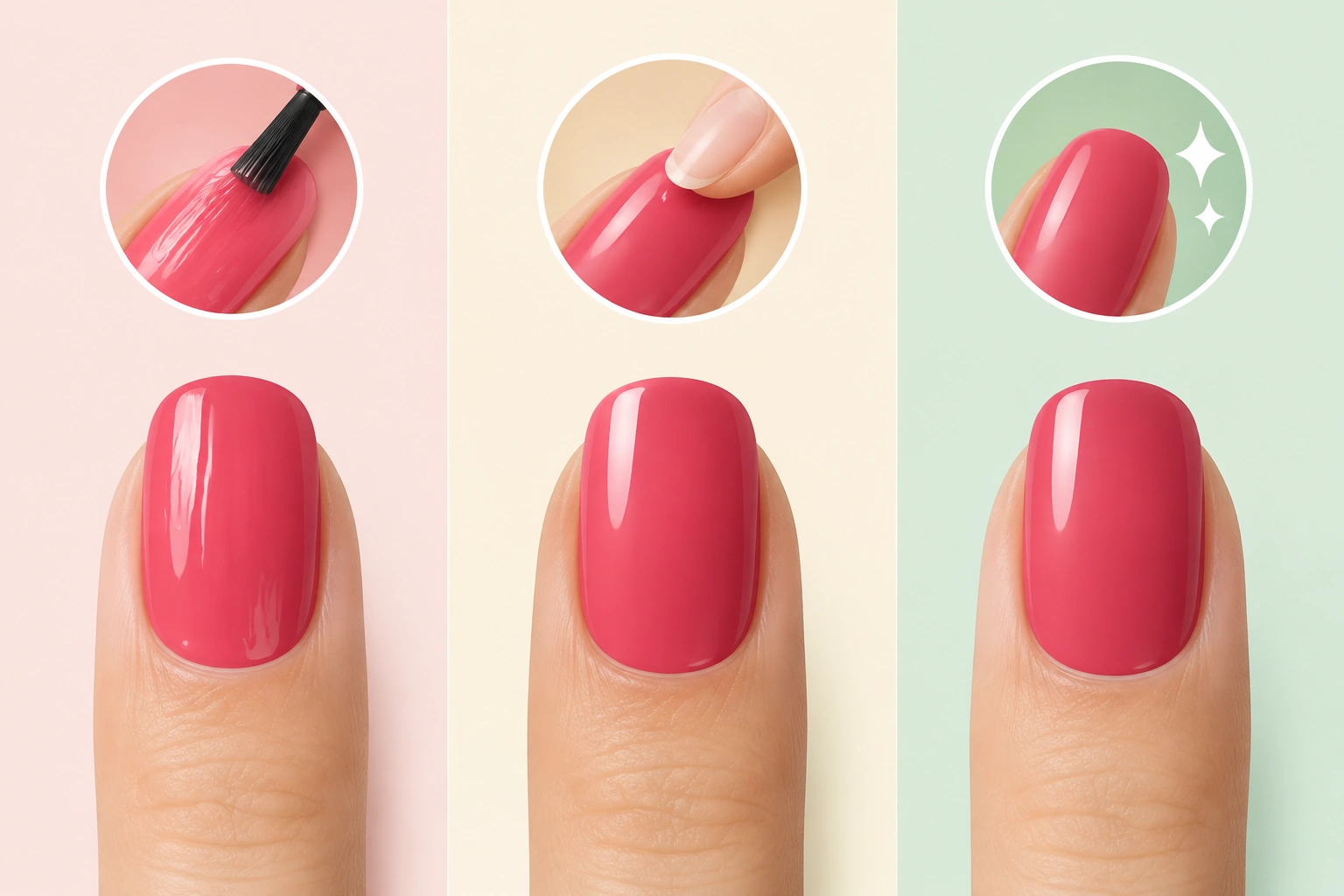
A quick-dry top coat is most useful when you want the surface to set sooner after the final coat, such as before bedtime or when you need to get back to light tasks faster. It can help the top layers feel ready more quickly, but it works best on thin, careful coats. It will not fully rescue a thick or rushed manicure.
Drying drops
Drying drops are often the better choice when you want a simple at-home shortcut and do not mind applying a small amount to each nail. They can help the surface set and may be especially useful after the last coat when you want to reduce smudges without adding another full layer of polish.
Which one should a beginner choose?
- Use a quick-dry top coat if you want one product that seals the manicure and helps speed up the final layer.
- Use drying drops if you want a lighter-touch option that can help the surface set after polishing.
- Either one works best when the manicure is already thin and even.
If you want a focused comparison, see quick-dry top coat vs. regular top coat.
The Best Beginner-Friendly Ways to Help Polish Dry Faster
You do not need salon tools to get better results. A few simple habits make a big difference.
Use thinner coats
This is the biggest improvement you can make. Load the brush lightly, then build color in layers instead of trying to finish in one pass.
Wait between coats
A good beginner rule is to wait about 2 to 5 minutes between thin coats so the surface can settle before the next layer goes on. If the polish still looks wet, drags, or strings, wait a little longer. After the final color coat and top coat, give the manicure at least 20 to 30 minutes before trying to do much with your hands.
Choose faster-setting products when speed matters
A quick-dry top coat or drying drops can help if you know you need to get back to daily life sooner. That is especially useful if you are painting your nails before dinner, bedtime, or a busy morning.
Let air move gently around the nails
A fan on a low setting can help by moving solvent-rich air away from the nails, which may support drying. Keep the airflow gentle and steady. Strong heat is not necessary, and waving your hands around usually helps less than simply letting the air move over them.
Keep your manicure simple when you are learning
A straightforward routine is easier to dry well:
1. Base coat
2. Two thin color coats
3. Top coat or quick-dry top coat
That gives you a clean result without overcomplicating the process.
Common Mistakes That Cause Smudges, Dents, and Streaks
Most smudges come from a few predictable habits.
Thick coats
A thick coat may look efficient, but it slows drying and increases the chance of dents. It also tends to show brush marks more easily.
Rushing between layers
If the first coat is still soft, the next coat can drag it around. That creates streaks and uneven color.
Touching the nails too soon
This is the classic beginner mistake. The top may feel dry, but the polish underneath can still shift if you press, tap, or grab something.
Trusting cold water to “set” polish instantly
Cold water can feel like a shortcut, but it does not reliably harden polish all the way through. It may make the surface feel firmer for a moment, yet the manicure can still dent afterward.
Using your hands normally too early
Typing, opening cans, putting on shoes, or carrying bags can all leave marks if the manicure is not ready. Give the polish more time than you think it needs.
For a practical comparison of drying methods, air drying, drying drops, and fan drying each have different strengths, but none of them fix a thick or rushed application.
How to Tell When Your Nails Are Safe to Use Normally
Here is the easiest beginner test: if you can gently press a fingertip near the edge and the polish dents, it needs more time.
A safer approach is to treat your manicure in stages:
- First 10 to 15 minutes: do not touch anything
- After about 30 minutes: light tasks may be okay if the polish feels firm, but avoid pressure, tight shoes, heavy bags, and anything that can press on the nails
- After 1 to 2 hours: many regular-polish manicures are ready for more normal hand use, though they may still be vulnerable to dents
- By the next day: the manicure is usually much less likely to mark easily
If you are unsure, assume the polish needs more time. That small delay is usually less frustrating than fixing a dent or smudge later.
Quick Answers to Common Nail Polish Drying Questions
Does a fan help nail polish dry?
Yes, gentle airflow can help the solvents evaporate. Keep it mild. Strong heat or rough air movement is not necessary.
Does a quick-dry top coat really help?
Usually, yes, it can help the top layers set faster. It works best on thin coats and careful application.
Why does my polish look dry but still smudge?
Because the surface can set before the layers underneath harden. That is normal with regular polish.
Is gel polish faster than regular polish?
It can be faster to “finish” because it cures under a lamp, but it is a different system from air-drying polish. It is not the same drying process.
Can I use cold water to dry nails?
Cold water is not a reliable shortcut. It may make the surface feel firmer, but it does not guarantee a fully dry manicure.
What is the best beginner habit for faster drying?
Thin coats. If you only change one thing, change that one.
When to See a Nail Technician or Dermatologist
If your polish never seems to set properly, keeps wrinkling, or your nails react badly to products, a nail technician can help you troubleshoot your routine. If you notice redness, swelling, itching, or another skin reaction after polish or remover use, a dermatologist is the right person to ask.
For safety-related questions about cosmetic products and ingredients, the FDA’s cosmetics guidance is also a useful place to start.
The Bottom Line
Nail polish dries because its solvents evaporate and leave behind a solid film. That film may look ready before it is truly firm, which is why beginners often see smudges and dents even after waiting. Thin coats, patience between layers, and simple drying aids like quick-dry top coats or drying drops can make a big difference without making the process complicated.
If you want the smoothest result, think less about rushing the finish and more about helping each layer set well. That one habit solves a lot of manicure problems.

