
How to Prevent Toenail Odor: Simple Habits That Keep Feet Fresh

If you notice an unpleasant smell when you remove your shoes, trim your toenails, or clean around your toes, it is easy to assume your nails themselves are the problem. Usually, the odor comes from what is happening around the toenails instead.
Sweat, bacteria, dead skin, trapped debris, damp socks, and shoes that never fully dry can all create the perfect environment for odor. Sometimes athlete’s foot or a fungal nail problem can also contribute.
Learning how to prevent toenail odor does not require an expensive foot-care routine. For most people, consistent washing, careful drying, clean socks, properly trimmed nails, and dry footwear make the biggest difference.
This guide explains the habits that can help keep your toenails fresh, which tools are worth using, what mistakes to avoid, and when persistent odor deserves professional attention.
Quick Answer
To prevent toenail odor, wash your feet every day, dry thoroughly between and around your toes, keep toenails clean and appropriately trimmed, change sweaty socks quickly, and let shoes dry completely between wears. Persistent odor combined with thickening, discoloration, crumbling, itching, pain, redness, or drainage should be professionally evaluated.
Why Do Toenails Develop an Odor?
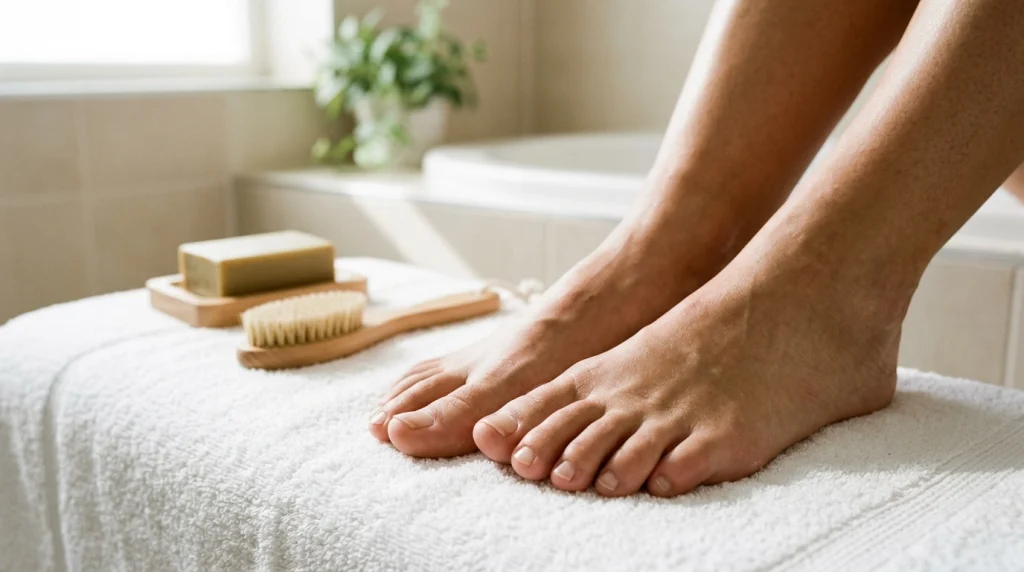
A healthy nail plate does not normally create a strong smell on its own.
The odor is more often produced by the environment surrounding your nails. Your feet spend hours inside socks and shoes, where warmth and moisture can build up. Sweat itself may not smell particularly strong, but bacteria breaking down substances on sweaty skin can create noticeable odors.
The CDC’s foot-hygiene guidance recommends washing feet daily, drying them completely, keeping toenails clean, and regularly changing socks. These habits also make the foot less welcoming to fungi that prefer warm, moist environments.
Common contributors to toenail-area odor include:
- Sweaty feet
- Damp socks
- Shoes that have not dried completely
- Dead skin around the toes
- Debris underneath the visible free edge of a nail
- Poorly cleaned nail tools
- Athlete’s foot
- Fungal nail infections
- Wearing tight, non-breathable footwear for long periods
Odor alone does not automatically mean you have an infection. However, odor accompanied by significant changes in your nails or skin deserves closer attention.
How to Prevent Toenail Odor Step by Step
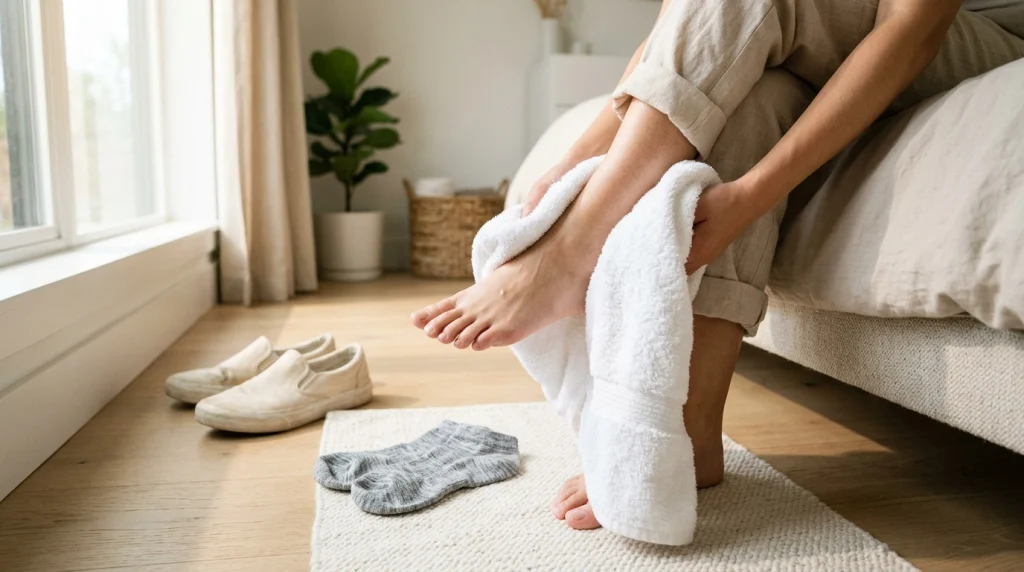
Preventing odor is usually easier than repeatedly trying to cover it with sprays or fragrances.
A simple routine that controls moisture and keeps your feet and nail area clean is a better long-term approach.
1. Wash Your Feet Every Day
Clean your feet daily with warm water and a mild soap.
Pay attention to:
- Between your toes
- Around the nail folds
- The tips of your toes
- The bottoms of your feet
- Any visible debris near the free edge of your toenails
You do not need to aggressively scrub healthy skin.
If visible dirt collects around a toenail, a clean, soft nail brush can help loosen it gently.
Avoid forcing sharp objects deep underneath your nails. The skin beneath the attached nail is sensitive. Digging at it can cause small injuries that may make irritation or infection more likely.
2. Dry Between Your Toes Carefully
Washing is only half of a good foot-care routine.
Leaving your toes damp can recreate the warm, moist environment you were trying to remove.
After bathing or showering, gently dry:
- The top and bottom of each foot
- Between every toe
- Around each toenail
- Along the sides of the nails
If the spaces between your toes regularly stay damp, spend an extra few seconds drying them rather than immediately putting socks on.
Fungi associated with athlete’s foot grow especially well in warm, moist environments, which is one reason keeping your feet dry matters.
3. Change Your Socks Daily—and After Sweating
Clean socks are one of the easiest odor-prevention tools you have.
At minimum, change your socks every day.
Change them sooner when they become damp from:
- Exercise
- Hot weather
- Long shifts at work
- Walking for extended periods
- Naturally sweaty feet
Putting clean feet back into damp socks can quickly undo your washing and drying routine.
If sweaty feet are a regular issue for you, carrying an extra pair of socks can be surprisingly useful.
4. Let Shoes Dry Between Wears
Shoes can hold moisture long after your feet feel dry.
Wearing the same damp pair day after day can keep your feet in a humid environment and allow odor-causing microorganisms to thrive.
When possible:
- Remove shoes after wearing them.
- Open the tongue or loosen the laces.
- Let the inside air out.
- Wait until the shoes are fully dry before wearing them again.
Rotating between two or more pairs can be especially helpful if you wear closed shoes every day.
Breathable shoes may also reduce moisture buildup. The American Academy of Dermatology’s nail-fungus prevention advice recommends footwear that allows airflow and also advises protecting your feet in warm communal environments.
5. Keep Your Toenails Appropriately Trimmed
Long toenails can create more space for debris to collect underneath their free edges.
Trim toenails when needed and generally cut them straight across rather than deeply rounding the corners.
Do not cut so short that the surrounding skin becomes tender.
Keeping your nails reasonably short can make them easier to clean and inspect. It can also help you notice discoloration, lifting, thickening, or other changes sooner.
6. Clean Your Nail Tools
Your clippers and files also need attention.
The CDC’s nail-hygiene recommendations advise keeping nails clean and cleaning grooming tools before use.
For personal home tools:
- Remove visible nail debris after use.
- Follow the tool manufacturer’s cleaning directions.
- Allow cleaned tools to dry completely before storing them.
- Do not share personal clippers or files.
If a tool is rusty, damaged, or difficult to clean thoroughly, replacing it is often the simplest choice.
7. Wear Foot Protection in Shared Wet Areas
Locker rooms, public showers, pool decks, and similar spaces can expose bare feet to organisms that cause fungal infections.
Wear shower sandals or another appropriate form of foot protection instead of walking barefoot.
This does not guarantee that you will never develop athlete’s foot or nail fungus, but it reduces unnecessary exposure.
8. Treat Excessive Foot Moisture as Part of the Problem
Some people naturally sweat more than others.
If your feet become noticeably damp even when you are not exercising, focus on moisture management throughout the day.
Helpful habits include:
- Choosing fresh socks
- Rotating footwear
- Allowing shoes to air out
- Avoiding staying in wet footwear
- Washing after heavy sweating
- Using foot products only according to their directions
If excessive sweating is persistent or difficult to control, a dermatologist or other healthcare professional can help you discuss treatment options instead of relying on increasingly harsh DIY remedies.
Simple Toenail Odor Prevention Checklist
| Habit | How Often | Why It Helps |
|---|---|---|
| Wash feet with mild soap | Daily | Removes sweat, surface dirt, and debris |
| Dry between toes | After every wash | Reduces lingering moisture |
| Change socks | Daily and after sweating | Prevents prolonged dampness |
| Rotate shoes | When possible | Gives footwear time to dry |
| Trim toenails | As needed | Makes nails easier to keep clean |
| Clean nail tools | Before/after use as appropriate | Reduces contamination |
| Inspect feet and nails | Regularly | Helps you notice changes early |
| Wear sandals in communal wet areas | Every visit | Reduces exposure to fungi |
The key is consistency. You do not need a complicated 10-product foot-care routine if basic hygiene and moisture control are working.
What About Foot Powder, Shoe Spray, or Deodorizer?
These products can be useful, but they should support good hygiene rather than replace it.
A shoe deodorizer may make footwear smell fresher, for example, but it will not solve constantly damp shoes or treat an actual nail infection.
Some antifungal powders or sprays are intended to help prevent fungal growth in footwear. Use them only according to the package directions and stop if they irritate your skin.
If you have very sensitive skin, cracked skin, eczema, or another skin concern, be particularly cautious about fragranced or heavily medicated products.
More product does not automatically mean better odor control.
What Does a Basic Routine Cost?
Fortunately, preventing toenail odor can be inexpensive.
For many people, the essentials are simply:
- Mild soap
- Clean towels
- Clean socks
- A personal toenail clipper
- An optional soft nail brush
You usually do not need salon treatments, electric tools, elaborate foot soaks, or multiple deodorizing products simply to maintain fresh, healthy-looking feet.
Spend first on clean, comfortable socks and properly fitting footwear rather than unnecessary treatments.
Expert Tip: If your feet smell again soon after washing, look beyond your toenails. Check whether your socks stay damp or your shoes still smell and feel moist inside. Repeatedly washing your feet will have limited benefit if you immediately put them back into damp footwear.
Can a Fungal Infection Cause Toenail Odor?
It can be part of the picture, especially when odor appears with other nail or skin changes.
Nail fungus, medically called onychomycosis, can affect the appearance and structure of a toenail. According to the American Academy of Dermatology’s guide to nail fungus symptoms, possible signs include discoloration, thickening, brittleness, cracking, crumbling, buildup underneath the nail, lifting, and sometimes pain.
Athlete’s foot may cause symptoms such as:
- Itching
- Burning
- Peeling skin
- Scaling
- Cracking, particularly between the toes
Do not assume every thick or discolored toenail is fungus.
Injury, psoriasis, and other nail conditions can sometimes resemble fungal nail changes. A dermatologist may examine the nail and, when necessary, test a sample before deciding on treatment.
That is especially important before spending months treating yourself for a condition you may not actually have.
What Should You Avoid Putting Around Smelly Toenails?
Home remedies can sound attractive because many use products you already own.
However, stronger is not always safer.
For everyday cleaning, avoid unnecessarily applying harsh substances such as concentrated disinfectants or other irritating chemicals directly to your skin and nails.
Also avoid:
- Scraping deeply underneath the toenail
- Cutting living skin around the nail
- Repeatedly soaking irritated or cracked feet in harsh mixtures
- Covering damaged skin with strongly fragranced products
- Using someone else’s nail tools
- Trying to grind down a suspicious nail aggressively at home
If a product burns or causes redness, itching, or swelling, stop using it and rinse the area as appropriate.
Pedicures and Toenail Odor Prevention
A professional pedicure can make your feet look and feel refreshed, but a salon visit is not required for basic odor prevention.
Daily care between appointments matters more.
If you receive professional pedicures, pay attention to hygiene. Nail tools and reusable equipment should be appropriately cleaned and disinfected according to applicable salon practices.
The American Academy of Dermatology advises customers to pay attention to whether salons sanitize nail-grooming tools and foot baths between clients.
At home, do not attempt aggressive cuticle cutting or deep under-nail cleaning just because you saw it during a salon service.
Common Mistakes to Avoid
Even a well-intended foot-care routine can make things worse when it becomes too aggressive.
Avoid these common mistakes:
- Putting clean socks on damp feet. Dry thoroughly first.
- Wearing the same sweaty shoes every day. Give footwear time to dry.
- Trying to mask odor with fragrance alone. Address moisture and hygiene first.
- Digging underneath the nail with pointed tools. This can damage sensitive tissue.
- Cutting toenails extremely short. Over-trimming can irritate the surrounding area.
- Sharing nail clippers or files. Fungal infections can spread through contaminated personal items.
- Ignoring athlete’s foot symptoms. Fungal skin infections can spread to toenails.
- Assuming every unusual nail is fungus. Several nail problems can look similar.
- Continuing DIY care despite pain or drainage. These symptoms deserve professional evaluation.
When to See a Nail Technician or Dermatologist
There is an important difference between a cosmetic nail problem and a medical nail problem.
A licensed nail technician can help with routine grooming, trimming, polish, and cosmetic foot care when your skin and nails are otherwise healthy.
A dermatologist, podiatrist, or appropriate healthcare professional is a better choice when the issue may involve infection, injury, or disease.
Consider medical evaluation if you notice:
- Persistent odor despite consistent hygiene
- A toenail becoming yellow, white, brown, black, or greenish without an obvious cosmetic explanation
- Significant nail thickening
- Crumbling or splitting
- The nail lifting away from the nail bed
- Increasing pain
- Redness or swelling around a nail
- Pus or other drainage
- Warm or spreading irritated skin
- Repeated athlete’s foot
- A wound that is not healing normally
Seek care sooner if you have diabetes, poor circulation, reduced sensation in your feet, or another condition that makes foot injuries or infections more concerning.
Do not rely on a nail salon to diagnose or treat a suspected infection.
DIY Care vs. Professional Help
For ordinary sweaty-foot odor without concerning symptoms, DIY hygiene is usually a reasonable first step.
Try a consistent routine for your feet, socks, shoes, and nail tools rather than changing only one thing.
Professional help becomes more useful when:
- The smell persists despite good hygiene.
- You cannot tell whether a nail change is cosmetic or medical.
- A thick nail is difficult or painful to trim.
- You suspect fungal infection.
- The surrounding skin is inflamed or damaged.
Medical nail treatment can take time because toenails grow slowly. If fungus is confirmed, treatment may involve prescription topical or oral medicines depending on the individual situation.
FAQs
How can I stop my toenails from smelling?
Wash your feet daily, dry thoroughly between the toes, keep the nails clean and appropriately trimmed, wear fresh socks, and allow shoes to dry before wearing them again. If odor persists with nail discoloration, thickening, pain, or crumbling, consider professional evaluation.
Why do my toenails smell even after I wash them?
Your shoes or socks may still contain moisture and odor-producing bacteria. Athlete’s foot or another fungal problem can also contribute. Make sure your feet, socks, and footwear are all being addressed rather than repeatedly washing only the nails.
Should I clean underneath my toenails every day?
Daily foot washing is helpful, but aggressive under-nail cleaning is unnecessary. If debris is visible beneath the free edge, soften it during washing and gently clean the accessible area with a soft nail brush. Do not push tools deeply underneath attached nail tissue.
Can sweaty feet make my toenails smell?
Yes. Sweat creates moisture inside socks and shoes, and bacteria acting on sweaty skin can contribute to odor. Keeping feet dry and changing damp socks promptly may help substantially.
Does smelly toenail buildup mean I have fungus?
Not necessarily. Debris can include dead skin, lint, and other material. However, persistent buildup combined with thickening, discoloration, crumbling, lifting, itching, or peeling may indicate a problem that should be evaluated.
How often should I change socks to prevent foot odor?
At least once per day, and more often when they become damp from exercise, heat, work, or heavy sweating.
Can a pedicure get rid of toenail odor?
A pedicure may clean and groom the feet, but it does not address every cause of odor and should not be used to treat a suspected infection. Consistent daily hygiene and moisture control are more important for prevention.
Final Thoughts
Learning how to prevent toenail odor mostly comes down to controlling moisture and maintaining simple, consistent hygiene.
Wash your feet every day, dry carefully around and between your toes, change damp socks, allow shoes to dry, keep your toenails appropriately trimmed, and use clean personal grooming tools.
Avoid the temptation to attack odor with harsh chemicals or aggressive scraping. Healthy feet usually need gentle care, not stronger treatments.
Most importantly, pay attention to what your nails and skin are telling you. Persistent smell accompanied by thickening, discoloration, crumbling, pain, swelling, peeling, or drainage should not simply be covered with deodorizer.
Start with the basic routine today, keep it consistent, and seek professional advice when something looks or feels abnormal.

