
Quick Answer
A nail dehydrator can cause burning, redness, itching, peeling, or swelling if your skin reacts to an ingredient. However, symptoms after a manicure may also come from primer, gel, acrylic, glue, or another nail product used at the same time. The FDA’s nail product safety guidance notes that nail products can cause irritation and allergic reactions.
Signs to watch for
- Burning or stinging: Immediate discomfort may point toward irritation, especially after skin contact.
- Red, itchy skin: Itching around the cuticles or fingertips can occur with contact dermatitis.
- Swollen nail folds: Puffy or tender skin around several nails deserves attention.
- Peeling or blisters: These can occur in stronger irritant or allergic reactions.
- Face or eyelid rash: Nail-product allergens can sometimes transfer from the fingers to other skin.
What to do first
- Stop using the suspected products and avoid another exposure until you know what caused the reaction.
- Seek urgent medical help for breathing trouble or swelling of the lips, tongue, face, or throat.
If your fingertips suddenly itch after nail prep, it’s easy to blame the dehydrator. The timing makes that conclusion feel obvious.
In practice, several products usually touch the nail during one manicure. This guide explains how to separate simple irritation from a possible allergy and what to do next.
In This Guide
- Can a nail dehydrator cause an allergic reaction?
- What does a nail dehydrator allergic reaction look like?
- Is it an allergy, irritation, or another nail problem?
- Which nail product ingredients can cause reactions?
- What should you do after a nail product reaction?
- When should you see a doctor?
- How can you prevent another reaction?
- Frequently asked questions
- Final takeaway
Can a Nail Dehydrator Cause an Allergic Reaction?
Yes, a reaction after using nail dehydrator is possible. Still, the dehydrator may not always be the ingredient responsible.
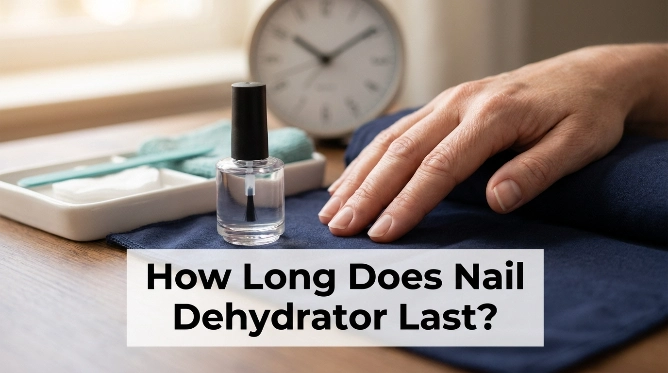
A nail dehydrator is a nail-prep product designed to temporarily remove surface oils and moisture from the natural nail. This helps gel, acrylic, press-on systems, and other coatings adhere more effectively.
Many dehydrators rely on fast-evaporating solvents. Those ingredients can dry or irritate surrounding skin if the brush touches the cuticle or sidewalls.
That type of reaction is often irritant contact dermatitis. It happens because a substance directly damages or disrupts the skin barrier rather than triggering a specific allergy.
Allergic contact dermatitis works differently. Your immune system becomes sensitized to an ingredient and reacts after later exposure.
- Irritation may happen after a single strong exposure.
- Allergy may appear only after you’ve used a product successfully many times.
- Both can cause redness, burning, dryness, peeling, or soreness.
This is why I don’t judge the culprit by timing alone. A manicure can involve dehydrator, primer, base gel, color gel, builder gel, acrylic liquid, glue, top coat, remover, and cleanser within one session.
As of 2026, acrylate and methacrylate allergy remains an important concern with modern nail systems. These chemicals are especially relevant when uncured nail material repeatedly touches the skin.
Vet note: For this human-health topic, a dermatologist or other qualified healthcare professional is the appropriate clinician to consult if symptoms persist or recur.
What Does a Nail Dehydrator Allergic Reaction Look Like?

A suspected nail-product allergy commonly causes itchy, inflamed skin around the fingers. Symptoms can also appear away from the nails after contaminated fingers touch another area.
Common symptoms around the nails
- Itching: Persistent itching can be more suspicious for dermatitis than simple temporary dryness.
- Redness: The cuticles, fingertips, or nail folds may look inflamed.
- Swelling: Skin around one or several nails may become puffy or tender.
- Burning: Some people describe stinging or a hot sensation.
- Peeling: The fingertips may become dry, flaky, or cracked.
- Small blisters: Stronger dermatitis can produce fluid-filled bumps.
- Nail changes: Severe or repeated reactions can occur alongside lifting, soreness, or damage around the nail unit.
The American Academy of Dermatology explains that contact dermatitis can develop wherever an irritating or allergenic substance affects the skin. Hands are a common location because they contact so many products.
Symptoms can appear on the face
A rash doesn’t have to remain around your nails. Residue can transfer when you rub your eyelids, face, neck, or another sensitive area.
Eyelid skin is particularly delicate. A person can therefore develop an eyelid rash while the fingers show milder symptoms.
How quickly can symptoms appear?
Strong irritation can start during application or shortly afterward. Allergic contact dermatitis may be delayed and become more obvious hours or days later.
Timing alone can’t confirm the diagnosis. Record what products you used and when each symptom began.
Section Takeaway: Itching, swelling, redness, peeling, blisters, and rashes beyond the fingertips can all justify taking a suspected nail-product reaction seriously.
Is It an Allergy, Irritation, or Another Nail Problem?

Allergy and irritation can look surprisingly similar. Infection and mechanical nail damage can also mimic parts of either reaction.
| Problem | Common clues | Typical timing | Best next step |
|---|---|---|---|
| Irritant contact dermatitis | Burning, dryness, redness, cracking, soreness | Often during or soon after exposure | Stop exposure and protect the skin barrier |
| Allergic contact dermatitis | Strong itching, redness, swelling, scaling, possible blisters | Often delayed by hours or days | Avoid suspected products and consider dermatology assessment |
| Possible infection | Increasing pain, warmth, pus, significant tenderness | May worsen over time | Seek medical evaluation |
| Mechanical damage | Thin, sore, split, or over-filed nails | Often noticeable after filing or removal | Pause enhancements and allow recovery |
A burning sensation immediately after dehydrator touches broken skin may fit irritation. Severe itching that returns with repeated manicures raises more concern for allergy.
Don’t deliberately reapply the suspected product to find out. Re-exposure can make a sensitized person’s reaction worse.
Which Nail Product Ingredients Can Cause Reactions?
The ingredient list matters more than the words printed on the front of the bottle. Two products labeled “nail prep” can contain different formulas.
Solvents in nail dehydrators
Dehydrators often contain volatile ingredients intended to remove oil and evaporate quickly. These can cause pronounced dryness or irritation if they repeatedly contact skin.
Never assume that burning means the product is “working.” Nail prep should be targeted to the nail plate rather than painted across the skin.
Acrylates and methacrylates
Acrylates and methacrylates are important allergens associated with artificial nail systems. DermNet notes that acrylate monomers can cause allergic contact dermatitis and may affect the fingers, hands, face, eyelids, or neck.
You can review DermNet’s overview of acrylate allergy and its common presentation if gel or acrylic products were part of the same manicure.
These chemicals may be found in gel, acrylic, adhesive, or related systems rather than the dehydrator itself. That’s an important distinction when you’re trying to identify the trigger.
Primer isn’t the same as dehydrator
A nail dehydrator removes surface moisture and oil. A primer is designed to improve bonding between the natural nail and the enhancement system.
Some primers use stronger chemistry, including methacrylic acid. Treat the two bottles as separate exposures when reviewing what caused a reaction.
Don’t rely on “hypoallergenic” alone
Marketing terms don’t tell you which ingredient caused your symptoms. Keep the full ingredient list or photograph the packaging before throwing anything away.
That information can be valuable if a dermatologist later recommends patch testing.
Vet note: Don’t perform DIY patch tests using concentrated nail chemicals. A dermatologist can select appropriate allergens and test conditions.
What Should You Do After a Nail Product Reaction?
First, stop applying the suspected product. Continuing the manicure can add more exposure while your skin is already irritated.
- Stop the nail service. Don’t add another coat to see whether the discomfort settles.
- Remove fresh product from skin. Follow the product’s safety directions and avoid spreading residue over other areas.
- Wash exposed skin gently. Use mild soap and water when appropriate, then pat dry.
- Don’t pick or scratch. Broken skin can become more painful and may increase infection risk.
- Pause nail products. Give irritated skin time to settle rather than switching immediately to another system.
- Save the labels. Photograph dehydrator, primer, base coat, gel, glue, and other products used.
A bland moisturizer may help support dry, irritated skin. Avoid adding fragranced lotions, essential oils, or other new products while you’re trying to identify the trigger.
For significant dermatitis, a healthcare professional may recommend medication such as a topical corticosteroid. The right treatment depends on severity, location, and your medical history.
If reactions keep returning, ask a dermatologist about patch testing for allergic contact dermatitis. Patch testing looks for delayed skin reactions to specific allergens.
When Should You See a Doctor?
Some mild irritation settles after the exposure stops. Other symptoms need prompt or urgent medical attention.
Get emergency help for signs of a severe allergic reaction
- Difficulty breathing or wheezing
- Swelling of the tongue or throat
- Rapidly increasing facial or lip swelling
- Fainting, severe dizziness, or feeling unable to breathe normally
These symptoms are not something to manage with another nail-care product. Contact your local emergency medical service.
Arrange medical evaluation for concerning nail or skin symptoms
- Severe or increasing swelling around the fingers
- Blistering or raw, weeping skin
- Significant nail separation or nail-bed pain
- A spreading rash
- Rash involving the eyelids or face
- Pus, increasing warmth, or worsening tenderness
- Symptoms that repeatedly return after manicures
A clinician can help determine whether you’re dealing with irritation, allergy, infection, or another problem. Bring the exact products or ingredient photographs when possible.
Vet note: A persistent or severe reaction should be evaluated by a healthcare professional rather than diagnosed from appearance alone.
How Can You Prevent Another Nail Dehydrator Reaction?

The safest prevention strategy is to avoid the confirmed trigger. Until you know what that is, reduce unnecessary exposure across the entire manicure routine.
Keep nail prep off the skin
I treat dehydrator like a nail-plate product, not a cuticle product. A lightly loaded brush gives much better control than flooding the nail.
- Remove excess liquid from the brush before application.
- Keep product away from sidewalls and cuticles.
- Don’t apply over cuts, torn cuticles, or visibly irritated skin.
- Clean accidental skin exposure according to the manufacturer’s directions.
Avoid repeated exposure when symptoms are unexplained
Don’t switch brands every few days while the skin remains inflamed. That creates more variables and makes the original cause harder to identify.
Frequent exposure can also be a problem when allergy is involved. Once sensitization develops, even smaller exposures may trigger another flare.
Use complete, compatible nail systems
Follow the manufacturer instructions for preparation, application, and curing. Incompletely cured gel material can leave reactive chemicals where they can contact skin.
The American Academy of Dermatology also recommends knowing which products are used during nail services because nail-product ingredients can cause reactions. Its manicure and pedicure safety guidance offers broader nail-care precautions.
Tell nail professionals about a confirmed allergy
If patch testing identifies an acrylate or another allergen, keep the written results. Show them to your nail technician and relevant healthcare professionals.
This can matter outside manicures because related materials may appear in dental, medical, adhesive, or cosmetic products.
Section Takeaway: Preventing another flare means controlling skin contact, avoiding unexplained re-exposure, and identifying the actual allergen rather than simply changing dehydrator brands.
Frequently Asked Questions
Can nail dehydrator make my fingers itch?
Yes. Itching after nail prep can occur with irritant or allergic contact dermatitis, especially if liquid touched the skin. Because several products are normally used during one manicure, itching doesn’t prove that the dehydrator itself caused the reaction.
Why are my cuticles swollen after doing my nails?
Swollen cuticles can occur after irritation, allergic contact dermatitis, trauma, or infection. Stop using the suspected products and monitor for worsening pain, warmth, pus, spreading redness, or significant swelling, which should be medically assessed.
Can you suddenly become allergic to nail products?
Yes. Allergic contact dermatitis can develop after previous exposures that caused no obvious problem. Once your immune system becomes sensitized to an ingredient, later contact can produce an itchy or inflamed rash.
How do I know whether I’m allergic to acrylates?
A dermatologist can evaluate your history and may recommend patch testing using appropriate allergens. Don’t place uncured gel, acrylic liquid, primer, or other concentrated nail products directly on your skin as a homemade allergy test.
Can nail allergies cause an eyelid rash?
Yes. Nail-product allergens can be transferred when your fingers touch your face or eyelids. The rash may therefore appear away from the nails, even when the skin around your fingers looks less affected.
Should I try a different nail dehydrator after a reaction?
Not immediately. First let the skin recover and review every product used during the manicure. If reactions are repeated or significant, identifying the responsible ingredient is safer than testing several new formulas on irritated skin.
Can I still get gel or acrylic nails after a confirmed allergy?
That depends on the exact allergen identified. If you have a confirmed acrylate or methacrylate allergy, discuss future nail products with a dermatologist because related ingredients can appear across multiple gel, acrylic, and adhesive systems.
Final Takeaway
A nail dehydrator allergic reaction is possible, but don’t assume the dehydrator is automatically responsible. Irritating solvents, primer, uncured gel, acrylic ingredients, glue, and other products used during the same manicure can produce overlapping symptoms.
Stop exposure when itching, burning, swelling, peeling, or blistering appears. Save the ingredient lists and seek professional assessment if symptoms are severe, spreading, persistent, or repeatedly return.
If the problem keeps happening, finding the exact trigger is more useful than simply buying another bottle labeled “gentle.” Your future manicures become much safer once you know what your skin needs to avoid.