
Quick Answer
A nail dehydrator may sting if it touches a cut, hangnail, irritated cuticle, or an over-filed nail. A true burning sensation is not something you should push through. Stop applying the product, remove it from the skin, and follow the product directions. The FDA’s nail product safety guidance also recommends following label warnings and paying attention to reactions.
What the sensation may mean
- Brief cool feeling: Fast-evaporating solvents can make the nail feel cool as they dry.
- Sharp skin sting: The dehydrator may have reached a cut, hangnail, or irritated cuticle.
- Burning through nail: The nail plate may be unusually thin or damaged from filing or removal.
- Itching and rash: Consider irritation or an allergic reaction to a nail product rather than normal dehydration.
- Heat under a lamp: That points more toward gel curing heat than the dehydrator itself.
What to do now
- Stop using the product if the burning is painful, persistent, or getting stronger.
- If the liquid is on your skin, rinse it away and check the product label for first-aid instructions.
A nail dehydrator burning sensation can be confusing because nail prep products are supposed to dry quickly. They are not supposed to make you endure significant pain.
I treat noticeable burning as a signal to check the nail, surrounding skin, and products being used. This guide explains the common causes, what to do immediately, and how to tell a dehydrator sting from primer irritation, gel heat, or a possible nail-product allergy.
In This Guide
- Why Does a Nail Dehydrator Cause a Burning Sensation?
- Is a Little Tingling From Nail Dehydrator Normal?
- How Can You Tell Dehydrator Sting From Primer Burn, Gel Heat, or Allergy?
- What Should You Do If Nail Dehydrator Burns?
- Which Nail Conditions Make Burning More Likely?
- How Can You Prevent Nail Dehydrator Burning?
- When Should You See a Dermatologist or Doctor?
- Frequently Asked Questions
- Final Takeaway
Why Does a Nail Dehydrator Cause a Burning Sensation?
A nail dehydrator can sting when its solvents reach sensitive living tissue instead of staying only on the intact nail plate. Small cuts, freshly trimmed cuticles, hangnails, and over-filed nails are common trouble spots.
Definition: A nail dehydrator is a prep liquid designed to remove temporary surface moisture and oils from the natural nail before gel, acrylic, dip, glue, or another enhancement system is applied.
Formulas vary between brands. Many commercial dehydrators use fast-evaporating solvents such as isopropyl alcohol, ethyl acetate, or similar solvents.
These ingredients help leave the nail surface clean and dry. They can also irritate skin, especially when the skin barrier is already damaged.
Skin contact is one of the most common explanations
The product should generally stay on the nail plate rather than flooding the sidewalls or cuticle. A small brush loaded with too much liquid can easily touch surrounding skin.
- Hangnails: Torn skin gives the liquid direct access to sensitive tissue.
- Fresh cuticle work: Nipping or aggressive pushing can leave tiny injuries.
- Cracked fingertips: Dry or split skin can sting when exposed to solvents.
- Existing dermatitis: Already inflamed skin may react more strongly.
The nail may have been filed too thin
The visible nail plate itself does not contain nerves. Sensitivity comes from living tissue underneath and around it.
If aggressive hand filing or e-filing removes too much nail plate, the remaining nail provides less protection. Products that previously felt harmless may suddenly feel uncomfortable.
The American Academy of Dermatology notes that filing the natural nail for artificial nail application can thin and weaken it. That is one reason I would never respond to burning by filing the surface even more.
The product may not be the dehydrator
Bottles used during nail prep can look similar. Dehydrator, acid primer, acid-free primer, bonder, base coat, and gel products are not interchangeable.
Methacrylic acid, for example, is associated with certain nail primers rather than being a defining dehydrator ingredient. If a strong primer touches skin, the irritation may be blamed on the dehydrator applied just before it.
Is a Little Tingling From Nail Dehydrator Normal?

A cool feeling as a dehydrator evaporates can happen. Painful burning, however, should not be treated as proof that the product is “working.”
Think about both intensity and duration. A sensation that disappears almost immediately is different from sharp pain that continues after the liquid has dried.
Usually less concerning
- A brief cool feeling during evaporation
- No redness around the nail
- No swelling or itching
- No lingering tenderness afterward
- No broken skin where the product was applied
Reasons to stop
- Sharp, hot, or painful burning
- Burning that continues or gets stronger
- Red or swollen nail folds
- Blisters, peeling, or weeping skin
- New itching around several nails
- Pain beneath a visibly thin or damaged nail
Don’t keep adding layers to “test” whether the feeling improves. More chemical exposure can make irritation worse.
If the discomfort starts every time you use one specific bottle, stop using it until you understand the cause. Check the ingredient label and the manufacturer’s directions as well.
Vet note: This is a human nail-care topic, so a veterinarian is not appropriate here. Persistent skin or nail symptoms should be assessed by a qualified healthcare professional or dermatologist.
How Can You Tell Dehydrator Sting From Primer Burn, Gel Heat, or Allergy?
Timing gives you one of the best clues. Identify exactly which step was happening when the sensation started.
Here is a practical comparison.
| Situation | When It Starts | Typical Clues | First Response |
|---|---|---|---|
| Dehydrator irritation | During or just after dehydrator application | Sting near cuticle, hangnail, crack, or over-filed area | Stop application and remove product from affected skin |
| Primer irritation | After primer is brushed on | Strong sting, especially with skin contact or an acid-containing primer | Stop and follow the primer’s safety directions |
| Gel heat spike | While gel is curing in the lamp | Sudden heat or pain beneath the gel layer | Stop the curing exposure and review application thickness and system instructions |
| Contact dermatitis | May appear after exposure rather than instantly | Itching, redness, swelling, scaling, blistering, or rash | Stop suspected products and seek medical advice if symptoms persist |
Don’t confuse burning with a gel heat spike
A dehydrator normally air-dries. It does not need a UV or LED lamp unless a specific manufacturer explicitly says otherwise.
If the painful sensation begins only after your hand enters the lamp, the dehydrator is unlikely to be the direct cause. Curing gels can release heat during polymerization, especially with thicker layers or sensitive, thinned nails.
Watch for allergy-type symptoms
Allergic contact dermatitis is different from a momentary solvent sting. Nail-product allergies can involve redness, itching, swelling, scaling, or blistering around the fingers.
The reaction may also appear away from the nails after contaminated fingers touch another area. DermNet’s guidance on nail cosmetics allergy explains that patch testing can be used when a clinician suspects an allergy.
Importantly, don’t assume every allergy comes from the dehydrator. Acrylates and methacrylates are common concerns in artificial nail and gel systems, so the entire product routine needs consideration.
What Should You Do If Nail Dehydrator Burns?
Stop applying the product first. Continuing with primer, base coat, gel, acrylic, or glue can make it harder to identify what caused the reaction.
- Stop the service. Don’t apply another coat over an area that is actively burning.
- Remove liquid from the skin. If dehydrator reached surrounding skin, rinse the affected area with water and follow the product’s first-aid instructions.
- Inspect the nail. Look for a cut, hangnail, redness, thinning, cracking, or recent filing damage.
- Check the bottle. Confirm that you used dehydrator rather than primer, bonder, or another prep product.
- Read the ingredient list. Keep the product name and ingredients available if symptoms continue.
- Do not immediately retry. Give irritated skin or nails time to settle instead of repeating the exposure.
The CDC’s NIOSH guidance lists skin exposure as a route of exposure for common solvents such as ethyl acetate and recommends prompt water flushing after skin contamination. That supports a simple rule: don’t deliberately leave a stinging solvent sitting on irritated skin.
If the product enters your eyes, rinse immediately according to the label and seek appropriate medical guidance. Eye exposure deserves more caution than a minor manicure mistake.
Should you finish the manicure?
I wouldn’t finish a cosmetic service on a nail that remains painful. Covering the problem with gel or acrylic may make monitoring the area harder.
The American Academy of Dermatology’s artificial nail guidance also warns against covering damaged nails, since artificial nail procedures can worsen existing problems.
Which Nail Conditions Make Burning More Likely?
Some nails tolerate prep products easily while others become sensitive. The difference is often the condition of the nail plate and surrounding skin before the bottle is opened.
Recent aggressive filing
A natural nail only needs the preparation required by the system you’re using. Filing until the nail feels sore, hot, or paper-thin is too aggressive.
Over-filing may leave the nail bed more sensitive to later steps. The solution is gentler preparation, not stronger dehydrator.
Cuticle cuts and hangnails
Even a tiny break in the skin can make alcohol- or ester-based products sting. Inspect the sidewalls before applying anything.
If you see bleeding or an open cut, postpone chemical prep on that area. Cosmetic adhesion is not worth irritating an injury.
Dry or cracked skin
Repeated exposure to solvents can dry the skin. Someone who already has cracked fingertips or irritated nail folds may notice stronger discomfort.
NIOSH identifies both isopropyl alcohol and ethyl acetate as potential skin irritants. Ingredient lists vary, so check your exact product rather than assuming every dehydrator has the same formula.
Recent enhancement removal
Peeling gel, scraping softened acrylic, or aggressive e-file removal can leave nails tender. Applying dehydrator immediately afterward may expose an already compromised nail to another drying step.
Take tenderness seriously. A nail that hurts before prep is telling you something before any new product is applied.
How Can You Prevent Nail Dehydrator Burning?
The safest approach is precise application on intact nails. More dehydrator does not automatically create better adhesion.
- Use a thin coat: Wipe excess liquid from the brush before touching the nail.
- Avoid flooding: Leave the surrounding skin and cuticle dry.
- Check for cuts: Look for hangnails, splits, or recent nicks first.
- File gently: Don’t thin the natural nail in pursuit of stronger adhesion.
- Let it air-dry: Follow the manufacturer’s drying directions before the next step.
- Use compatible products: Follow one system’s directions instead of randomly layering prep products.
- Read warnings: Check professional-use labels and ingredient information.
- Ventilate the area: Nail solvents are volatile, so good airflow matters.
Dehydrator goes before primer when both are required
A common prep sequence is nail preparation, cleansing, dehydrator, primer if required, then the enhancement system. Your manufacturer’s instructions should take priority.
Using several prep liquids because “more must be better” can increase chemical exposure without solving the real cause of lifting. Oil contamination, poor cuticle removal, incorrect curing, application technique, and incompatible products can all affect retention.
Don’t dehydrate irritated skin
Apply the product to the natural nail, not like a skin antiseptic. The goal is surface preparation of the nail plate.
If your brush repeatedly floods the cuticle, remove more liquid from it before application. Small technique changes can make a large difference.
When Should You See a Dermatologist or Doctor?
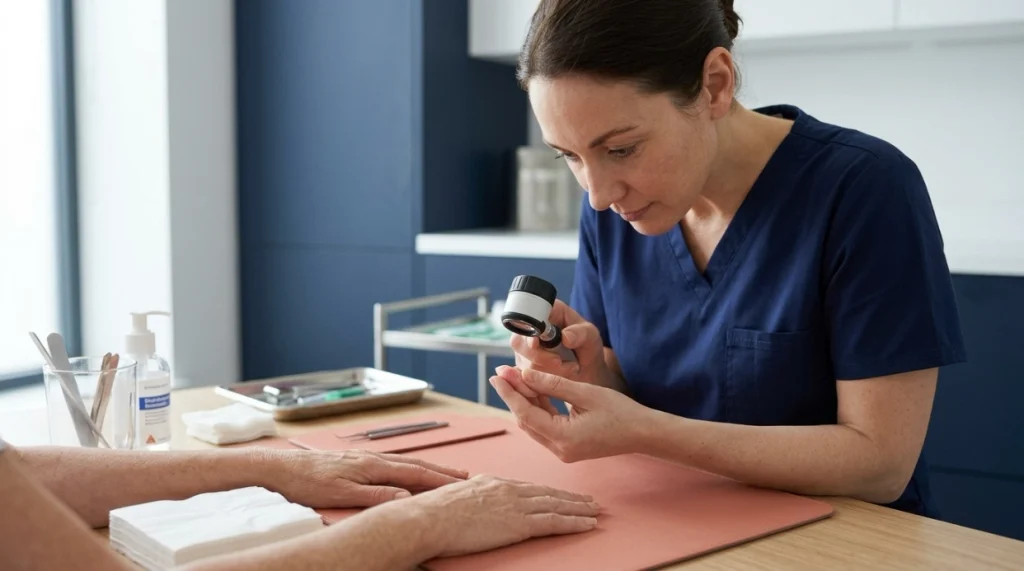
Seek medical advice when symptoms are more than a short-lived sting. Persistent or worsening reactions should not be diagnosed through trial and error with additional nail products.
Contact a healthcare professional if you develop:
- Persistent redness or swelling
- Blisters or weeping skin
- Intense itching
- Increasing pain around or beneath the nail
- Nail separation or significant discoloration
- Drainage, pus, or other signs that may suggest infection
- A recurring reaction every time gel, acrylic, primer, or prep products are used
If you develop facial swelling, lip or tongue swelling, difficulty breathing, or another severe systemic reaction, seek urgent medical care.
Why a dermatologist may suggest patch testing
Repeated itching and dermatitis around artificial nails can indicate allergic contact dermatitis. A dermatologist can decide whether patch testing is appropriate and which substances should be tested.
The American Academy of Dermatology’s contact dermatitis guidance advises stopping a suspected product when it appears to be causing a rash. Nail products can be among the possible triggers.
Bring the bottles or ingredient lists from your manicure when possible. That gives the clinician more useful information than simply saying that “the nail chemicals” caused the problem.
Medical note: Burning, redness, or a rash can have several causes. A nail article cannot diagnose an allergy, chemical injury, dermatitis, or infection.
Frequently Asked Questions
Is nail dehydrator supposed to burn?
No. A cool evaporating sensation can occur, but a painful burning feeling should not be considered a required part of nail preparation. Stop if it hurts, especially when the nail or surrounding skin is already damaged.
Why does nail dehydrator burn around my cuticles?
The liquid may be touching living skin, a hangnail, or a tiny cut. Many dehydrators use fast-evaporating solvents that can irritate compromised skin. Use a smaller amount and keep the brush on the nail plate.
Can nail dehydrator burn an over-filed nail?
An over-filed nail can become unusually sensitive because less nail plate remains between products and the nail bed. If the nail is sore before dehydrator is applied, stop further prep and avoid adding more potentially irritating products.
Is nail dehydrator the same as nail primer?
No. Dehydrator mainly removes surface moisture and oils. Primer is a separate adhesion product, and some primers use ingredients such as methacrylic acid. Always identify the bottle before applying it.
Why does my nail burn only under the UV or LED lamp?
If discomfort begins during curing rather than during dehydrator application, you may be experiencing heat generated while the gel polymerizes. Thick gel layers and thin or damaged nails can make this heat more noticeable.
Could a burning sensation mean I’m allergic to nail products?
Possibly, but burning alone cannot diagnose an allergy. Allergic contact dermatitis often includes itching, redness, swelling, scaling, or blistering. A dermatologist may recommend patch testing when reactions repeatedly occur after nail-product exposure.
Can I use nail dehydrator again after it stings?
First identify why it stung. Don’t immediately reapply it to damaged skin or a painful nail. If the reaction keeps returning with the same product, stop using it and consider professional medical advice before further exposure.
Final Takeaway
A nail dehydrator should prepare the nail, not create significant pain. A brief cool sensation can happen as solvents evaporate, but sharp or persistent burning deserves attention.
Check for cuts, hangnails, aggressive filing, and accidental skin contact first. Then confirm that the bottle is truly a dehydrator rather than a primer or another chemical prep product.
If symptoms include itching, swelling, rash, blistering, or continuing pain, stop experimenting with nail products. Give the area time to recover and seek professional advice when symptoms persist or worsen.
As of 2026, my simplest rule remains the safest one: better adhesion is never a good reason to ignore pain.